
SEO Strategy Template: Boost Organic Traffic & Rankings

An SEO strategy template provides a structured, repeatable framework that guides content creators and marketers through the essential steps of optimizing web content for search engines, leading to measurable improvements in organic traffic and search engine rankings. By standardizing the optimization process, businesses can achieve a 20-50% increase in organic search visibility within six months when consistently applying a well-defined strategy.
Key Takeaways
- A robust SEO strategy template standardizes content optimization, ensuring consistent application of best practices across all content.
- Effective keyword research is foundational, focusing on user intent and long-tail opportunities to capture targeted traffic efficiently.
- Content planning must align with audience needs and business goals, leveraging AI tools to streamline creation and optimize for readability and engagement.
- On-page and technical SEO are critical for search engine crawlability and user experience, directly impacting rankings and site performance.
- Off-page SEO, primarily through strategic link building, builds domain authority and signals trustworthiness to search engines.
- Continuous performance tracking and iterative refinement are essential for adapting to algorithm changes and sustaining long-term SEO success.
Introduction to the SEO Strategy Template
An SEO strategy template is a structured blueprint that guides your entire search engine optimization efforts, ensuring consistency, comprehensiveness, and efficiency across all your content initiatives. This template serves as a roadmap, detailing every step from initial keyword discovery to final performance analysis, allowing for a systematic approach to improving organic search visibility.
Implementing a standardized SEO process helps organizations, especially those leveraging AI for content generation, maintain high-quality outputs that are primed for search engine ranking. It prevents crucial steps from being overlooked and provides a clear framework for team collaboration and accountability. For instance, without a template, content creators might optimize for keywords but neglect critical on-page elements like meta descriptions or internal linking, significantly hindering a page’s ranking potential.
The core components of an effective SEO strategy template typically include audience analysis, in-depth keyword research, content planning, on-page optimization, technical SEO considerations, off-page strategies, and ongoing performance measurement. Each component is interdependent, contributing to a holistic strategy that aims to satisfy both search engine algorithms and user intent.
SEO strategy is the meticulous process of organizing and executing actions designed to improve a website's visibility in organic search engine results. It encompasses a wide array of tactics aimed at attracting relevant traffic.
By defining clear objectives and outlining actionable steps, a template transforms abstract SEO goals into concrete, manageable tasks. This is particularly valuable for solopreneurs and small marketing teams who need to maximize their impact with limited resources. It also facilitates the integration of AI tools, enabling automated content generation and optimization while adhering to pre-defined SEO parameters.
This comprehensive guide provides an SEO strategy template designed to be both robust and adaptable, ensuring your content, whether human-generated or AI-powered, achieves maximum search engine performance.
Understanding Your Niche and Audience
Understanding your niche and target audience is the foundational first step in developing an effective SEO strategy, as it dictates every subsequent decision, from keyword selection to content tone. Without a clear grasp of who you are trying to reach and what problems you solve for them, your SEO efforts will lack focus and yield suboptimal results.
This initial phase involves deep dives into market research, competitor analysis, and the creation of detailed audience personas. A clear understanding ensures that content is not only optimized for search engines but also genuinely valuable and relevant to the human readers you aim to attract.
Market Research and Competitive Analysis
Thorough market research identifies the landscape in which your content operates, revealing opportunities and threats. This includes analyzing market size, growth trends, and specific segments. Competitive analysis then focuses on understanding what your direct and indirect competitors are doing well, and where their weaknesses lie.
Key aspects of competitive analysis include:
- Competitor Identification: Pinpoint direct rivals who target the same keywords and audience, and indirect competitors who offer alternative solutions.
- Keyword Gap Analysis: Discover keywords your competitors rank for but you do not, identifying untapped opportunities.
- Content Strategy Review: Analyze their top-performing content, identifying themes, formats, and engagement metrics.
- Backlink Profile Examination: Understand where competitors are acquiring their backlinks, providing insights for your own link-building efforts.
- SERP Feature Analysis: Observe what types of content and features (e.g., featured snippets, video carousels) dominate the search results for your target keywords.
This analysis provides crucial data points that inform your unique selling propositions and content differentiation strategies.
Defining Your Target Audience and Creating Personas
Your target audience comprises the specific group of people most likely to be interested in your products, services, or content. Creating detailed audience personas brings this abstract group to life, making it easier to tailor your SEO strategy and content creation. A typical organization might have 3-5 primary personas.
Audience persona is a semi-fictional representation of your ideal customer, based on market research and real data about your existing customers.
Each persona should include:
- Demographics: Age, gender, location, income, education level.
- Psychographics: Interests, hobbies, values, attitudes, lifestyle.
- Goals and Motivations: What are they trying to achieve? What drives their decisions?
- Pain Points and Challenges: What problems do they face that your content or offering can solve?
- Information Consumption Habits: Where do they seek information? Which platforms do they use?
- Search Behavior: What keywords do they use? What questions do they ask?
By deeply understanding your audience's needs and pain points, you can create content that directly addresses their queries, making it highly relevant and valuable. This relevance is a powerful signal to search engines and significantly improves engagement metrics.
Niche Definition and Value Proposition
Your niche is the specific segment of the market you serve, characterized by a unique set of needs or interests. Clearly defining your niche helps you stand out from broader competitors and focus your SEO efforts on a highly receptive audience.
Niche refers to a specialized segment of a larger market, defined by unique needs, preferences, or demographics.
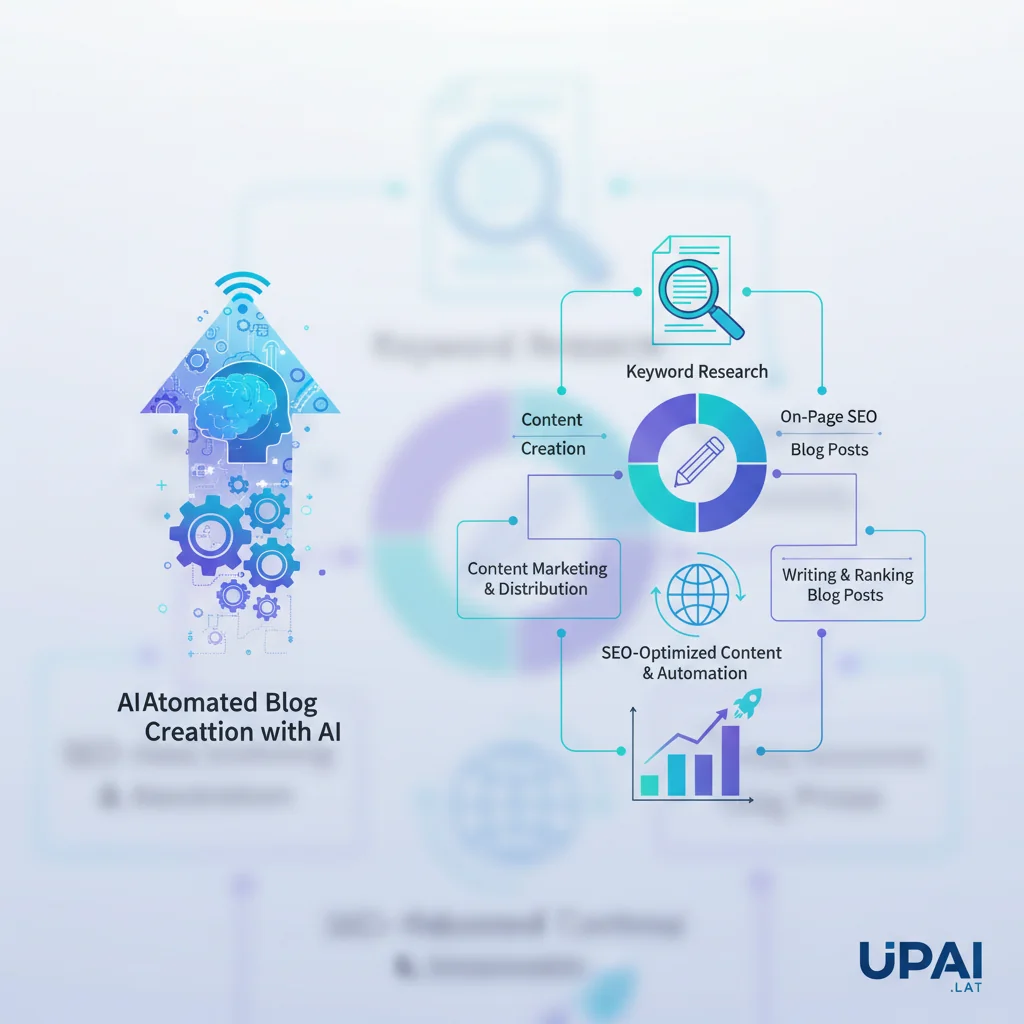
Your value proposition articulates why a user should choose your content or solution over others. It should be clear, concise, and compelling, often integrated into your website’s messaging and content strategy. For example, UPAI's value proposition centers on "Automated Blog Creation with AI — SEO-Optimized Content," directly addressing the pain points of content creators seeking efficiency and ranking power.
By establishing a strong foundation in your niche and understanding your audience, you lay the groundwork for all subsequent SEO activities, ensuring they are targeted and effective.
Comprehensive Keyword Research
Comprehensive keyword research is the cornerstone of any successful SEO strategy, identifying the exact words and phrases your target audience uses to find information, products, or services online. This process moves beyond simple terms to uncover user intent, competitive landscape, and long-tail opportunities, ensuring your content directly addresses what potential customers are searching for.
Effective keyword research informs content creation, guides on-page optimization, and provides insights into market demand, ultimately driving qualified organic traffic to your site.
Identifying Seed Keywords and Broad Topics
Seed keywords are the foundational terms that define your niche and industry, acting as starting points for broader research. These are typically short, high-level terms directly related to your business or content focus.
For example, if you sell "AI content tools," seed keywords might include "AI writing," "content automation," "SEO tools," or "blog generator." From these initial terms, you can expand your research using various keyword tools to discover related phrases, questions, and long-tail variations.
The goal at this stage is to brainstorm a wide array of potential topics that resonate with your target audience identified in the previous step.
Exploring Long-Tail Keywords and Semantic Keywords
While seed keywords attract broad interest, long-tail keywords are more specific, often longer phrases (3+ words) that represent more focused user intent and typically have lower search volume but higher conversion rates. Semantic keywords are related terms and phrases that help search engines understand the full context and relevance of your content, even if they don't contain the exact target keyword.
Consider the differences:
| Feature | Short-Tail Keywords | Long-Tail Keywords |
|---|---|---|
| Length | 1-2 words (e.g., "SEO") | 3+ words (e.g., "how to create an SEO strategy template") |
| Search Volume | High | Low to Medium |
| Competition | Very High | Lower |
| User Intent | Broad, ambiguous | Specific, clear, often transactional or informational |
| Conversion Rate | Lower (due to broad intent) | Higher (due to specific intent) |
| Ranking Difficulty | Very Difficult | Easier |
Incorporating both long-tail and semantic keywords ensures your content answers a wide range of user queries and provides comprehensive coverage of a topic, signaling authority to search engines. For example, an article optimized for "SEO strategy template" might also include semantic keywords like "content marketing plan," "search visibility framework," or "organic growth roadmap."
Analyzing Keyword Intent and Competition
Understanding keyword intent is paramount. There are four primary types of search intent:
- Informational: Users seeking information (e.g., "what is SEO," "how to write a blog post").
- Navigational: Users looking for a specific website or page (e.g., "UPAI login," "Google Maps").
- Transactional: Users intending to make a purchase or complete an action (e.g., "buy AI writing software," "SEO tool free trial").
- Commercial Investigation: Users researching products or services before making a purchase (e.g., "best AI content generator reviews," "UPAI vs. competitors").
Aligning your content with the correct intent ensures that you provide the most relevant information to the searcher. For instance, a blog post about an SEO strategy template should predominantly target informational and commercial investigation intent, while a product page should target transactional intent.
Assessing keyword competition involves evaluating the difficulty of ranking for a particular keyword, often indicated by metrics like Keyword Difficulty (KD) scores provided by various tools. Higher competition means more established websites are already ranking, requiring more significant effort to displace them. Prioritize keywords with a balance of decent search volume, clear intent, and manageable competition.
Tools and Techniques for Keyword Research
Numerous tools assist in comprehensive keyword research:
- Google Keyword Planner: Free tool for search volume and related keywords.
- SEMrush, Ahrefs, Moz Keyword Explorer: Premium tools offering in-depth analysis of search volume, difficulty, competitor rankings, and more.
- Google Search Console: Reveals actual search queries users are using to find your site.
- AnswerThePublic, AlsoAsked.com: Visualizes questions and related phrases users ask around a topic.
- AI-powered tools: UPAI's content generation can integrate keyword research findings to create SEO-optimized drafts.
When analyzing your content for keyword usage, ensure you maintain a natural flow. Tools like UPAI's Keyword Density tool can help you analyze the frequency and distribution of your target keywords and related terms, preventing over-optimization while ensuring adequate coverage.
Strategic Content Planning and Creation
Strategic content planning and creation involve mapping out the content you will produce, aligning it with your keyword research and audience needs, and then generating high-quality, engaging material. This phase transforms raw keyword data into valuable, readable, and SEO-optimized articles, blog posts, landing pages, and other content formats that resonate with your target audience.
A well-structured content plan ensures consistency, covers essential topics thoroughly, and maximizes the impact of each piece of content produced, whether by human writers or AI.
Developing Content Pillars and Clusters
Content pillars and clusters form a strategic framework for organizing your website's content around broad topics, establishing your authority in a specific niche. A pillar page is a comprehensive, high-level piece of content that covers a broad topic extensively, without going into excessive detail on every subtopic.
Around this pillar, you create multiple cluster content pieces—individual blog posts or articles—that delve into specific subtopics linked back to the pillar page. This interlinking strategy signals to search engines that your pillar page is an authoritative resource on the broader topic, improving its ranking potential.
Elements of a robust content cluster strategy include:
- Identify Core Pillar Topics: Based on your seed keywords and audience pain points, select 3-5 broad topics (e.g., "SEO Strategy," "AI Content Generation," "Blog Monetization").
- Map Cluster Content Ideas: For each pillar, brainstorm 10-20 specific long-tail keywords and related subtopics that can be covered in individual articles.
- Create the Pillar Page: Develop a comprehensive, evergreen piece of content that provides an overview of the pillar topic and links out to all relevant cluster content.
- Write Cluster Content: Produce detailed articles for each subtopic, ensuring they link back to the pillar page and other relevant cluster pieces.
- Internal Linking Strategy: Implement a strong internal linking structure, connecting cluster pages to the pillar page and to each other, using descriptive anchor text.
Establishing an Editorial Calendar
An editorial calendar is a schedule that organizes and tracks all your content creation and publication efforts, ensuring a consistent and timely content flow. It brings structure to your strategy, allowing for efficient resource allocation and preventing content gaps or overlaps.
Key components of an editorial calendar typically include:
- Content title and target keyword(s)
- Content format (blog post, video, infographic, case study)
- Target audience persona
- Assigned writer/creator
- Due dates for drafts, reviews, and publication
- Status (in progress, ready for review, published)
- Call-to-action (CTA) and conversion goal
An editorial calendar enables proactive planning, allowing you to align content with seasonal trends, product launches, or marketing campaigns. For AI-powered content workflows, it helps manage the queue of articles to be generated, reviewed, and published, ensuring a steady stream of SEO-optimized content.
Content Types and AI-Assisted Creation
The type of content you create should align with your audience's preferences and the keyword intent. Common content types include:
- Blog Posts: Ideal for informational and commercial investigation intent, covering a wide range of topics.
- Landing Pages: Designed for transactional intent, focusing on conversions.
- How-to Guides/Tutorials: Excellent for practical, problem-solving content.
- Listicles: Engaging and easily digestible for various topics.
- Case Studies: Builds trust and showcases success, targeting commercial investigation.
- Product Reviews/Comparisons: Helps users make informed decisions, targeting commercial investigation.
AI tools, like UPAI, significantly accelerate content creation, allowing you to produce high volumes of SEO-optimized content without sacrificing quality. UPAI can generate full blog posts, outlines, and even optimize existing content. When using AI for content creation, focus on guiding the AI with clear prompts, relevant keywords, and structural requirements. Always review and refine AI-generated content to ensure accuracy, factual correctness, and a unique brand voice.
Before publishing, always check your content’s readability using tools like UPAI's Readability tool to ensure it is accessible and engaging for your target audience. Additionally, optimize your headlines and titles using a Headline Analyzer to improve click-through rates from the SERPs.
On-Page SEO Optimization
On-page SEO optimization involves optimizing individual web pages to rank higher and earn more relevant traffic in search engines. This critical phase focuses on elements within your control on your website, ensuring that search engines can easily understand your content and that it provides the best possible user experience.
Proper on-page optimization directly communicates the topic and relevance of your content to search engine crawlers, improving your chances of ranking for target keywords.
Optimizing Core On-Page Elements
Several core elements on each page require meticulous optimization:
- Title Tags: The HTML title tag (`<title>`) is one of the most important on-page SEO factors. It should be unique for each page, accurately describe the page's content, and include your primary target keyword, ideally near the beginning. Keep it under 60 characters to avoid truncation in SERPs.
- Meta Descriptions: While not a direct ranking factor, the meta description is your advertisement in the search results. It should be compelling, accurately summarize the page content, include your primary keyword, and encourage clicks. Aim for 150-160 characters. Use UPAI's SERP Preview tool to see how your title and meta description will appear in Google.
- Header Tags (H1, H2, H3): Use header tags to structure your content logically and hierarchically. The `<h1>` tag should contain your primary keyword and serve as the main title of the page. `
` and `
` tags break up content into readable sections, often incorporating secondary keywords or variations. This improves readability for users and helps search engines understand the content's structure.
- URL Structure: Create short, descriptive, and keyword-rich URLs. Avoid long, complex URLs with unnecessary parameters. For example, `yourdomain.com/seo-strategy-template` is far better than `yourdomain.com/blog/post_id=12345&category=seo`.
Content Quality and Keyword Integration
High-quality content is the foundation of effective on-page SEO. It means providing comprehensive, accurate, and valuable information that truly answers user queries. Search engines prioritize content that demonstrates expertise, authoritativeness, and trustworthiness (E-E-A-T).
Integrate your target keywords naturally throughout the content, including the introduction, body paragraphs, and conclusion. Avoid keyword stuffing, which can harm your rankings. Instead, focus on using semantic variations and related terms to provide context and cover the topic thoroughly. The optimal keyword density typically falls between 0.5% and 2.5% for primary keywords, though this varies by industry and content type. You can monitor this with UPAI's Keyword Density tool.
Ensure your content is:
- Comprehensive: Covers the topic in sufficient depth, answering common questions.
- Unique: Offers a fresh perspective or more detailed information than competitors.
- Engaging: Keeps readers on the page, reducing bounce rate.
- Actionable: Provides clear takeaways or next steps for the user.
Image Optimization and Internal Linking
Images enhance user experience and can also be optimized for SEO:
- File Names: Use descriptive, keyword-rich file names (e.g., `seo-strategy-template-flowchart.png`).
- Alt Text: Provide descriptive alt text for all images. This improves accessibility for visually impaired users and helps search engines understand the image content. Include relevant keywords where appropriate.
- Compression: Compress images to reduce file size without sacrificing quality, improving page load speed. Tools like TinyPNG or compressor.io can help.
Internal linking is the practice of hyperlinking one page on your website to another page on the same website. It serves several important SEO functions:
- Distributes Page Authority: Links pass "link equity" or "PageRank" from one page to another, boosting the authority of linked pages.
- Aids Navigation: Helps users find related content, improving user experience and time on site.
- Helps Search Engines Discover Pages: Crawlers use internal links to find and index new pages on your site.
- Defines Site Structure: Strong internal linking reinforces your content clusters and overall site hierarchy.
Use descriptive anchor text for internal links, relevant to the page being linked to. For instance, linking to a tool like UPAI's SEO Checker with anchor text like "analyze a page's SEO score" is more effective than "click here."
Structured Data and Schema Markup
Structured data, also known as schema markup, is a standardized format for providing information about a webpage and classifying its content. It helps search engines better understand the context of your content, leading to richer search results (rich snippets).
For blog posts and articles, common schema types include Article schema, FAQPage schema, and HowTo schema. Implementing FAQ Schema, for example, can display common questions and answers directly in the SERP, increasing visibility and click-through rates. While structured data isn't a direct ranking factor, it can significantly improve your presence in the SERPs, indirectly boosting organic traffic.
After optimizing your on-page elements, use UPAI's SEO Checker to get an instant score and actionable recommendations for further improvements.
Technical SEO Fundamentals
Technical SEO fundamentals ensure that search engines can efficiently crawl, index, and render your website, forming the bedrock upon which all other SEO efforts are built. Without a technically sound website, even the most optimized content may struggle to rank, as search engines might not be able to access or understand it properly.
This category addresses server-side optimizations, site architecture, and other behind-the-scenes factors that directly impact user experience and search engine accessibility.
Site Speed and Core Web Vitals
Site speed is a critical ranking factor and user experience component; faster loading websites consistently outperform slower ones in search rankings and user engagement. Google's Core Web Vitals (CWV) are a set of specific metrics that measure user experience aspects like loading performance, interactivity, and visual stability.
The three main Core Web Vitals are:
- Largest Contentful Paint (LCP): Measures loading performance. Ideally, LCP should occur within 2.5 seconds of when the page first starts loading.
- First Input Delay (FID): Measures interactivity. Ideally, FID should be 100 milliseconds or less. (Note: FID is being replaced by INP - Interaction to Next Paint - in March 2024, which measures the latency of all user interactions.)
- Cumulative Layout Shift (CLS): Measures visual stability. Ideally, CLS should be 0.1 or less.
To improve site speed and CWV:
- Optimize images (compress, use modern formats like WebP).
- Minify CSS, JavaScript, and HTML.
- Leverage browser caching.
- Reduce server response time.
- Use a Content Delivery Network (CDN).
- Eliminate render-blocking resources.
Regularly monitor your CWV scores using Google Search Console and PageSpeed Insights.
Mobile-Friendliness and Responsive Design
With mobile-first indexing, Google primarily uses the mobile version of your content for indexing and ranking. Therefore, having a mobile-friendly website is no longer optional; it is essential for search visibility. A responsive design ensures your website adapts seamlessly to different screen sizes and devices, providing an optimal viewing experience for all users.
Key considerations for mobile-friendliness:
- Fluid Layouts: Content and images adjust automatically to screen size.
- Readable Fonts: Text should be legible without zooming.
- Tap Targets: Buttons and links should be large enough and spaced adequately for easy tapping.
- Fast Load Times: Mobile users expect even faster loading.
You can test your website's mobile-friendliness using Google's Mobile-Friendly Test tool.
Crawlability and Indexability
Crawlability refers to a search engine's ability to access and "read" the content on your website, while indexability means the search engine can analyze and store that content in its index. If your site isn't crawlable or indexable, it won't appear in search results.
Ensure crawlability and indexability by:
- Robots.txt: This file tells search engine bots which pages or sections of your site they should or shouldn't crawl. Ensure you're not blocking important pages.
- Sitemaps (XML Sitemaps): An XML sitemap lists all the important pages on your website, helping search engines discover and prioritize your content. Submit your sitemap to Google Search Console.
- Canonical Tags: Use canonical tags (`<link rel="canonical" href="...">`) to indicate the preferred version of a page when duplicate content exists (e.g., for different URL parameters or syndicated content). This prevents duplicate content issues.
- Noindex Tags: Use the `noindex` meta tag or HTTP header to prevent specific pages (e.g., thank-you pages, internal search results) from being indexed, keeping them out of search results.
Regularly check your "Coverage" report in Google Search Console to identify any indexing issues.
HTTPS and Security
HTTPS (Hypertext Transfer Protocol Secure) is a secure version of HTTP, encrypting data transferred between a user's browser and your website. Google has confirmed HTTPS as a minor ranking signal, but more importantly, it builds user trust and protects sensitive information. All websites should use HTTPS.
Ensure your website has a valid SSL certificate and that all pages load over HTTPS. Redirect all HTTP traffic to HTTPS to avoid duplicate content issues and ensure consistent security.
Off-Page SEO and Link Building
Off-page SEO encompasses all the activities performed outside your website to improve its search engine ranking, with link building being the most significant component. These external signals demonstrate your website's authority, trustworthiness, and relevance to search engines, directly influencing your domain's overall strength and ability to rank.
A robust off-page strategy involves acquiring high-quality backlinks from reputable sources, alongside other efforts to enhance your brand's online presence and reputation.
Understanding Backlinks and Domain Authority
A backlink (or inbound link) is a link from one website to another. Search engines view backlinks as "votes of confidence" or endorsements. The more high-quality, relevant backlinks your site receives from authoritative domains, the more trustworthy and authoritative your site appears to search engines.
Domain Authority (DA) is a search engine ranking score developed by Moz that predicts how well a website will rank on search engine result pages (SERPs). It's scored on a 100-point logarithmic scale, with higher scores corresponding to a greater ability to rank.
Key factors influencing the value of a backlink include:
- Relevance: Links from sites in the same niche or industry are more valuable.
- Authority: Links from high-authority, well-established websites carry more weight.
- Anchor Text: Descriptive and relevant anchor text helps search engines understand the context of the linked page.
- Placement: Links placed within editorial content are generally more valuable than those in footers or sidebars.
- "Dofollow" vs. "Nofollow": "Dofollow" links pass link equity, while "nofollow" links typically do not (though Google has stated they may treat nofollow as a hint).
Effective Link Building Strategies
Acquiring high-quality backlinks requires a strategic and ethical approach. Avoid "black hat" tactics like buying links or participating in link schemes, as these can lead to severe penalties from Google. Focus on white-hat strategies that build genuine relationships and earn natural links:
- Content Promotion: Create exceptional, shareable content that naturally attracts links. Promote your content across social media, email newsletters, and relevant communities.
- Guest Posting: Write articles for other authoritative websites in your niche, including a contextual backlink to your site. This requires offering genuine value to the host site's audience.
- Broken Link Building: Find broken links on other websites using tools, then offer your relevant content as a replacement. This is a win-win: the site owner fixes a broken link, and you get a backlink.
- Resource Page Link Building: Identify websites that curate lists of resources relevant to your niche and suggest your content for inclusion.
- Unlinked Brand Mentions: Monitor for mentions of your brand or products online that don't include a link. Reach out to the site owner and politely request a link.
- HARO (Help a Reporter Out): Respond to journalist queries on HARO to provide expert insights, often resulting in mentions and backlinks from news sites.
- Competitor Backlink Analysis: Use tools like Ahrefs or SEMrush to analyze your competitors' backlink profiles. Identify common sources and target them for your own link-building efforts.
Brand Mentions and Social Signals
Beyond direct backlinks, other off-page signals contribute to your SEO:
- Brand Mentions: Even unlinked mentions of your brand, products, or services across the web can signal popularity and authority to search engines. Consistent brand mentions contribute to brand recognition and trust.
- Social Signals: While social media shares, likes, and comments are not direct ranking factors, they can indirectly influence SEO. High social engagement can lead to increased visibility, driving more traffic to your content, which in turn might lead to more natural backlinks. Social platforms also help in content distribution and audience building.
- Online Reviews: Positive reviews on platforms like Google My Business, Yelp, or industry-specific review sites enhance your local SEO and build trust. Search engines consider review signals when evaluating local businesses.
A holistic off-page SEO strategy integrates link building with broader efforts to cultivate a strong, positive online presence for your brand, enhancing its perceived authority and trustworthiness in the eyes of both users and search engines.
Performance Tracking, Analysis, and Iteration
Performance tracking, analysis, and iteration form the continuous feedback loop essential for refining and optimizing your SEO strategy over time. This stage involves monitoring key metrics, identifying what works and what doesn't, and making data-driven adjustments to improve future outcomes.
Without consistent tracking, SEO efforts can become aimless, failing to adapt to algorithm changes or evolving user behavior, leading to stagnation or decline in organic visibility.
Key Performance Indicators (KPIs) for SEO
KPIs are measurable values that demonstrate how effectively you are achieving your business objectives. For SEO, primary KPIs focus on organic traffic, rankings, and conversions:
- Organic Traffic: The number of visitors coming to your site from unpaid search results. Track overall organic sessions, new users, and specific landing page performance.
- Keyword Rankings: Your position in search results for target keywords. Monitor top-performing keywords and those that are declining.
- Click-Through Rate (CTR): The percentage of impressions that result in a click. A higher CTR indicates your title tags and meta descriptions are compelling.
- Bounce Rate: The percentage of visitors who navigate away from your site after viewing only one page. A high bounce rate can indicate content irrelevance or poor user experience.
- Conversion Rate: The percentage of organic visitors who complete a desired action (e.g., purchase, form submission, sign-up). This is the ultimate measure of ROI for many businesses.
- Average Time on Page: How long users spend on a specific page. Longer times generally indicate engaging content.
- Page Load Speed: Measured by metrics like Largest Contentful Paint (LCP) and First Input Delay (FID), directly impacting user experience and rankings.
- Backlink Profile Growth: The number and quality of new backlinks acquired over time.
Regularly reviewing these KPIs in tools like Google Analytics and Google Search Console provides a clear picture of your SEO strategy's effectiveness.
Utilizing Analytics Tools
Leveraging analytics tools is crucial for gathering the data needed to track KPIs and make informed decisions:
- Google Analytics: Provides comprehensive data on website traffic, user behavior, conversions, and audience demographics. Set up goals to track specific conversion actions.
- Google Search Console: Offers insights into your site's performance in Google Search, including search queries, impressions, clicks, average position, and indexing status. It also alerts you to technical issues.
- Third-Party SEO Tools (e.g., SEMrush, Ahrefs, Moz): Provide detailed competitive analysis, keyword tracking, backlink audits, site audits, and more advanced metrics not available in Google's free tools.
- UPAI's Earn Calculator (https://upai.lat/earn-calculator): Use this tool to estimate the potential monetization of your blog, linking your SEO efforts directly to revenue projections.
Configure dashboards and reports to visualize your most important KPIs at a glance, enabling quick identification of trends and anomalies.
Content Audits and Refresh Strategies
Content audits involve systematically reviewing all existing content on your website to assess its performance and identify opportunities for improvement. This process helps you decide whether to update, remove, or consolidate content.
Steps for a content audit:
- Inventory Content: Create a list of all your pages, including URL, title, target keyword, and publication date.
- Gather Data: Collect performance metrics for each page (organic traffic, rankings, bounce rate, conversions) from Google Analytics and Search Console.
- Evaluate Content Quality: Assess accuracy, comprehensiveness, freshness, and alignment with user intent.
- Categorize Actions:
- Update/Refresh: For pages with good potential but outdated information or declining performance. Add new sections, update statistics, improve on-page SEO.
- Consolidate/Merge: For multiple pages covering similar topics but lacking depth individually. Combine them into one comprehensive piece.
- Remove/Redirect: For low-performing, irrelevant, or duplicate content. Remove and implement 301 redirects to a relevant page.
- Keep As Is: For high-performing, evergreen content.
Regular content audits (e.g., annually or semi-annually) ensure your website remains lean, relevant, and optimized, consistently providing value to both users and search engines. AI tools can assist in identifying content gaps or suggesting improvements during this process.
A/B Testing and Continuous Improvement
A/B testing (or split testing) involves comparing two versions of a webpage or element (A and B) to determine which one performs better. This data-driven approach allows you to make incremental improvements to your SEO strategy based on empirical evidence.
SEO elements you can A/B test include:
- Title Tags and Meta Descriptions: Test different wording to improve CTR in SERPs.
- Headlines and Subheadings: Optimize for engagement and readability. Use UPAI's Headline Analyzer to pre-score headline variations.
- Call-to-Actions (CTAs): Test different phrasing, colors, or placements to boost conversion rates.
- Page Layout and Design: Experiment with content organization or visual elements to improve user experience metrics like time on page and bounce rate.
Continuous improvement is the philosophy of constantly seeking ways to enhance your SEO strategy. This involves staying updated with algorithm changes, industry trends, and emerging technologies. Regular analysis and iteration ensure your strategy remains agile and effective in the dynamic landscape of search engine optimization.
Common SEO Strategy Mistakes to Avoid
Avoiding common SEO strategy mistakes is as crucial as implementing best practices, as these errors can severely hinder your progress, waste resources, and even lead to search engine penalties. Many missteps stem from a lack of understanding of search engine guidelines or prioritizing quantity over quality.
Being aware of these pitfalls allows content creators and marketers to proactively build a more resilient and effective SEO strategy.
Neglecting User Intent
One of the most significant mistakes is creating content without a clear understanding of user intent for target keywords. If a user searches for "best running shoes" (commercial investigation) and your page offers a historical overview of running shoes (informational), they will quickly bounce, signaling to Google that your content is not relevant. This mismatch leads to poor engagement metrics and lower rankings.
Always align your content format and depth with the dominant search intent of your primary keyword. Use the SERP itself as a guide: what kind of content is Google already ranking for that query?
Keyword Stuffing and Over-Optimization
In the early days of SEO, simply repeating keywords frequently was a common tactic. Today, keyword stuffing—the practice of unnaturally cramming keywords into content, meta tags, or anchor text—is a detrimental black-hat technique. It makes content unreadable for users and is easily detected and penalized by search engines.
Focus on natural language, semantic keywords, and providing comprehensive value. While keyword density still plays a role, it should be a byproduct of well-written, informative content, not the primary goal. Use UPAI's Keyword Density tool to monitor your usage and avoid over-optimization.
Ignoring Technical SEO
Many content-focused marketers often overlook the foundational importance of technical SEO. A beautiful, well-written article won't rank if search engines can't crawl or index it, or if the page loads too slowly. Neglecting technical aspects like site speed, mobile-friendliness, broken links, crawl errors, or proper sitemap submission can undermine all other SEO efforts.
Regular technical audits are essential. Use tools like Google Search Console and UPAI's SEO Checker to identify and rectify technical issues promptly.
Lack of Consistency and Patience
SEO is a long-term strategy, not a quick fix. Many businesses make the mistake of expecting immediate results and abandoning their efforts if they don't see rapid changes. Inconsistent content publishing, sporadic link-building efforts, or infrequent performance monitoring will yield inconsistent results.
Commit to a consistent content schedule, patiently build high-quality backlinks, and allow time for search engines to crawl, index, and evaluate your changes. Significant ranking improvements often take 6-12 months of sustained effort.
Failing to Track and Analyze Performance
Launching an SEO strategy without a robust tracking and analysis framework is like driving blind. Without monitoring KPIs such as organic traffic, keyword rankings, and conversion rates, you cannot identify what's working, what's failing, or where to allocate resources effectively. This leads to wasted effort and missed opportunities.
Implement Google Analytics and Google Search Console from day one. Regularly review your data, conduct content audits, and use insights to iterate and refine your strategy. Tools like UPAI's Earn Calculator can help quantify the financial impact of your SEO gains.
Creating Duplicate or Thin Content
Duplicate content, which is identical or very similar content appearing on multiple URLs, can confuse search engines about which version to rank, potentially leading to neither ranking well. Thin content, which offers little to no value to the user, is also frowned upon and can lead to lower rankings or even manual penalties.
Always strive for unique, high-quality content that provides substantial value. Use canonical tags for unavoidable duplicate content and consistently update or remove thin content pages.
Conclusion: Automate Your SEO Success
Implementing a comprehensive SEO strategy template is no longer a luxury but a necessity for any business aiming to thrive in the competitive digital landscape. By systematically addressing audience understanding, keyword research, content creation, on-page and technical optimization, and off-page efforts, you build a robust foundation for sustainable organic growth. The continuous cycle of tracking, analysis, and iteration ensures your strategy remains agile and effective against evolving search engine algorithms.
While the depth and breadth of SEO can seem daunting, modern AI tools are revolutionizing how content creators and marketers approach these challenges. Platforms like UPAI empower you to automate significant portions of your SEO workflow, from generating SEO-optimized blog posts and headlines to analyzing keyword density and readability. This automation frees up valuable time, allowing you to focus on strategic oversight and creative refinement, rather than manual, repetitive tasks.
Embrace the power of AI to streamline your SEO strategy, accelerate content production, and ensure every piece of content you publish is primed for peak performance. Start leveraging UPAI's suite of tools today to transform your SEO efforts into a highly efficient, data-driven engine for organic success. Automate Your Blog with AI.
Frequently Asked Questions
What is an SEO strategy template?
Why should I use an SEO strategy template?
What are the essential components of an SEO strategy template?
How do I customize an SEO strategy template for my specific business?
How often should I update my SEO strategy based on the template?
Can an SEO strategy template guarantee higher search rankings?
Related Articles

Surfer SEO Review 2026: Optimize Your Content for Top Rankings
Our in-depth Surfer SEO review for June 2026 covers features, pricing, pros, and cons. Discover how this tool can elevate your on-page SEO and content strategy. Learn more!

Master Single Page SEO for Top Search Rankings in 2026
Unlock the power of single page SEO to drive targeted traffic. Learn strategies to optimize your content for AI search in 2026 and beyond. Start ranking higher today!
Top SEO Services Norfolk Businesses Need for Growth
Boost your Norfolk business with expert SEO services. We help you rank higher, attract more customers, and dominate the local market. Get started today!
More free AI tools from the same team
Grow your LinkedIn presence on autopilot. Try LinkedIn automation and AI content for free.
Read the Linkesy blogAsk AI about UPAI
Click your favorite assistant to learn more about us