
Lean Startup: Avoid Overhiring for Business Success

Running a lean business startup, while avoiding the common pitfall of overhiring, hinges on a strategic framework rooted in validated learning, iterative development, and an acute awareness of resource allocation. This approach, which prioritizes efficiency and adaptability, significantly increases a startup's chances of long-term success by conserving crucial capital and maintaining organizational agility, with 90% of startups reportedly failing due to various factors, many of which can be mitigated by lean principles.
Key Takeaways
- **Lean Startup Definition:** The Lean Startup methodology focuses on rapid experimentation, validated learning, and iterative product development to minimize waste and maximize value creation.
- **Overhiring Risk:** Excessive staffing drains financial resources, introduces bureaucratic inefficiencies, and erodes agility, posing a critical threat to early-stage startup survival.
- **Strategic Staffing:** Build high-impact teams by hiring for essential roles, leveraging fractional or contract talent, and prioritizing adaptability over immediate headcount expansion.
- **Operational Efficiency:** Implement lean principles across all operations, optimizing resource allocation, automating processes, and rigorously managing cash flow to sustain growth without bloat.
- **Smart Scaling:** Grow incrementally, using data-driven decisions and automation to expand market reach and product offerings while preserving a lean organizational structure.
- **Common Pitfalls:** Avoid mistaking "lean" for "cheap," neglecting company culture, or failing to adapt based on market feedback, as these undermine the core benefits of a lean approach.
What is the Lean Startup Philosophy and How Does it Prevent Overhiring?
The Lean Startup philosophy is a business methodology for developing products and businesses, emphasizing rapid iteration, validated learning, and the elimination of wasteful practices, directly preventing overhiring by focusing resources on critical, validated needs. It advocates for building a Minimum Viable Product (MVP), testing it with real customers, and continuously learning and adapting based on feedback, rather than investing heavily in unproven ideas or excessive headcount.
Defining the Core Principles of Lean Startup
At its heart, the Lean Startup methodology is about efficiency, adaptability, and customer-centricity. It provides a scientific approach to creating and managing startups, ensuring that resources, including human capital, are deployed only where they generate measurable value.
- **Validated Learning:** This is the process of demonstrating empirically that a startup has discovered valuable truths about its customers' needs and market demand. It means learning what customers truly want, not what founders assume they want, through experimentation.
- **Minimum Viable Product (MVP):** An MVP is the version of a new product which allows a team to collect the maximum amount of validated learning about customers with the least effort. It is not necessarily the lowest quality product, but the smallest version that can still deliver core value and gather critical feedback.
- **Build-Measure-Learn Feedback Loop:** This core loop guides product development. Startups *build* an MVP, *measure* its performance and user reactions, and *learn* from the data to inform their next steps, which could be to pivot (change direction) or persevere (continue on the current path).
How Lean Principles Directly Address Overhiring
Lean principles inherently discourage overhiring by promoting a culture of resource scarcity and strategic deployment. Every hiring decision under a lean framework is scrutinized for its immediate, measurable impact on validated learning or core product development.
By focusing on MVPs and validated learning, a lean startup avoids hiring for roles that support features or products that haven't yet proven market demand. This prevents the costly scenario of building a large team around an idea that ultimately fails to resonate with customers, thereby conserving runway and maintaining agility.
The Role of Iteration and Experimentation in Resource Allocation
Iteration is the repetitive process of refining a product or business model based on feedback and learning. In a lean context, each iteration is a small experiment designed to answer specific questions about the market or product viability. This experimental approach has profound implications for staffing:
- **Just-in-Time Staffing:** Teams are built incrementally, adding new members only when specific, validated needs arise from the Build-Measure-Learn cycle. This contrasts sharply with traditional models that might hire a full team upfront based on a comprehensive but unvalidated business plan.
- **Multidisciplinary Teams:** Early lean teams often consist of generalists or individuals with multiple skill sets, reducing the need for specialized hires until the product's direction is clearer and more stable. This fosters a versatile workforce capable of adapting to pivots.
- **Focus on Core Competencies:** Lean startups identify their absolute core competencies and hire for those first, often outsourcing or delaying hires for non-core functions until later stages. This ensures that the most critical value-creating activities are adequately staffed, but not overstaffed.
For example, instead of hiring a full marketing team before product-market fit, a lean startup might first use an SEO Checker to understand initial market demand and optimize early content, then iterate on messaging with a small, agile team, proving the need for a dedicated marketing hire through data, not assumption.
Why is Overhiring a Significant Risk for Early-Stage Startups?
Overhiring poses a critical threat to early-stage startups by rapidly depleting financial resources, introducing bureaucratic inefficiencies, and eroding the agile culture essential for innovation and survival. It creates an unsustainable burn rate, significantly shortening the startup's runway before achieving profitability or securing further funding.
The Financial Drain of Excessive Staffing
Personnel costs are typically the largest expense for any business, and for a startup, they can quickly become insurmountable. Each additional hire comes with a substantial financial burden beyond just salary.
- **Salaries and Wages:** The most obvious cost, which compounds with every new employee.
- **Benefits:** Health insurance, retirement plans, paid time off, and other perks add significantly to the overall cost per employee, often 20-40% above base salary.
- **Recruitment Costs:** Fees for recruiters, advertising job postings, and the time spent by existing employees in the hiring process.
- **Onboarding and Training:** Time and resources invested in integrating new hires, which diverts existing staff from core tasks.
- **Infrastructure Costs:** More employees require more office space, equipment (laptops, software licenses), and administrative support, scaling up operational overhead.
An inflated payroll directly impacts a startup's burn rate, which is the rate at which an enterprise spends money, especially venture capital, in excess of income. A high burn rate shortens the "runway"—the amount of time a company has before it runs out of money. For startups operating on limited seed funding, a shortened runway can be fatal, forcing premature fundraising rounds or even closure.
Operational Inefficiencies and Reduced Agility
While more hands might seem beneficial, an oversized team in an early-stage startup often leads to diminishing returns and operational drag. The very structure designed for speed and innovation can become bogged down.
- **Communication Overload:** More people mean more communication channels, more meetings, and a higher potential for misunderstandings. Decision-making slows down as more stakeholders need to be consulted.
- **Bureaucracy and Process Bloat:** With more employees, there's a natural tendency to introduce more formal processes, hierarchies, and approvals, which can stifle the quick, iterative cycles central to lean methodologies.
- **Role Duplication and Lack of Ownership:** Unclear roles and responsibilities can emerge, leading to duplicated efforts or, conversely, tasks falling through the cracks. This dilutes individual ownership and accountability.
- **Slower Pivots:** A larger team makes it harder to pivot quickly in response to market feedback. Realigning a big team, retraining, or even letting people go is a complex and costly endeavor.
The essence of a startup is its ability to move fast, experiment, and adapt. Overhiring directly undermines this core advantage, turning a nimble speedboat into a sluggish tanker.
Cultural Degradation and Morale Impact
The culture of an early-stage startup is its lifeblood, often characterized by strong camaraderie, shared vision, and a sense of collective ownership. Overhiring can dilute this unique environment.
- **Loss of Intimacy:** As teams grow, the close-knit feeling can dissipate, making it harder to maintain a strong, unified culture.
- **Decreased Individual Impact:** In a smaller team, each member's contribution is highly visible and impactful. In a larger, potentially overstaffed team, individuals might feel their work has less significance, leading to disengagement.
- **Increased Stress and Uncertainty:** If the company faces financial distress due to overhiring, the looming threat of layoffs can create a pervasive atmosphere of anxiety, damaging morale and productivity.
- **Difficulty in Maintaining Vision:** With more people, especially if hiring isn't aligned with core values, it becomes harder to ensure everyone is rowing in the same direction and understands the company's foundational vision.
Maintaining a strong, positive, and agile culture is paramount for a startup. Overhiring can inadvertently introduce elements that erode this foundation, making it harder to attract and retain top talent in the long run.
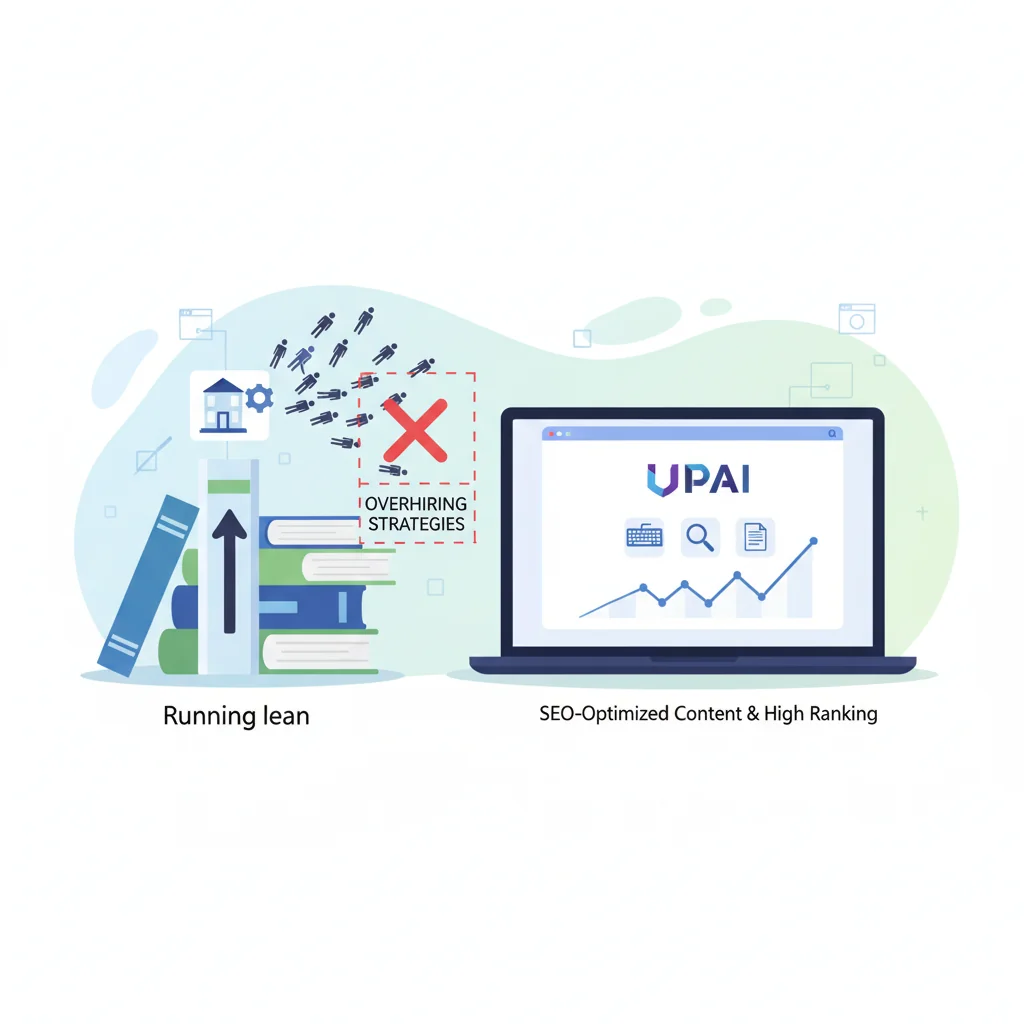
How Can Startups Build a Lean, High-Performing Team Effectively?
Building a lean, high-performing team effectively involves a deliberate strategy of identifying essential roles, prioritizing versatile talent, and strategically leveraging external resources to maximize impact while minimizing fixed costs. This approach ensures every team member directly contributes to validated learning and core product development.
Identifying Essential Roles and Core Competencies
The first step in lean staffing is a rigorous assessment of what roles are absolutely critical for the startup's current stage and immediate validated learning objectives. This means distinguishing between "must-have" and "nice-to-have" functions.
- **Product Visionary/Founder:** Someone to define the problem, solution, and overall direction.
- **Technical Lead/Engineer:** To build the core product or service.
- **Customer Discoverer/UX Designer:** To interact with potential users, gather feedback, and ensure usability.
- **Growth/Marketing Experimenter:** To test channels for customer acquisition and validate market messaging.
Focus on roles that directly contribute to the Build-Measure-Learn cycle. For example, before hiring a full-time content marketer, a startup might experiment with AI-powered content tools like UPAI to generate early blog posts and then analyze their performance using a Keyword Density tool to refine SEO, validating the need for a dedicated role based on data.
Hiring for Versatility, Culture Fit, and Adaptability
In a lean startup, individual team members often wear multiple hats. Therefore, hiring for versatility and a strong cultural alignment is more important than specialized, narrow skill sets in the early stages.
- **Versatility (T-shaped skills):** Seek individuals with deep expertise in one area (the vertical bar of the 'T') but also broad knowledge across various disciplines (the horizontal bar). This allows them to contribute effectively to different aspects of the business as needs evolve.
- **Culture Fit:** Hire individuals who resonate with the startup's values, mission, and work ethic. In a small team, a single misaligned hire can have a disproportionately negative impact on morale and productivity.
- **Adaptability and Growth Mindset:** Startups are dynamic environments. Team members must be comfortable with change, ambiguity, and continuous learning. A growth mindset ensures they are open to new ideas and willing to pivot as necessary.
- **Problem-Solvers:** Look for individuals who are proactive in identifying and solving problems, rather than just executing tasks. This entrepreneurial spirit is crucial for navigating startup challenges.
During the interview process, focus on behavioral questions that reveal these traits. Ask about past experiences where candidates had to adapt, learn new skills, or contribute outside their defined role.
Leveraging Fractional, Contract, and AI Resources Strategically
One of the most effective strategies for maintaining a lean team and avoiding overhiring is to utilize external resources for non-core or temporary functions. This provides access to specialized expertise without the long-term financial commitment of a full-time employee.
| Staffing Model | Key Advantages | Key Disadvantages | Best Use Cases |
|---|---|---|---|
| **Full-Time Employee** | Deep commitment, institutional knowledge, cultural integration. | High fixed cost, long-term commitment, slower to scale down. | Core product development, essential leadership, long-term strategic roles. |
| **Fractional Employee** | Access to senior expertise at a fraction of the cost, flexible hours. | Less dedicated time, potential for scheduling conflicts. | Part-time executive roles (e.g., fractional CMO, CFO), specialized consulting. |
| **Contractor/Freelancer** | Project-based, flexible, access to niche skills, no benefits cost. | Less loyalty, potential for inconsistent availability, limited cultural integration. | Specific projects (e.g., web design, content creation, legal advice), temporary skill gaps. |
| **AI Tools/Automation** | High efficiency, 24/7 availability, low variable cost, scalability. | Lacks human judgment, requires oversight, potential for generic output. | Repetitive tasks (e.g., data analysis, basic content generation), SEO optimization, customer support bots. |
AI tools, like UPAI, are particularly powerful for lean startups. Instead of hiring a full-time SEO specialist from day one, a startup can leverage UPAI's SERP Preview and Headline Analyzer to optimize their online presence and content, achieving significant SEO benefits with minimal human overhead. This allows the core team to focus on product development and customer acquisition, while AI handles time-consuming, repeatable tasks.
The "Two-Pizza Team" Concept
The "two-pizza team" concept, popularized by Amazon, suggests that a team should be small enough that it can be fed by two pizzas (typically 5-9 people). This principle promotes:
- **Autonomy:** Small teams can operate with greater independence and make decisions more quickly without extensive hierarchical approvals.
- **Accountability:** Each member's contribution is more visible, fostering a stronger sense of ownership and accountability.
- **Communication Efficiency:** Less people means fewer communication paths, reducing overhead and speeding up information flow.
- **Agility:** Smaller teams can pivot and adapt to new information or market changes much faster than larger, more complex units.
By structuring teams around this principle, startups can scale their product development efforts without necessarily scaling their bureaucracy, maintaining a lean and efficient organizational structure even as the company grows.
What Lean Operational Strategies Can Minimize Waste Beyond Staffing?
Lean operational strategies minimize waste beyond staffing by optimizing resource allocation, extensively automating processes, and rigorously integrating customer feedback into every facet of the business. These strategies ensure that every dollar, hour, and effort contributes directly to validated learning and value creation, rather than being consumed by non-essential activities.
Optimizing Resource Allocation and Budgeting
Effective resource allocation in a lean startup means directing capital, time, and effort to activities that offer the highest return on investment in terms of validated learning or direct revenue generation. This requires a disciplined approach to budgeting and spending.
- **Activity-Based Costing:** Understand the true cost of each activity or project. This helps identify areas where resources are disproportionately consumed without corresponding value.
- **Zero-Based Budgeting:** Instead of adjusting last year's budget, start from scratch each cycle, justifying every expense. This forces a critical review of all spending.
- **Prioritization Matrix:** Use frameworks (e.g., Eisenhower Matrix, RICE scoring) to prioritize tasks and projects, ensuring that the most impactful work receives resources first.
- **Shared Resources:** Leverage shared services, co-working spaces, or cloud-based infrastructure to avoid redundant investments in physical assets or specialized personnel.
For instance, instead of investing in proprietary analytics software, a lean startup might first utilize free or freemium tools, or even an Earn Calculator to project potential revenue from content, postponing larger software investments until their necessity is proven by scale or specific feature requirements.
Process Automation and Technology Integration
Automation is a cornerstone of lean operations, enabling startups to perform repetitive tasks quickly, consistently, and without human intervention, thereby freeing up valuable employee time for more strategic work. Technology integration ensures these automated processes are seamless and efficient.
- **Marketing Automation:** Tools for email campaigns, social media scheduling, and lead nurturing can automate outreach and customer engagement.
- **Customer Support Automation:** Chatbots and AI-powered helpdesks can handle common queries, reducing the need for a large support team.
- **Operational Automation:** Automate invoicing, expense tracking, data entry, and project management workflows to streamline administrative tasks.
- **Content Creation Automation:** Platforms like UPAI can automate parts of the content creation process, from keyword research to drafting SEO-optimized articles. For example, generating FAQ Schema automatically can save hours of manual work for SEO specialists, allowing them to focus on higher-level content strategy.
By carefully selecting and integrating technology, startups can achieve significant operational leverage, allowing a small team to manage a much larger volume of work than would otherwise be possible. This directly translates to avoiding the need for additional hires for routine tasks.
Data-Driven Decision-Making and Continuous Improvement
A lean operation is inherently data-driven. Every decision, from product features to marketing channels, should be informed by measurable data rather than assumptions or gut feelings. This continuous feedback loop drives improvement and minimizes wasted effort.
- **Key Performance Indicators (KPIs):** Define clear, measurable KPIs that align with validated learning goals (e.g., customer acquisition cost, conversion rate, retention rate, time to market for MVP features).
- **A/B Testing:** Continuously test different versions of product features, marketing messages, or website layouts to identify what performs best. This minimizes the risk of launching suboptimal solutions.
- **Analytics and Reporting:** Implement robust analytics tools to track user behavior, website performance, and business metrics. Regularly review these reports to identify trends, opportunities, and areas for improvement.
- **Retrospectives and Post-Mortems:** After each major project or experiment, conduct a review to understand what went well, what could be improved, and what lessons were learned. This fosters a culture of continuous learning and refinement.
Tools like an Readability checker can ensure that all external communications, from website copy to marketing emails, are clear and effective, directly impacting conversion rates and customer understanding, which are critical data points for a lean business.
How Do Financial Prudence and Burn Rate Management Support a Lean Model?
Financial prudence and proactive burn rate management are foundational to supporting a lean business model, ensuring the startup maintains a sustainable financial runway and avoids premature capital depletion. By carefully monitoring cash flow, controlling expenses, and making data-informed financial decisions, startups can extend their operational lifespan and focus resources on validated growth activities.
Cash Flow Forecasting and Management
Accurate cash flow forecasting is paramount for any lean startup. It provides a clear picture of incoming and outgoing money, allowing founders to anticipate financial needs and make proactive decisions.
- **Detailed Projections:** Create weekly or monthly cash flow projections for at least 12-18 months, accounting for all expected revenues and expenses. Be conservative with revenue estimates and liberal with expense estimates.
- **Scenario Planning:** Develop best-case, worst-case, and most-likely scenarios to understand potential financial outcomes under different market conditions or operational challenges.
- **Regular Reconciliation:** Reconcile actual cash flow against projections frequently (e.g., weekly or bi-weekly) to identify discrepancies early and adjust forecasts or spending plans as needed.
- **Working Capital Optimization:** Manage accounts receivable and payable efficiently to ensure sufficient working capital is always available. Negotiate favorable payment terms with suppliers and encourage prompt payment from customers.
Effective cash flow management prevents unexpected liquidity crises, which can force a startup to make hasty, often detrimental, decisions like emergency fundraising rounds or layoffs. It ensures the company has sufficient funds to execute its validated learning experiments and core product development.
Identifying and Cutting Non-Essential Costs
A lean startup continuously scrutinizes every expense, distinguishing between essential investments that drive validated learning and growth, and non-essential costs that can be reduced or eliminated. This discipline is crucial for extending runway.
- **Subscription Audit:** Regularly review all software subscriptions and services. Cancel those that are underutilized, redundant, or no longer critical to core operations.
- **Negotiate with Vendors:** Don't hesitate to negotiate better terms or prices with suppliers and service providers. Even small savings can add up over time.
- **Outsourcing Non-Core Functions:** Instead of building internal departments for non-core activities (e.g., legal, accounting, specialized IT support), outsource them to experts on a project or fractional basis.
- **Delaying Capital Expenditures:** Postpone large capital investments (e.g., expensive office fit-outs, high-end equipment) until they are absolutely necessary and financially justifiable by proven business growth.
- **Leveraging Free/Open-Source Tools:** Utilize free or open-source software alternatives where possible, especially in the early stages, to reduce software licensing costs.
For example, a startup might delay hiring a full-time content manager by using UPAI to automate blog post creation and then using the Readability tool to ensure quality, only considering a hire when content volume or strategic complexity outstrips automated capabilities.
Key Financial Metrics for Lean Startups
Monitoring specific financial metrics provides critical insights into the health and sustainability of a lean business. These metrics help founders understand where money is going and how efficiently it's being used.
- **Burn Rate:** The rate at which the company is spending its cash. Calculated as (Total Cash Outflow - Total Cash Inflow) per month. A sustainable burn rate is crucial.
- **Runway:** The number of months a company can continue operating before running out of cash, assuming current burn rate. Calculated as (Cash Balance / Monthly Burn Rate).
- **Customer Acquisition Cost (CAC):** The total cost associated with acquiring a new customer. A lean startup aims to minimize CAC.
- **Customer Lifetime Value (LTV):** The predicted total revenue that a customer will generate throughout their relationship with a company. A high LTV relative to CAC indicates a sustainable business model.
- **Gross Margin:** Revenue minus the cost of goods sold. A strong gross margin indicates the core product or service is profitable.
- **Unit Economics:** The revenues and costs associated with a single unit of a business (e.g., per customer, per product sold). Positive unit economics are essential for scalable profitability.
Regularly tracking these metrics allows founders to identify financial bottlenecks, assess the effectiveness of spending, and make timely adjustments to their strategy. Tools like UPAI's Earn Calculator can help estimate potential blog monetization, providing a clear financial goal for content efforts and aligning them with overall revenue targets.
Bootstrapping vs. External Funding Considerations
The decision to bootstrap or seek external funding has profound implications for a startup's financial prudence and lean operations. Both paths have distinct advantages and disadvantages.
- **Bootstrapping:** Relying solely on internal funds and customer revenue.
- **Advantages:** Full ownership and control, forces extreme financial discipline, lower burn rate, direct customer validation (as customers are paying).
- **Disadvantages:** Slower growth, limited capital for large-scale initiatives, higher personal risk for founders.
- **External Funding (e.g., Venture Capital):** Raising capital from investors.
- **Advantages:** Faster growth potential, access to expert advice and networks, ability to hire more quickly.
- **Disadvantages:** Dilution of ownership, pressure for rapid growth (which can lead to overhiring), loss of some control, higher burn rate expectations.
A lean startup often begins by bootstrapping to validate its business model and achieve product-market fit with minimal external influence. If external funding is sought, it should be done strategically, with a clear plan for how the capital will accelerate validated learning and sustainable growth, not merely to expand headcount prematurely.
What are Smart Scaling Strategies to Avoid Bloat and Maintain Agility?
Smart scaling strategies enable a startup to grow its market reach and revenue without succumbing to organizational bloat or losing its inherent agility, primarily through phased expansion, extensive automation, data-driven decision-making, and strategic outsourcing. This approach ensures that growth is sustainable and efficient, preserving the lean ethos.
Phased Growth and Incremental Expansion
Instead of attempting a massive, simultaneous expansion, smart scaling advocates for a phased, incremental approach. This allows the startup to test new markets, products, or features on a smaller scale, gather data, and refine its strategy before committing significant resources.
- **Geographic Expansion:** Rather than launching in multiple countries at once, target one new region, learn from the experience, and then expand to others.
- **Product Line Extension:** Introduce new products or features one by one, using MVPs to test demand and gather feedback, rather than developing a full suite of offerings simultaneously.
- **Market Segmentation:** Focus on serving a specific customer segment extremely well before attempting to broaden the target audience.
- **Pilot Programs:** Before a full-scale rollout, implement pilot programs or beta tests to identify potential issues and optimize processes.
This incremental approach minimizes risk and allows the startup to adapt its growth strategy based on real-world validated learning, preventing resource waste on unproven expansion initiatives. For instance, a startup might use an SERP Preview tool to analyze search visibility in a new target region before fully committing marketing resources there.
Automating Core Processes for Scalability
Automation is not just for efficiency in the early stages; it is a critical enabler of scalable growth. By automating core, repeatable processes, a startup can handle increasing volumes of work without proportionally increasing its headcount.
- **Sales and Marketing Funnels:** Implement robust CRM and marketing automation platforms to manage leads, customer communication, and sales processes from initial contact to conversion.
- **Customer Onboarding and Support:** Automate welcome emails, tutorial sequences, and use AI-powered chatbots or extensive knowledge bases (potentially using FAQ Schema for better search visibility) to handle common customer inquiries.
- **Operations and Logistics:** Automate inventory management, order fulfillment, billing, and reporting to streamline backend processes.
- **Content Creation and SEO:** Utilize AI writing platforms like UPAI to scale content production, ensuring consistent quality and SEO optimization across a growing library of articles, product descriptions, or marketing copy. This allows a small content team to manage a vast output.
The goal is to build systems that can scale independently of human intervention, allowing the human team to focus on strategic initiatives, complex problem-solving, and relationship building.
Data-Driven Decision-Making for Growth
As a startup scales, the volume of data generated increases exponentially. Leveraging this data effectively is crucial for making informed growth decisions and avoiding costly missteps.
- **Growth Analytics:** Implement comprehensive analytics dashboards to track key growth metrics (e.g., user acquisition channels, conversion rates, churn rates, average revenue per user).
- **Attribution Modeling:** Understand which marketing channels and touchpoints are most effective in driving growth and allocate resources accordingly.
- **Customer Segmentation:** Use data to segment customers and tailor marketing, product development, and support efforts to specific groups, maximizing impact and efficiency.
- **Experimentation Frameworks:** Maintain a culture of continuous experimentation (A/B testing, multivariate testing) to validate assumptions about growth initiatives before full implementation.
Data provides the evidence needed to make calculated risks and pivot quickly when a growth strategy isn't yielding the desired results, preventing the commitment of resources to ineffective initiatives.
Outsourcing Non-Core Functions and Leveraging Partnerships
Strategic outsourcing and forming partnerships allow a scaling startup to access specialized expertise or expand capacity without increasing its fixed headcount or building out internal departments for every function.
- **Specialized Services:** Outsource functions like legal, accounting, payroll, and complex IT infrastructure management to external providers.
- **Manufacturing and Logistics:** For physical products, partner with third-party manufacturers and logistics providers to handle production, warehousing, and shipping.
- **Customer Support Overflow:** Use external call centers or remote support teams to manage peak customer service demands, rather than hiring a large internal team for fluctuating needs.
- **Strategic Alliances:** Form partnerships with complementary businesses to leverage their existing customer bases, distribution channels, or technological expertise, expanding reach without direct investment.
This approach keeps the core team focused on the startup's unique value proposition and primary growth drivers, while external partners handle supporting functions efficiently. For content marketing at scale, a startup might rely on UPAI for content generation, then use the Keyword Density tool to check for over-optimization before publishing, outsourcing the initial draft to AI and retaining human oversight for strategic refinement.
What Common Mistakes Do Startups Make When Implementing Lean Principles and Staffing?
Startups frequently make critical mistakes when attempting to implement lean principles and staffing strategies, including mistaking "lean" for "cheap," neglecting company culture, failing to adapt or pivot, and ignoring crucial market signals. These errors undermine the very advantages a lean approach is designed to provide, often leading to inefficiencies and premature failure.
Mistaking "Lean" for "Cheap" or Under-investing
One of the most pervasive misconceptions is that "lean" simply means cutting costs indiscriminately. True lean methodology is about maximizing value with minimal waste, which sometimes requires strategic, high-impact investments.
- **Under-investing in Core Product:** Skimping on essential product development, quality assurance, or critical infrastructure can lead to a subpar product, poor user experience, and ultimately, customer churn.
- **Ignoring Talent Acquisition:** Believing that any hire is too expensive, rather than investing in highly skilled, versatile individuals who can deliver disproportionate value. A single exceptional hire can outperform several mediocre ones.
- **Neglecting Essential Tools:** Avoiding necessary software or services (e.g., project management tools, CRM, analytics platforms) in the name of saving money, which can lead to operational inefficiencies and missed opportunities. For instance, not using an SEO Checker to optimize content could mean missing out on organic traffic, a low-cost acquisition channel.
- **Failing to Invest in Learning:** Not allocating resources for validated learning, market research, or experimentation, which are fundamental to the lean process. This leads to building products in a vacuum.
Lean is about smart spending, not zero spending. It's about ensuring every dollar spent contributes directly to validated learning, core product development, or customer acquisition, even if it means a higher upfront investment in a critical area.
Neglecting Company Culture and Team Cohesion
Even with a lean team, neglecting the human element and company culture can be detrimental. A strong culture is a powerful asset, especially in a high-pressure startup environment.
- **Lack of Clear Communication:** Failing to communicate vision, goals, and challenges transparently can lead to confusion, misalignment, and decreased morale.
- **Poor Onboarding:** Insufficiently integrating new hires into the team and culture can result in disengagement, slower productivity, and higher turnover.
- **Ignoring Employee Feedback:** Not soliciting or acting on feedback from team members can create a disempowering environment, leading to reduced innovation and loyalty.
- **Overworking Employees:** While lean teams are expected to be efficient, consistently overworking employees without adequate recognition or breaks leads to burnout, reduced productivity, and eventual departures.
A lean team thrives on high trust, clear communication, and shared purpose. Founders must actively cultivate a culture that supports these elements, even as the company grows incrementally.
Failing to Iterate, Pivot, or Adapt to Market Signals
The core of the Lean Startup is the Build-Measure-Learn loop, which implies a willingness to change course. A common mistake is to become too attached to the initial idea or product, ignoring contradictory evidence.
- **Ignoring Negative Feedback:** Dismissing customer feedback or market data that suggests the product or strategy is not working, rather than using it to inform a pivot.
- **Lack of Experimentation:** Failing to run continuous experiments to test hypotheses about the market, product, or business model. Without experimentation, there's no validated learning.
- **Analysis Paralysis:** Spending too much time analyzing data without taking action. Lean is about rapid iteration and moving forward.
- **Attachment to a "Finished" Product:** Believing the product is "done" and resisting further changes or improvements, even when market conditions or customer needs evolve.
Successful lean startups embrace change. They are not afraid to pivot when the data demands it, even if it means abandoning previous efforts. This adaptability is a key differentiator from traditional business models.
Lack of Clear Vision and Strategic Focus
While lean encourages agility, it does not mean a lack of direction. A common mistake is to pursue too many opportunities or lack a clear, overarching vision, leading to scattered efforts and wasted resources.
- **Product Feature Bloat:** Continuously adding features without validating their necessity, leading to a complex product that solves no single problem well.
- **Chasing Every Opportunity:** Attempting to serve too many customer segments or pursue too many market opportunities simultaneously, diluting focus and resources.
- **Undefined Value Proposition:** Failing to articulate a clear, compelling value proposition that resonates with target customers.
- **Absence of Measurable Goals:** Operating without clear, measurable goals for each stage of development, making it impossible to assess progress or the effectiveness of strategies.
A lean startup must maintain a sharp focus on its core value proposition and target market. While experiments are encouraged, they should always be aligned with the overarching vision and designed to answer specific, strategic questions. Using tools like a Headline Analyzer can help ensure that marketing messages consistently convey this core value proposition clearly and effectively.
Conclusion: Automate Your Blog with AI
Mastering lean business startup principles and actively implementing strategies to prevent overhiring is not merely a cost-saving measure; it is a fundamental approach to building resilient, adaptable, and ultimately successful ventures. By embracing validated learning, meticulous resource allocation, and a culture of continuous iteration, startups can navigate the treacherous early stages with greater confidence and a significantly extended runway. The journey requires discipline, a willingness to adapt, and a strategic embrace of efficiency in every operational facet.
In today's competitive landscape, leveraging technology, particularly AI, becomes an indispensable component of this lean philosophy. For content marketing, a critical driver of early customer acquisition and brand building, AI-powered platforms offer an unparalleled advantage. Automate Your Blog with AI to ensure your content strategy is not only effective but also aligns perfectly with lean principles, allowing your team to focus on core innovation and customer engagement.
Frequently Asked Questions
What is overhiring in a lean startup context?
How can a lean startup avoid overhiring?
What are the risks of overhiring for a lean startup?
When is the right time to hire more people in a lean startup?
How can a startup measure the need for new hires without overhiring?
What are alternatives to full-time hires for lean startups?
Related Articles

What is the Best Go-to-Market Strategy for Startups in 2026?
Discover the best go-to-market strategy for startups in 2026. Learn essential steps for product launch, customer acquisition, and market penetration.

Startup Pvmodus: Accelerate Growth with Predictive Velocity
Discover Startup Pvmodus, the AI-driven framework for predictive growth. Learn how to leverage data and agile methods to ensure market relevance and accelerate your venture's success.
More free AI tools from the same team
Grow your LinkedIn presence on autopilot. Try LinkedIn automation and AI content for free.
Read the Linkesy blogAsk AI about UPAI
Click your favorite assistant to learn more about us