
What is the Best Go-to-Market Strategy for Startups in 2026?

A successful go-to-market (GTM) strategy for startups is a meticulously crafted plan that outlines how a new product or service will reach its target customers and achieve market penetration, directly impacting early growth and long-term viability in 2026 and beyond. It is not merely a marketing plan but a holistic blueprint encompassing product, sales, marketing, and distribution, designed to secure a competitive edge and accelerate customer acquisition from day one.
For startups, a well-defined GTM strategy is the critical bridge between product development and market success, ensuring resources are allocated efficiently and every customer interaction is optimized. In today's dynamic digital landscape, leveraging AI-powered tools for content creation and SEO becomes an indispensable component of this strategy, enabling startups to build strong organic visibility and attract their ideal audience at scale.
Key Takeaways
- A comprehensive GTM strategy is essential for startup success, guiding product launch, customer acquisition, and market penetration.
- Defining your Ideal Customer Profile (ICP) and Unique Value Proposition (UVP) are foundational steps that inform all subsequent GTM decisions.
- Achieving Product-Market Fit (PMF) and establishing a robust pricing strategy must precede widespread market entry to ensure demand and profitability.
- Strategic channel selection, encompassing both digital and traditional avenues, is crucial for effectively reaching and engaging your target audience.
- An integrated sales and marketing strategy, powered by SEO-optimized content, drives awareness, conversion, and customer loyalty.
- Continuous measurement, analysis, and iteration of your GTM strategy are non-negotiable for sustained growth and adapting to market changes.
What is a Go-to-Market (GTM) Strategy for Startups?
A Go-to-Market (GTM) strategy is a comprehensive action plan detailing how a company will bring a new product or service to market, outlining the steps required to successfully launch, acquire customers, and achieve a competitive advantage. For startups, this strategy is paramount as it orchestrates all activities from product development to sales and marketing, ensuring a cohesive and impactful entry into a chosen market segment.
The core objective of a GTM strategy is to clearly define who the target customer is, what problem the product solves for them, how the product will be priced, and through which channels it will be distributed and promoted. In 2026, a robust GTM plan integrates advanced analytics, AI-driven insights, and agile methodologies to adapt quickly to market feedback and optimize resource deployment.
Why is a GTM Strategy Crucial for Startups?
Startups operate with limited resources and face intense competition, making a GTM strategy a non-negotiable component for survival and growth. It minimizes risks by providing a clear roadmap, prevents wasted efforts on misaligned marketing or sales activities, and ensures that the entire organization is aligned toward common goals.
Without a well-defined GTM strategy, startups often struggle with:
- **Inefficient resource allocation:** Wasting time and money on unproven channels or untargeted messaging.
- **Lack of market clarity:** Failing to understand customer needs or competitive landscapes.
- **Slow customer acquisition:** Difficulty in reaching and converting early adopters.
- **Poor product-market fit:** Launching a product that doesn't resonate with customer demand.
- **Unsustainable growth:** Achieving initial traction without a scalable plan for expansion.
A GTM strategy acts as a compass, guiding startups through the complex journey of launching and scaling, ensuring every decision is data-informed and customer-centric.
Step 1: Understand Your Market and Define Your Ideal Customer Profile (ICP)
Understanding your market and defining your Ideal Customer Profile (ICP) is the foundational first step of any successful go-to-market strategy, as it dictates every subsequent decision regarding product features, messaging, channels, and pricing. Without a crystal-clear understanding of who you are serving, your efforts will be scattered and ineffective, leading to wasted resources and missed opportunities.
This initial phase involves rigorous research to identify market segments, analyze competitive landscapes, and pinpoint the specific characteristics of the customers who will derive the most value from your product and be most profitable for your business. It is about moving beyond assumptions to data-driven insights.
Market Research and Segmentation
Market research involves gathering and analyzing information about your target market, including its size, growth potential, trends, and customer behavior. Segmentation divides this broad market into smaller, more manageable groups with similar needs and characteristics.
- **Identify Market Size and Trends:** Determine the total addressable market (TAM), serviceable available market (SAM), and serviceable obtainable market (SOM). Analyze industry reports, government data, and analyst forecasts for growth trends.
- **Competitive Analysis:** Identify direct and indirect competitors. Analyze their products, pricing, marketing strategies, strengths, and weaknesses. This helps you identify gaps in the market and opportunities for differentiation.
- **Customer Segmentation:** Divide your potential customer base into segments based on demographic (age, location, income), psychographic (values, interests, lifestyle), behavioral (usage patterns, brand loyalty), and geographic factors.
- **Pain Point Identification:** Through surveys, interviews, and social listening, uncover the specific problems, frustrations, and unmet needs that your product can solve for each segment.
Thorough market research provides the context necessary to define who your product is for and where it fits within the existing landscape.
Defining Your Ideal Customer Profile (ICP)
An Ideal Customer Profile (ICP) describes the type of company or individual that would gain the most value from your product or service, resulting in the highest customer lifetime value (LTV) and the lowest customer acquisition cost (CAC). For B2B startups, this refers to the ideal company, while for B2C, it focuses on the ideal individual consumer.
To define your ICP:
- **Demographics (B2C) / Firmographics (B2B):** For B2C, consider age, gender, income, education, location. For B2B, look at industry, company size, revenue, growth rate, technology stack.
- **Psychographics / Behaviors:** Understand their values, beliefs, interests, lifestyle, buying habits, and motivations. For B2B, this includes company culture, decision-making processes, and current solutions they use.
- **Pain Points and Goals:** What specific challenges does your ICP face that your product addresses? What are their aspirations and objectives?
- **Budget and Willingness to Pay:** Does your ICP have the financial capacity and perceived need to invest in your solution?
- **Channel Preferences:** Where do they consume information? What social media platforms do they use? Which publications do they read?
Creating detailed buyer personas, which are semi-fictional representations of your ICP based on real data, helps bring these profiles to life and makes them actionable for your team.
Leveraging AI for ICP Insights
AI tools can significantly enhance your ability to understand your market and define your ICP by processing vast amounts of data and identifying patterns. For instance, AI can analyze search query data to reveal common pain points and interests related to your niche.
UPAI’s suite of tools can assist here:
- **Keyword Research:** AI-powered keyword research helps uncover the exact language your ICP uses to search for solutions, revealing their intent and specific problems.
- **Competitor Content Analysis:** By analyzing competitor content, you can identify gaps in their approach and understand what topics resonate with their audience, which likely overlaps with your ICP.
- **Search Intent Mapping:** Understanding the intent behind search queries allows you to tailor your content directly to what your ICP is looking for at different stages of their buying journey.
By using these insights, you can create content that speaks directly to your ICP's needs, positioning your startup as the authoritative solution provider.
Step 2: Craft a Compelling Unique Value Proposition (UVP)
Crafting a compelling Unique Value Proposition (UVP) is the second critical step in a go-to-market strategy, clearly articulating why a customer should choose your product over alternatives by highlighting its distinct benefits and superior problem-solving capabilities. A strong UVP acts as the cornerstone of all your messaging, ensuring that your target audience immediately grasps the value your startup offers and how it directly addresses their specific pain points.
This step involves moving from understanding your customer's needs to defining how your product uniquely fulfills those needs, setting you apart in a crowded market. It must be concise, relevant, and easy for your ICP to understand and remember.
What is a Unique Value Proposition?
A Unique Value Proposition (UVP) is a clear statement that describes the specific benefits your product offers, identifies who your target customer is, and explains how your product is different from and better than the competition. It is the promise of value you deliver.
A well-defined UVP answers the fundamental question: "Why should I buy from you instead of your competitors?" It is not a slogan or a tagline, but rather a strategic statement that guides your product development, marketing, and sales efforts.
Key characteristics of an effective UVP:
- **Clarity:** Easy to understand in 5 seconds.
- **Relevance:** Addresses a specific pain point or need of your ICP.
- **Quantifiable Value:** Whenever possible, quantify the benefits (e.g., "save 30%," "reduce time by half").
- **Differentiation:** Clearly explains why you are better or different from competitors.
- **Credibility:** Supported by evidence or features.
Developing Your UVP
Developing your UVP is an iterative process that requires deep introspection and a solid understanding of both your product and your customer. It typically involves several key stages:
- **Identify All Benefits:** List every feature of your product and translate each feature into a tangible benefit for the customer. For example, a "fast processor" (feature) translates to "save time on complex tasks" (benefit).
- **Connect Benefits to ICP Pain Points:** Cross-reference your list of benefits with the pain points and needs you identified in your ICP research. Which benefits directly solve their most pressing problems?
- **Analyze the Competition:** Review the UVPs and messaging of your competitors. What promises are they making? Where are their gaps? How can you differentiate yourself? Look for areas where you can offer something truly unique or superior.
- **Articulate Your Differentiators:** What makes your product unique? Is it a specific technology, a novel business model, superior customer service, a specific niche focus, or a combination of factors?
- **Draft Your UVP Statement:** Combine these elements into a concise statement. A common framework is: "We help [ICP] achieve [desired outcome] by [unique solution] unlike [competitors/current alternatives]."
Example: "We help busy solopreneurs create high-ranking blog content in minutes by leveraging AI-powered automation, unlike traditional manual writing processes that are time-consuming and costly."
Testing and Refining Your UVP
A UVP is not set in stone; it must be tested and refined based on real-world feedback. Initial versions are hypotheses that need validation.
- **A/B Testing Messaging:** Use different versions of your UVP in your marketing materials, landing pages, and ads to see which resonates most with your target audience. Track conversion rates, click-through rates, and engagement.
- **Customer Interviews and Surveys:** Ask potential customers if they understand your UVP, if it sounds appealing, and if they believe your product can deliver on the promise. Gather qualitative feedback on clarity and impact.
- **Sales Conversations:** Train your sales team to articulate the UVP and gather feedback on customer reactions during pitches. What objections arise? What aspects resonate most?
- **Monitor Analytics:** Observe how different messaging influences website traffic, bounce rates, time on page, and conversion funnels.
The goal is to continuously iterate until your UVP is clear, compelling, and consistently drives interest and conversions among your ICP. Tools like UPAI's Headline Analyzer can assist in testing and improving the impact of your UVP when integrated into headlines and key messaging.
Step 3: Achieve Product-Market Fit (PMF) and Define Your Pricing Strategy
Achieving Product-Market Fit (PMF) and defining a robust pricing strategy are crucial steps that ensure your startup offers a solution that genuinely satisfies market demand at a sustainable and profitable price point. PMF signifies that you have built a product that meets a strong market need, while pricing determines your revenue model, perceived value, and competitive positioning.
Without PMF, even the most aggressive GTM efforts will fail to gain traction, as customers will not find sufficient value in the product. Concurrently, an ill-conceived pricing strategy can undermine profitability, deter customers, or leave money on the table.
Validating Product-Market Fit
Product-Market Fit (PMF) occurs when a startup's product successfully addresses a significant market need, leading to strong demand and organic growth. Marc Andreessen famously defined PMF as "being in a good market with a product that can satisfy that market."
Indicators of PMF include:
- **Organic Growth:** Customers are actively seeking out and using your product without extensive marketing efforts.
- **High Retention Rates:** Users are sticking with your product over time, indicating sustained value.
- **Strong Engagement:** Users are frequently interacting with your product and utilizing its core features.
- **Positive Word-of-Mouth:** Customers are enthusiastically recommending your product to others.
- **Overwhelming Demand:** You might even struggle to keep up with the influx of new users or requests.
To validate PMF, startups often engage in:
- **Minimum Viable Product (MVP) Testing:** Launching a basic version of the product to a small group of early adopters to gather feedback.
- **User Interviews:** Conducting structured interviews to understand user satisfaction, pain points, and feature requests.
- **Quantitative Surveys:** Using surveys (e.g., the "how would you feel if you could no longer use this product?" survey by Sean Ellis) to gauge user sentiment and the indispensability of your product.
- **Usage Analytics:** Tracking key metrics like daily/monthly active users, feature adoption, and session duration.
Iterative development based on this feedback is essential to refine the product until a strong PMF is achieved. This ensures that your content, optimized with tools like UPAI’s Keyword Density checker, accurately reflects the value proposition that resonates most with users who have found PMF.
Developing Your Pricing Strategy
Your pricing strategy defines how you will monetize your product and is directly tied to your UVP, PMF, and overall business model. It impacts profitability, market perception, and customer acquisition.
Considerations for pricing:
- **Cost-Plus Pricing:** Calculate your production and operational costs, then add a desired profit margin. Simple but may not reflect market value.
- **Value-Based Pricing:** Price your product based on the perceived value it delivers to the customer, rather than just its cost. This often yields higher margins but requires a deep understanding of customer ROI.
- **Competitor-Based Pricing:** Set prices relative to what your competitors charge. This is useful for competitive positioning but can limit differentiation.
- **Freemium Model:** Offer a basic version of your product for free, with premium features or higher usage tiers available for a fee. Excellent for user acquisition but requires careful management of conversion rates.
- **Subscription Model:** Charge a recurring fee for access to your product or service. Provides predictable revenue and fosters long-term customer relationships.
- **Tiered Pricing:** Offer multiple pricing tiers with varying features or usage limits to cater to different customer segments.
Your pricing strategy should align with your UVP and target ICP. A premium product solving a critical problem for high-value customers might command a higher, value-based price, while a mass-market utility might opt for competitive or freemium models.
Common Pricing Models for Startups
Choosing the right pricing model is critical for revenue generation and market penetration. Here’s a comparison of common models:
| Pricing Model | Description | Pros | Cons | Best For |
|---|---|---|---|---|
| **Freemium** | Basic version free, advanced features paid. | High user acquisition, low entry barrier, virality. | Low conversion rates, high support costs for free users. | Products with network effects, large user bases. |
| **Subscription** | Recurring fee for ongoing access. | Predictable revenue, strong customer loyalty. | Requires continuous value delivery, churn risk. | SaaS, content platforms, ongoing services. |
| **Value-Based** | Price reflects perceived customer value/ROI. | High margins, strong alignment with customer success. | Difficult to quantify value, requires deep customer understanding. | High-impact B2B solutions, premium products. |
| **Per-User/Seat** | Charge per user or seat for software access. | Scales with team size, clear value metric. | Can deter larger teams, encourages 'shadow IT'. | Collaboration tools, B2B software. |
| **Tiered Pricing** | Multiple packages with different features/limits. | Catters to diverse segments, encourages upsells. | Can be complex to manage, requires careful feature allocation. | SaaS, service businesses with varied offerings. |
Testing different pricing tiers and models with early adopters can provide invaluable data before a full market launch. Tools like UPAI’s Earn Calculator can help estimate the potential revenue impact of different monetization strategies for content-driven businesses.
Step 4: Select Optimal Channels and Distribution Strategy
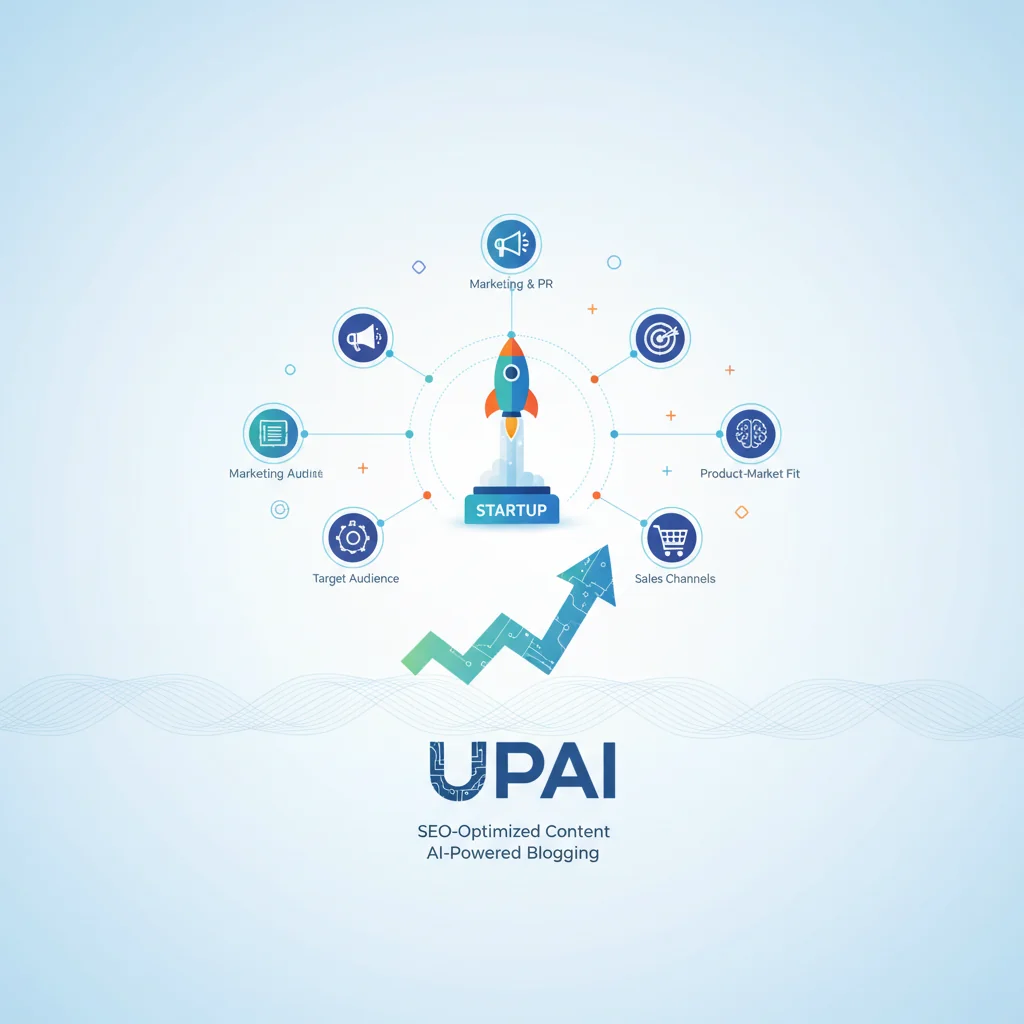
Selecting optimal channels and defining your distribution strategy is a critical fourth step in your go-to-market plan, determining how your product will physically or digitally reach your ICP and how effectively you can communicate your UVP. The right channels ensure your message is delivered where your target customers are most receptive, maximizing visibility and minimizing customer acquisition costs.
This phase involves identifying the most effective pathways to market, considering both direct and indirect approaches, and aligning these choices with your ICP's behaviors and preferences. A well-chosen channel strategy is fundamental to scalable growth.
Identifying Your Primary Channels
Channels are the conduits through which your product or service is delivered to the customer, and through which you communicate with them. Identifying the most effective channels requires a deep understanding of your ICP's habits, where they spend their time, and how they prefer to interact with businesses.
Key questions to ask:
- Where does your ICP seek information about solutions like yours?
- What platforms do they use for communication and entertainment?
- How do they prefer to purchase products or services?
- What is the cost-effectiveness and scalability of each potential channel?
- Which channels align best with your brand identity and UVP?
A multi-channel approach is often effective, but startups should prioritize a few core channels initially to focus resources and gain mastery before expanding.
Digital Channels for Startups
For most modern startups, digital channels form the backbone of their distribution and marketing strategy due to their scalability, measurability, and cost-effectiveness.
- **Search Engine Optimization (SEO):** Optimizing your website and content to rank highly in search engine results for relevant keywords. This drives organic, high-intent traffic. UPAI's SEO Checker can help analyze page performance, while SERP Preview allows you to visualize how your content appears in Google search results.
- **Search Engine Marketing (SEM) / Paid Search:** Running targeted ad campaigns on platforms like Google Ads to appear at the top of search results. Offers immediate visibility and precise targeting.
- **Social Media Marketing:** Engaging with your ICP on platforms like LinkedIn, Facebook, Instagram, X (formerly Twitter), or TikTok, through organic content, paid ads, and community building.
- **Content Marketing:** Creating valuable, relevant, and consistent content (blog posts, videos, podcasts, whitepapers) to attract, engage, and retain a clearly defined audience. This is where UPAI excels, helping you produce SEO-optimized content efficiently.
- **Email Marketing:** Building an email list and sending targeted communications, newsletters, and promotional offers to nurture leads and retain customers.
- **Affiliate Marketing:** Partnering with other businesses or influencers to promote your product in exchange for a commission on sales.
- **Online Marketplaces/App Stores:** Listing your product on platforms like Amazon, Shopify App Store, or Apple App Store, leveraging their existing user base.
Each digital channel requires a tailored approach and continuous optimization. For content, ensuring readability with UPAI’s Readability tool and effective headline creation with the Headline Analyzer are crucial for engagement.
Traditional and Partnership Channels
While digital dominates, traditional and partnership channels still hold significant value, especially for certain industries or ICPs.
- **Direct Sales:** Building an internal sales team to engage directly with potential customers, common in B2B for complex or high-value products.
- **Channel Partners/Resellers:** Working with third-party organizations that sell your product or service, expanding your reach without direct investment in a large sales force.
- **Public Relations (PR):** Securing media coverage through press releases, media outreach, and thought leadership to build brand awareness and credibility.
- **Events and Trade Shows:** Participating in industry-specific events to network, showcase your product, and generate leads.
- **Offline Advertising:** Billboards, print ads, radio, or TV ads, though often cost-prohibitive for early-stage startups.
The choice between direct and indirect distribution, or a combination, depends on your product, market, and resources.
Aligning Channels with Your ICP
The most effective channel strategy is one that is deeply aligned with your ICP's journey and preferences. If your ICP primarily researches solutions through industry blogs, then content marketing and SEO should be a top priority. If they rely on peer recommendations, then community building and referral programs will be key.
For content marketers, ensuring that the content created for these channels is not only engaging but also discoverable is paramount. UPAI's tools help automate the creation of high-quality, SEO-optimized content, allowing startups to scale their content efforts across various digital channels without extensive manual labor. This includes generating structured data like FAQ schema using UPAI's FAQ Schema tool, which can enhance visibility in search results.
Step 5: Develop Your Sales and Marketing Strategy (The GTM Motion)
Developing your sales and marketing strategy, often referred to as the "GTM motion," is the fifth critical step, detailing how your startup will actively attract, engage, convert, and retain customers using a coordinated approach. This involves defining your sales model, outlining your marketing funnel, and integrating these efforts to create a seamless customer journey from initial awareness to loyal advocacy.
This phase translates your ICP, UVP, PMF, and channel choices into actionable plans for generating demand and closing deals, ultimately driving revenue and growth for your startup. It's where the rubber meets the road in terms of customer interaction.
Building Your Sales Model
Your sales model dictates how your product will be sold and who will be responsible for the sales process. The choice depends heavily on your product's complexity, price point, and your ICP's buying habits.
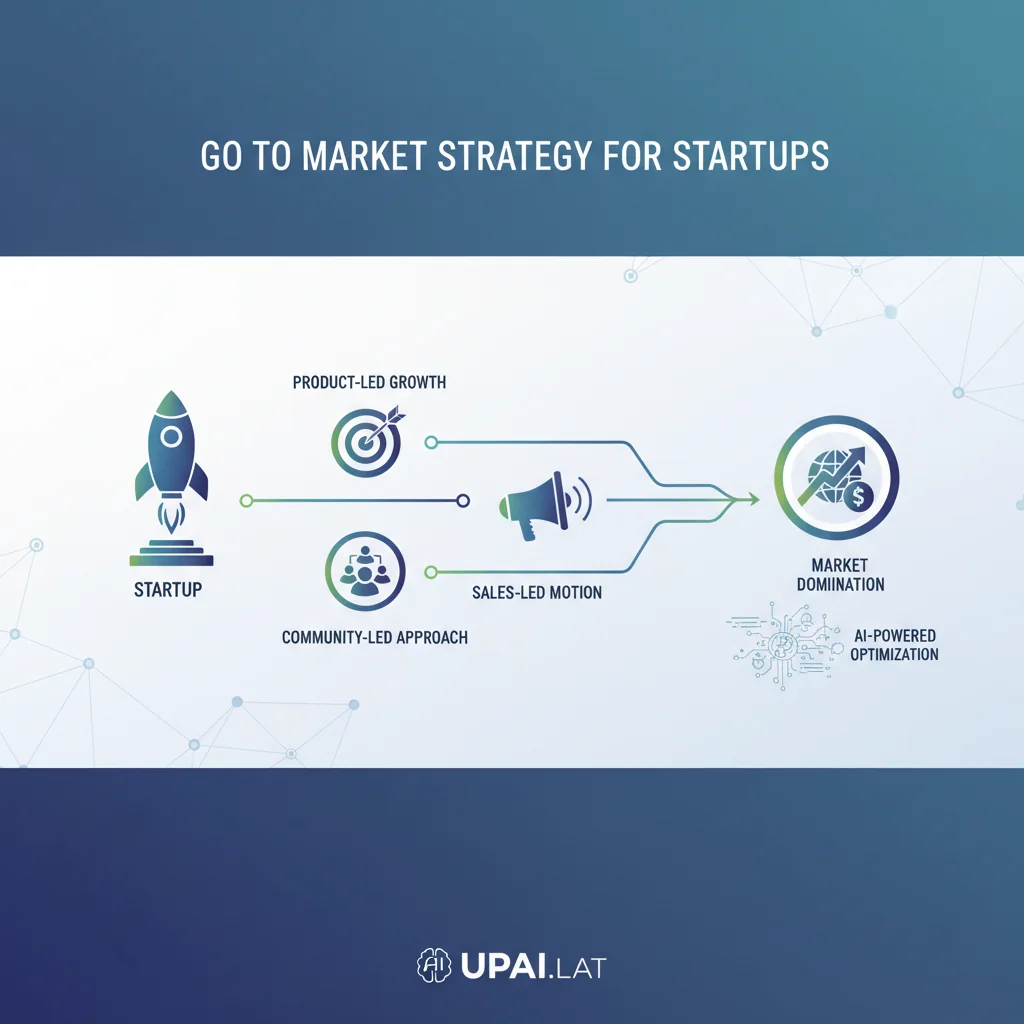
- **Self-Serve (Product-Led Growth):** Customers discover, try, and purchase the product entirely on their own, often through a freemium model or free trial. This is common for SaaS products with intuitive interfaces and lower price points. Marketing focuses on driving users to the product, and the product itself acts as the primary sales tool.
- **Inside Sales:** A sales team sells remotely via phone, email, and video conferencing. Effective for moderately complex products with medium price points, or for qualifying leads before passing them to field sales.
- **Field Sales:** A sales team meets with prospects in person. Typically used for high-value, complex enterprise solutions where extensive consultation and relationship building are required.
- **Channel Sales/Partnerships:** Leveraging third-party partners (resellers, distributors, system integrators) to sell your product. This extends your reach without building a large internal sales force.
Many startups begin with a self-serve or inside sales model and scale up as their product and market mature. The key is to align your sales motion with how your ICP prefers to buy.
Crafting Your Marketing Strategy
Your marketing strategy encompasses all activities designed to create awareness, generate interest, and nurture leads through the buying journey. It's about communicating your UVP effectively across chosen channels.
A typical marketing funnel includes:
- **Awareness:** Activities aimed at making your ICP aware of your product and the problem it solves. This includes content marketing (blog posts, social media), PR, SEO, and paid advertising.
- **Consideration:** Engaging prospects who are aware of your product and are evaluating solutions. This involves providing detailed information (whitepapers, webinars, case studies), product demos, and comparative content.
- **Conversion:** Encouraging prospects to make a purchase. This includes clear calls-to-action, free trials, special offers, and personalized sales outreach.
- **Retention/Advocacy:** Keeping existing customers happy and turning them into advocates. This involves customer support, onboarding, success programs, and encouraging reviews/referrals.
Each stage requires specific content and channel tactics. For example, awareness content might be broad and educational, while conversion content is highly specific and solution-oriented. UPAI helps automate the creation of diverse content types to support every stage of this funnel.
The Role of Content Marketing and SEO
Content marketing and SEO are foundational pillars of a modern GTM motion, particularly for startups looking for sustainable, cost-effective growth. By creating high-quality, relevant, and SEO-optimized content, startups can attract their ICP organically, establish authority, and nurture leads over time.
How content and SEO drive GTM success:
- **Organic Traffic Generation:** High-ranking content on search engines like Google brings in qualified leads actively searching for solutions.
- **Thought Leadership:** Consistently publishing valuable content positions your startup as an expert in your niche, building trust and credibility.
- **Lead Nurturing:** Content like whitepapers, case studies, and email sequences educates prospects and moves them through the sales funnel.
- **Cost-Effectiveness:** Once ranked, organic content continues to generate traffic and leads without ongoing ad spend, offering a high ROI over time.
- **Brand Building:** A strong content presence reinforces your UVP and brand identity.
This is where UPAI truly shines. UPAI (upai.lat) automates the creation of SEO-optimized blog content, enabling startups to:
- **Scale Content Production:** Generate large volumes of high-quality articles quickly, covering a wide range of keywords relevant to your ICP.
- **Ensure SEO Best Practices:** Automatically incorporate optimal keyword density (which you can check with the Keyword Density tool), readability (check with Readability), and semantic structure for higher search rankings.
- **Focus on Strategy:** Free up marketing teams to focus on content strategy, promotion, and analysis rather than the laborious writing process.
- **Improve SERP Visibility:** Leverage tools like SERP Preview to see how your titles and descriptions will appear, and FAQ Schema to enhance rich snippet potential.
By integrating AI-powered content automation, startups can achieve a powerful GTM motion that drives both immediate and long-term organic growth.
Step 6: Execute Your Launch Strategy
Executing your launch strategy is the sixth pivotal step in your go-to-market plan, representing the culmination of all prior planning as you officially introduce your product or service to your target market. A well-orchestrated launch generates initial buzz, acquires early adopters, and provides critical validation for your GTM assumptions, setting the stage for broader market penetration.
This phase involves careful coordination across product, marketing, sales, and support teams to ensure a smooth rollout and a compelling first impression. It's about making a splash and converting initial interest into tangible results.
Phased Launch Approach
For many startups, a phased launch approach is more effective and less risky than a single, large-scale event. This allows for testing, feedback, and adjustments before a full public release.
- **Alpha Launch:** An internal or highly private test with a very small group of trusted users (often friends, family, or close advisors). Focuses on identifying major bugs and usability issues.
- **Beta Launch:** A controlled public or semi-private launch to a larger group of early adopters (e.g., 100-1000 users). The goal is to gather extensive feedback on features, performance, and overall user experience, often with an NDA. This phase is crucial for validating PMF with a real user base.
- **Controlled Rollout / Soft Launch:** Releasing the product to a specific geographic region, a particular segment of your ICP, or through a limited channel. This allows you to test your GTM motion on a smaller scale, refine messaging, and optimize sales processes before a wider release.
- **General Availability (GA) / Full Public Launch:** The product is officially available to the entire target market. This is often accompanied by significant marketing and PR efforts to maximize exposure.
Each phase provides an opportunity to collect data, learn, and iterate, minimizing the risk of a catastrophic full launch.
Pre-Launch Activities
Success on launch day is built on extensive preparation. Key pre-launch activities include:
- **Final Product Testing:** Thorough QA to ensure the product is stable, functional, and bug-free.
- **Marketing Asset Creation:** Developing all necessary marketing materials: website content, landing pages, ad creatives, press releases, social media kits, email sequences, and sales collateral. Ensure all content is SEO-optimized using tools like UPAI for maximum organic reach.
- **Sales Team Training:** If applicable, training your sales team on product features, benefits, common objections, and sales scripts.
- **Customer Support Setup:** Establishing support channels (email, chat, phone), creating FAQs, and training support staff.
- **Legal and Compliance Review:** Ensuring all legal requirements (privacy policies, terms of service) are met.
- **Partnership Activation:** Coordinating with any channel partners or influencers for joint launch activities.
- **Building Anticipation:** Running teaser campaigns, collecting email sign-ups, and engaging with early adopters to build excitement leading up to the launch.
Every piece of content, from your landing page to your press release, should be meticulously crafted and optimized. Use UPAI's Headline Analyzer to ensure your announcements grab attention, and SEO Checker to confirm your launch pages are technically sound.
Launch Day and Post-Launch
Launch day is about execution and monitoring. All pre-planned activities are set into motion, and teams are ready to respond.
- **Execute Marketing Campaigns:** Deploy ads, send emails, publish social media posts, and issue press releases.
- **Monitor Performance:** Continuously track website traffic, conversions, sign-ups, sales, and user engagement in real-time.
- **Customer Feedback:** Actively solicit and respond to customer feedback, reviews, and support inquiries.
- **Public Relations:** Engage with media inquiries and manage public perception.
- **Team Coordination:** Maintain strong communication across all teams to address issues swiftly.
Post-launch, the focus shifts to sustained growth and iteration. Analyze initial performance against your KPIs (see Step 7), identify what worked and what didn't, and be prepared to pivot or adjust your GTM strategy. The launch is not the end, but the beginning of continuous optimization.
Step 7: Measure, Analyze, and Iterate
Measuring, analyzing, and iterating is the seventh and ongoing step of your go-to-market strategy, ensuring that your startup continuously optimizes its approach based on real-world performance data. A GTM strategy is not a static document but a living plan that must evolve with market feedback, customer behavior, and competitive shifts, making continuous improvement essential for sustained success.
This phase involves defining clear Key Performance Indicators (KPIs), setting up robust analytics, regularly reviewing performance, and implementing data-driven adjustments to maximize efficiency and accelerate growth. Without this iterative loop, even a perfectly planned launch can lose momentum.
Key Performance Indicators (KPIs) for GTM
To effectively measure the success of your GTM strategy, you must define specific, measurable, achievable, relevant, and time-bound (SMART) KPIs. These metrics provide objective insights into various aspects of your launch and ongoing market penetration.
Common GTM KPIs include:
- **Customer Acquisition Cost (CAC):** The total cost associated with acquiring a new customer, divided by the number of new customers acquired over a period. Lower CAC indicates a more efficient GTM.
- **Customer Lifetime Value (LTV):** The predicted revenue that a customer will generate throughout their relationship with your product. A high LTV relative to CAC is essential for long-term profitability. UPAI's Earn Calculator can help estimate potential monetization and LTV for content-driven models.
- **Conversion Rates:** The percentage of prospects who complete a desired action, such as signing up for a trial, making a purchase, or downloading content. Track conversion rates at various stages of your funnel.
- **Churn Rate:** The percentage of customers who stop using your product or service over a given period. High churn indicates a problem with PMF, onboarding, or ongoing value.
- **User Engagement Metrics:** Daily/monthly active users (DAU/MAU), session duration, feature adoption rates, and time spent in the product. These indicate how much value users are deriving.
- **Market Share:** The percentage of the total market that your product captures.
- **Brand Awareness:** Metrics like website traffic, social media mentions, search volume for your brand name, and media coverage.
- **Net Promoter Score (NPS):** A measure of customer loyalty and willingness to recommend your product.
- **SEO Performance:** Organic traffic, keyword rankings, and SERP visibility, which can be monitored with UPAI's SEO Checker and SERP Preview.
Regularly reviewing these KPIs against your initial goals provides a clear picture of your GTM strategy's effectiveness.
Data Analysis and Feedback Loops
Collecting data is only the first step; analyzing it to extract actionable insights is where the real value lies. Establish clear feedback loops throughout your organization.
- **Centralized Data Dashboards:** Create dashboards that provide a holistic view of your GTM performance across all channels and stages.
- **Regular Performance Reviews:** Conduct weekly or monthly meetings to review KPIs, discuss trends, and identify areas for improvement.
- **Customer Feedback Channels:** Continuously gather feedback through surveys, interviews, support tickets, and social media listening. This qualitative data provides context to your quantitative metrics.
- **A/B Testing:** Implement A/B tests for different messaging, landing page designs, pricing models, and feature sets to identify what performs best.
- **Sales and Marketing Alignment:** Ensure sales and marketing teams regularly share insights on lead quality, conversion blockers, and customer needs.
The goal is to move beyond simply observing data to understanding the "why" behind the numbers.
Continuous Optimization
Iteration is the process of making incremental improvements based on your analysis. Your GTM strategy should be agile, allowing for rapid adjustments.
- **Refine ICP and UVP:** If initial targeting or messaging isn't resonating, revisit your ICP and UVP based on new data.
- **Optimize Channels:** Double down on channels that are performing well and re-evaluate or deprioritize underperforming ones. For content channels, ensure your articles are optimized for keyword density using UPAI’s Keyword Density tool.
- **Adjust Pricing:** Test different pricing tiers or models if conversion rates are low or if you're leaving money on the table.
- **Improve Product:** Prioritize feature development based on user feedback and engagement data to enhance PMF.
- **Enhance Content Strategy:** Use analytics to identify high-performing content types and topics, and leverage AI to scale the creation of similar content. Ensure readability with UPAI’s Readability tool to maximize engagement.
By embedding a culture of continuous measurement, analysis, and iteration, your startup can adapt to market changes, outmaneuver competitors, and build a GTM strategy that drives sustainable, long-term growth.
Common Go-to-Market Mistakes for Startups
Many startups, despite their innovative products, falter during their go-to-market phase due to avoidable errors that undermine even the most promising ventures. Recognizing and actively mitigating these common mistakes is as crucial as executing the GTM strategy itself, preventing wasted resources and ensuring a clearer path to market success.
These pitfalls often stem from a lack of thorough preparation, an overreliance on assumptions, or an inability to adapt, highlighting the importance of a data-driven and agile approach to market entry.
Mistake 1: Not Defining a Clear Ideal Customer Profile (ICP)
One of the most frequent and detrimental mistakes is launching without a precise understanding of who the target customer is. Without a well-defined ICP, marketing efforts become generic, messaging is diluted, and resources are spread too thin across a broad, undifferentiated audience.
- **Consequence:** High CAC, low conversion rates, and difficulty in achieving product-market fit.
- **Solution:** Invest significant time in market research and develop detailed buyer personas before any launch activities commence. Constantly validate and refine your ICP based on early user data.
Mistake 2: Failing to Validate Product-Market Fit (PMF)
Launching a product that doesn't genuinely solve a significant problem for a specific market segment is a recipe for failure. Many startups rush to market with a product they *think* customers want, rather than one they've validated through rigorous testing and feedback.
- **Consequence:** High churn, low engagement, and ultimately, product abandonment.
- **Solution:** Prioritize MVP development and extensive beta testing. Use qualitative and quantitative feedback to iterate on the product until there's clear evidence of strong demand and customer satisfaction.
Mistake 3: Weak or Undifferentiated Value Proposition (UVP)
If your startup cannot clearly articulate why it's different and better than existing solutions, customers will struggle to see its unique value. A vague or generic UVP fails to capture attention and gives customers no compelling reason to switch from their current options.
- **Consequence:** Low conversion rates, difficulty standing out in crowded markets, and reliance on price wars.
- **Solution:** Develop a concise, benefits-driven UVP that highlights your unique advantages. Test your UVP with your ICP to ensure it resonates and differentiates effectively.
Mistake 4: Choosing the Wrong Channels or Over-Investing in Too Many
Startups often make the mistake of either using channels where their ICP isn't present or trying to be everywhere at once. Spreading resources too thinly across too many channels leads to ineffective execution and diluted impact.
- **Consequence:** Inefficient marketing spend, low reach among the target audience, and poor ROI.
- **Solution:** Research your ICP's media consumption habits and focus on 1-3 primary channels where they are most active. Master those channels before considering expansion. Use data from early campaigns to inform future channel investment.
Mistake 5: Neglecting a Comprehensive Content Strategy
In the digital age, content is king for attracting, educating, and converting customers. Many startups underestimate the power of SEO-optimized content to drive organic traffic and establish authority, relying solely on paid acquisition which can be unsustainable.
- **Consequence:** Limited organic visibility, higher CAC, and missed opportunities to build long-term relationships with prospects.
- **Solution:** Integrate content marketing and SEO into your GTM from day one. Develop a content strategy that addresses ICP pain points at every stage of the buying journey. Leverage AI-powered tools like UPAI to scale high-quality, SEO-optimized content production efficiently.
Mistake 6: Lack of Measurement and Iteration
A GTM strategy is not a "set it and forget it" plan. Failing to continuously track KPIs, analyze performance, and make data-driven adjustments means missing opportunities for optimization and allowing inefficiencies to persist.
- **Consequence:** Stagnant growth, inability to adapt to market changes, and repeated mistakes.
- **Solution:** Establish clear KPIs from the outset. Implement robust analytics and reporting. Schedule regular review meetings to analyze performance and commit to an agile, iterative approach, making continuous adjustments to your strategy.
Mistake 7: Underestimating the Importance of Customer Onboarding and Success
A successful launch is only the beginning. Many startups focus heavily on acquisition but neglect the post-purchase experience, leading to high churn rates and lost potential for referrals.
- **Consequence:** High churn, negative word-of-mouth, and reduced LTV.
- **Solution:** Design a comprehensive onboarding process that guides new users to success. Invest in customer support and success teams to ensure users derive maximum value from your product, turning them into loyal advocates.
By being aware of these common pitfalls and actively planning to avoid them, startups can significantly increase their chances of a successful and sustainable go-to-market.
Conclusion: Automate Your Blog with AI
Developing and executing a successful go-to-market strategy for a startup in 2026 requires a meticulously planned, data-driven, and agile approach that covers everything from deep market understanding to continuous iteration. By systematically progressing through the seven steps outlined – understanding your ICP, crafting a compelling UVP, achieving PMF and defining pricing, selecting optimal channels, developing integrated sales and marketing, executing a strategic launch, and committing to ongoing measurement and iteration – startups can significantly increase their chances of not just market entry, but sustainable growth and long-term success.
In today's competitive digital landscape, a critical component of an effective GTM strategy is a robust content marketing engine. For startups, where resources are often constrained, leveraging AI-powered tools offers an unparalleled advantage. Automating the creation of high-quality, SEO-optimized content allows you to establish authority, attract organic traffic, and nurture leads at scale, all while freeing up valuable time and resources.
Ready to supercharge your go-to-market content strategy and ensure your startup stands out? Automate your blog with AI. Explore UPAI's suite of tools at upai.lat to generate SEO-optimized articles, analyze your content's performance, and accelerate your path to market dominance.
Frequently Asked Questions
What is a go-to-market strategy for startups?
Why is a GTM strategy crucial for startups?
What are the key components of a startup GTM strategy?
How can startups identify their ideal target customer for a GTM strategy?
What are common GTM strategies for early-stage startups?
How should startups measure the success of their GTM strategy?
Related Articles

Startup Pvmodus: Accelerate Growth with Predictive Velocity
Discover Startup Pvmodus, the AI-driven framework for predictive growth. Learn how to leverage data and agile methods to ensure market relevance and accelerate your venture's success.

Lean Startup: Avoid Overhiring for Business Success
Discover lean business startup strategies to avoid overhiring. Learn how to conserve capital and maintain agility for long-term success. Read more!
More free AI tools from the same team
Grow your LinkedIn presence on autopilot. Try LinkedIn automation and AI content for free.
Read the Linkesy blogAsk AI about UPAI
Click your favorite assistant to learn more about us