
Startup vs Small Business: Understanding the Key Differences

A startup is fundamentally a young company designed for rapid growth and scalability through innovation, often seeking external venture capital to disrupt existing markets or create new ones, whereas a small business typically operates with the goal of generating steady profit and self-sustainability within an established market, often relying on organic growth and local customer bases without the explicit aim of exponential scale or investor exits.
This core distinction dictates everything from funding strategies and team culture to risk tolerance and long-term vision, making the choice or identification between the two critical for entrepreneurs, investors, and even content strategists aiming to reach specific audiences.
Key Takeaways
- Growth Ambition: Startups target exponential, scalable growth; small businesses aim for steady, sustainable growth.
- Funding Sources: Startups often rely on venture capital and angel investors; small businesses typically use loans, bootstrapping, or personal savings.
- Innovation Focus: Startups prioritize disruptive innovation; small businesses focus on improving existing products/services or local adaptation.
- Risk Profile: Startups operate with high risk and high potential reward; small businesses generally have moderate risk within established markets.
- Exit Strategy: Startups often plan for acquisition or IPO; small businesses focus on long-term ownership, succession, or direct sale.
- Team Culture: Startup culture is typically agile and fast-paced; small business culture often emphasizes stability and community.
Understanding the Core Distinction: Startup vs. Small Business
The fundamental difference between a startup and a small business lies in their core ambition, growth trajectory, and approach to innovation, with startups aiming for exponential growth and market disruption, while small businesses prioritize sustained profitability and often serve established local or niche markets. This distinction isn't merely semantic; it profoundly impacts every operational decision, from funding and hiring to marketing and exit strategies. Recognizing these differences is crucial for anyone embarking on an entrepreneurial journey or analyzing the business landscape.What is a Startup?
A startup is a young company founded by one or more entrepreneurs to develop a unique product or service and bring it to market, typically characterized by high uncertainty, rapid growth potential, and a strong emphasis on innovation and scalability. Startups often aim to solve a problem in a novel way, leveraging technology to achieve significant market penetration and a substantial return for investors within a relatively short timeframe. Their lifecycle is often geared towards an eventual acquisition or public offering (IPO), rather than generational ownership.Key characteristics of a startup include:
- Innovation-Driven: Startups introduce new products, services, or business models that often disrupt existing industries or create entirely new ones.
- Scalability: The business model is designed for rapid and widespread expansion, often reaching national or international markets quickly.
- High Growth Potential: Startups seek exponential growth, often aiming to capture a significant market share within a few years.
- External Funding: They typically rely on external capital from angel investors, venture capitalists, or seed funding rounds to fuel their aggressive growth.
- Risk Tolerance: Startups operate in environments of high uncertainty, with a significant risk of failure but also the potential for massive success.
- Team Structure: Often lean, agile teams with a strong emphasis on innovation, experimentation, and a dynamic, often equity-based, compensation structure.
What is a Small Business?
A small business is an independently owned and operated company that typically focuses on generating profit and providing goods or services to a local community or specific niche market, with a primary goal of self-sustainability and steady, organic growth rather than exponential expansion. These businesses often provide essential services or products, such as a local bakery, a consulting firm, a retail store, or a plumbing service, and are integral to the economic fabric of communities. Their growth is usually financed through retained earnings, business loans, or personal investment.Distinguishing features of a small business include:
- Self-Sustaining: Small businesses prioritize profitability and cash flow to remain operational and independent.
- Organic Growth: Growth is typically steady and incremental, often financed through internal resources or traditional bank loans.
- Local/Niche Focus: Many small businesses serve a specific geographic area or a specialized market segment.
- Established Market: They often operate within existing markets, competing through quality service, personalized attention, or competitive pricing.
- Owner-Operated: The owner is usually deeply involved in daily operations and decision-making.
- Stability and Legacy: The long-term vision often involves building a stable enterprise, potentially passing it down through generations, or selling it to another individual.
Funding and Investment Strategies
The choice of funding sources and investment strategies is one of the most significant differentiators between startups and small businesses, directly reflecting their growth ambitions and risk profiles. Startups predominantly seek external venture capital for rapid scale, while small businesses typically rely on self-funding, traditional loans, or organic reinvestment to ensure stability and controlled expansion. Understanding these distinct approaches is vital for securing the right capital for your specific business model.Startup Funding: Fueling Exponential Growth
Startup funding is primarily characterized by its reliance on external equity investments from angel investors, venture capital firms, and seed funds, with the expectation of a significant return upon a successful exit event like an acquisition or IPO. These investors provide capital in exchange for equity, betting on the startup's potential for hyper-growth and market disruption. The funding journey often involves multiple rounds, each designed to fuel specific growth milestones.Common startup funding stages include:
- Bootstrapping: Initial self-funding by founders, often using personal savings or revenue generated from early sales.
- Friends & Family: Early capital from personal networks, typically small amounts.
- Angel Investors: High-net-worth individuals who provide seed capital in exchange for equity, often also offering mentorship.
- Seed Funding: The first significant institutional investment, used to validate the product-market fit and build an initial team.
- Venture Capital (Series A, B, C, etc.): Larger investments from VC firms to scale operations, expand market reach, and further develop the product. Each series represents a new stage of growth and a higher valuation.
- Crowdfunding: Raising small amounts of capital from a large number of individuals, often through online platforms.
The pursuit of venture capital requires a compelling pitch, a robust business plan, and a clear path to scalability, as investors seek high-risk, high-reward opportunities. For startups, effective content marketing is crucial to articulate their vision and attract both customers and investors. Optimizing your content for search engines using tools like UPAI's SEO Checker ensures your message reaches the right audience, enhancing visibility for potential stakeholders.
Small Business Funding: Sustainable Capital
Small business funding primarily focuses on securing capital that supports steady operations, organic growth, and long-term stability, typically through debt financing, self-funding, or local investment, rather than surrendering equity for exponential growth. The emphasis is on maintaining ownership and control, utilizing financing methods that align with a more predictable and often slower growth trajectory. These businesses prioritize managing cash flow and minimizing debt to sustain operations.Typical funding sources for small businesses include:
- Bootstrapping: The most common method, where the owner uses personal savings or reinvests profits back into the business.
- Small Business Loans: Traditional bank loans, often backed by government programs like the SBA in the US, providing capital for equipment, working capital, or expansion.
- Lines of Credit: Flexible funding options allowing businesses to draw and repay funds as needed.
- Personal Loans/Credit Cards: Often used for initial capital or bridging short-term cash flow gaps, though generally riskier.
- Friends & Family: Similar to startups, but often with less formal terms and lower expectations of exponential returns.
- Grants: Specific grants may be available for certain types of small businesses or those in particular industries/locations.
Small businesses value control and often shy away from equity investments that dilute ownership. Their funding strategies are designed to support a predictable business model and ensure long-term viability. Content for small businesses often emphasizes local SEO and community engagement, making tools like UPAI's SERP Preview invaluable for ensuring their online presence is optimized for local search results and clear to potential customers.
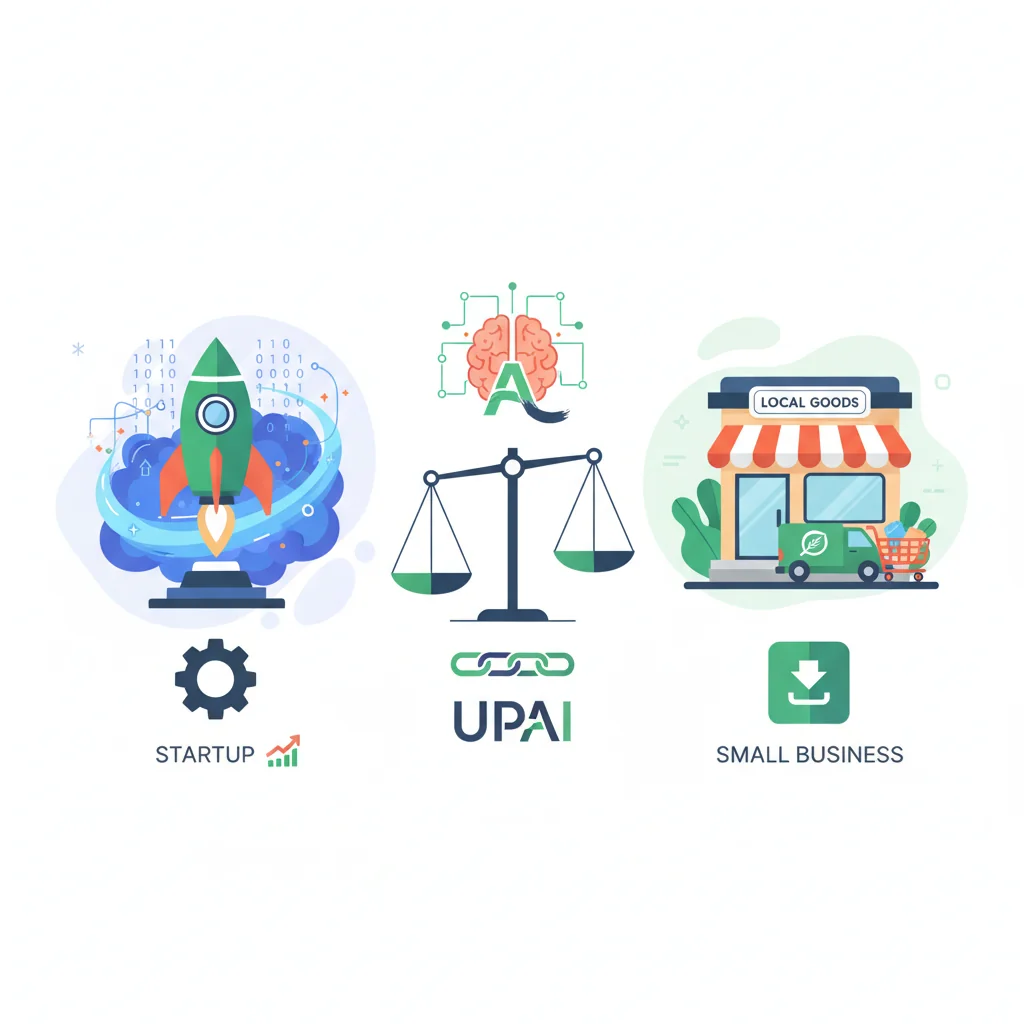
Growth Trajectories and Scalability
The intended growth trajectory and inherent scalability of a business model represent a primary distinguishing factor between startups and small businesses, with startups engineered for rapid, often exponential expansion into vast markets, while small businesses typically pursue steady, organic growth within established or niche segments. This fundamental difference influences everything from operational planning and technological choices to hiring practices and marketing efforts. Understanding these divergent paths helps entrepreneurs align their vision with appropriate strategies.Startup Growth: Hyper-Scaling for Market Dominance
Startup growth is characterized by an aggressive pursuit of rapid and exponential expansion, often aiming for market dominance or significant disruption within a short timeframe, fueled by innovation and substantial external investment. The goal is to scale quickly, acquire a large user base, and achieve significant market share, often at the expense of early profitability. This requires a business model that can be replicated and expanded without a proportional increase in costs, leveraging technology and automation.Key aspects of startup scalability and growth include:
- Technological Leverage: Startups often build scalable technology platforms (e.g., SaaS, mobile apps) that can serve millions of users with minimal additional cost per user.
- Aggressive Market Entry: Strategies focus on quickly capturing market share, sometimes employing "blitzscaling" tactics to outpace competitors.
- Global Ambition: Many startups are designed with international expansion in mind from day one, seeking to address a global problem or market.
- Iterative Development: Products and services are often launched as Minimum Viable Products (MVPs) and refined quickly based on user feedback to accelerate market fit.
- Data-Driven Decisions: Growth is meticulously tracked through metrics like user acquisition cost (CAC), lifetime value (LTV), and churn rate to optimize scaling efforts.
- Automation and Efficiency: High reliance on automated processes and efficient systems to handle increased demand without linearly increasing human resources.
For startups, content plays a crucial role in educating the market, attracting early adopters, and establishing thought leadership. Leveraging AI-powered tools like UPAI for automated blog creation and SEO optimization can significantly accelerate content production and ensure it's effective for rapid audience acquisition. Checking your content's quality with UPAI's Readability tool ensures your complex ideas are accessible to a broad audience, fostering faster adoption.
Small Business Growth: Steady Expansion and Stability
Small business growth prioritizes steady, organic, and sustainable expansion, often within a defined local or niche market, focusing on profitability and stability rather than exponential scale. This approach typically involves incremental improvements, deepening customer relationships, and controlled expansion that can be financed through existing cash flow or traditional debt. The owner often seeks to build a lasting enterprise that can support their lifestyle and potentially be passed down or sold for a reasonable return.Characteristics of small business growth and scalability include:
- Organic Expansion: Growth is typically driven by word-of-mouth, repeat customers, and local marketing efforts.
- Profit-Centric: New investments or expansions are usually undertaken with a clear path to profitability and return on investment.
- Customer Retention: A strong emphasis on building loyal customer bases through excellent service and personalized experiences.
- Controlled Risk: Expansion is often cautious, avoiding overextension and maintaining healthy financial reserves.
- Local/Niche Dominance: The goal might be to become the leading provider in a specific geographic area or a highly specialized market segment.
- Operational Efficiency: Focus on optimizing existing processes to improve margins and customer satisfaction, rather than fundamentally redesigning for massive scale.
While small businesses may not target hyper-growth, effective content marketing is still essential for attracting and retaining customers. Creating valuable, localized content can significantly boost visibility and trust. Tools like UPAI's Headline Analyzer can help small business owners craft compelling titles that capture local interest and drive engagement, ensuring their blog posts stand out in search results.
Innovation and Disruption
The role of innovation and the intention to disrupt are central to differentiating startups from small businesses, with startups inherently focused on pioneering new solutions to challenge existing paradigms, while small businesses primarily leverage innovation to enhance current offerings or improve operational efficiencies within established frameworks. This distinction shapes their product development cycles, market strategies, and competitive positioning. Understanding their unique approaches to innovation clarifies their distinct market impacts.Startup Innovation: Pioneering New Frontiers
Startup innovation is characterized by its pursuit of disruptive technologies, novel business models, or entirely new markets, aiming to fundamentally change how consumers or industries operate. Startups are often founded on a breakthrough idea that addresses an unmet need or offers a significantly superior solution to an existing problem, often leveraging cutting-edge technology. Their innovation is not incremental but transformative, seeking to create new value propositions that can rapidly reshape industries.Key aspects of startup innovation include:
- Radical Solutions: Developing products or services that are fundamentally different from what currently exists, often making existing solutions obsolete.
- Technology-Driven: Heavy reliance on new technologies (e.g., AI, blockchain, biotechnology) to enable their unique offerings and achieve scalability.
- Market Creation: Often creating entirely new market categories or expanding existing ones dramatically.
- Experimentation & Iteration: A culture of rapid prototyping, testing, and pivoting based on market feedback to find product-market fit.
- Intellectual Property: A strong focus on developing and protecting proprietary technology or unique processes.
- Solution-Oriented: Identifying significant problems and designing innovative solutions that offer substantial improvements in efficiency, cost, or user experience.
For startups, communicating their innovative vision is paramount to attracting early adopters, talent, and investors. Detailed blog posts and thought leadership content are essential for explaining complex technologies and market disruptions. Utilizing UPAI's platform to generate high-quality, SEO-optimized content can help startups quickly establish authority and explain their groundbreaking innovations to a global audience, ensuring their message is clear and impactful.
Small Business Innovation: Enhancing and Adapting
Small business innovation typically involves improving existing products, services, or operational processes, or adapting established business models to better serve specific local or niche customer needs, rather than outright market disruption. Their innovation is often incremental, focusing on enhancing customer experience, increasing efficiency, or finding unique ways to deliver value within an established market. This approach ensures sustained relevance and competitiveness without the high-risk gamble of radical invention.Examples of small business innovation include:
- Process Optimization: Implementing new software for inventory management, streamlining customer service, or adopting more efficient production methods.
- Product Customization: Offering personalized versions of standard products or services to cater to specific customer preferences.
- Service Enhancement: Improving delivery speed, offering extended hours, or providing unique in-store experiences.
- Local Adaptation: Tailoring products, services, or marketing messages to resonate specifically with a local community's culture or needs.
- Digital Transformation: Adopting e-commerce platforms, social media marketing, or online booking systems to reach customers more effectively.
- Niche Specialization: Becoming experts in a very specific segment of an existing market, offering unparalleled knowledge and service.
Small businesses benefit immensely from content that showcases their expertise, unique selling propositions, and commitment to customer satisfaction. Blog posts detailing new service offerings, customer success stories, or local community involvement can build trust and loyalty. Generating FAQ Schema with UPAI for common customer questions can significantly improve a small business's search visibility, helping them attract customers looking for specific solutions in their area.
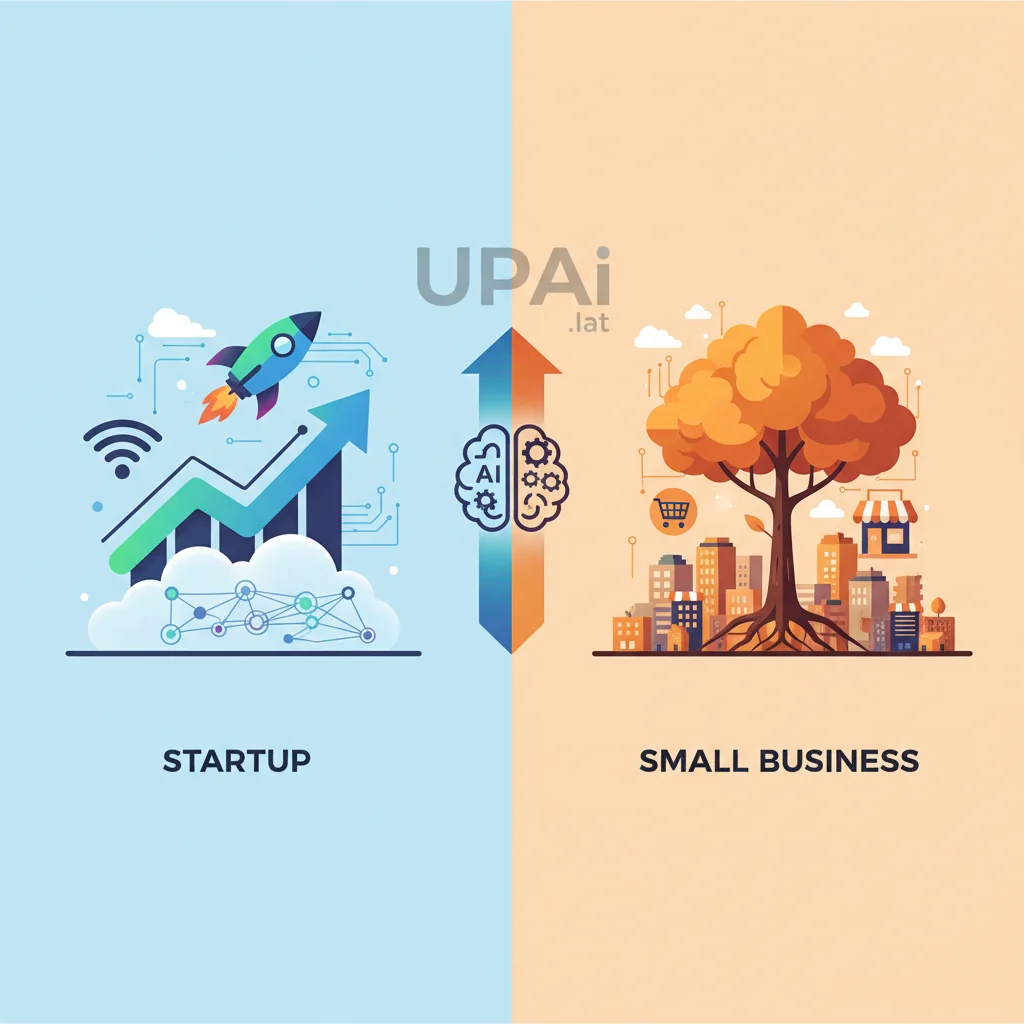
Team Structure and Culture
The distinct team structures and organizational cultures found in startups versus small businesses directly reflect their differing objectives, growth models, and risk profiles, with startups fostering agile, fast-paced, and often equity-driven environments, while small businesses prioritize stability, community, and established roles. These cultural and structural differences profoundly impact employee attraction, retention, and overall operational dynamics. Recognizing these nuances helps potential employees and partners align with the right organizational fit.Startup Culture: Agile, Dynamic, Equity-Driven
Startup culture is typically characterized by its agility, fast-paced environment, flat hierarchies, and a strong emphasis on innovation and problem-solving, often driven by a shared vision and the potential for significant equity-based rewards. Teams are usually small, cross-functional, and highly collaborative, adapting quickly to market changes and iterating rapidly on products and strategies. This culture thrives on ambition, risk-taking, and a collective belief in the company's disruptive potential.Defining elements of startup culture include:
- Flat Hierarchy: Minimal layers of management, encouraging direct communication and individual responsibility.
- Agility and Adaptability: Teams are designed to pivot quickly, embrace change, and learn from failures.
- High Autonomy and Ownership: Employees often have significant responsibility and ownership over their projects, fostering a sense of entrepreneurship.
- Equity Compensation: Stock options or shares are common, aligning employee incentives with the company's long-term success and potential exit.
- Innovation Focus: A continuous drive to experiment, develop new solutions, and challenge the status quo.
- Fast-Paced Environment: Intense work schedules and rapid decision-making are common, fueled by ambitious growth targets.
- Strong Vision: A compelling mission that unites the team and motivates them through periods of high uncertainty.
Attracting top talent to a startup often involves showcasing the exciting challenges and growth opportunities, which can be effectively communicated through a vibrant blog and career pages. Regularly publishing content that highlights team achievements, company values, and technological advancements, optimized for search engines using UPAI, helps build a strong employer brand. Analyzing your content's Keyword Density ensures you're effectively targeting terms that attract both customers and future employees.
Small Business Culture: Stability, Community, Expertise
Small business culture typically emphasizes stability, a strong sense of community, and the value of deep expertise, often characterized by more traditional hierarchies, a focus on customer relationships, and a family-like atmosphere. Employees often wear multiple hats and contribute directly to the business's daily operations and local reputation, valuing job security and a predictable work environment. The culture fosters loyalty and a personal connection to the business's mission and its customers.Hallmarks of small business culture include:
- Community Focus: A strong emphasis on local connections, customer relationships, and contributing to the community.
- Stability and Security: Employees often seek long-term employment and a predictable work environment.
- Personalized Relationships: Close-knit teams and direct interaction with owners and customers are common.
- Deep Expertise: Valuing specialized skills and experience relevant to the specific products or services offered.
- Clear Roles and Responsibilities: More defined job descriptions and traditional reporting structures.
- Work-Life Balance: Often a higher priority than in high-growth startup environments, though this can vary.
- Customer-Centricity: A profound dedication to excellent customer service and building lasting relationships.
For small businesses, content marketing is an opportunity to highlight their unique customer service, community involvement, and specialized knowledge. Blog posts can feature employee spotlights, customer testimonials, and local events, building a strong sense of trust and connection. Ensuring this content is well-written and engaging can be supported by UPAI's writing tools, helping small businesses effectively communicate their values and attract loyal customers.
Risk Tolerance and Failure Rates
The inherent risk tolerance and corresponding failure rates significantly differentiate startups from small businesses, with startups embracing high levels of risk for potentially exponential returns and consequently facing higher rates of early failure, while small businesses typically operate with more measured risk within established markets, aiming for sustained profitability. This fundamental divergence dictates strategic planning, financial resilience, and the psychological demands on entrepreneurs. Understanding these risk profiles is critical for setting realistic expectations and preparing for challenges.Startup Risk: High Stakes, High Reward
Startup risk is characterized by an extremely high tolerance for uncertainty and potential failure in pursuit of groundbreaking innovation and massive market disruption, leading to a significantly higher likelihood of not achieving long-term viability compared to traditional small businesses. The nature of startups—developing unproven products, entering untested markets, and relying on external funding with high expectations—inherently amplifies risk. Founders often face the "pivot or perish" dilemma, constantly adapting their strategy.Factors contributing to high startup risk and failure rates include:
- Product-Market Fit: The challenge of developing a product or service that truly meets market demand, often leading to early failure if not achieved.
- Funding Dependency: Reliance on external funding rounds means a constant need to prove traction and secure subsequent investments, with failure to do so often leading to collapse.
- Aggressive Competition: Competing against well-funded rivals or established incumbents with greater resources.
- Operational Scalability: The difficulty of scaling infrastructure, teams, and processes rapidly while maintaining quality.
- Team Dynamics: Founder disputes, lack of essential skills, or cultural clashes within the core team.
- Burn Rate: Rapid expenditure of capital before achieving profitability or securing the next funding round.
Despite the high risk, the potential for substantial returns drives startup founders and investors. Effective communication, including through well-crafted content, is crucial for mitigating some of these risks by clearly articulating value, attracting talent, and engaging customers. Using UPAI's platform to generate and optimize blog content can help startups rapidly test market messaging and build brand awareness, which are vital for attracting investment and reducing early market risk.
Small Business Risk: Measured and Mitigated
Small business risk generally involves a more measured and mitigated approach within established markets, focusing on sustained profitability and stability, which results in a lower, though still significant, failure rate compared to high-growth startups. These businesses often enter markets with proven demand, rely on established operational models, and finance growth through more conservative means, thereby reducing the extreme uncertainties inherent in disruptive innovation. The risks are often related to market fluctuations, local competition, or operational inefficiencies.Common risks for small businesses and their mitigation strategies include:
- Market Demand Fluctuations: Adapting to changes in local customer preferences or economic conditions. Mitigation: Diversifying offerings, strong customer relationships.
- Local Competition: Competing effectively with other local businesses or larger chains. Mitigation: Niche specialization, superior customer service, local marketing.
- Cash Flow Management: Ensuring sufficient funds for daily operations, inventory, and payroll. Mitigation: Careful budgeting, managing receivables, lines of credit.
- Operational Inefficiencies: Suboptimal processes leading to higher costs or reduced quality. Mitigation: Continuous process improvement, staff training.
- Regulatory Compliance: Adhering to local, state, and national regulations. Mitigation: Staying informed, seeking expert advice.
- Owner Burnout: The demanding nature of running a small business. Mitigation: Delegation, work-life balance, building a strong support team.
For small businesses, consistent and informative content can build trust and establish expertise, helping to mitigate market risks by attracting a loyal customer base. Blog posts that address common customer problems, offer helpful tips, or highlight community involvement can strengthen brand reputation. Utilizing UPAI to generate SEO-optimized content ensures that this valuable information reaches local customers and reinforces the business's stability and reliability.
Legal Structures and Regulatory Considerations
The choice of legal structure and the associated regulatory considerations are fundamentally different for startups versus small businesses, largely driven by their distinct funding models, growth ambitions, and ownership structures. Startups often opt for structures like C-Corporations to facilitate external investment and future IPOs, while small businesses frequently choose LLCs, S-Corporations, or sole proprietorships for simplicity, tax benefits, and owner control. Understanding these differences is paramount for legal compliance, financial planning, and safeguarding personal assets.Legal Structures for Startups
Startups frequently choose legal structures that facilitate external equity investment, accommodate multiple founders with varying equity stakes, and prepare for potential acquisition or public offering, with the C-Corporation being the most common choice. This structure allows for an unlimited number of shareholders and different classes of stock, making it attractive to venture capitalists and angel investors. The complexity of these structures often requires specialized legal advice from the outset.Common legal structures for startups:
- C-Corporation (C-Corp): The preferred structure for startups seeking venture capital because it allows for unlimited shareholders, various share classes, and is designed for an eventual IPO. It provides liability protection for owners but is subject to "double taxation" (corporate profits taxed, then dividends taxed).
- Delaware C-Corp: Many startups, regardless of their physical location, incorporate in Delaware due to its well-established corporate laws, sophisticated court system for business disputes, and flexibility for founders and investors.
- Benefit Corporation (B-Corp): A C-Corp or S-Corp variant that balances profit with public benefit. While not a tax status, it legally protects a company's social mission alongside shareholder profit.
The legal framework for a startup must support rapid scaling and complex financial transactions. Content marketing can help clarify these complexities for founders and potential investors. UPAI's platform can assist in generating informative articles that explain legal nuances, potentially leveraging tools to ensure clarity and accuracy in communication. For instance, explaining the benefits of a C-Corp in an SEO-optimized blog post helps educate the entrepreneurial community.
Legal Structures for Small Businesses
Small businesses typically opt for legal structures that offer simplicity, tax advantages, and direct owner control, such as sole proprietorships, partnerships, LLCs, or S-Corporations, as these structures align with their goals of self-sustainability and organic growth. The choice often depends on the number of owners, desired liability protection, and specific tax implications, with a focus on minimizing administrative burden and maximizing owner benefit. These structures are generally less complex and more straightforward to establish and manage.Common legal structures for small businesses:
- Sole Proprietorship: The simplest and least expensive structure for a single owner. No legal distinction between the owner and the business, meaning personal assets are not protected from business liabilities.
- Partnership: Similar to a sole proprietorship but for two or more owners. General partnerships also offer no personal liability protection, while Limited Partnerships (LPs) and Limited Liability Partnerships (LLPs) offer some protection.
- Limited Liability Company (LLC): A popular choice offering personal liability protection for owners (like a corporation) while allowing for pass-through taxation (like a sole proprietorship or partnership), avoiding double taxation. It offers flexibility in management and ownership.
- S-Corporation (S-Corp): A corporate structure that avoids double taxation by passing income, losses, deductions, and credits through to shareholders' personal incomes. It still provides liability protection but has stricter requirements than an LLC regarding the number and type of shareholders.
For small businesses, selecting the right legal structure is a foundational decision that impacts long-term operations and personal finances. Creating educational content that demystifies these options can be highly valuable for their target audience of aspiring entrepreneurs. UPAI can help small businesses produce clear, concise blog posts explaining these legal differences, optimizing them for local search queries and ensuring they are easy to understand using the Readability tool.
Marketing and Customer Acquisition Strategies
The marketing and customer acquisition strategies employed by startups and small businesses diverge significantly, reflecting their distinct growth objectives and target audiences, with startups often relying on digital, viral, and growth-hacking tactics for rapid, scalable user acquisition, while small businesses typically focus on local, community-based, and relationship-driven approaches. These differences shape their communication channels, budget allocation, and the metrics they prioritize for success. Understanding these strategies is crucial for effective audience engagement and business development.Startup Marketing: Growth Hacking and Digital Dominance
Startup marketing is characterized by its aggressive, data-driven, and often experimental approach, heavily leveraging digital channels, viral loops, and growth hacking techniques to achieve rapid and scalable customer acquisition. The focus is on reaching a wide audience quickly, iterating on marketing messages, and optimizing conversion funnels, often with substantial investment in online advertising, content marketing, and PR to establish market presence and thought leadership. The goal is to acquire users and customers at scale, sometimes even at a loss initially, to secure market share.Key startup marketing strategies include:
- Digital Advertising: Extensive use of paid channels like Google Ads, social media ads (Facebook, Instagram, LinkedIn), and display networks to target specific demographics and interests.
- Content Marketing: Creating valuable, SEO-optimized content (blogs, whitepapers, case studies) to attract organic traffic, establish authority, and nurture leads. UPAI's automated blog creation excels here.
- Growth Hacking: Employing creative, low-cost, and unconventional marketing tactics to achieve rapid growth, often involving product-led growth and viral loops.
- Social Media Engagement: Building a strong presence on relevant platforms to engage with users, build community, and drive brand awareness.
- Public Relations (PR): Securing media coverage and thought leadership opportunities to gain credibility and reach a broader audience.
- SEO Optimization: Rigorous optimization of websites and content for search engines to rank highly for relevant keywords and drive organic traffic. This is where UPAI's SEO Checker and Keyword Density tools become indispensable.
For startups, efficient and scalable content production is critical for establishing market presence and educating potential users. UPAI's AI-powered blog creation platform is designed to meet this need, allowing startups to rapidly generate high-quality, SEO-optimized content that drives traffic and supports aggressive growth goals. Analyzing SERP Preview for their content helps startups ensure their listings are compelling and stand out in competitive search results.
Small Business Marketing: Local Focus and Relationship Building
Small business marketing prioritizes building strong relationships within a local community or niche market, relying heavily on word-of-mouth, local SEO, and personalized customer service to attract and retain clients. Their strategies are often more traditional or hyper-focused, emphasizing community involvement, direct engagement, and establishing trust, rather than large-scale digital campaigns. The goal is to cultivate a loyal customer base and grow steadily through reputation and personalized service.Key small business marketing strategies include:
- Local SEO: Optimizing Google My Business profiles, local directories, and website content to rank for "near me" searches and attract local customers.
- Word-of-Mouth Referrals: Encouraging satisfied customers to recommend the business, often through excellent service and community engagement.
- Community Involvement: Sponsoring local events, participating in local charities, and building connections within the community.
- Print Advertising: Utilizing local newspapers, flyers, or direct mail campaigns for targeted reach.
- Social Media (Local): Engaging with local followers, promoting local events, and showcasing community-focused content.
- Email Marketing: Building a local email list to share promotions, updates, and build direct relationships.
- Personalized Customer Service: Providing exceptional, individualized service that encourages repeat business and positive reviews.
For small businesses, content marketing that speaks directly to local needs and interests is highly effective. Blog posts can highlight local events, customer testimonials, or expert advice relevant to the community. UPAI can assist small businesses in creating targeted, engaging content, and tools like the Headline Analyzer ensure their blog titles are captivating, drawing in local readers and building a loyal following.
Exit Strategies and Long-Term Vision
The long-term vision and intended exit strategies represent a fundamental divergence between startups and small businesses, with startups typically aiming for a high-value acquisition or Initial Public Offering (IPO) within a few years to provide a return for investors, while small businesses often focus on sustained ownership, succession planning, or a direct sale to an individual for a stable retirement or legacy. These differing end goals shape every decision made from inception, including funding, structure, and operational focus. Understanding these distinct visions is crucial for entrepreneurs to align their business model with their personal and financial objectives.Startup Exit Strategies: The Grand Finale
Startup exit strategies are primarily geared towards providing a significant return on investment for venture capitalists and angel investors, typically through an acquisition by a larger company or an Initial Public Offering (IPO), rather than long-term independent ownership. The entire operational lifecycle of a startup is often designed with one of these exit events in mind, dictating decisions around growth, market share, intellectual property, and financial metrics. The goal is to maximize the company's valuation for an eventual payout.Common startup exit strategies include:
- Acquisition: The most common exit, where a larger company purchases the startup. This can be for technology, talent (acqui-hire), market share, or a strategic fit.
- Initial Public Offering (IPO): Listing the company's shares on a stock exchange, allowing the public to invest. This is typically reserved for very large, successful startups with significant revenue and market presence.
- Merger: Combining with another company, often of similar size, to achieve greater market power or operational synergies.
- Secondary Sale: Early investors or founders sell their shares to other private investors before an IPO or acquisition.
- Liquidation: If the startup fails to achieve its goals, assets are sold off to pay creditors, and the company ceases operations.
For startups, articulating a clear exit strategy is paramount for attracting investors. Content marketing plays a critical role in building the brand, showcasing growth, and demonstrating market potential, all of which contribute to a higher valuation. UPAI's tools for SEO-optimized content generation help startups build a strong online presence that supports their growth narrative and ultimately their exit goals. The Earn Calculator, while typically for blog monetization, can offer a conceptual framework for understanding potential value generation, albeit on a different scale.
Small Business Exit Strategies: Succession and Legacy
Small business exit strategies are often focused on ensuring the continuity of the business, providing for the owner's retirement, or passing on a legacy, typically through internal succession, a direct sale to an individual, or sometimes a strategic sale to a competitor, rather than a large-scale public offering. The long-term vision is usually centered on sustained profitability and community value, with the exit designed to be a smooth transition that preserves the business's integrity and supports the owner's financial future.Common small business exit strategies include:
- Internal Succession: Passing the business down to family members, employees, or a trusted manager. This is often planned years in advance.
- Sale to a Third Party: Selling the business to another individual or a small group of investors. This can be a strategic sale to a competitor or a sale to someone looking to acquire an established operation.
- Employee Stock Ownership Plan (ESOP): Selling the business to its employees, often providing tax benefits and fostering employee loyalty.
- Gradual Wind-Down: Slowly phasing out operations, selling off assets, and closing the business, often chosen when there's no suitable buyer or successor.
- Liquidation: Similar to startups, if the business becomes unprofitable or unsustainable, assets are sold to cover debts.
For small businesses, content marketing can help build a strong brand reputation and customer loyalty, which are critical assets when planning an exit. Blog posts that highlight the business's history, values, and community impact can increase its attractiveness to potential buyers or solidify its legacy for successors. UPAI's platform can help small businesses consistently produce high-quality content that reinforces their brand value, making their business a more appealing asset for future transitions.
Common Mistakes When Differentiating or Starting
Entrepreneurs often make critical errors when failing to properly distinguish between a startup and a small business, or when launching a venture without a clear understanding of which model they are pursuing, leading to misaligned strategies, funding issues, and ultimately, a higher risk of failure. These mistakes stem from a lack of clarity regarding growth ambitions, funding requirements, and operational philosophies. Avoiding these pitfalls requires careful planning, self-awareness, and a realistic assessment of market opportunities.Misunderstanding Funding Needs and Expectations
A common mistake is for a small business to seek venture capital or for a startup to attempt to bootstrap indefinitely, leading to a mismatch between funding sources and business goals. Small businesses, with their steady growth, are often unattractive to VCs who demand exponential returns, while startups requiring rapid scale will quickly exhaust bootstrapped funds. This misalignment wastes valuable time, capital, and emotional energy.To avoid this:
- Clearly Define Growth Ambition: Determine whether the goal is rapid, scalable growth (startup) or steady, sustainable profitability (small business) before seeking funding.
- Research Funding Sources: Understand the expectations of different investor types. Venture capitalists expect equity and high returns; banks offer debt with repayment schedules.
- Prepare Appropriate Materials: Tailor your pitch deck and financial projections to the specific type of investor you are approaching.
Ignoring True Market Fit and Scalability
Another frequent error is for aspiring startups to build a product without adequately validating its market fit or inherent scalability, resulting in a solution that solves a problem for a few but cannot be expanded to a mass audience. Conversely, a small business might try to force a scalable model onto a niche service that thrives on personalization, losing its core value. This misjudgment can lead to significant resource waste.To avoid this:
- Conduct Thorough Market Research: Understand the size of your target market and the depth of the problem you are solving.
- Test Minimum Viable Products (MVPs): For startups, launch small and iterate based on user feedback to prove product-market fit before scaling.
- Assess Business Model Limitations: Understand if your service inherently requires high touch, making hyper-scalability difficult, or if it can be automated and replicated.
Underestimating the Impact of Culture and Team Dynamics
Founders often fail to intentionally cultivate a culture that aligns with their business type, leading to employee dissatisfaction, high turnover, and operational inefficiencies. A startup attempting a slow-paced, traditional culture will stifle innovation, while a small business trying to force a hyper-agile, "move fast and break things" mentality will likely alienate employees seeking stability. Culture is not accidental; it is built.To avoid this:
- Define Core Values Early: Establish the principles that will guide your team's behavior and decisions.
- Hire for Cultural Fit: Beyond skills, assess whether candidates thrive in a fast-paced, ambiguous environment (startup) or a stable, community-focused one (small business).
- Communicate Expectations: Be transparent about the work environment, growth opportunities, and compensation structure (e.g., equity vs. salary).
Neglecting SEO and Content Strategy from Day One
Many new ventures, regardless of whether they are startups or small businesses, overlook the critical importance of a robust SEO and content strategy from their inception, resulting in missed opportunities for organic growth, brand visibility, and customer acquisition. Assuming that a great product will market itself, or that content is a secondary concern, leaves significant traffic and authority on the table. In today's digital landscape, visibility is paramount.To avoid this:
- Integrate SEO into Product/Service Launch: Plan your website structure, keyword strategy, and content themes before launch. For this, tools like UPAI's SEO Checker can provide early insights.
- Prioritize Content Creation: Consistently publish valuable, relevant, and optimized content that addresses your target audience's pain points and interests. UPAI's automated blog creation can streamline this.
- Utilize SEO Tools: Implement tools like UPAI's Keyword Density and Headline Analyzer to ensure your content is discoverable and engaging.
- Monitor and Adapt: Regularly analyze your content's performance and adjust your strategy based on search engine trends and user engagement. Preview how your content will appear in search results with UPAI's SERP Preview.
Conclusion: Choosing Your Path and Powering Your Content with AI
The distinction between a startup and a small business is profound, influencing every aspect of an enterprise from its foundational goals and funding mechanisms to its operational culture and ultimate exit strategy. While startups pursue rapid, scalable growth through innovation and external investment, small businesses prioritize sustainable profitability and steady expansion within established markets, often leveraging personal capital and local relationships. Both paths offer unique rewards and challenges, and neither is inherently superior; the optimal choice depends entirely on an entrepreneur's vision, risk tolerance, and long-term aspirations.Understanding these differences is not merely an academic exercise; it is a strategic imperative for entrepreneurs, investors, and even content creators. Mismatched expectations regarding growth, funding, or market approach can lead to significant setbacks. By clearly defining your venture's nature from the outset, you can align your resources, attract the right talent and capital, and build a resilient business model designed for your specific objectives.
Regardless of whether you're building the next unicorn startup or a thriving local small business, effective content marketing is non-negotiable for visibility, authority, and customer acquisition. UPAI (upai.lat) empowers both types of entrepreneurs to automate their content strategy, ensuring their message is not only heard but also optimized for search engines and AI engines alike. Automate your blog with AI and harness the power of SEO-optimized content to achieve your entrepreneurial dreams, whether they lead to a global empire or a beloved community staple.
Frequently Asked Questions
What is the primary difference between a startup and a small business?
Do startups always seek venture capital?
Can a business start as a small business and become a startup?
What is the typical funding source for a small business?
What is the long-term goal of a startup versus a small business?
Which type of business has a higher risk tolerance?
Related Articles

Branding Agency Startups: Your 2026 Launch Guide
Launch a successful branding agency startup in 2026. Discover essential strategies, operational insights, and tech for scaling your new venture. Start building your brand today!

Startup Consulting: Your Key to Navigating Early-Stage Business Growth
Discover how startup consulting offers vital external expertise and objective guidance for market entry, growth, and scaling. Boost your startup's success today.
More free AI tools from the same team
Grow your LinkedIn presence on autopilot. Try LinkedIn automation and AI content for free.
Read the Linkesy blogAsk AI about UPAI
Click your favorite assistant to learn more about us