
Startup Equipment Financing: Get the Gear You Need
Startup equipment financing is a specialized financial solution designed to help new businesses acquire essential machinery, technology, and other physical assets without requiring a large upfront capital investment. This crucial funding mechanism allows startups to conserve working capital, maintain liquidity, and scale operations effectively from day one, with a projected 80% of new businesses utilizing some form of external financing for equipment acquisition in their first two years.
Key takeaways
- Startup equipment financing enables new businesses to acquire necessary assets like machinery and technology without depleting critical working capital.
- The two primary forms are equipment loans, offering ownership and depreciation benefits, and equipment leases, providing flexibility and lower upfront costs.
- Lenders assess eligibility based on a startup's business plan, credit history, industry, and the equipment's value and expected lifespan.
- Securing financing involves detailed planning, comparing multiple offers, and preparing comprehensive documentation, including robust financial projections.
- Choosing the right financing type depends on ownership goals, cash flow, tax implications, and the anticipated obsolescence of the equipment.
- Common pitfalls include inadequate research, underestimating total costs, and failing to understand contract terms, which can lead to financial strain.
What is Startup Equipment Financing?
Startup equipment financing is a dedicated financial product that provides capital specifically for the purchase or lease of essential business assets, such as manufacturing machinery, office technology, vehicles, or specialized software. This type of funding is distinct from general business loans because the equipment itself often serves as collateral, reducing risk for lenders and making it more accessible for new ventures with limited operating history or collateral.
It allows startups to acquire the tools they need to generate revenue and operate efficiently without consuming their precious seed capital or lines of credit, which are better reserved for operational expenses like marketing, salaries, or inventory. By spreading the cost of equipment over several years, businesses can manage cash flow more effectively and align expenses with revenue generation.
Defining Key Terms in Equipment Financing
Understanding the terminology is crucial for navigating equipment financing options successfully.
- Equipment Financing is a broad term encompassing loans or leases specifically for acquiring business assets, where the equipment often acts as security for the debt.
- Capital Lease is a long-term lease agreement that transfers substantially all the risks and rewards of ownership to the lessee, often appearing as an asset and liability on the balance sheet, similar to a purchase.
- Operating Lease is a short-term lease where the lessor retains most ownership risks and benefits, treating the lease payments as operating expenses and typically keeping the asset off the lessee's balance sheet.
- Secured Loan is a loan backed by collateral, such as equipment or real estate, which the lender can seize if the borrower defaults.
- Collateral refers to an asset pledged by a borrower to a lender as security for a loan, which can be forfeited in the event of default.
These definitions highlight the fundamental differences in how financing agreements are structured and their implications for a startup's financial statements and operational flexibility. A clear grasp of these terms empowers business owners to make informed decisions that align with their long-term strategic goals.
For example, a content creation startup might need high-end cameras, editing suites, and powerful workstations. Financing these assets allows them to produce professional-quality content from day one, attracting clients and generating revenue without draining their initial investment in equipment that could cost tens of thousands of dollars.
Why is Equipment Financing Crucial for Startups?
Equipment financing is crucial for startups because it enables them to acquire necessary operational assets immediately, preserving working capital for other critical expenses like marketing, talent acquisition, and product development. This strategic financial move prevents new businesses from tying up significant portions of their limited cash reserves in depreciating assets, thereby maintaining liquidity and improving their runway for growth.
Without access to specialized financing, many startups would face a difficult choice: either delay operations until sufficient capital is accumulated, or compromise on the quality and efficiency of their equipment. Both scenarios can severely hinder a new business's ability to compete and scale effectively in a fast-paced market.
Benefits of Equipment Financing for New Businesses
The advantages of utilizing equipment financing extend beyond mere acquisition, offering several strategic benefits:
- Preserves Working Capital: Startups often operate with tight budgets. Financing allows them to pay for equipment in manageable monthly installments instead of a large lump sum, keeping cash free for day-to-day operations, marketing campaigns, or unexpected expenses.
- Access to Latest Technology: Rapid technological advancements mean equipment can quickly become outdated. Financing options, especially leases, provide flexibility to upgrade to newer models more frequently, ensuring the startup remains competitive and efficient.
- Predictable Monthly Payments: Fixed monthly payments simplify budgeting and financial forecasting, allowing startups to plan their cash flow with greater certainty. This predictability is vital for managing early-stage finances.
- Tax Advantages: Depending on the financing structure (loan vs. lease), startups may be eligible for tax deductions related to interest payments, depreciation, or lease payments, reducing their overall tax burden.
- Easier Qualification for New Businesses: Unlike traditional bank loans that often require extensive operating history and collateral, equipment financing is often more accessible for startups because the equipment itself serves as collateral, mitigating lender risk.
- Avoids Dilution of Equity: Unlike seeking equity investment, equipment financing does not require giving up ownership or control of the company, allowing founders to retain a larger stake in their venture.
For a content marketing agency, for example, investing in state-of-the-art video production equipment or advanced SEO software might be cost-prohibitive initially. Equipment financing makes these tools accessible, directly impacting the quality of their deliverables and their ability to attract premium clients. The ability to forecast these equipment costs accurately can be further enhanced by understanding potential returns, much like how the Earn Calculator helps content creators estimate monetization potential for their blogs.
Ultimately, equipment financing acts as a powerful enabler for startups, allowing them to build a robust operational foundation without compromising their financial agility or long-term growth prospects. It's a pragmatic approach to asset acquisition that supports sustained development.
What Are the Main Types of Equipment Financing?
The main types of equipment financing available to startups are equipment loans and equipment leases, each offering distinct advantages and disadvantages depending on a business's financial goals, tax strategy, and long-term asset needs. Understanding the fundamental differences between these two options is critical for making an informed decision that aligns with a startup's operational and financial objectives.
Both loans and leases allow businesses to acquire necessary equipment without a large upfront capital outlay, but they differ significantly in terms of ownership, accounting treatment, and flexibility at the end of the term.
Equipment Loans
An equipment loan functions much like a traditional business loan, but the funds are specifically designated for purchasing equipment. The borrower takes immediate ownership of the asset, and the equipment itself typically serves as collateral for the loan.
- Ownership: The startup owns the equipment from the outset, gaining equity as the loan is paid down.
- Loan Terms: Terms typically range from 1 to 7 years, depending on the equipment's useful life and cost.
- Interest Rates: Rates vary based on the borrower's creditworthiness, the loan term, and the lender.
- Tax Benefits: Startups can typically deduct interest payments and claim depreciation on the equipment, potentially reducing taxable income.
- End of Term: Once the loan is fully repaid, the startup owns the equipment free and clear.
- Best For: Equipment with a long useful life, assets that are not expected to become obsolete quickly, and businesses that prioritize ownership and associated tax benefits.
For instance, a manufacturing startup purchasing heavy machinery with a 15-year useful life would likely opt for an equipment loan. They gain full control, benefit from depreciation, and intend to use the asset for many years. Similarly, an SEO consulting firm might finance a custom-built server rack if they anticipate a long-term need for dedicated hardware.
Equipment Leases
An equipment lease is essentially a rental agreement where the startup pays a lessor for the use of equipment over a specified period. The lessor retains ownership of the equipment throughout the lease term.
There are two primary types of leases:
- Operating Lease:
- Ownership: The lessor retains ownership. The startup only has the right to use the equipment.
- Accounting: Payments are typically treated as operating expenses, keeping the asset and associated debt off the balance sheet (off-balance-sheet financing).
- Flexibility: Often offers lower monthly payments and greater flexibility at the end of the term, such as returning the equipment, renewing the lease, or purchasing it at fair market value.
- Best For: Equipment that depreciates quickly or becomes obsolete rapidly (e.g., high-tech computers, specialized software licenses that are frequently updated), and businesses that prefer lower upfront costs and greater flexibility.
- Capital Lease (or Finance Lease):
- Ownership: While legal title remains with the lessor, for accounting purposes, it's treated as if the startup owns the asset. It appears on the balance sheet.
- Accounting: The asset is capitalized, and depreciation is recorded by the lessee. Interest expense is also recognized.
- End of Term: Often includes a bargain purchase option, allowing the startup to buy the equipment for a nominal fee at the end of the lease.
- Best For: Equipment with a longer useful life that the startup intends to keep, but where the initial outright purchase is not feasible or desired due to cash flow.
A content creation studio that needs the latest video cameras and editing software might choose an operating lease to ensure they can upgrade every few years without the burden of selling outdated equipment. This keeps their technology stack competitive. Understanding the nuances of these financing types is vital for a startup's long-term financial health.
Comparison: Equipment Loan vs. Equipment Lease
The choice between an equipment loan and a lease significantly impacts a startup's balance sheet, cash flow, and tax obligations. Here's a direct comparison:
| Feature | Equipment Loan | Equipment Lease |
|---|---|---|
| Ownership | Borrower owns the equipment from day one. | Lessor owns the equipment; borrower rents it. |
| Balance Sheet Impact | Asset and corresponding liability appear on the balance sheet. | Operating lease: Off-balance-sheet. Capital lease: On-balance-sheet. |
| Tax Deductions | Interest payments and depreciation. | Lease payments (operating lease); interest and depreciation (capital lease). |
| Upfront Costs | Often requires a down payment (e.g., 10-20%). | Typically requires less upfront (first and last month's payment, security deposit). |
| End of Term | Equipment is owned outright by the borrower. | Return equipment, renew lease, or purchase at fair market/bargain price. |
| Flexibility | Less flexible; selling or upgrading requires a separate transaction. | More flexible for upgrades; easy return options. |
| Risk of Obsolescence | Borrower bears full risk of equipment becoming outdated. | Lessor often bears more of the obsolescence risk, especially with operating leases. |
The decision should be driven by a thorough analysis of the startup's specific needs, cash flow projections, and strategic vision for asset management. Businesses should consider the useful life of the equipment, how quickly it might become obsolete, and their long-term plans for growth and technology adoption.
How Do You Qualify for Startup Equipment Financing?
Qualifying for startup equipment financing primarily depends on demonstrating the business's viability, the applicant's creditworthiness, and the value and utility of the equipment being financed. Lenders assess a combination of factors, including the business plan, personal and business credit scores, industry experience, and the projected cash flow to ensure repayment capacity.
While startups often lack an extensive financial history, lenders are typically more lenient with equipment financing because the equipment itself acts as tangible collateral, reducing their overall risk compared to unsecured loans.
Key Qualification Criteria
Lenders evaluate several critical areas to determine eligibility:
- Business Plan and Industry: A well-articulated business plan demonstrating a clear market need, revenue projections, and operational strategy is essential. Lenders want to see that the startup operates in a stable or growing industry and has a viable path to profitability. For a content marketing startup, this means outlining target clients, content offerings, and how equipment like high-end cameras or AI-powered writing tools will directly generate revenue.
- Credit History (Personal and Business): Since startups often lack a robust business credit history, personal credit scores of the founders are heavily scrutinized. A strong personal credit score (typically 680+) significantly improves approval chances. Establishing business credit early is also beneficial.
- Time in Business: While equipment financing is more startup-friendly, some lenders may prefer businesses that have been operational for at least 6-12 months. However, specialized startup lenders exist for truly nascent ventures.
- Down Payment: A down payment (often 10-20% of the equipment cost) may be required, which reduces the loan amount and signals financial commitment from the startup, improving approval odds.
- Equipment Type and Value: The equipment itself plays a role. Lenders prefer assets that retain value, are easily resold if necessary, and have a clear useful life. High-value, essential equipment is generally easier to finance than highly specialized or rapidly obsolete items.
- Cash Flow Projections: Lenders need to be confident that the startup can generate sufficient cash flow to cover the monthly financing payments. Realistic and conservative financial projections are vital.
- Industry Experience: Founders with relevant industry experience or a proven track record in similar ventures are often viewed more favorably, as it demonstrates competence and reduces perceived risk.
For example, a blogger looking to upgrade to a professional podcasting studio might find it easier to qualify if they have a history of successful content creation, a strong personal credit score, and a clear plan for monetizing their podcast. Lenders analyze the entire picture, not just one isolated factor.
Startups should gather all relevant documentation, including a comprehensive business plan, financial statements (if any), personal financial statements, and projections, before approaching lenders. Presenting a clear, concise, and well-supported application significantly enhances the likelihood of approval.
What Are the Steps to Secure Equipment Financing?
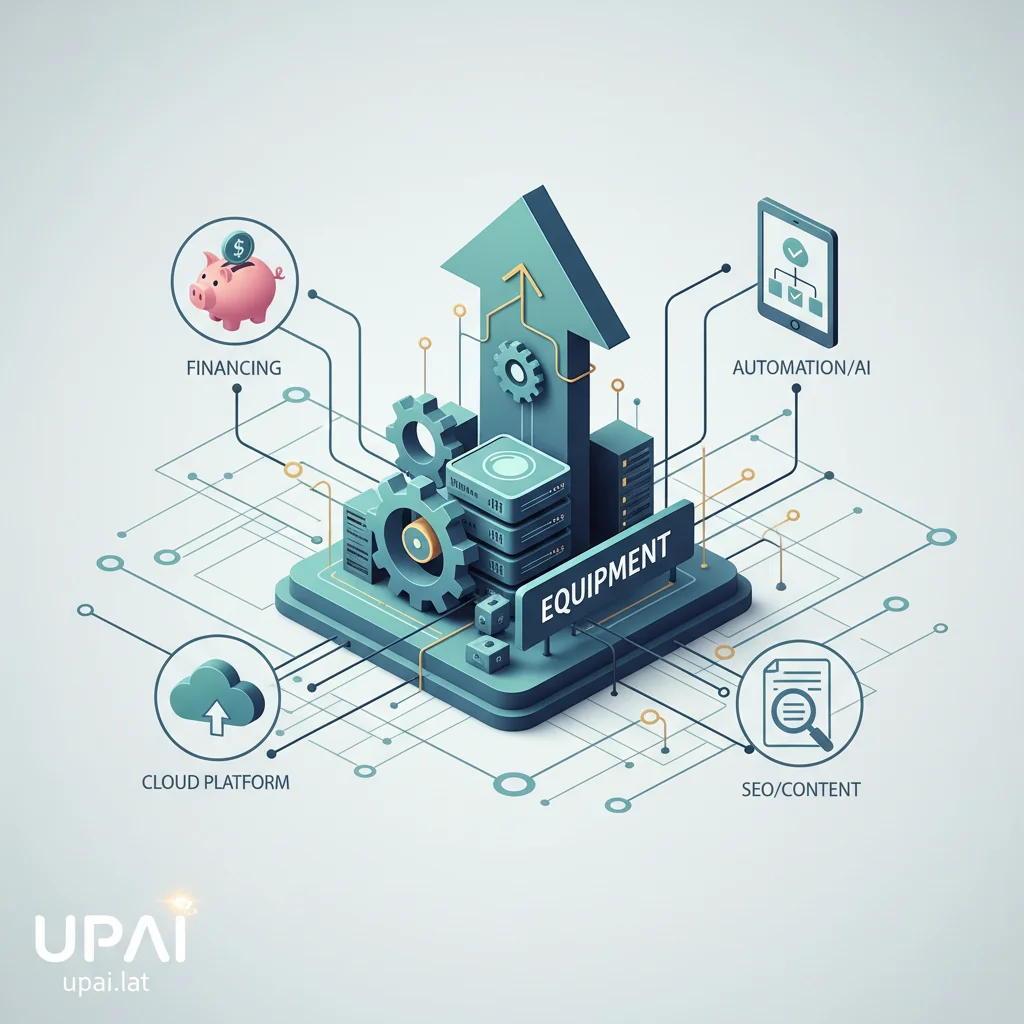
Securing startup equipment financing involves a systematic process beginning with a clear understanding of your equipment needs and culminating in the signing of a financing agreement. Following a structured approach ensures that startups identify the most suitable financing options, prepare a compelling application, and successfully acquire the necessary assets to grow their operations.
This process typically includes research, application preparation, lender evaluation, and finalization, each step requiring careful attention to detail and strategic planning.
The Step-by-Step Process
- Assess Your Equipment Needs and Budget:
Clearly define what equipment is essential for your startup's operations. Research specific models, their costs, and their expected useful life. Determine if you need to own the equipment long-term or if short-term use and flexibility are more important. Establish a realistic budget for acquisition and ongoing maintenance.
- Determine Your Eligibility and Gather Documentation:
Review the qualification criteria discussed previously. Gather all necessary documents, which typically include:
- Detailed business plan, including market analysis and competitive landscape.
- Financial projections (income statements, cash flow, balance sheets for at least 1-3 years).
- Personal and business credit reports.
- Bank statements (personal and business, typically 6-12 months).
- Tax returns (personal and business, if applicable, for the last 2-3 years).
- Legal business documents (e.g., articles of incorporation, business licenses).
- Equipment quotes or invoices from vendors.
- Research and Compare Lenders:
Explore various financing providers, including traditional banks, credit unions, online lenders, and specialized equipment financing companies. Each type of lender has different risk appetites, terms, and application processes. Compare interest rates, fees, loan terms, down payment requirements, and customer service. Look for lenders with experience financing startups in your specific industry. Use tools like the SERP Preview to see how different financing options are presented online, though this is more for content strategy, the principle of comparing options is similar.
- Submit Your Application:
Once you've selected a few potential lenders, submit your comprehensive application. Be prepared to answer follow-up questions and provide additional information promptly. Ensure the narrative in your business plan clearly articulates how the equipment will drive revenue and support your financial projections. The clarity and readability of your application materials are paramount; consider using a tool like Readability to ensure your proposals are easy to understand.
- Review Offers and Negotiate Terms:
Carefully review all financing offers received. Pay close attention to the Annual Percentage Rate (APR), total cost of the loan/lease, repayment schedule, any prepayment penalties, and specific clauses regarding maintenance or insurance. Don't hesitate to negotiate terms, especially if you have multiple offers. Ensure the terms align with your startup's cash flow capabilities and long-term goals.
- Finalize the Agreement and Acquire Equipment:
Once you're satisfied with an offer, sign the financing agreement. Understand all legal obligations before committing. Funds will then be disbursed to you or directly to the equipment vendor. Ensure you have a plan for equipment delivery, installation, and immediate operational integration.
This structured approach minimizes potential delays and increases the likelihood of securing favorable financing terms, allowing your startup to efficiently acquire the assets it needs to thrive.
What Are the Key Considerations When Choosing a Financing Option?
When choosing a startup equipment financing option, businesses must carefully evaluate several critical factors to ensure the selected solution aligns with their operational needs, financial health, and long-term strategic objectives. The decision between an equipment loan and a lease, or specific types within each, significantly impacts cash flow, tax obligations, and asset management.
A thoughtful assessment of these considerations prevents future financial strain and optimizes the return on investment for the acquired equipment.
Factors Influencing Your Financing Decision
Making the right choice requires a holistic view of your startup's situation:
- Ownership Goals: Do you want to own the equipment outright at the end of the term, or is temporary use sufficient? If long-term ownership and equity building are priorities, a loan is generally preferable. If flexibility and avoiding ownership responsibilities are key, a lease might be better.
- Cash Flow and Budget: Analyze your startup's current and projected cash flow. Leases often have lower monthly payments and require less upfront capital than loans, which can be beneficial for cash-strapped startups. However, the total cost of a lease over its term can sometimes exceed that of a loan.
- Equipment Obsolescence Risk: How quickly is the equipment likely to become outdated? For rapidly evolving technology (e.g., high-performance computing for AI development, advanced robotics, specialized content creation gear), an operating lease allows for easier upgrades without the burden of selling obsolete assets. For stable, long-life assets (e.g., manufacturing machinery, office furniture), an equipment loan is often more economical.
- Tax Implications: Consult with a tax advisor to understand the specific tax benefits associated with loans (depreciation, interest deductions) versus leases (lease payment deductions). The optimal choice depends on your startup's tax situation and whether you prefer to expense or depreciate assets.
- Total Cost of Financing: Beyond just interest rates or monthly payments, calculate the total cost over the entire term for each option, including fees, insurance, and potential end-of-lease purchase options. This comprehensive view helps identify the most cost-effective solution.
- Flexibility and Exit Strategy: Consider the flexibility of each option. Can you upgrade easily? What are the penalties for early termination? What happens at the end of the term? A lease typically offers more options for returning or upgrading equipment.
- Impact on Balance Sheet: For startups concerned about debt-to-equity ratios or attracting future investors, off-balance-sheet financing (like an operating lease) can be appealing, as it doesn't add to reported liabilities.
- Maintenance and Service: Some lease agreements may include maintenance and service plans, reducing operational headaches. With a loan, the startup is typically responsible for all maintenance.
For a content marketing startup, for instance, financing high-end AI content generation software might be better suited to a lease model if the software is updated annually and new, more powerful versions are released frequently. This allows them to stay at the forefront of technology without being stuck with outdated licenses. Conversely, a stable server infrastructure might be better suited for a loan, as its useful life is longer and less subject to rapid obsolescence.
By thoroughly evaluating these factors, startups can confidently select an equipment financing solution that supports their immediate needs and long-term growth trajectory, optimizing both financial management and operational efficiency.
Common Mistakes Startups Make with Equipment Financing
Startups often make several predictable mistakes when pursuing equipment financing, which can lead to higher costs, operational inefficiencies, or even financial distress. These errors typically stem from insufficient research, underestimating long-term commitments, or a lack of understanding of contract specifics, highlighting the critical need for due diligence.
Avoiding these common pitfalls is essential for securing financing that genuinely supports the startup's growth rather than becoming a burden.
Pitfalls to Avoid in Equipment Financing
- Not Thoroughly Researching Equipment Needs:
Purchasing or leasing equipment that is either over-specified (too powerful/expensive for current needs) or under-specified (quickly becomes inadequate) is a common error. This leads to wasted capital or premature replacement costs. Conduct a detailed analysis of current and future operational requirements for at least 3-5 years.
- Failing to Compare Multiple Offers:
Accepting the first financing offer without shopping around is a significant mistake. Rates, terms, fees, and conditions can vary widely between lenders. Always solicit at least three to five offers to ensure you're getting competitive terms. This diligence can save tens of thousands of dollars over the life of the financing.
- Ignoring the Total Cost of Ownership (TCO):
Focusing solely on monthly payments without considering the full TCO—including interest, fees, maintenance, insurance, installation, and potential end-of-term costs (e.g., residual value in a lease)—can lead to unpleasant surprises. Always calculate the true all-in cost.
- Underestimating the Impact on Cash Flow:
Startups often have fluctuating cash flows. Committing to high monthly payments without a robust cash flow projection can quickly strain finances. Ensure your financing payments are comfortably covered by projected revenue, even during leaner periods. Using a tool like the Earn Calculator might help content-focused startups project monetization to better align with financing capabilities.
- Not Reading the Fine Print of Contracts:
Lease and loan agreements are complex legal documents. Overlooking clauses related to prepayment penalties, default terms, insurance requirements, maintenance responsibilities, or end-of-lease options can be costly. Always read the entire contract and seek legal counsel if anything is unclear.
- Neglecting Business Credit Building:
Relying solely on personal credit for financing limits future opportunities and can expose personal assets. Startups should actively work to establish and build business credit from day one by separating personal and business finances, paying vendors promptly, and using business credit cards responsibly. This improves access to better financing terms down the line.
- Failing to Plan for Obsolescence:
For technology-heavy equipment, failing to account for how quickly it will become outdated is a misstep. If you finance rapidly evolving tech with a long-term loan, you might be stuck paying for obsolete equipment. This is where leases offer a significant advantage for certain types of assets.
- Inadequate Documentation:
Submitting an incomplete or poorly organized application signals disorganization and can lead to delays or outright rejection. Ensure all required documents are prepared meticulously, clearly presented, and supported by sound financial reasoning.
By being aware of these common mistakes and proactively addressing them, startups can navigate the equipment financing landscape more effectively, securing the assets they need on favorable terms and setting a solid foundation for sustainable growth.
How to Optimize Your Financing Application for Success
Optimizing your startup equipment financing application significantly increases your chances of approval and can lead to more favorable terms. This optimization involves presenting a clear, compelling, and well-supported case to lenders, demonstrating both your business's viability and your capacity for repayment.
A meticulous approach to preparing and submitting your application not only streamlines the process but also builds confidence with potential financiers.
Strategies for a Stronger Application
To make your application stand out, focus on these key areas:
- Develop a Comprehensive Business Plan: Your business plan is the cornerstone of your application. It must clearly articulate your business model, target market, competitive analysis, marketing strategy, and management team. Crucially, it needs to demonstrate how the equipment being financed is integral to your revenue generation and operational efficiency. For content marketers, this might include how new AI-powered tools or video equipment will enable new service offerings or improve content quality, directly leading to increased client acquisition and revenue.
- Present Robust Financial Projections: Lenders scrutinize cash flow projections more than anything else. Provide realistic, conservative, yet optimistic forecasts for at least 1-3 years. Detail how the new equipment will directly contribute to these projections. Show how you will comfortably make the monthly payments even during potential slow periods.
- Maintain Excellent Personal and Business Credit: Before applying, check your credit reports for accuracy and address any discrepancies. If your personal credit is weak, work to improve it. For business credit, ensure you have a separate EIN, open business bank accounts, and pay all business bills on time. A strong credit profile reduces perceived risk for lenders.
- Provide Detailed Equipment Information: Include vendor quotes, specifications, and a justification for why this specific equipment is necessary. Lenders want to understand the asset they are financing, its market value, and its expected useful life. Highlighting the equipment's resale value can also be beneficial.
- Demonstrate Industry Expertise and Experience: Highlight the experience and qualifications of your management team, especially if it's relevant to the industry you're operating in. Lenders are more confident in teams with a proven track record or deep domain knowledge.
- Clearly Articulate the Use of Funds: Explain precisely how the financing will be used and the expected return on investment (ROI) from the equipment. Connect the equipment directly to improved productivity, increased sales, or reduced operational costs. This shows strategic thinking and a clear path to profitability.
- Prepare for Due Diligence: Be ready to answer detailed questions about your business, financials, and the equipment. Have all supporting documents organized and easily accessible. Prompt and thorough responses demonstrate professionalism and preparedness.
- Optimize Your Application Language for Clarity: Ensure your business plan, financial summaries, and all accompanying text are clear, concise, and easy to understand. Avoid jargon where possible, or explain it thoroughly. A tool like Readability can help ensure your application documents are compelling and accessible to financial decision-makers. Similarly, checking your Keyword Density for key financial terms (like "cash flow" or "ROI") ensures your focus is clear.
By meticulously preparing and strategically presenting these elements, startups can significantly enhance their equipment financing applications, securing the capital needed to fuel their growth and operational success.
Conclusion
Startup equipment financing is an indispensable tool for new businesses, enabling them to acquire critical assets without exhausting their initial capital. By understanding the distinct advantages of equipment loans versus leases, meticulously preparing a robust application, and carefully evaluating lender offers, startups can make informed financial decisions that foster sustainable growth and operational efficiency.
The ability to strategically invest in essential equipment, whether it's for manufacturing, technology infrastructure, or advanced content creation studios, directly impacts a startup's capacity to compete and innovate. Avoiding common pitfalls and optimizing every aspect of the financing application ensures access to the best possible terms, setting the stage for long-term success.
For startups, including content marketers and solopreneurs, mastering these financing strategies is as crucial as mastering their core craft. Just as UPAI helps automate and optimize your content creation for peak performance, smart equipment financing optimizes your business's foundational assets. Automate your blog with AI and empower your content strategy with UPAI today.
Industry-Specific Equipment Financing: Tailoring Solutions for Diverse Startups
While the core principles of equipment financing remain universal, the specific types of equipment, their costs, lifecycle, and strategic importance vary significantly across different industries. Understanding these nuances is crucial for startups to secure the most appropriate and cost-effective financing solutions. Lenders often specialize or have a deeper understanding of particular sectors, which can influence their terms and willingness to lend.
Tech Startups: Servers, Software, and Specialized Hardware
For tech startups, equipment often translates to high-performance servers, networking infrastructure, specialized development hardware (e.g., AI/ML accelerators), and significant software licenses. The challenge here is the rapid pace of technological obsolescence. Equipment can depreciate quickly, and upgrades are frequent. Therefore, financing options that offer flexibility, such as operating leases or shorter-term loans with upgrade clauses, are often preferred.
- Typical Equipment: Data center infrastructure, high-end workstations, specialized testing equipment, software licenses.
- Key Considerations: Rapid obsolescence, integration with cloud services, scalability requirements, cybersecurity.
- Preferred Financing: Operating leases, technology refresh programs, flexible loan terms, subscription models for software.
Manufacturing Startups: Machinery and Production Lines
Manufacturing startups require substantial capital investment in heavy machinery, assembly lines, robotics, and quality control systems. This equipment is typically long-lasting, high-value, and critical to the core business operation. Financing for manufacturing equipment often involves larger loan amounts, longer repayment periods, and can sometimes be secured by the equipment itself, offering lower interest rates due to the tangible collateral.
- Typical Equipment: CNC machines, industrial robots, 3D printers, assembly lines, packaging machinery, material handling systems.
- Key Considerations: High upfront cost, long operational lifespan, complex installation, maintenance schedules, energy efficiency, regulatory compliance.
- Preferred Financing: Capital leases, long-term equipment loans, secured loans, sale-leaseback options for existing assets.
Service-Based Startups: Vehicles, Tools, and Office Infrastructure
Service-based businesses, ranging from construction to consulting, have diverse equipment needs. This can include commercial vehicles, specialized tools, diagnostic equipment, and robust office infrastructure. The financing strategy here depends on the asset's utility and mobility. For vehicles, fleet financing or individual vehicle loans are common. For office equipment, smaller leases or lines of credit might be more suitable, often bundled with IT services.
- Typical Equipment: Commercial vehicles (vans, trucks), construction tools, professional service equipment (e.g., medical devices, salon chairs), high-end office furniture, IT infrastructure.
- Key Considerations: Mobility of assets, regulatory compliance (e.g., vehicle standards, licensing), direct impact on service delivery and client perception.
- Preferred Financing: Vehicle loans/leases, smaller equipment leases, business lines of credit for general equipment, vendor financing for specific tools.
Content Creation Startups: Studio Gear, Cameras, and Editing Suites
For content marketers, videographers, podcasters, and other creative startups – like those leveraging UPAI for automation – high-quality production equipment is non-negotiable. This includes professional cameras, lighting rigs, audio recording equipment, powerful editing workstations, and specialized software. While individual items might not be as expensive as a manufacturing robot, the cumulative cost of a fully equipped studio can be substantial. Financing ensures access to top-tier equipment without draining critical working capital, allowing for high-quality output that stands out.
- Typical Equipment: 4K/8K cameras, professional lenses, lighting kits, microphones, audio mixers, high-performance editing PCs/Macs, studio monitors, specialized software, green screens, teleprompters.
- Key Considerations: Image and audio quality standards, rapid software updates, portability for on-location shoots, integration with cloud platforms and AI tools.
- Preferred Financing: Equipment leases (especially for rapidly evolving tech like cameras and computers), specific equipment loans, vendor financing with upgrade paths, short-term project-based financing.
Industry-Specific Equipment Financing Considerations: A Comparison
| Industry Type | Typical Equipment Examples | Key Financing Challenges | Recommended Financing Approaches |
|---|---|---|---|
| Tech Startups | Servers, specialized hardware, software licenses | Rapid obsolescence, high upgrade frequency, integration complexity | Operating leases, technology refresh programs, short-term loans, SaaS-like subscriptions |
| Manufacturing Startups | Heavy machinery, production lines, robotics | High upfront cost, long asset life, specialized installation, energy consumption | Capital leases, long-term equipment loans, secured loans, sale-leaseback options |
| Service-Based Startups | Commercial vehicles, specialized tools, diagnostic equipment | Diverse asset types, mobility, regulatory compliance, client-facing reliability | Vehicle loans/leases, smaller equipment leases, lines of credit for general tools |
| Content Creation Startups | Professional cameras, audio gear, editing workstations, studio lighting | High-quality standards, frequent tech updates, significant cumulative cost, portability | Equipment leases, specific equipment loans, vendor financing with upgrade paths, short-term project loans |
| Retail/Hospitality Startups | POS systems, commercial kitchen equipment, display units, furnishings | Seasonal demands, aesthetic appeal, hygiene standards, high foot traffic wear-and-tear | Equipment leases, short-term loans, vendor financing bundles, merchant cash advances (for POS) |
The Evolving Landscape: Technology and Future Trends in Equipment Financing
The world of equipment financing is not static. Driven by technological advancements and changing market demands, new approaches and tools are continually emerging. Startups that stay abreast of these trends can leverage them to secure more efficient, flexible, and tailored financing solutions, ultimately gaining a competitive edge.
Digitalization of the Application Process
Gone are the days when equipment financing applications were solely paper-based, requiring extensive physical documentation and lengthy processing times. Today, many lenders offer fully digital application portals. This digitalization streamlines the process significantly, making it faster and more accessible for startups:
- Faster Submissions: Online forms and secure document uploads reduce preparation time and logistical hurdles.
- Quicker Approvals: Automated data verification, credit checks, and preliminary underwriting accelerate decision-making, sometimes resulting in same-day approvals for smaller amounts.
- Enhanced Transparency: Applicants can often track their application status in real-time through dashboards, providing clarity and reducing anxiety.
- Reduced Errors: Digital forms can include validation rules and prompts, minimizing common application mistakes and incomplete submissions.
- Improved Accessibility: Startups in remote locations or those without easy access to traditional financial institutions can apply from anywhere.
This shift benefits startups by allowing them to acquire essential equipment more rapidly, shortening the lead time from decision to operational readiness and preventing lost opportunities.
Artificial Intelligence and Data Analytics in Underwriting
AI and machine learning are revolutionizing how lenders assess risk and make financing decisions. Instead of relying solely on traditional credit scores and historical financial statements, AI algorithms can analyze vast datasets, including alternative data points, industry trends, cash flow patterns, and even predictive analytics, to create a more comprehensive and nuanced risk profile. For startups with limited operating history, this can be a game-changer:
- More Holistic Risk Assessment: AI can identify creditworthiness beyond conventional metrics, considering factors like market potential, team experience, and business model viability.
- Personalized Offers: Algorithms can dynamically tailor financing terms, rates, and repayment schedules based on a more granular understanding of a startup's specific situation and projected growth.
- Increased Accessibility: Startups that might have been overlooked or deemed too risky by traditional, rigid underwriting models could find new financing opportunities through AI-powered lenders.
- Enhanced Fraud Detection: AI significantly enhances the ability to detect fraudulent applications and suspicious activities, protecting both lenders and legitimate borrowers from financial crime.
As these technologies mature, expect even more sophisticated, accessible, and fair financing options for innovative startups across all sectors.
Emerging Financing Models: Green Equipment and Subscription Services
Beyond traditional loans and leases, new models are gaining traction, driven by sustainability goals, technological shifts, and the desire for greater operational flexibility and predictability:
- Green Equipment Financing: With a growing global emphasis on environmental sustainability and corporate social responsibility, financing options specifically for eco-friendly or energy-efficient equipment are becoming more common. These often come with preferential rates, longer terms, or government incentives (e.g., tax credits, grants), encouraging startups to invest in sustainable technologies. This can range from solar panels and electric vehicle fleets to energy-efficient HVAC systems and advanced recycling machinery, contributing to both environmental goals and operational cost savings.
- Equipment-as-a-Service (EaaS) / Subscription Models: Mirroring the software-as-a-service (SaaS) trend, EaaS allows startups to access equipment through a subscription model rather than outright purchase or traditional lease. This shifts equipment from a capital expenditure (CapEx) to an operational expenditure (OpEx), significantly reducing upfront costs and often including comprehensive maintenance, regular upgrades, and dedicated support. It's particularly appealing for rapidly evolving technology or specialized equipment where continuous access to the latest models is critical, such as high-end computing resources, advanced robotics, or sophisticated content creation tools, ensuring startups always have access to cutting-edge technology without the burden of ownership.
These evolving models offer startups greater flexibility, reduced financial risk, and better alignment with modern business practices, making equipment acquisition more strategic, less burdensome, and more responsive to a dynamic market.
Frequently Asked Questions
What is startup equipment financing?
What types of equipment can I finance as a startup?
What are the typical eligibility requirements for startup equipment financing?
How does startup equipment financing differ from a traditional business loan?
What are the benefits of using equipment financing for a startup?
Can I get equipment financing if my startup has no credit history?
Related Articles

How to Find the Best Payroll for Startups: A Guide
Discover how to find the best payroll for startups. Ensure compliance, manage costs, and scale effectively for employee satisfaction. Learn more today!

Startup Accountant: Your Essential Financial Partner
Discover why a startup accountant is crucial for your new business. Get expert financial guidance, optimize cash flow, and ensure compliance. Learn more today!

CPA for Startups: Your Key to Financial Stability & Growth
Discover why a CPA is crucial for startups. Gain financial oversight, ensure compliance, and get strategic guidance to boost growth. Partner with a CPA today!
More free AI tools from the same team
Grow your LinkedIn presence on autopilot. Try LinkedIn automation and AI content for free.
Read the Linkesy blogAsk AI about UPAI
Click your favorite assistant to learn more about us