
Startup Business Line of Credit: Your Flexible Funding Solution

A business line of credit for a startup is a flexible financial tool that provides access to a predetermined amount of capital, offering startups a crucial safety net and growth engine, with typical interest rates for established small businesses ranging from 7% to 25% depending on creditworthiness and lender type. Unlike a traditional term loan, which disburses a lump sum upfront, a line of credit allows a startup to draw funds as needed, repay them, and then draw again, much like a credit card but often with more favorable terms and higher limits. This adaptability makes it an invaluable resource for managing unpredictable cash flow, seizing immediate opportunities, and navigating the often-turbulent early stages of business development without diluting equity or committing to rigid repayment schedules for unused funds.
For entrepreneurs and small business owners, understanding and strategically utilizing a business line of credit can be the difference between stagnating growth and sustainable expansion. This comprehensive guide will dissect the nuances of securing and managing a line of credit, offering actionable insights for startups aiming to optimize their financial agility and achieve long-term success. We will explore eligibility, application processes, strategic use cases, and common pitfalls to ensure your startup harnesses this powerful financial instrument effectively.
Key takeaways
- A business line of credit provides flexible, revolving access to funds, unlike a lump-sum term loan.
- Startups primarily use lines of credit for managing working capital, bridging cash flow gaps, and funding short-term opportunities.
- Eligibility typically hinges on the founder's personal credit, a solid business plan, and demonstrable (even if nascent) cash flow.
- Responsible management, including timely repayments and avoiding long-term asset purchases, is critical for maintaining financial health.
- Comparing lines of credit with other funding options is essential to choose the most appropriate capital structure for your startup's needs.
- The application process requires meticulous preparation of financial documents and a clear understanding of lender expectations.
What Exactly is a Business Line of Credit for Startups?
A business line of credit for startups is a flexible financing arrangement that allows a business to borrow up to a certain limit, repay the borrowed amount, and then borrow again, providing continuous access to working capital. This revolving nature distinguishes it significantly from traditional term loans, which disburse a fixed sum that is then repaid over a set period without the option to re-access funds once repaid. For startups, this flexibility is paramount, as early-stage businesses often face unpredictable revenue streams and fluctuating operational costs.A business line of credit functions similarly to a credit card but is specifically designed for business use, often featuring higher credit limits and potentially lower interest rates than personal credit cards. Interest is only charged on the amount drawn, not on the entire approved credit limit, making it a cost-effective solution for short-term financial needs. This financial instrument is particularly suited for startups because it provides immediate liquidity for operational expenses, unexpected costs, or temporary cash flow shortages without the burden of interest on unused funds. It serves as an agile financial safety net, empowering startups to react quickly to market demands or unforeseen challenges.
Defining a Business Line of Credit
A Business Line of Credit (LOC) is a flexible financing option that provides a business with access to a set amount of money that can be borrowed, repaid, and re-borrowed over time. This revolving credit facility offers considerable adaptability for managing day-to-day operations and seizing short-term opportunities. It is an agreement between a financial institution and a business that establishes a maximum loan amount the business can draw from, providing a crucial liquidity buffer.
How a Line of Credit Differs from a Term Loan
Understanding the fundamental differences between a line of credit and a term loan is crucial for startups. While both provide capital, their structures and intended uses vary significantly:
- Access to Funds: A term loan provides a lump sum upfront, which is then paid back in fixed installments over a predetermined period. A line of credit allows for draws as needed, up to a maximum limit, and funds can be repaid and re-borrowed.
- Interest Payments: With a term loan, interest accrues on the entire principal balance from day one. With a line of credit, interest is only charged on the specific amount currently drawn, not on the total available credit limit.
- Flexibility: Lines of credit offer superior flexibility, ideal for managing fluctuating cash flow, seasonal demands, or unexpected expenses. Term loans are better suited for specific, larger investments like equipment purchases or real estate.
- Repayment: Term loans have fixed monthly payments that include both principal and interest. Lines of credit often have variable payments, sometimes interest-only for a period, or based on the outstanding balance.
- Purpose: Term loans are typically for long-term investments or significant, one-time capital expenditures. Lines of credit are designed for short-term working capital needs.
Why It's Particularly Suited for Startups
Startups operate in an environment characterized by uncertainty and rapid change, making a line of credit an ideal financial tool. New businesses often lack the established revenue streams and credit history required for larger, more traditional loans or equity investments. A line of credit addresses several key startup challenges:
- Cash Flow Management: Many startups experience uneven cash flow due to delayed payments from clients, upfront inventory purchases, or seasonal sales cycles. An LOC bridges these gaps, ensuring payroll, rent, and supplier payments are met consistently.
- Operational Agility: It allows startups to quickly respond to market opportunities, such as purchasing discounted inventory, investing in a sudden marketing campaign, or covering unexpected operational costs without delay.
- Emergency Buffer: A line of credit acts as a financial safety net for unforeseen expenses or downturns, providing peace of mind and preventing business disruption.
- Building Business Credit: Responsibly managing and repaying a business line of credit can significantly help a startup establish a positive business credit history, which is vital for future financing opportunities.
- Non-Dilutive Funding: Unlike equity financing, a line of credit does not require founders to give up ownership or control of their company.
The ability to access funds only when needed and pay interest solely on the borrowed amount makes a line of credit an efficient and cost-effective solution for the dynamic financial landscape of a startup. It allows founders to maintain control and adapt quickly, fostering resilience and growth.
Why a Line of Credit is Essential for Startup Growth and Stability
A business line of credit is essential for startup growth and stability because it provides unparalleled flexibility for managing day-to-day operations and capitalizing on emergent opportunities, directly supporting the dynamic financial needs of a nascent business. This financial instrument allows founders to proactively address cash flow fluctuations, fund short-term projects, and maintain operational continuity without tying up valuable equity or incurring interest on unused capital. Its revolving nature means that funds become available again as they are repaid, creating a sustainable financial resource.Managing Cash Flow Gaps
Startups frequently encounter periods where expenses outpace revenue, creating cash flow gaps. This can be due to slow-paying clients, large upfront inventory purchases, or seasonal dips in sales. A line of credit acts as a vital bridge during these times, ensuring that essential operations, such as payroll, rent, and utility payments, are not interrupted. This stability is critical for employee morale, supplier relationships, and overall business continuity.
For example, a startup manufacturing a physical product might need to purchase raw materials in bulk to meet an upcoming order. If the payment from the client for that order isn't due for another 60 days, a line of credit can cover the material costs, allowing production to proceed without delay. Once the client pays, the line of credit can be repaid, making the funds available for the next cycle.
Seizing Opportunities (Inventory, Marketing)
The startup landscape is competitive, and the ability to act quickly on opportunities can provide a significant advantage. A line of credit provides the capital needed to capitalize on these moments without waiting for revenue to catch up or undergoing a lengthy loan application process.
- Inventory Purchases: Discovering a discounted bulk supplier or needing to stock up for a sudden surge in demand can be a game-changer. A line of credit allows for immediate inventory acquisition, preventing missed sales and increasing profit margins.
- Marketing Campaigns: A timely marketing push, such as a holiday promotion or a response to a competitor's move, can significantly boost brand visibility and sales. An LOC can fund these campaigns, allowing startups to scale their outreach effectively.
- Small Equipment Upgrades: While not ideal for major capital expenditures, an LOC can cover smaller, critical equipment upgrades that improve efficiency or production capacity, directly impacting growth.
Emergency Fund and Unexpected Expenses
No business operates without unexpected challenges, and startups are particularly vulnerable. Equipment breakdowns, unforeseen legal fees, or emergency repairs can quickly drain limited cash reserves. A line of credit serves as a robust emergency fund, providing immediate access to capital when it's most needed.
This financial cushion prevents startups from having to halt operations, scramble for high-interest short-term loans, or dip into personal savings, which can be detrimental to both the business and the founder's financial well-being. Having a pre-approved line of credit means that when an emergency strikes, the focus can remain on resolving the issue rather than finding the funds.
Building Business Credit History
Establishing a strong business credit history is foundational for a startup's long-term financial health. Lenders and suppliers often review a company's credit profile when making decisions about financing, payment terms, or partnerships. A well-managed business line of credit is an excellent way to build this history.
- Demonstrates Responsibility: Consistently drawing funds and repaying them on time shows financial responsibility to credit bureaus and future lenders.
- Opens Doors to Future Funding: A solid credit score can lead to larger loan amounts, lower interest rates, and more favorable terms for future financing needs, such as expansion loans or commercial mortgages.
- Improves Vendor Relations: Some suppliers offer better payment terms (e.g., Net 60 instead of Net 30) to businesses with strong credit, further improving cash flow.
By strategically utilizing and diligently managing a business line of credit, startups not only solve immediate financial needs but also lay the groundwork for a robust financial future, attracting more favorable terms and opportunities as they grow.
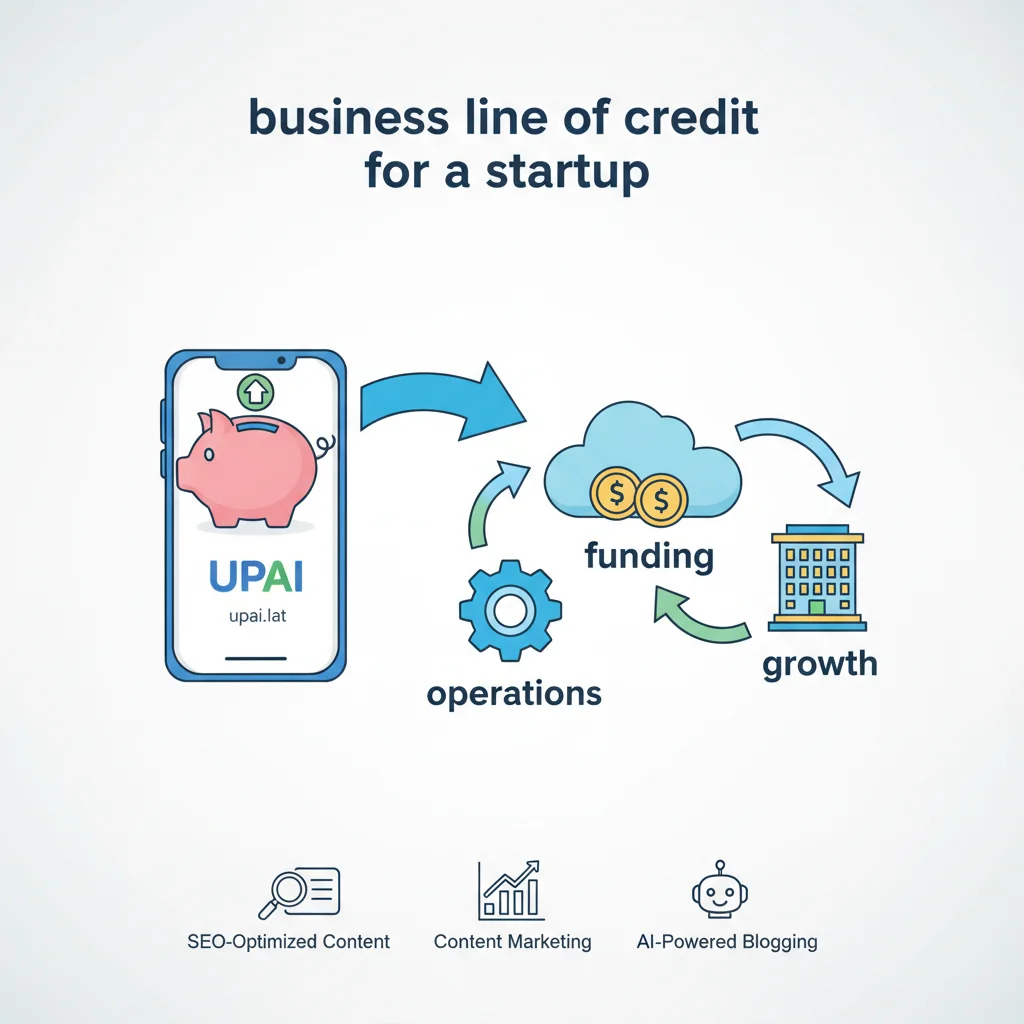
Types of Business Lines of Credit Available to Startups
Startups can access several types of business lines of credit, primarily categorized by whether they are secured by collateral or unsecured, and by the type of lender providing the capital, each offering distinct advantages and disadvantages tailored to different startup profiles and needs. Understanding these variations is crucial for selecting the most appropriate financing solution, as eligibility requirements, interest rates, and loan terms can differ significantly across these options. Choosing the right type of line of credit directly impacts a startup's financial flexibility and overall cost of borrowing.Secured vs. Unsecured Lines of Credit
The primary distinction among lines of credit lies in the requirement for collateral:
-
Secured Line of Credit
A Secured Line of Credit is a line of credit backed by collateral, such as accounts receivable, inventory, equipment, or real estate. Because the lender has a tangible asset to recover losses if the borrower defaults, secured lines of credit typically come with higher credit limits and lower interest rates. For startups that possess valuable assets, even if they are modest, a secured line can be a more accessible and affordable option.
Advantages for Startups:
- Higher credit limits are often available, providing more substantial working capital.
- Lower interest rates due to reduced risk for the lender.
- Easier to qualify for, especially for younger businesses with limited operating history.
Disadvantages:
- Requires valuable assets to pledge as collateral.
- Risk of losing collateral if the business defaults on payments.
- Can involve more complex application processes due to asset valuation.
Common types of collateral for startups include accounts receivable (invoice financing/factoring, which can function like a secured line), inventory, or even personal assets of the owner if a personal guarantee is required and backed by specific assets.
-
Unsecured Line of Credit
An unsecured line of credit does not require any collateral. Instead, lenders assess the borrower's creditworthiness based on factors like the business's cash flow, revenue, time in business, and the personal credit score of the business owner(s). These lines are generally harder for very young startups to obtain and often come with lower credit limits and higher interest rates due to the increased risk for the lender.
Advantages for Startups:
- No collateral required, meaning no assets are at risk.
- Simpler application process compared to secured lines.
- Greater flexibility in how funds are used, as there are no asset-specific restrictions.
Disadvantages:
- Lower credit limits, which might not meet all working capital needs.
- Higher interest rates to compensate for the lack of collateral.
- Stricter eligibility requirements, making them challenging for very new or low-revenue startups.
- Often requires a personal guarantee from the business owner, effectively linking personal assets to the business debt.
Bank vs. Online Lenders
The source of the line of credit also plays a significant role in its terms and accessibility:
-
Traditional Banks and Credit Unions
Traditional financial institutions are known for offering competitive interest rates and larger credit limits, particularly for secured lines. They often prefer businesses with a longer operating history, consistent revenue, and strong credit profiles. For startups, securing a line of credit from a traditional bank can be challenging without a proven track record or substantial collateral.
Pros: Lower interest rates, higher credit limits, potential for a long-term banking relationship.
Cons: Stricter eligibility, longer application processes, often less flexible for true startups.
-
Online Lenders
Online lenders have emerged as a popular alternative for startups due to their more flexible eligibility criteria and faster application processes. They often specialize in small business financing and are more willing to work with younger businesses or those with less-than-perfect credit. While they offer speed and accessibility, interest rates can be higher than those from traditional banks.
Pros: Faster application and approval, more flexible eligibility, better for younger or smaller startups.
Cons: Potentially higher interest rates, shorter repayment terms, may offer lower credit limits.
Invoice Factoring/Financing (as a form of revolving credit)
While not a traditional line of credit, invoice factoring or financing can function similarly for startups with outstanding invoices. This involves selling your accounts receivable (factoring) or using them as collateral for a loan (financing) to receive immediate cash. It provides a revolving source of capital tied directly to your sales.
- Invoice Factoring: You sell your invoices to a third party (the factor) at a discount. The factor then collects payment directly from your customers. This immediately frees up cash tied in receivables.
- Invoice Financing: You use your outstanding invoices as collateral for a loan. You retain control of collections, and once the customer pays, you repay the loan plus fees.
This option is particularly beneficial for B2B startups that often deal with 30, 60, or 90-day payment terms, effectively turning future revenue into immediate working capital. It's a form of secured financing where the "collateral" is your future earnings from existing sales.
Choosing the right type of line of credit requires a careful assessment of your startup's financial health, asset base, immediate capital needs, and long-term goals. Each option presents a unique balance of accessibility, cost, and risk.
Eligibility Criteria: What Lenders Look for in a Startup
Lenders evaluate several key factors when determining a startup's eligibility for a business line of credit, primarily focusing on risk mitigation through a comprehensive assessment of the business's viability and the founder's financial responsibility. While each lender has specific requirements, common criteria include the business plan, the founder's personal credit score, time in business, and the startup's revenue or cash flow, all of which paint a picture of the business's capacity to repay. Understanding these expectations allows startups to strategically position themselves for approval and secure favorable terms.Business Plan and Projections
A well-articulated business plan is paramount for startups seeking any form of financing, including a line of credit. Lenders need to understand your vision, market, operational strategy, and, most importantly, your financial forecasts. A robust business plan demonstrates foresight and a clear path to profitability, which mitigates perceived risk.
- Executive Summary: A concise overview of your business, its mission, and financial needs.
- Market Analysis: Evidence of market demand, target audience, and competitive advantages.
- Operational Plan: How your business will function day-to-day, including staffing, production, and distribution.
- Management Team: Profiles of key personnel, highlighting relevant experience and expertise.
- Financial Projections: Detailed forecasts for revenue, expenses, profit and loss, cash flow, and balance sheets for at least the next 1-3 years. These projections should be realistic and well-supported.
Lenders scrutinize these projections to gauge the startup's potential for generating sufficient cash flow to service the line of credit. The clarity and credibility of your financial story are crucial.
Personal Credit Score of Founders
For most startups, especially those without a long operating history or substantial business credit, the personal credit score of the founder(s) plays a critical role in securing a business line of credit. Lenders view personal credit as an indicator of financial responsibility and reliability. A FICO score of 680 or higher is generally considered good, with scores above 720 being excellent and significantly improving approval chances and interest rates.
- Demonstrates Repayment History: A strong personal credit score reflects a history of timely payments and responsible debt management, suggesting similar behavior in business.
- Personal Guarantee: Many startup lines of credit require a personal guarantee, meaning the founder is personally liable for the debt if the business defaults. Therefore, personal credit is directly relevant.
- Lack of Business Credit: Since startups often haven't had time to build a robust business credit profile, personal credit fills this gap.
Founders should regularly check their personal credit reports for accuracy and take steps to improve their scores if necessary before applying for financing.
Time in Business (Can Be a Challenge for True Startups)
Most lenders prefer businesses that have been operating for at least 6 months to 2 years, as this provides a track record of operations and some financial data. This can be a significant hurdle for true "startups" that are very new. However, some online lenders and alternative financing providers are more flexible.
- Proof of Concept: Even a few months of operation can demonstrate that the business model is viable and that the startup can generate some revenue.
- Financial Data: A longer operating history provides more financial statements (bank statements, P&L) for lenders to analyze, reducing uncertainty.
- Industry-Specific Nuances: Some industries might have different expectations for time in business due to their typical startup cycles.
If your startup is very new, focus on presenting a compelling business plan, strong personal credit, and any early revenue or customer traction you have achieved.
Revenue/Cash Flow (Even if Nascent)
While established businesses are evaluated on consistent, strong revenue, startups are often assessed on their potential for revenue and their current cash flow, even if it's nascent or irregular. Lenders want to see that the business has the capacity to generate income and manage its expenses.
- Bank Statements: Lenders will request bank statements (typically 3-12 months) to analyze transaction history, average daily balances, and overall cash flow patterns.
- Sales Figures: Any demonstrable sales, even small ones, indicate market acceptance and revenue-generating ability.
- Profitability (or path to it): While not all startups are profitable immediately, a clear path to profitability within the financial projections is crucial.
- Debt Service Coverage Ratio (DSCR): Lenders assess if the startup's projected cash flow is sufficient to cover its existing debt obligations, plus the proposed line of credit payments.
Even if your revenue is low, showing consistent growth or a clear strategy for increasing sales can be persuasive.
Collateral (for Secured Lines)
For secured lines of credit, the presence and value of collateral are primary eligibility factors. Collateral reduces the lender's risk, making them more willing to lend, often with better terms. Common types of collateral for startups include:
- Accounts Receivable: Unpaid invoices from creditworthy customers.
- Inventory: Raw materials, work-in-progress, or finished goods that can be liquidated.
- Equipment: Machinery, vehicles, or technology assets owned by the business.
- Real Estate: Commercial property owned by the business or personal real estate if a personal guarantee is secured by it.
The value and liquidity of the collateral directly influence the approved credit limit. Lenders typically lend a percentage of the collateral's appraised value (e.g., 70-85% for accounts receivable, 50% for inventory).
Industry and Market
Lenders also consider the industry in which the startup operates and the overall market conditions. Certain industries are perceived as higher risk (e.g., highly volatile sectors), while others are seen as more stable. A startup operating in a growing market with high demand is generally more attractive than one in a declining or saturated market.
- Industry Risk: Lenders assess the inherent risks associated with your industry (e.g., regulatory challenges, economic sensitivity).
- Market Demand: A large, growing market indicates greater potential for customer acquisition and revenue generation.
- Competitive Landscape: Understanding your competitive advantage and how you plan to differentiate yourself is important.
By thoroughly preparing and addressing these eligibility criteria, startups significantly improve their chances of securing a business line of credit that supports their growth trajectory.
The Application Process: Step-by-Step for Startups
Securing a business line of credit for a startup involves a structured application process that demands meticulous preparation and a clear understanding of lender expectations, typically starting with gathering comprehensive financial and business documentation before engaging with potential lenders. This systematic approach ensures all necessary information is available to demonstrate the startup's creditworthiness and repayment capacity, streamlining the evaluation period and increasing the likelihood of approval. A well-prepared application reflects professionalism and financial acumen, critical attributes for any successful funding request.Step 1: Meticulous Preparation of Documents and Financial Statements
Before approaching any lender, gather all relevant business and personal financial documents. This pre-application homework is crucial for a smooth process and to present your startup in the best possible light. A well-organized submission can significantly speed up the underwriting process.
- Business Plan: A detailed document outlining your business model, market analysis, operational strategy, management team, and comprehensive financial projections (1-3 years).
- Legal Business Documents:
- Business registration documents (e.g., Articles of Incorporation/Organization).
- Employer Identification Number (EIN).
- Business licenses and permits.
- Financial Statements:
- Bank Statements: 3-12 months of business bank statements (and sometimes personal bank statements for very new startups).
- Profit & Loss (P&L) Statements: Also known as Income Statements, showing revenue, costs, and profits over a period.
- Balance Sheets: A snapshot of assets, liabilities, and equity at a specific point in time.
- Cash Flow Statements: Tracking the movement of cash into and out of the business.
- Tax Returns:
- Business tax returns (if available, typically 1-2 years).
- Personal tax returns for all principal owners (1-2 years).
- Personal Financial Statement: A summary of the owner's personal assets, liabilities, and net worth.
- Credit Reports: Both business credit report (if established) and personal credit reports for all owners. Use tools like the UPAI SEO Checker to ensure your financial narratives are clear and concise, much like optimizing content for clarity.
- Collateral Documentation (for secured lines): Proof of ownership and valuation for any assets pledged as collateral (e.g., inventory lists, equipment appraisals, accounts receivable aging reports).
Ensure all documents are accurate, up-to-date, and organized. Inconsistencies or missing information will cause delays.
Step 2: Researching and Selecting Lenders
Not all lenders are created equal, especially for startups. Research institutions that specialize in or are known to be friendly towards small businesses and new ventures. Consider both traditional banks and online lenders.
- Traditional Banks: Often offer lower rates and higher limits but have stricter criteria and longer approval times. Best for startups with some operating history and strong financials.
- Credit Unions: Similar to banks but often more community-focused and potentially more flexible for local businesses.
- Online Lenders: Known for faster applications, more flexible eligibility, and quicker funding. They are often a good fit for younger startups or those needing capital quickly, though rates might be higher. Use the UPAI SERP Preview to see how different lenders present their offerings online, helping you compare at a glance.
- SBA-Backed Lenders: The Small Business Administration (SBA) guarantees a portion of loans from approved lenders, reducing risk for the lender and making financing more accessible to small businesses, including startups.
Compare interest rates, fees (origination, maintenance, draw fees), credit limits, repayment terms, and customer service. Read reviews and look for transparency in their offerings.
Step 3: Submitting the Application
Once you've chosen a few potential lenders, complete their application forms. This typically involves filling out an online or paper application and uploading/submitting all the documents prepared in Step 1.
- Accuracy is Key: Double-check all information for accuracy to avoid processing delays.
- Be Prepared for Questions: Lenders will likely have follow-up questions about your business, finances, and projections. Respond promptly and thoroughly.
- Personal Guarantees: Be prepared to sign a personal guarantee, especially for unsecured lines of credit or if your business is very new.
The application itself is often a concise summary of your business, while the supporting documents provide the detailed evidence. Craft your narrative clearly, much like writing compelling content. The UPAI Readability tool can help ensure your written responses are easy to understand for financial professionals.
Step 4: Underwriting and Approval
After submission, your application enters the underwriting phase. Underwriting is the process by which a lender assesses the creditworthiness of a borrower and the risk associated with lending to them. Underwriters review all submitted documents, analyze your financial health, and evaluate the risk of default. They will assess your:
- Credit History: Both personal and business (if applicable).
- Financial Ratios: Debt-to-income, debt service coverage, liquidity ratios.
- Cash Flow Analysis: Ability to generate enough cash to cover repayments.
- Collateral Valuation: For secured lines, they'll verify the value and liquidity of pledged assets.
- Business Viability: Assessment of your business plan, market, and management team.
This process can take anywhere from a few hours (for some online lenders) to several weeks (for traditional banks). If approved, the lender will present you with a loan agreement outlining the terms, including the credit limit, interest rate, fees, and repayment schedule.
Carefully review the entire agreement before signing. Understand all terms and conditions, especially any covenants or reporting requirements. Don't hesitate to ask for clarification on anything unclear. Once signed, funds can typically be accessed within a few business days, providing your startup with the vital capital it needs to grow.
Comparing Business Lines of Credit with Other Startup Funding Options
A business line of credit stands out from other startup funding options by offering unparalleled flexibility for short-term working capital needs, contrasting sharply with the lump-sum disbursement and fixed repayment schedules of term loans or the equity dilution inherent in venture capital. Understanding these distinctions is critical for startups to select the most appropriate funding mechanism that aligns with their specific financial requirements, growth stage, and long-term strategic goals. Each funding type serves a distinct purpose, and a balanced approach often involves utilizing multiple sources.Comparison Table: Line of Credit vs. Term Loan vs. Equity Funding
To illustrate the key differences, consider this comparison of common startup funding options:
| Feature | Business Line of Credit | Term Loan | Equity Funding (e.g., VC, Angel) |
|---|---|---|---|
| Access to Funds | Revolving; draw as needed, repay, re-draw. | Lump sum disbursed upfront. | Lump sum investment in exchange for ownership. |
| Purpose | Working capital, cash flow gaps, short-term opportunities. | Specific large expenditures (equipment, expansion). | Scalable growth, product development, market penetration. |
| Repayment | Variable, interest only on drawn amount, principal repaid as able. | Fixed monthly payments (principal + interest). | No direct repayment; investors seek return on investment (ROI) through exit. |
| Interest/Cost | Interest on drawn amount, fees (draw, maintenance). | Interest on full principal, origination fees. | Equity dilution (giving up ownership), potential board seats/influence. |
| Collateral | Often unsecured (personal guarantee) or secured by AR/inventory. | Often secured by assets or revenue. | No collateral; risk taken by investors for potential high reward. |
| Impact on Ownership | None (debt). | None (debt). | Significant (investors own a portion of the company). |
| Approval Speed | Moderate to fast (online lenders). | Moderate to slow (banks). | Very slow and competitive. |
| Best For | Managing daily operations, short-term liquidity. | Funding specific projects, predictable expenses. | High-growth, scalable businesses seeking significant capital for rapid expansion. |
Pros and Cons of Each Option for Startups
Business Line of Credit
- Pros:
- Flexibility: Only pay interest on what you use.
- Revolving Access: Funds replenish as you repay.
- Non-Dilutive: No loss of ownership.
- Quick Access: Often faster than term loans for approval.
- Builds Credit: Responsible use strengthens business credit.
- Cons:
- Limited for Large Investments: Not ideal for major capital expenditures.
- Variable Rates: Interest rates can fluctuate.
- Personal Guarantee: Often required, linking personal assets.
- Risk of Over-reliance: Can become a crutch if not managed properly.
Term Loan
- Pros:
- Predictable Payments: Fixed monthly installments simplify budgeting.
- Larger Sums: Suitable for significant, one-time investments.
- Non-Dilutive: No loss of ownership.
- Specific Purpose: Clear use of funds can be beneficial for accountability.
- Cons:
- Less Flexible: Lump sum, no re-borrowing once repaid.
- Interest on Full Amount: Pay interest on unused portions if not spent immediately.
- Stricter Qualification: Often requires more established business history.
- Fixed Commitment: Payments must be made regardless of cash flow fluctuations.
Equity Funding
- Pros:
- Significant Capital: Can provide large sums for rapid scaling.
- No Repayment Obligation: No monthly payments, easing cash flow pressure.
- Strategic Partnerships: Investors often bring expertise, networks, and mentorship.
- Validation: Securing equity funding can validate your business model.
- Cons:
- Dilution of Ownership: Giving up a portion of your company.
- Loss of Control: Investors may demand board seats or influence decisions.
- High Expectations: Investors expect a significant return, putting pressure on growth.
- Long, Complex Process: Fundraising can be time-consuming and distracting.
- Only for Scalable Businesses: Not suitable for all types of startups.
Choosing the right funding for your startup involves careful consideration of your immediate needs, long-term goals, risk tolerance, and the stage of your business. A line of credit is excellent for operational agility, while term loans fund specific growth initiatives, and equity fuels aggressive, scalable expansion. Many successful startups use a blend of these options at different stages of their lifecycle.
Strategic Management of Your Startup's Line of Credit
Strategic management of a startup's line of credit is crucial for maximizing its benefits while mitigating risks, requiring disciplined usage, diligent monitoring of terms, and a clear repayment strategy to prevent over-leveraging and maintain financial health. Effective management ensures that this flexible funding tool genuinely supports growth and stability, rather than becoming a source of financial strain. By adhering to best practices, startups can leverage their line of credit to build a stronger financial foundation and enhance their business credit profile.Responsible Usage: When and When Not to Draw
The flexibility of a line of credit is its greatest asset, but it also demands discipline. Responsible usage is about knowing when to draw funds and, crucially, when not to.
- When to Draw:
- Bridging Cash Flow Gaps: Covering payroll, rent, or supplier payments during periods of slow revenue.
- Short-Term Inventory Buys: Seizing opportunities for discounted bulk purchases or stocking up for anticipated demand.
- Seasonal Fluctuations: Funding operations during off-peak seasons to prepare for peak periods.
- Emergency Expenses: Addressing unexpected repairs, legal fees, or minor equipment failures.
- Short-Term Marketing Campaigns: Funding time-sensitive promotional efforts with a clear, quick ROI.
- When NOT to Draw:
- Long-Term Investments: Avoid using an LOC for major capital expenditures like real estate, large equipment, or long-term R&D. These require longer-term financing with fixed payments.
- Funding Losses: A line of credit should not be used to cover persistent operational losses. This indicates a fundamental business model issue, not a cash flow gap.
- Personal Expenses: Strictly separate business and personal finances. Using an LOC for personal needs muddies the waters and can have legal and tax implications.
- Paying Off Other Debt: While it might seem tempting to use an LOC to pay off higher-interest debt, ensure this is a strategic move, not just shuffling debt. Consider the fees and terms carefully.
Each draw should have a clear purpose and a reasonable expectation of repayment within a short timeframe. Regularly review your financial health using tools that provide real-time insights, similar to how content creators use the UPAI Earn Calculator to project monetization potential, ensuring each financial decision has a clear ROI.
Monitoring Interest Rates and Fees
Understanding the full cost of your line of credit is essential. Interest rates, while often variable, are just one component. Various fees can significantly impact the overall expense.
- Interest Rates: Most lines of credit have variable interest rates, often tied to a benchmark like the prime rate plus a margin. Monitor these rates to anticipate changes in your payment obligations.
- Draw Fees: Some lenders charge a fee each time you draw funds from your line of credit.
- Maintenance/Annual Fees: An annual or monthly fee simply for having the line of credit available, regardless of whether you use it.
- Inactivity Fees: Some lenders may charge a fee if you don't use your line of credit for a certain period.
- Late Payment Fees: Penalties for missed or late payments.
- Over-limit Fees: If you exceed your credit limit.
Keep a detailed ledger of all draws, repayments, interest, and fees. This not only helps with budgeting but also ensures accuracy in your financial records. A clear understanding of these costs, similar to analyzing keyword density with UPAI's Keyword Density tool, ensures you know exactly what you're getting for your investment.
Repayment Strategies
A proactive repayment strategy is vital for maintaining a healthy line of credit and avoiding spiraling debt. The goal is to repay the principal as quickly as possible to minimize interest accrual.
- Pay More Than the Minimum: Always aim to pay more than the minimum required payment, especially the principal portion. This reduces the outstanding balance faster, lowering future interest charges.
- Automate Payments: Set up automatic payments to ensure you never miss a due date, protecting your credit score and avoiding late fees.
- Allocate Specific Revenues: If you used the line of credit for a specific project or inventory purchase, allocate a portion of the revenue generated from that initiative directly to repaying the line.
- Regular Review: Periodically review your cash flow projections and adjust your repayment strategy as needed. If you anticipate a period of higher revenue, plan to make a larger principal payment.
- Avoid Maxing Out: Try to keep a portion of your line of credit available for true emergencies. Consistently maxing out your line can signal financial distress to lenders and may lead to higher rates or reduced limits.
Impact on Business Credit Score
Responsible management of your business line of credit directly impacts your business credit score, which is crucial for future financing and vendor relationships. Lenders report your payment history to business credit bureaus (e.g., Dun & Bradstreet, Experian Business, Equifax Business).
- Positive Impact:
- Timely Payments: The most significant factor for a positive credit score.
- Low Utilization: Keeping your outstanding balance low relative to your credit limit (e.g., below 30%) demonstrates good financial health.
- Long Credit History: The longer you responsibly manage the line, the better your score.
- Negative Impact:
- Late Payments: Severely damages your credit score.
- High Utilization: Consistently using a high percentage of your available credit suggests over-reliance or financial strain.
- Defaults: Can make it extremely difficult to secure future financing.
By diligently managing your line of credit, you build a strong financial reputation, opening doors to more favorable terms and larger capital access as your startup grows. This proactive approach to financial health is as vital as optimizing your content for search engines using tools like UPAI's FAQ Schema generator for better visibility.
Common Mistakes Startups Make with Lines of Credit
Startups often make critical errors when utilizing business lines of credit, primarily due to a lack of strategic foresight or misunderstanding the product's intended use, which can lead to increased debt burdens and damaged financial health. These mistakes range from misusing funds for long-term assets to neglecting repayment terms, ultimately hindering a startup's growth potential and ability to secure future financing. Avoiding these pitfalls is essential for harnessing the true power of a flexible credit facility and ensuring sustainable business operations.Using It for Long-Term Assets
One of the most frequent and detrimental mistakes startups make is using a line of credit to finance long-term assets or investments. A line of credit is designed for short-term, revolving working capital needs, not for purchases that won't generate immediate revenue or that have a long depreciation schedule.
- Why it's a mistake: Long-term assets (like real estate, major equipment, or extensive R&D) typically require dedicated term loans with longer repayment periods that align with the asset's lifespan. Using a line of credit for these purposes can lead to a situation where the asset is not generating enough cash flow to cover the short-term, often variable, payments of the LOC. This creates a liquidity mismatch and can quickly drain your working capital, leading to financial distress.
- Better approach: Reserve your line of credit for operational expenses, inventory, and short-term cash flow gaps. Seek term loans or equity financing for substantial, long-term investments.
Over-Leveraging and Maxing Out the Line
While a line of credit provides a safety net, consistently maxing it out or relying on it for everyday operational costs without a clear repayment plan indicates a deeper financial issue and constitutes over-leveraging.
- Why it's a mistake:
- Increased Interest Costs: The more you borrow, the more interest accrues, eating into your profits.
- Reduced Flexibility: A maxed-out line means you lose your emergency fund and ability to seize unexpected opportunities.
- Signals Financial Distress: Lenders view high utilization as a red flag, potentially leading to reduced limits, higher rates, or even account closure. It also negatively impacts your business credit score.
- Debt Spiral: If revenue doesn't quickly catch up, the business can enter a debt spiral, struggling to make even interest payments.
- Better approach: Maintain a healthy buffer and use the LOC strategically for temporary needs. If you find yourself consistently maxing it out, it's time to re-evaluate your business model, cash flow, or seek more permanent funding solutions. Regularly review your budget and financial forecasts, much like using UPAI's Headline Analyzer to refine your content strategy for optimal performance.
Not Understanding the Terms and Fees
Many startups rush through the loan agreement without fully grasping all the terms, conditions, and associated fees. This oversight can lead to unexpected costs and unpleasant surprises down the line.
- Why it's a mistake:
- Hidden Costs: Overlooking draw fees, maintenance fees, inactivity fees, or prepayment penalties can significantly increase the actual cost of borrowing.
- Variable Rates: Not understanding how variable interest rates are calculated or what benchmarks they are tied to can lead to budgeting inaccuracies.
- Covenants: Some lines of credit come with covenants (e.g., maintaining certain financial ratios). Breaching these can trigger penalties or even immediate repayment demands.
- Personal Guarantees: Failing to understand the implications of a personal guarantee can put personal assets at risk.
- Better approach: Read the entire loan agreement carefully. Ask the lender to clarify any ambiguous terms. Document everything. Consider seeking advice from a financial advisor or legal counsel if the terms are complex.
Ignoring Financial Health and Business Credit
Some startups view a line of credit as a one-off solution and neglect the ongoing importance of maintaining strong financial health and building business credit, which is a critical mistake for long-term sustainability.
- Why it's a mistake:
- Missed Future Opportunities: A poor credit score due to mismanagement will make it harder to secure future financing, attract investors, or get favorable terms from suppliers.
- Higher Costs: Lenders charge higher interest rates to businesses with lower credit scores, increasing borrowing costs.
- Limited Growth: Without access to affordable capital, growth opportunities can be severely constrained.
- Better approach:
- Monitor Your Credit: Regularly check both your personal and business credit reports for accuracy.
- Pay On Time: Always make payments on or before the due date.
- Manage Utilization: Keep your credit utilization low.
- Maintain Good Financial Records: Accurate and up-to-date financial statements are crucial for demonstrating health and securing better terms.
By avoiding these common mistakes, startups can ensure their business line of credit serves as a powerful tool for growth and stability, rather than a source of financial burden.
Conclusion
A business line of credit offers startups an indispensable blend of flexibility and financial security, serving as a critical tool for navigating the unpredictable currents of early-stage business growth. By providing revolving access to capital, it empowers businesses to manage cash flow fluctuations, seize immediate opportunities, and build a robust financial foundation without diluting equity. Strategic utilization, meticulous adherence to repayment terms, and a clear understanding of its nuances are paramount for transforming this flexible debt into a powerful catalyst for sustainable expansion.Successfully securing and managing a line of credit demands thorough preparation, a clear business plan, and ongoing financial discipline. It's not merely about acquiring funds, but about integrating this tool into a broader financial strategy that supports both short-term operational needs and long-term growth objectives. Avoiding common pitfalls, such as misusing funds for long-term assets or neglecting repayment, ensures that the line of credit remains an asset, not a liability, contributing positively to your business credit profile and overall stability.
For every aspiring entrepreneur and growing startup, mastering the art of financial management, including the strategic deployment of a business line of credit, is as crucial as perfecting your product or service. Just as UPAI automates and optimizes your content creation for maximum impact, understanding and leveraging financial tools correctly automates your path to financial resilience. Empower your startup's financial journey, streamline your capital access, and ensure your business is always ready for the next opportunity.
Frequently Asked Questions
What is a business line of credit for a startup?
How is a business line of credit different from a term loan for a startup?
What are the typical interest rates for a startup business line of credit?
What are the eligibility requirements for a startup to get a business line of credit?
How can a startup use a business line of credit effectively?
What are the risks of using a business line of credit for a startup?
Related Articles

Equipment Loans for Startups: Your Guide to Essential Assets
Discover how equipment loans for startups can fund your essential assets, from machinery to tech. Secure the tools you need to grow your business today.

Startup Business Credit Cards: EIN Only Options for Growth
Discover startup business credit cards requiring only your EIN, not a personal guarantee. Build business credit and protect personal assets from day one. Learn more!

Startup Bookkeeping: Your Guide to Flawless Finances
Master startup bookkeeping with our essential guide. Learn setup, tools, and expert tips for financial clarity and business growth. Get started today!
More free AI tools from the same team
Grow your LinkedIn presence on autopilot. Try LinkedIn automation and AI content for free.
Read the Linkesy blogAsk AI about UPAI
Click your favorite assistant to learn more about us