
Music Startup: Innovating the Future of the Music Industry

A music startup is an innovative venture leveraging technology and novel business models to address challenges, create new opportunities, or enhance existing experiences within the vast global music industry, which generated over $28.6 billion in recorded music revenue in 2023. These companies often seek to disrupt traditional paradigms in areas like creation, distribution, consumption, monetization, and fan engagement, driven by advancements in artificial intelligence, blockchain, virtual reality, and data analytics. Success for a music startup hinges on a clear value proposition, a scalable business model, robust technology, effective marketing, and adept navigation of complex legal and licensing frameworks. The landscape is dynamic, demanding agility and a deep understanding of both musical artistry and technological innovation.
Key Takeaways
- Music startups thrive by identifying and solving specific pain points in the music industry, often through technology-driven solutions.
- Diverse business models, from subscription services and licensing platforms to creator tools and fan engagement apps, define the modern music startup.
- Effective marketing and robust audience acquisition strategies are paramount for growth, requiring data-driven decisions and optimized content.
- Navigating the complex legal and intellectual property landscape is a critical, non-negotiable step for any music industry venture.
- Securing appropriate funding and building a strong, interdisciplinary team are foundational pillars for long-term sustainability and scalability.
- The future of music startups is shaped by AI, blockchain, and immersive technologies, demanding continuous innovation and adaptation.
Defining the Modern Music Startup Landscape
The modern music startup landscape is characterized by innovation at the intersection of technology, creativity, and commerce, focusing on solving inefficiencies or creating entirely new value propositions within the music ecosystem. These ventures are distinct from traditional record labels or publishers by their emphasis on scalable technology platforms, often operating with leaner teams and aiming for rapid growth. They typically target specific niches, such as artist-fan connection, music production, rights management, or experiential consumption.
A music startup distinguishes itself by its commitment to disruption, often challenging established industry norms through novel approaches. This can involve developing AI-powered tools for music creation, building blockchain-based royalty distribution systems, or creating immersive virtual concert experiences. The core objective is to deliver enhanced value to artists, fans, or industry stakeholders, frequently by leveraging data and automation to streamline processes or personalize experiences.
The Evolution of Music Startups
Music startups have evolved significantly from the early days of digital music distribution, moving beyond simple online stores to complex ecosystems. Initially, the focus was on digital delivery and combating piracy; now, it encompasses a broad spectrum of services, including advanced analytics, personalized recommendations, direct-to-fan monetization, and sophisticated production tools. This evolution reflects the industry's shift from physical products to digital services and the increasing importance of direct artist-fan relationships.
The current era of music startups is heavily influenced by Web3 technologies, artificial intelligence, and the creator economy. These technologies enable unprecedented levels of transparency, automation, and direct monetization for artists, while also offering fans more interactive and personalized experiences. Understanding this historical trajectory helps identify future opportunities and potential pitfalls.
Key Characteristics of Successful Music Startups
Successful music startups exhibit several common characteristics that contribute to their longevity and impact. These include a clear problem-solution fit, a strong technological foundation, a scalable business model, and a deep understanding of their target audience. They also demonstrate resilience in navigating regulatory hurdles and adapting to rapid technological changes.
- Innovation Focus: They introduce genuinely new ideas or significantly improve existing ones, rather than simply replicating current services.
- Technological Agility: The ability to quickly adopt and integrate new technologies (AI, blockchain, VR) into their offerings.
- Scalable Business Model: A clear path to growth and profitability that doesn't rely on linear resource increases.
- User-Centric Design: Products and services built with the end-user (artist, fan, label) firmly in mind, ensuring ease of use and value.
- Industry Insight: A nuanced understanding of the music industry's unique challenges, power structures, and cultural nuances.
Music technology is the application of scientific and engineering principles to the creation, performance, recording, and distribution of music. It encompasses hardware, software, and platforms that enable new forms of musical expression and engagement.
Key Business Models and Revenue Streams for Music Startups
Music startups generate revenue through a diverse array of business models, moving beyond traditional sales to embrace subscriptions, licensing, advertising, and innovative direct-to-fan monetization strategies. The choice of business model is critical and directly influences a startup's scalability, profitability, and market positioning. Effective models often combine multiple revenue streams to diversify income and mitigate risks.
Understanding the various monetization avenues available allows music startups to design sustainable financial frameworks. These models are constantly evolving with technological advancements and changes in consumer behavior, requiring startups to remain adaptable and innovative in their approach to revenue generation. A robust business model ensures long-term viability and attractiveness to investors.
Subscription and Freemium Models
Subscription models are a cornerstone for many music startups, offering recurring revenue by providing access to premium features or content for a regular fee. This model is prevalent in streaming services, music production software, and online learning platforms. A freemium strategy often accompanies subscriptions, providing basic services for free to attract users, then converting them to paying subscribers for advanced functionalities or an ad-free experience.
Examples include Spotify (premium subscriptions), Splice (subscription for samples and plugins), and various online masterclass platforms. The key to success lies in offering compelling value that justifies the recurring cost, alongside effective user acquisition and retention strategies. Analyzing user engagement and churn rates is crucial for optimizing these models, which you can monitor with robust analytics.
Licensing and Rights Management Platforms
Licensing models empower startups to facilitate the use of music in various contexts, such as film, television, advertising, video games, and social media. These platforms connect rights holders (artists, labels, publishers) with content creators and businesses seeking to license music, simplifying a historically complex and opaque process. Revenue is typically generated through a percentage of the licensing fee or a flat service charge.
Startups in this space often leverage technology to streamline rights clearance, track usage, and ensure fair compensation. This area is ripe for disruption through blockchain technology, which offers the potential for immutable records of ownership and automated royalty distribution. Efficient rights management can unlock significant value for artists and creators.
Direct-to-Fan (D2F) and Creator Economy Models
Direct-to-Fan (D2F) models empower artists to connect and monetize their audience directly, bypassing traditional intermediaries. This approach fosters stronger artist-fan relationships and allows artists to retain a larger share of their earnings. Startups in this sector provide tools and platforms for artists to sell merchandise, offer exclusive content, host virtual events, and engage with their community.
The creator economy has supercharged D2F, with platforms enabling artists to build membership communities, accept tips, and sell digital collectibles (NFTs). Examples include Patreon for fan subscriptions, Bandcamp for music and merch sales, and platforms facilitating NFT drops. This model emphasizes community building, authenticity, and direct value exchange.
Advertising and Data Monetization
Advertising remains a significant revenue stream for platforms that attract large user bases, particularly those offering free access to music content. This includes audio ads, display ads, and sponsored content integrated within streaming services or music-related apps. Data monetization involves leveraging aggregated, anonymized user data to provide insights to labels, marketers, or artists, always adhering to privacy regulations.
While effective for scale, advertising models often face challenges with user experience and ad fatigue. Balancing ad load with content consumption is crucial. Data monetization requires robust infrastructure for data collection, analysis, and ethical handling. Startups must be transparent about data usage to maintain user trust.
Here is a comparison of different music startup business models:
| Business Model | Primary Revenue Source | Key Advantage | Primary Challenge | Example Startup Type |
|---|---|---|---|---|
| Subscription/Freemium | Monthly/Annual Fees, Premium Features | Predictable Recurring Revenue | User Acquisition & Retention (Churn) | Streaming service, DAW plugin provider |
| Licensing/Rights Management | Licensing Fees, Service Commissions | Unlocks New Revenue Streams for IP | Complex Legalities, Industry Relationships | Sync licensing platform, Micro-licensing library |
| Direct-to-Fan (D2F) | Merchandise Sales, Digital Content, Memberships, NFTs | Higher Artist Share, Stronger Fan Connection | Artist Adoption, Community Building | Artist storefronts, Fan engagement apps |
| Advertising/Data | Ad Impressions, Sponsored Content, Data Insights | Scalability with Large User Base | User Experience, Data Privacy Concerns | Free streaming tier, Music discovery app |
| Experiential/Live Tech | Ticket Sales, Virtual Goods, Sponsorships | Unique Fan Experiences, High Engagement | High Production Costs, Niche Market | VR concert platform, Interactive live stream tech |
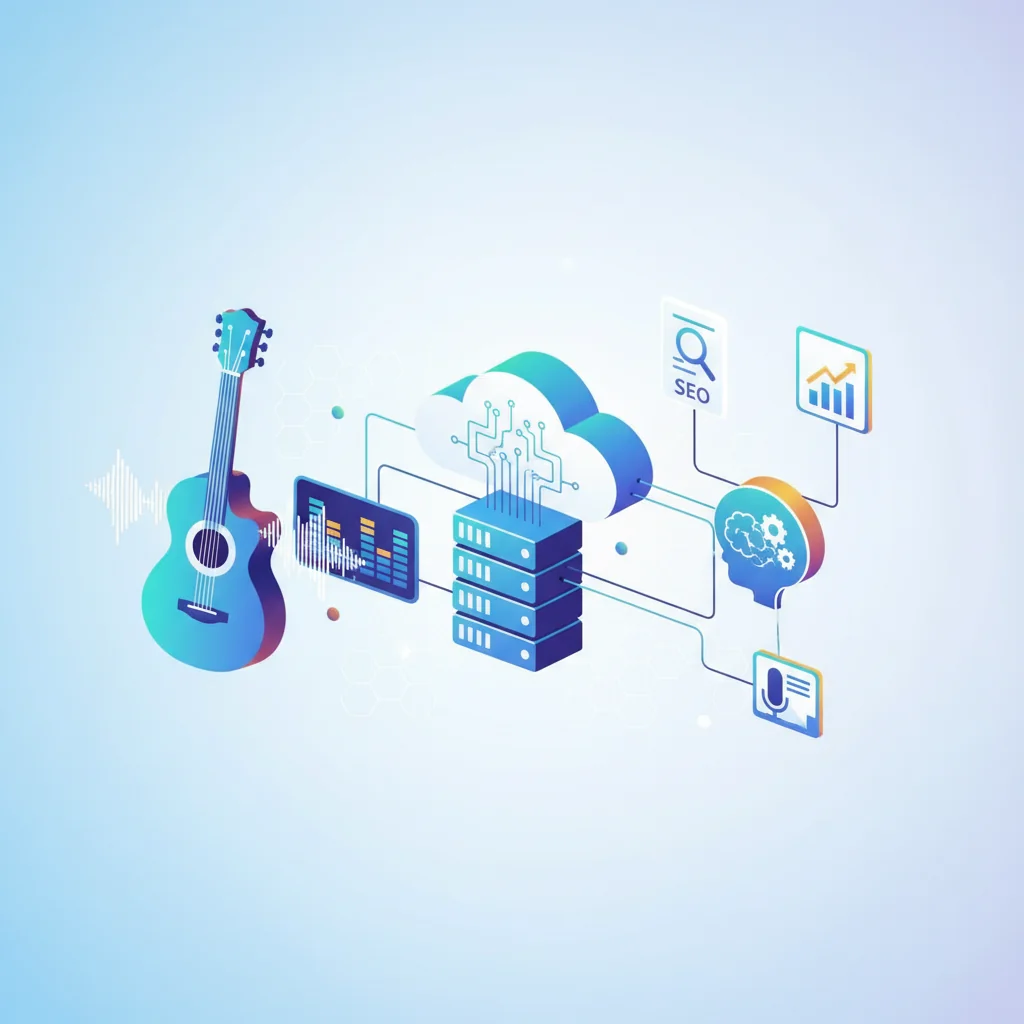
Leveraging Technology for Disruption in the Music Industry
Leveraging cutting-edge technology is the primary driver for disruption and innovation within the music industry, enabling startups to create new products, optimize workflows, and deliver unparalleled experiences. Technologies such as Artificial Intelligence (AI), blockchain, virtual and augmented reality (VR/AR), and advanced data analytics are transforming how music is created, distributed, consumed, and monetized. These tools offer unprecedented opportunities for efficiency, personalization, and transparency across the entire music value chain.
The strategic application of technology allows music startups to carve out competitive advantages, address long-standing industry pain points, and build scalable solutions. From automating mundane tasks to generating entirely new forms of musical content, technology is not just an enabler but often the core product itself. Staying abreast of technological advancements and understanding their practical applications is paramount for any aspiring music tech entrepreneur.
Artificial Intelligence (AI) in Music
Artificial Intelligence is revolutionizing music creation, personalization, and business operations by automating complex tasks and generating insights from vast datasets. AI algorithms can compose original music, assist artists with production by suggesting melodies or harmonies, and even master tracks to professional standards. Furthermore, AI-driven recommendation engines enhance user discovery on streaming platforms, tailoring content to individual tastes and increasing engagement.
Beyond creativity, AI optimizes marketing campaigns by predicting audience behavior and personalizing ad delivery. It also plays a crucial role in rights management, helping to identify unauthorized usage and streamline royalty distribution. Music startups utilizing AI gain significant efficiencies and can offer highly customized experiences. Ensure your AI-generated content is optimized for discoverability using tools like UPAI's SEO Checker to analyze its search engine performance.
Artificial Intelligence (AI) is a broad branch of computer science concerned with building smart machines capable of performing tasks that typically require human intelligence, such as learning, problem-solving, and decision-making.
Blockchain and Web3 Innovations
Blockchain technology offers unprecedented transparency, security, and immutability for tracking music ownership, royalties, and fan engagement, fundamentally reshaping trust and value distribution. By creating decentralized ledgers, blockchain can ensure that artists are fairly compensated, that intellectual property rights are clearly recorded, and that transactions are verifiable. This is particularly impactful for micro-payments and fractional ownership of music assets.
Web3, encompassing blockchain, NFTs (Non-Fungible Tokens), and decentralized autonomous organizations (DAOs), is enabling new monetization avenues for artists and more direct fan participation. NFTs, for instance, allow artists to sell unique digital assets, granting fans exclusive content, experiences, or even fractional ownership in a song. DAOs can empower fan communities to collectively fund projects or make decisions about artist careers, fostering deeper engagement and shared value.
Virtual Reality (VR) and Augmented Reality (AR)
Virtual Reality (VR) and Augmented Reality (AR) are creating immersive and interactive music experiences, transcending the limitations of physical spaces and traditional consumption methods. VR enables fans to attend virtual concerts, explore interactive musical worlds, or even perform alongside their favorite artists in a simulated environment. AR overlays digital content onto the real world, offering enhanced live show experiences, interactive album art, or location-based music discovery.
Music startups are developing platforms for virtual festivals, VR music games, and AR-enhanced merchandising. These technologies open up new revenue streams through virtual ticket sales, digital goods, and branded immersive experiences. The potential for global reach and personalized engagement is immense, offering a compelling alternative or complement to traditional live music.
Data Analytics and Personalization
Advanced data analytics provides music startups with deep insights into listener behavior, market trends, and content performance, enabling highly personalized experiences and data-driven business decisions. By analyzing vast amounts of streaming data, social media interactions, and demographic information, startups can understand what music resonates with which audiences, predict future trends, and optimize their offerings. This granular understanding allows for hyper-targeted marketing and content recommendations.
Personalization, driven by these insights, is key to user retention and satisfaction. From custom playlists to tailored promotional messages, data analytics allows startups to deliver relevant content at the right time. This also informs strategic decisions regarding artist development, genre focus, and geographic market expansion. Tools for Keyword Density analysis can help ensure your content aligns with search trends identified through market data.
Marketing and Audience Growth Strategies for Music Startups
Effective marketing and robust audience growth strategies are indispensable for music startups to gain visibility, attract users, and establish a sustainable market presence in a crowded and competitive industry. A comprehensive strategy integrates digital marketing, content creation, community building, and strategic partnerships to reach target demographics and convert interest into active engagement. Without a clear plan for audience acquisition, even the most innovative music tech product will struggle to gain traction.
The goal is not just to acquire users, but to build a loyal community that champions your product or service. This requires consistent effort, data-driven optimization, and a deep understanding of where your potential audience spends their time online. Mastering these strategies ensures that your music startup resonates with the right people and achieves its growth objectives.
Digital Marketing and SEO for Music Startups
Digital marketing encompassing search engine optimization (SEO), social media marketing, and paid advertising is crucial for music startups to improve online visibility and attract organic traffic. SEO ensures that your platform or content ranks highly in search engine results for relevant keywords, making it discoverable by potential users. This involves optimizing website content, using appropriate keywords, and building high-quality backlinks.
For music startups, this means optimizing artist profiles, genre-specific content, and platform features for search engines. Tools like UPAI's SEO Checker can help analyze your website's performance, while the SERP Preview allows you to visualize how your content appears in search results. A strong SEO foundation drives sustained, cost-effective traffic. Paid advertising campaigns on platforms like Google Ads, Facebook, and Instagram can provide immediate reach and target specific demographics with precision, complementing organic efforts.
Content Marketing and Community Building
Content marketing builds authority, engages audiences, and drives organic traffic by providing valuable, relevant, and consistent information related to music, technology, or industry insights. For a music startup, this could involve blog posts about music production tips, interviews with emerging artists, industry trend analyses, or tutorials on using your platform's features. High-quality content not only attracts users but also positions your brand as a thought leader.
Community building fosters loyalty and advocacy, transforming passive users into active brand evangelists. This involves creating spaces (forums, Discord servers, social media groups) where users can interact with each other, share feedback, and connect with the brand directly. Engaging with your community, responding to their needs, and providing exclusive content strengthens their bond with your startup. Consider using UPAI's Headline Analyzer to craft compelling titles for your content and improve click-through rates.
Social Media and Influencer Marketing
Social media marketing is essential for direct engagement with target audiences and for amplifying content through viral distribution, while influencer marketing leverages trusted voices to reach niche communities. Platforms like TikTok, Instagram, YouTube, and X (formerly Twitter) are indispensable for music startups to showcase their offerings, share updates, and interact with artists and fans. Each platform requires a tailored content strategy to maximize impact.
Influencer marketing involves collaborating with established artists, music critics, tech reviewers, or industry personalities who have a significant following. Their endorsement can introduce your startup to a highly relevant and engaged audience, building trust and credibility more effectively than traditional advertising. Identifying the right influencers whose audience aligns with your product is critical for success.
Partnerships and Integrations
Strategic partnerships with artists, labels, publishers, and other technology providers can significantly accelerate audience growth and expand market reach for music startups. Collaborating with established players provides access to their existing user bases, distribution channels, and industry expertise. For instance, a music production software startup might partner with a popular artist to create exclusive sound packs, or a streaming service might integrate with a smart home device manufacturer.
Integrations with complementary platforms or services can also enhance your product's value proposition and attract users from those ecosystems. This could involve API integrations with social media platforms, analytics tools, or other music-specific services. Such partnerships are mutually beneficial, driving visibility and user acquisition for all parties involved.
Navigating Legal and Licensing Complexities in Music
Navigating the intricate web of legal and licensing complexities is a paramount challenge for any music startup, directly impacting its operational legality, revenue generation, and long-term sustainability. The music industry is governed by complex intellectual property laws, copyright regulations, and a multi-layered system of rights holders, requiring meticulous attention to detail. Failure to comply with these regulations can result in costly lawsuits, significant fines, and irreversible damage to a startup's reputation.
A thorough understanding of intellectual property rights, licensing agreements, and international copyright laws is not optional; it is fundamental to building a legitimate and successful music venture. Proactive engagement with legal counsel and industry experts is essential to ensure compliance and to build a scalable and legally sound business model from inception.
Understanding Intellectual Property and Copyright
Intellectual property (IP) and copyright are the foundational legal concepts protecting creative works in music, granting creators exclusive rights over their compositions, sound recordings, and performances. For music startups, understanding these rights is critical, as virtually every aspect of their business involves copyrighted material. Copyright ownership typically resides with the songwriter (for the musical composition) and the record label or artist (for the sound recording).
Copyright is a legal right that grants the creator of an original work exclusive rights to its use and distribution, usually for a limited time, with the intention of enabling the creator to receive compensation for their intellectual effort. It covers musical compositions, lyrics, and sound recordings.
Startups must identify who owns the rights to the music they use, distribute, or facilitate. This involves distinguishing between publishing rights (for the composition) and master rights (for the sound recording). Any use of copyrighted music without proper authorization constitutes infringement, carrying severe penalties. Establishing clear IP ownership and usage policies is essential for both the startup and its users, particularly for platforms that host user-generated content.
Types of Music Licenses and Their Application
Various types of music licenses govern the legal use of copyrighted music, and music startups must acquire the appropriate licenses for their specific business model to operate legally. These licenses include mechanical licenses (for reproducing and distributing compositions), public performance licenses (for playing music publicly), synchronization licenses (for pairing music with visual media), and master use licenses (for using sound recordings).
Each license grants specific rights for specific uses and is typically issued by different rights holders or collective management organizations (CMOs). For example, a streaming service needs public performance and mechanical licenses, while a platform allowing users to create videos with background music needs synchronization and master use licenses. Navigating these licenses often involves direct negotiation with rights holders or obtaining blanket licenses from CMOs like ASCAP, BMI, PRS for Music, or SESAC.
- Mechanical License: Required for reproducing and distributing a musical composition (e.g., streaming, downloads, CDs).
- Public Performance License: Required for playing a musical composition publicly (e.g., radio, TV, venues, streaming).
- Synchronization (Sync) License: Required for pairing a musical composition with visual media (e.g., film, TV, ads, video games).
- Master Use License: Required for using a specific sound recording (the "master") in any project.
- Print License: Required for reproducing sheet music or lyrics.
International Copyright and Global Operations
Operating a music startup globally introduces additional layers of complexity due to variations in international copyright laws and licensing frameworks across different territories. Copyright protection is largely governed by international treaties like the Berne Convention and the TRIPS Agreement, but the specifics of enforcement, duration, and collective management can vary significantly from country to country. A license obtained in one country may not be valid in another.
Music startups with global ambitions must develop a comprehensive international licensing strategy, often involving partnerships with local collective management organizations or direct deals with rights holders in each target market. This requires significant legal due diligence and a deep understanding of local regulations to avoid legal pitfalls and ensure global compliance. Ignoring these international nuances can severely limit a startup's market expansion and expose it to legal risks.
Data Privacy, Security, and Compliance (GDPR, CCPA)
Data privacy and security are critical legal considerations for music startups that collect, process, and store user data, requiring strict compliance with regulations like GDPR and CCPA. These laws mandate how personal data must be handled, granting users significant rights over their information. Non-compliance can lead to substantial fines and erosion of user trust.
Music startups must implement robust data protection measures, transparent privacy policies, and secure data storage practices. This includes obtaining explicit consent for data collection, providing users with access to their data, and ensuring data minimization. Building a privacy-by-design approach into product development from the outset is crucial for long-term compliance and ethical operations. Regularly reviewing and updating privacy practices is essential to adapt to evolving legal landscapes.
Funding Your Music Startup: Options and Strategies
Securing adequate funding is a critical determinant of a music startup's ability to develop its product, scale operations, and achieve market penetration. Various funding options exist, ranging from bootstrapping and grants to venture capital and crowdfunding, each with its own advantages, disadvantages, and suitability depending on the startup's stage and capital needs. A well-defined funding strategy aligns with the startup's business model and growth trajectory.
Entrepreneurs must understand the different types of capital available and how to effectively pitch their vision to potential investors. This involves demonstrating market potential, a viable business model, a strong team, and a clear path to profitability or exit. Strategic funding ensures the necessary resources are available to navigate the competitive music industry landscape.
Bootstrapping and Angel Investors
Bootstrapping involves funding a music startup primarily through personal savings, early revenue, or minimal external capital, allowing founders to maintain full control and avoid equity dilution. This approach fosters financial discipline and forces a focus on lean operations and rapid monetization. While challenging, it can be ideal for validating a concept before seeking significant external investment.
Angel investors are high-net-worth individuals who provide capital for startups, usually in exchange for ownership equity. They often bring not only financial resources but also valuable industry experience, mentorship, and connections. Angel rounds are typically smaller than venture capital rounds and occur at the seed stage, making them a crucial early funding source for many music startups.
Venture Capital and Strategic Investors
Venture Capital (VC) firms provide substantial funding to high-growth potential startups in exchange for significant equity, aiming for a large return on investment within a specific timeframe (typically 5-10 years). VCs look for scalable business models, strong teams, clear market opportunities, and a defensible competitive advantage. For music startups, this often means demonstrating disruptive technology or a proven track record of rapid user acquisition and monetization.
Strategic investors are corporations or established companies within or adjacent to the music industry that invest in startups for strategic reasons beyond just financial return. This could include gaining access to new technology, expanding into new markets, or integrating the startup's product into their own offerings. Such investments can come with invaluable industry connections and resources, but may also involve alignment with the strategic investor's corporate goals.
Crowdfunding and Grants
Crowdfunding platforms allow music startups to raise capital directly from a large number of individuals, often in exchange for early access to products, exclusive content, or equity. This method not only provides funding but also serves as a powerful market validation tool, demonstrating demand and building a passionate community around the product. Platforms like Kickstarter, Indiegogo, and specialized music crowdfunding sites enable this approach.
Grants offer non-dilutive funding, meaning founders do not give up equity in exchange for capital. These are typically provided by government agencies, non-profit organizations, or industry associations to support innovation, cultural initiatives, or specific technological developments. While competitive, grants can be an excellent source of funding for R&D-heavy music tech startups or those with a strong social impact component.
Pitch Deck and Financial Projections
A compelling pitch deck and robust financial projections are essential tools for attracting any form of external investment, clearly articulating the startup's vision, market opportunity, and path to profitability. The pitch deck should concisely convey the problem being solved, the proposed solution, the market size, the business model, the team, and the ask (how much funding is needed and for what). It must tell a compelling story that resonates with investors.
Financial projections, including revenue forecasts, expense breakdowns, and cash flow statements, must be realistic, well-researched, and demonstrate a clear understanding of the market dynamics. Investors scrutinize these projections to assess the startup's growth potential and financial viability. Being able to clearly explain assumptions and defend your numbers is crucial during investor meetings. Consider how your monetization potential scales using a tool like UPAI's Earn Calculator to estimate revenue.
Operational Excellence and Team Building for Music Startups
Achieving operational excellence and assembling a high-performing, interdisciplinary team are foundational elements for the sustained success and scalability of any music startup. Efficient operations ensure that resources are utilized optimally, product development proceeds smoothly, and customer satisfaction remains high. A strong team, comprising diverse skill sets and a shared vision, is the engine that drives innovation, execution, and resilience in a dynamic industry.
Effective management of daily processes, from product development cycles to customer support, coupled with strategic talent acquisition and retention, creates a robust framework for growth. Without these critical components, even the most innovative idea can falter under the weight of poor execution or internal discord. Operational efficiency directly translates to market competitiveness and investor confidence.
Building a Diverse and Skilled Team
Building a diverse and skilled team is paramount for a music startup, bringing together expertise across technology, music, business, and legal domains to tackle complex industry challenges effectively. A balanced team typically includes individuals with strong technical backgrounds (developers, data scientists), music industry veterans (artists, producers, label execs), business strategists (marketing, finance), and legal experts specializing in intellectual property. This multidisciplinary approach ensures all facets of the business are covered.
Diversity extends beyond skill sets to include varied perspectives, backgrounds, and experiences, which foster innovation and problem-solving. A strong team culture, emphasizing collaboration, open communication, and shared values, is crucial for navigating the intense demands of startup life. Attracting top talent requires a compelling vision, competitive compensation, and a supportive work environment.
Product Development and Agile Methodologies
Product development for music startups often employs agile methodologies, allowing for rapid iteration, continuous feedback, and flexible adaptation to market demands and user needs. Agile principles, such as Scrum or Kanban, break down large projects into smaller, manageable sprints, facilitating quicker delivery of features and faster learning cycles. This iterative approach is particularly valuable in the fast-evolving music tech landscape, where market trends and technological capabilities can shift rapidly.
Focusing on a Minimum Viable Product (MVP) first helps validate core assumptions with real users before investing heavily in full-scale development. Continuous user testing, gathering feedback, and prioritizing features based on data are key to building a product that genuinely resonates with its target audience. This iterative process allows startups to pivot when necessary and ensures resources are allocated efficiently.
Customer Support and User Experience (UX)
Exceptional customer support and a seamless user experience (UX) are vital for retaining users, building loyalty, and fostering positive word-of-mouth for music startups. In a competitive market, a superior UX can be a significant differentiator, making a product intuitive, enjoyable, and efficient to use. This includes clear interfaces, responsive design, and robust functionality that meets user expectations.
Proactive and responsive customer support addresses user issues promptly, resolves problems effectively, and gathers valuable feedback for product improvement. Implementing self-service options, comprehensive FAQs, and accessible support channels (chat, email, phone) enhances the overall user journey. Satisfied users are more likely to become long-term customers and advocates for your brand. Ensure your content is easy to understand with UPAI's Readability checker to enhance user experience.
Scalability and Infrastructure Planning
Planning for scalability and robust infrastructure from the outset is crucial for music startups to handle increasing user loads, data volumes, and feature expansion without compromising performance or reliability. As a startup grows, its underlying technology stack must be able to support a larger user base, more complex data processing, and potentially global distribution. This involves choosing flexible cloud platforms, designing modular architectures, and implementing efficient database management.
Investing in scalable infrastructure prevents bottlenecks and ensures a smooth user experience even during peak demand. This includes considering aspects like content delivery networks (CDNs) for global reach, robust security measures, and automated deployment pipelines. Neglecting scalability early on can lead to costly re-architecting and service disruptions down the line, hindering growth and damaging reputation.
Common Mistakes Music Startups Make
Music startups frequently encounter pitfalls that can derail their progress, even with innovative ideas, often stemming from a lack of industry understanding, poor execution, or an inability to adapt. Recognizing and actively avoiding these common mistakes is as crucial as identifying opportunities for innovation. These errors can range from misjudging market needs to overlooking legal complexities, ultimately impacting sustainability and growth.
Learning from the failures of others provides invaluable foresight, allowing new ventures to navigate the challenging landscape with greater precision. Proactive risk mitigation and a commitment to continuous learning are essential for increasing a music startup's chances of long-term success. Avoiding these missteps helps preserve resources, maintain focus, and build a more resilient company.
Underestimating Legal and Licensing Complexities
One of the most frequent and detrimental mistakes music startups make is severely underestimating the intricate legal and licensing complexities inherent in the music industry. Many founders, particularly those from a purely tech background, fail to grasp the nuances of copyright, intellectual property, and the multi-layered system of rights holders. This oversight often leads to operating illegally, incurring substantial fines, or facing costly lawsuits that can cripple a nascent company.
The assumption that "it's just music" and can be treated like any other digital content is fundamentally flawed. Each piece of music often has multiple copyrights (composition, sound recording), owned by different entities, and requires specific licenses for different uses. Neglecting to secure proper licenses for streaming, public performance, synchronization, or master use is a critical error. This can be mitigated by engaging legal counsel early and integrating legal compliance into the core business model from day one.
Ignoring Market Needs and User Feedback
Developing a product or service without adequately understanding genuine market needs or actively soliciting and incorporating user feedback is a common pitfall that leads to solutions looking for a problem. Music startups often fall in love with their own innovative ideas without validating if those ideas truly solve a pain point for artists, fans, or industry professionals. This results in products that fail to gain traction because they don't meet a real demand or are difficult to use.
Failing to engage in thorough market research, competitive analysis, and consistent user testing can lead to significant resource waste. It is essential to continuously interact with target users, gather their insights, and iterate on the product based on their input. A startup that builds in a vacuum risks creating something nobody wants or needs, regardless of its technological sophistication.
Poor Monetization Strategy or Lack of Revenue Clarity
Many music startups struggle due to a poor or unclear monetization strategy, failing to establish a viable path to profitability that justifies their operational costs and attracts investors. An innovative product is not enough; there must be a clear and sustainable way to generate revenue. This mistake often manifests as an over-reliance on a single, unproven revenue stream, or a complete absence of a well-defined business model beyond user acquisition.
Startups might offer services for free indefinitely without a clear plan for conversion, or they might set pricing models that are not competitive or don't reflect the value provided. Developing a diverse set of revenue streams, accurately projecting costs, and understanding the unit economics of the business are crucial. Investors seek clear evidence of how a startup will make money and eventually become profitable. Using tools like UPAI's Earn Calculator can help estimate potential earnings and refine your monetization strategy.
Lack of Industry Connections and Partnerships
Operating in isolation and failing to build crucial industry connections and strategic partnerships significantly hinders a music startup's growth, visibility, and access to essential resources. The music industry is built on relationships, and trying to navigate it without engaging with labels, publishers, artists, managers, and other tech providers is a severe disadvantage. These connections provide invaluable insights, potential collaborations, and access to existing user bases.
Without partnerships, startups often struggle with distribution, content acquisition, and gaining credibility within an established ecosystem. Networking at industry events, seeking mentorship, and actively pursuing mutually beneficial collaborations are vital. A startup that attempts to "go it alone" misses out on opportunities for co-marketing, integration, and validation that can accelerate its market entry and adoption.
Inadequate SEO and Content Optimization
Neglecting search engine optimization (SEO) and effective content optimization is a common oversight that limits a music startup's organic discoverability and ability to attract its target audience. Even with a revolutionary product, if potential users cannot find your platform through search engines, growth will be severely hampered. This mistake often stems from a lack of understanding of how search engines work and the importance of relevant content.
Music startups need to optimize their websites, product descriptions, and blog content for keywords relevant to their niche. This includes using appropriate meta descriptions, strong headlines, and structured data. Failing to do so means relying solely on paid advertising or word-of-mouth, which can be unsustainable. Regularly checking your content's readability with UPAI's Readability tool and ensuring keyword relevance with the Keyword Density checker can significantly improve organic search performance. Ignoring these aspects means missing out on a powerful, cost-effective channel for user acquisition.
The Future of Music Startups: Trends and Opportunities
The future of music startups is poised for continued rapid evolution, driven by advancements in artificial intelligence, the maturation of Web3 technologies, and an increasing demand for personalized and immersive fan experiences. These trends present significant opportunities for entrepreneurs to innovate across the entire music value chain, from creation and distribution to monetization and consumption. Successful startups will be those that anticipate these shifts and build flexible, forward-thinking solutions.
The industry is moving towards greater artist empowerment, enhanced fan engagement, and more transparent and efficient systems. Understanding these overarching trends allows music startups to position themselves strategically, develop products that meet emerging needs, and capitalize on the next wave of technological disruption. The emphasis will remain on creating value for both creators and consumers in novel ways.
AI-Powered Creativity and Automation
AI will increasingly empower artists with advanced tools for music creation, production, and automation, streamlining workflows and opening new avenues for artistic expression. This includes AI-assisted composition, where algorithms can generate melodies, harmonies, or even full tracks based on user input or specific styles. AI will also automate tedious tasks like mixing, mastering, and audio clean-up, freeing artists to focus on creative aspects. Furthermore, AI-driven tools can help manage metadata, tag content, and organize vast music libraries more efficiently.
Beyond creation, AI will play a larger role in automating royalty distribution, identifying copyright infringements, and personalizing music recommendations with unprecedented accuracy. Startups focusing on AI-powered creator tools, intelligent rights management, or hyper-personalized discovery engines are well-positioned for future growth. The goal is to augment human creativity, not replace it, making music production more accessible and efficient for everyone. Ensure your AI-generated content is optimized for search engines using UPAI's SEO Checker.
Web3, NFTs, and Decentralized Ecosystems
Web3 technologies, particularly NFTs and decentralized autonomous organizations (DAOs), will continue to foster new models of ownership, monetization, and community building within the music industry. NFTs are evolving beyond simple digital collectibles, offering utility such as exclusive access to content, voting rights in artist decisions, or fractional ownership of music IP. This creates direct, transparent, and immutable relationships between artists and their most dedicated fans.
Decentralized ecosystems built on blockchain can provide artists with greater control over their music, fairer compensation, and transparent royalty distribution systems, bypassing traditional intermediaries. Startups building decentralized music platforms, NFT marketplaces with enhanced utility, or tools for artist DAOs are at the forefront of this shift. The focus is on empowering creators and fans through shared ownership and governance, fostering a more equitable and transparent music economy.
Immersive Experiences: Metaverse, VR, and AR
The metaverse, alongside advancements in virtual reality (VR) and augmented reality (AR), will redefine how fans experience music, moving towards highly immersive, interactive, and personalized virtual environments. Virtual concerts and festivals within the metaverse will become more commonplace, offering unique social experiences and new monetization opportunities through virtual goods and sponsorships. AR will enhance live performances and daily music consumption, blending digital content with the physical world.
Music startups are exploring interactive music games, virtual artist avatars, and platforms that allow fans to co-create or influence musical experiences in real-time. These technologies offer unprecedented levels of engagement and the ability to reach a global audience without geographical constraints. The challenge lies in creating compelling, high-quality experiences that justify the investment in hardware and development, but the potential for innovation and revenue is substantial.
Data-Driven Fan Engagement and Personalization at Scale
Advanced data analytics and machine learning will drive hyper-personalized fan engagement strategies, delivering tailored content, experiences, and merchandise at scale. Music startups will leverage vast datasets to understand individual listener preferences, predict future tastes, and identify micro-communities. This allows for highly targeted marketing campaigns, customized recommendations, and unique fan journeys that deepen loyalty.
The future will see more sophisticated recommendation engines that not only suggest music but also events, merchandise, and even other artists based on a comprehensive understanding of a fan's digital footprint. Startups focusing on advanced analytics platforms, AI-driven CRM for artists, or dynamic content delivery systems will be crucial. The goal is to move beyond generic interactions to create truly individualized and meaningful connections between artists and their audience. Ensure your content's structure and relevance are optimized for search engines, which can be previewed using UPAI's SERP Preview tool.
The music startup landscape is a vibrant and ever-evolving frontier, demanding continuous innovation and strategic execution. From the initial spark of an idea to securing funding and scaling operations, every step requires precision and foresight. By embracing cutting-edge technologies, understanding diverse business models, and diligently navigating legal and marketing complexities, entrepreneurs can carve out significant success. UPAI empowers you to optimize your content strategy, ensuring your message resonates and your platform gains the visibility it deserves. Automate your blog with AI and leverage our tools to analyze your SEO, preview SERP results, check readability, craft compelling headlines, generate FAQ schema, and monitor keyword density. Let UPAI be your partner in content excellence.
Frequently Asked Questions
What exactly is a music startup?
What are some common challenges music startups face?
How do music startups typically make money?
What kind of technology is driving innovation in music startups?
How can a music startup differentiate itself from competitors?
What are the key elements for a music startup to be successful?
Related Articles

Best Business Structure for Small Tech Startups: LLC vs. C-Corp
Discover the best business structure for your small tech startup. Learn about LLCs, C-Corps, and S-Corps to protect your assets and optimize taxes. Find out which is right for you.

Best Payroll Provider for Startups: Gusto & More
Discover the best payroll provider for your startup. Explore top options like Gusto, focusing on features, ease of use, and compliance for growing businesses.

Travel Startups: Innovating the Future of Global Tourism
Explore the exciting world of travel startups disrupting the $1.5 trillion global industry with innovative tech and new market segments. Discover their impact today!
More free AI tools from the same team
Grow your LinkedIn presence on autopilot. Try LinkedIn automation and AI content for free.
Read the Linkesy blogAsk AI about UPAI
Click your favorite assistant to learn more about us