
Marketing Agency for Startups: Grow Your Business

Hiring a marketing agency for startups is a strategic investment that provides specialized expertise and accelerated growth pathways, with 80% of venture-backed startups leveraging external marketing support to scale efficiently. These agencies offer tailored services designed to navigate the unique challenges of emerging businesses, from establishing brand identity to acquiring initial customers and optimizing conversion funnels.
Key Takeaways
- Specialized Expertise: Startup marketing agencies offer deep knowledge in brand building, digital acquisition, and growth hacking specific to early-stage companies.
- Cost-Effective Scaling: Outsourcing marketing functions can be more budget-friendly and scalable than building an in-house team from scratch.
- Comprehensive Service Offering: Agencies typically provide a full spectrum of services, including SEO, content marketing, social media, paid ads, and analytics.
- Strategic Partnership: Successful engagement requires clear objectives, open communication, and a data-driven approach to measure ROI.
- Risk Mitigation: Agencies help startups avoid common marketing pitfalls, ensuring resources are allocated effectively to drive measurable results.
- Competitive Edge: Leveraging an agency's industry insights and technological resources can significantly accelerate market entry and sustained growth.
Why Startups Need a Dedicated Marketing Agency
Startups require a dedicated marketing agency to navigate the complex and competitive landscape, accelerate market entry, and achieve sustainable growth without the overhead of building an extensive in-house team. These agencies provide specialized expertise, strategic guidance, and scalable resources essential for early-stage companies to establish their presence and acquire customers efficiently.
Unique Challenges Startups Face
Startups encounter a distinct set of challenges that differentiate them from established businesses, primarily revolving around limited resources, brand recognition, and market validation. Understanding these hurdles is crucial for effective marketing.
- Limited Budget & Resources: Startups often operate with lean budgets, making every marketing dollar critical. Agencies help optimize spend for maximum impact.
- Lack of Brand Awareness: New companies need to build recognition from scratch, requiring sustained effort in PR, content, and digital advertising.
- Undefined Target Audience: Many startups are still refining their ideal customer profile, making initial targeting a process of discovery and iteration.
- Competitive Market Entry: Breaking into established markets or creating new ones demands innovative strategies to stand out.
- Need for Rapid Growth: Investors and founders expect quick traction and scalability, putting pressure on marketing to deliver fast results.
- Resource Scarcity: Beyond budget, startups often lack dedicated marketing staff, advanced tools, or the time to execute complex campaigns.
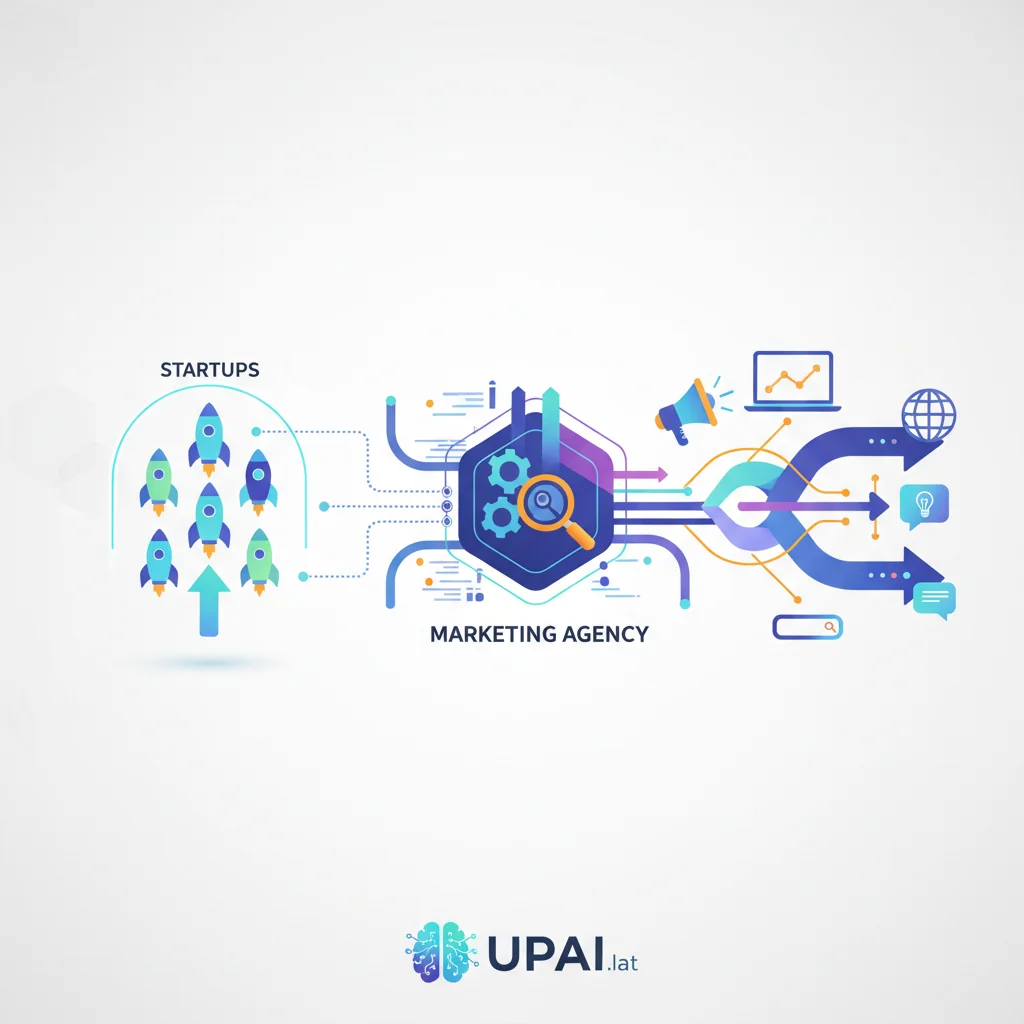
A startup marketing agency is a specialized firm that offers comprehensive marketing services tailored to the unique needs, challenges, and growth objectives of early-stage companies.
Benefits of External Expertise vs. In-House
Leveraging external expertise from a marketing agency offers significant advantages over building an in-house team, particularly for startups that need agility, diverse skills, and immediate impact. Agencies bring a breadth of experience across various industries and marketing channels that a single internal hire cannot match.
- Access to Diverse Skill Sets: An agency provides a team of specialists (SEO experts, content creators, PPC managers, designers, strategists) rather than relying on a single generalist.
- Industry Best Practices & Trends: Agencies work with multiple clients, staying abreast of the latest marketing technologies and strategies, which can be invaluable for a startup.
- Objective Perspective: External partners offer an unbiased view of your brand and market, identifying opportunities or weaknesses that internal teams might overlook.
- Scalability: Agencies can quickly scale services up or down based on your needs and budget fluctuations, providing flexibility that in-house teams lack.
- Reduced Overhead: Hiring an agency eliminates the costs associated with salaries, benefits, training, and marketing software subscriptions for an internal team.
Agencies can also implement technical standards and quality controls that might be difficult for a nascent internal team to establish. For instance, adherence to specific technical specifications for digital assets and platforms, often detailed in documents like technical specification annexes, ensures robust and compliant marketing infrastructure.
Cost-Effectiveness and Scalability
Hiring a marketing agency is often more cost-effective and scalable for startups than building an internal team, allowing them to allocate resources strategically and adapt quickly to changing market conditions. This financial prudence is critical for businesses operating with limited seed capital or early-stage funding.
A full-time senior marketing manager's salary, benefits, and associated costs can easily exceed $100,000 annually. An agency, conversely, allows startups to access a team of specialists for a fraction of that cost, often through retainer models or project-based fees. This structure means you pay only for the services you need, when you need them.
Consider the following comparison:
| Factor | In-House Marketing Team (e.g., 1-2 hires) | Marketing Agency (Retainer Model) |
|---|---|---|
| Initial Investment | High (recruitment, onboarding, equipment, software licenses) | Low (contract setup, no hiring costs) |
| Ongoing Costs | Salaries, benefits, taxes, training, software subscriptions | Fixed monthly retainer or project fees |
| Skill Set Availability | Limited to specific hires (e.g., generalist or 1-2 specialists) | Broad team of specialists (SEO, content, PPC, design, analytics) |
| Scalability | Difficult and slow (requires more hires or layoffs) | Highly flexible (scale services up or down as needed) |
| Time to Impact | Longer (recruitment, onboarding, strategy development) | Faster (agency can begin execution immediately) |
| Risk | High (single points of failure, potential for poor hires) | Lower (diversified expertise, established processes) |
This scalability is particularly important for startups experiencing rapid growth or pivoting their business model, as agencies can swiftly adjust strategies and resource allocation. For example, if a startup needs to ramp up content production for a new product launch, an agency can deploy additional writers and strategists without the startup needing to hire temporary staff.
Core Services Offered by a Startup Marketing Agency
A comprehensive startup marketing agency delivers a full spectrum of services designed to address every stage of a startup's growth, from foundational brand development to sophisticated digital acquisition and performance analysis. These services are typically integrated to create a cohesive marketing strategy that drives measurable results.
Brand Strategy and Positioning
Brand strategy and positioning are fundamental services offered by marketing agencies, establishing the unique identity, values, and market perception of a startup. This foundational work ensures all subsequent marketing efforts are aligned and resonate with the target audience.
Brand strategy is the long-term plan for the development of a successful brand in order to achieve specific business goals. It defines who your startup is, what it stands for, and how it communicates its value.
Key components include:
- Vision, Mission, and Values: Defining the core purpose and guiding principles of the startup.
- Target Audience Identification: Deep dives into demographics, psychographics, and user behavior to create detailed buyer personas.
- Unique Value Proposition (UVP): Articulating what makes the startup's product or service distinctly better or different from competitors.
- Brand Messaging & Tone of Voice: Developing consistent language and communication style across all platforms.
- Brand Identity Guidelines: Establishing visual elements like logos, color palettes, typography, and imagery.
Effective positioning ensures your startup occupies a distinct and desirable place in the minds of your target customers. This strategic clarity is paramount for differentiation in crowded markets.
Market Research and Competitor Analysis
Market research and competitor analysis are essential services that provide startups with critical insights into their industry, target audience, and competitive landscape, informing data-driven strategic decisions. Agencies conduct thorough investigations to uncover opportunities and potential threats.
These analyses typically involve:
- Market Sizing & Trends: Understanding the total addressable market, growth rates, and emerging trends.
- Customer Segmentation: Dividing the target market into distinct groups with shared characteristics and needs.
- Consumer Behavior Analysis: Investigating how potential customers make purchasing decisions, their pain points, and motivations.
- Competitor Benchmarking: Evaluating direct and indirect competitors' strengths, weaknesses, marketing strategies, pricing, and customer experience.
- SWOT Analysis: Identifying internal Strengths and Weaknesses, and external Opportunities and Threats relative to the market.
This intelligence is crucial for refining product-market fit, identifying untapped niches, and developing effective differentiation strategies. Agencies use various tools and methodologies, including surveys, focus groups, data analytics, and competitive intelligence platforms, to gather this information.
Digital Marketing Suite
The digital marketing suite encompasses a broad array of online strategies and tactics that marketing agencies deploy to enhance a startup's visibility, drive traffic, and generate leads and conversions. This integrated approach leverages various channels to reach the target audience effectively.
Search Engine Optimization (SEO)
SEO is the process of optimizing a website and its content to rank higher in search engine results pages (SERPs), thereby increasing organic (unpaid) traffic. For startups, early SEO efforts are foundational for long-term discoverability.
- Keyword Research: Identifying relevant search terms with high intent and manageable competition. UPAI's platform assists in identifying high-value keywords for your niche.
- On-Page SEO: Optimizing website content, meta descriptions (which you can preview with UPAI's SERP Preview), titles, headers, and image alt text for target keywords.
- Technical SEO: Ensuring website crawlability, mobile-friendliness, site speed, and structured data implementation (like FAQ Schema).
- Content Creation & Optimization: Developing high-quality, authoritative content that addresses user queries and incorporates relevant keywords (check keyword usage with UPAI's Keyword Density tool).
- Off-Page SEO (Link Building): Acquiring high-quality backlinks from authoritative sites to improve domain authority.
- Local SEO: Optimizing for local searches, crucial for startups with a physical presence or regional focus.
Regular monitoring of SEO performance is vital. Tools like UPAI's SEO Checker can provide instant insights into a page's optimization status, helping agencies and startups identify areas for improvement.
Content Marketing
Content marketing involves creating and distributing valuable, relevant, and consistent content to attract and retain a clearly defined audience, ultimately driving profitable customer action. For startups, it builds thought leadership, trust, and organic visibility.
- Blog Posts & Articles: Providing solutions, insights, and educational content related to the startup's industry.
- Website Copy: Crafting compelling, conversion-focused text for landing pages, product descriptions, and service pages.
- Ebooks & Whitepapers: Long-form content for lead generation and demonstrating deep expertise.
- Infographics & Visual Content: Engaging ways to present complex information.
- Video Content: Tutorials, product demos, brand stories for platforms like YouTube and social media.
- Content Strategy Development: Planning content pillars, editorial calendars, and distribution channels.
Agencies ensure content is not only engaging but also optimized for readability (which can be assessed with UPAI's Readability tool) and search engines, maximizing its impact.
Social Media Marketing
Social media marketing utilizes social media platforms to connect with your audience, build your brand, increase sales, and drive website traffic. For startups, it's a powerful tool for community building and direct engagement.
- Platform Strategy: Identifying the most relevant platforms (LinkedIn, Instagram, TikTok, X, Facebook) based on target audience demographics.
- Content Creation & Curation: Developing engaging posts, stories, and videos tailored to each platform.
- Community Management: Engaging with followers, responding to comments, and building a loyal community.
- Paid Social Advertising: Running targeted ad campaigns to reach specific audiences and drive conversions.
- Influencer Marketing: Collaborating with relevant influencers to extend reach and credibility.
Paid Advertising (PPC & Social Ads)
Paid advertising involves running campaigns on search engines (PPC - Pay-Per-Click) and social media platforms to drive immediate, targeted traffic and conversions. This is crucial for startups needing rapid visibility and lead generation.
- Google Ads (Search & Display): Bidding on keywords to appear in search results or displaying ads across Google's network.
- Social Media Ads: Highly targeted campaigns on platforms like Facebook, Instagram, LinkedIn, and TikTok based on demographics, interests, and behaviors.
- Ad Copy & Creative Development: Crafting compelling ad headlines (which can be refined using UPAI's Headline Analyzer), visuals, and calls-to-action.
- Landing Page Optimization: Ensuring ad traffic lands on highly relevant, conversion-focused pages.
- Budget Management & Bidding Strategy: Optimizing ad spend for maximum ROI and efficient lead acquisition.
Email Marketing
Email marketing is a direct marketing channel that uses email to promote a business's products or services, build relationships with potential and current customers, and drive loyalty. It's highly effective for nurturing leads and customer retention.
- List Building Strategies: Implementing opt-in forms, lead magnets, and content upgrades to grow an email subscriber base.
- Email Campaign Development: Crafting newsletters, promotional emails, welcome sequences, and abandoned cart reminders.
- Segmentation & Personalization: Dividing subscribers into groups and tailoring content for increased relevance.
- Automation & Workflows: Setting up automated email sequences for onboarding, nurturing, and re-engagement.
- A/B Testing: Optimizing subject lines, content, and calls-to-action for better engagement and conversion rates.
Public Relations and Outreach
Public Relations (PR) and outreach services focus on managing the public perception of a startup and building relationships with media, influencers, and industry stakeholders. This helps establish credibility, generate positive buzz, and secure valuable media coverage.
- Media Relations: Pitching stories to journalists, bloggers, and industry publications.
- Press Release Distribution: Announcing product launches, funding rounds, partnerships, and other significant news.
- Thought Leadership Placement: Securing opportunities for founders to share expertise in articles, interviews, or speaking engagements.
- Crisis Communication: Developing strategies to manage and mitigate negative publicity.
- Influencer & Analyst Relations: Building relationships with key opinion leaders who can advocate for the startup.
Effective PR can significantly amplify a startup's message and contribute to brand authority, often more cost-effectively than paid advertising for building trust.
Analytics and Reporting
Analytics and reporting are critical services that provide startups with actionable insights into marketing campaign performance, allowing for data-driven optimization and proof of ROI. Agencies meticulously track, analyze, and present performance data.
- KPI Definition & Tracking: Establishing key performance indicators (KPIs) aligned with business goals (e.g., CAC, LTV, conversion rates, website traffic).
- Data Collection & Integration: Setting up analytics platforms (Google Analytics, CRM, marketing automation) and ensuring data flows correctly.
- Performance Analysis: Interpreting data to identify trends, successes, and areas for improvement across all marketing channels.
- Custom Dashboards: Creating visual, easy-to-understand dashboards that provide a real-time overview of performance.
- Regular Reporting: Providing detailed reports (weekly, monthly, quarterly) outlining progress, insights, and recommendations.
- Attribution Modeling: Understanding which touchpoints contribute to conversions to optimize budget allocation.
This rigorous approach ensures transparency and accountability, allowing startups to clearly see the value generated by their marketing investment. It also informs strategic adjustments to maximize future results.
How to Choose the Right Marketing Agency for Your Startup
Selecting the ideal marketing agency is a pivotal decision for any startup, as the right partner can significantly accelerate growth while the wrong one can deplete valuable resources. The process demands thorough due diligence, clear objective setting, and a focus on alignment with your startup's specific needs and culture.
Defining Your Needs and Budget
Before engaging with any agency, startups must clearly define their marketing needs, objectives, and available budget to ensure a successful partnership. This clarity provides a framework for evaluating potential agencies and setting realistic expectations.
Begin by asking:
- What are our primary business goals? (e.g., increase user acquisition by 20% in 6 months, achieve product-market fit, secure next funding round).
- What specific marketing challenges are we facing? (e.g., low website traffic, poor conversion rates, lack of brand awareness, difficulty generating leads).
- What marketing channels are most critical for our target audience? (e.g., B2B LinkedIn, B2C Instagram, Google Search).
- What resources (time, internal staff, content assets) can we commit internally?
- What is our realistic marketing budget? This should cover agency fees, ad spend, and any necessary tools or subscriptions.
A marketing budget is an allocation of financial resources dedicated to promoting a product or service, typically encompassing agency fees, advertising spend, and content creation costs.
Having these answers solidified allows you to articulate your requirements precisely to agencies, enabling them to propose relevant and effective solutions rather than generic packages.
Key Criteria for Selection
When evaluating potential marketing agencies, startups should focus on several key criteria that indicate competence, reliability, and cultural fit. These factors go beyond surface-level promises and delve into an agency's operational integrity and proven track record.
- Specialization & Experience: Does the agency have specific experience with startups or within your industry? Look for case studies demonstrating success with similar companies.
- Transparency & Communication: Agencies should be open about their processes, pricing, and reporting. Clear communication channels and regular updates are non-negotiable.
- Data-Driven Approach: Does the agency emphasize data analysis, ROI measurement, and continuous optimization? Ask about their tools and reporting methodologies.
- Team Expertise & Structure: Understand who will be working on your account, their qualifications, and how the team is structured.
- Cultural Fit: The agency's values and working style should align with your startup's culture. A good fit fosters better collaboration and long-term success.
- References & Testimonials: Request client references and review independent testimonials or case studies.
- Adherence to Quality Standards: Ensure the agency follows established industry norms and quality management principles, similar to those outlined by organizations like ICONTEC, which emphasize process quality and technical competence.
Prioritize agencies that demonstrate a genuine understanding of your startup's vision and challenges, rather than those offering a one-size-fits-all solution.
Questions to Ask Potential Agencies
Asking the right questions during the selection process helps uncover crucial information about an agency's capabilities, approach, and suitability for your startup. These questions should delve beyond superficial claims and assess their practical application of marketing principles.
- "What is your experience working with startups in our industry/niche?" This reveals their direct relevance and understanding of your market.
- "How do you define success for a marketing campaign, and how do you measure ROI?" Look for specific metrics and reporting methodologies.
- "Can you provide case studies or examples of similar projects you've completed, including challenges and outcomes?" Concrete examples offer insight into their problem-solving abilities.
- "What is your typical client onboarding process, and what level of involvement do you expect from our team?" Understand the operational flow and commitment required.
- "Who will be our primary point of contact, and what is the composition of the team working on our account?" Clarifies communication structure and expertise.
- "How do you stay updated on the latest marketing trends and algorithm changes?" Assesses their commitment to continuous learning and innovation.
- "What tools and technologies do you use for analytics, project management, and campaign execution?" Ensures they leverage modern, effective platforms.
- "What is your pricing structure (retainer, project-based, performance-based), and what does it include/exclude?" Crucial for budget alignment and transparency.
- "How do you handle unexpected challenges or pivots in strategy?" Reveals their flexibility and problem-solving approach.
- "What is your philosophy on client communication and reporting frequency?" Sets expectations for ongoing engagement.
These questions facilitate a deeper understanding of an agency's operational style and help you determine if they are the right strategic partner for your startup.
The Startup-Agency Partnership: Best Practices for Success
A successful partnership between a startup and a marketing agency hinges on collaboration, clear communication, and a shared understanding of goals and expectations. Establishing best practices from the outset ensures both parties are aligned and working efficiently towards common objectives, maximizing the return on investment.
Setting Clear KPIs and Expectations
Establishing clear Key Performance Indicators (KPIs) and mutual expectations at the beginning of the partnership is paramount for measuring success and maintaining accountability. Ambiguous goals lead to misaligned efforts and dissatisfaction.
Startups must define:
- Specific, Measurable, Achievable, Relevant, Time-bound (SMART) goals: For instance, "increase qualified leads by 30% in the next quarter" rather than "get more leads."
- Target Audience Definition: Provide detailed buyer personas to ensure campaigns reach the right people.
- Brand Guidelines & Messaging: Share all existing brand assets and messaging frameworks to maintain consistency.
- Budget Allocation: Be transparent about total marketing budget, including ad spend and agency fees.
- Decision-Making Process: Clarify who needs to approve creative, budgets, and strategic shifts.
The agency, in turn, should propose how they will track these KPIs, what benchmarks they aim for, and how often they will report on progress. This upfront alignment prevents misunderstandings and provides a clear roadmap for the engagement.
Effective Communication Channels
Effective communication is the backbone of any successful startup-agency relationship, fostering transparency, trust, and efficient problem-solving. Establishing clear channels and protocols ensures information flows smoothly and decisions are made promptly.
- Designate a Single Point of Contact (SPOC): Both the startup and the agency should have a primary liaison to streamline communication and prevent confusion.
- Regular Check-ins: Schedule weekly or bi-weekly meetings to discuss progress, challenges, and upcoming initiatives.
- Project Management Tools: Utilize shared platforms (e.g., Asana, Trello, Monday.com) for task tracking, file sharing, and feedback.
- Clear Feedback Loop: Establish a process for providing and receiving feedback on creative, strategy, and performance.
- Emergency Protocols: Define how urgent issues will be handled outside of regular communication channels.
Proactive communication from both sides, especially regarding changes in market conditions, product development, or budget, is vital for agile adaptation of marketing strategies.
Data Sharing and Feedback Loops
Robust data sharing and continuous feedback loops are essential for optimizing marketing performance and iterating on strategies in real-time. Startups must provide agencies with access to relevant data, and agencies must translate that data into actionable insights.
- Access to Analytics: Grant the agency access to Google Analytics, CRM data, ad platform data, and any other relevant performance dashboards.
- Sales Data Integration: Share sales figures and customer acquisition costs where possible to help agencies understand the full funnel impact of their efforts.
- Regular Performance Reviews: Conduct scheduled meetings to review campaign data, discuss trends, and jointly decide on strategic adjustments.
- Constructive Feedback: Provide specific, actionable feedback on agency deliverables, focusing on outcomes rather than subjective preferences.
- Market Insights from Startup: Share internal insights about customer interactions, product feedback, and industry developments that can inform agency strategy.
This collaborative, data-centric approach allows both parties to learn and adapt, ensuring marketing efforts remain highly relevant and effective.
Long-Term Strategy and Adaptation
A successful startup-agency partnership extends beyond short-term campaigns, focusing on building a long-term strategy that can adapt to evolving market dynamics and the startup's growth trajectory. Marketing is not a static endeavor; it requires continuous evolution.
- Phased Approach: Develop a multi-phase marketing roadmap that aligns with the startup's funding rounds, product launches, and scaling objectives.
- Market Monitoring: Agencies should continuously monitor market trends, competitor activities, and technological advancements to identify new opportunities or threats.
- Strategy Reviews: Conduct quarterly or semi-annual strategic reviews to assess the overall marketing direction, re-evaluate KPIs, and adjust tactics as needed.
- Flexibility & Agility: Both parties must be prepared to pivot strategies based on performance data, market feedback, or unexpected events.
- Knowledge Transfer: Agencies should contribute to the startup's internal marketing knowledge base, empowering the internal team for future growth.
This forward-thinking approach ensures the marketing strategy remains resilient and effective, supporting the startup's sustained growth over time.
Key Marketing Strategies for Startups (Implemented by Agencies)
Marketing agencies deploy a range of proven strategies tailored to startups, focusing on maximizing early-stage growth, brand visibility, and customer acquisition within typically constrained budgets. These strategies are often interconnected, forming a holistic approach to market penetration and expansion.
SEO for Early-Stage Companies
SEO for early-stage companies focuses on building a strong organic foundation, targeting less competitive keywords initially, and ensuring technical soundness to facilitate long-term search visibility. Agencies prioritize foundational elements before scaling to broader keyword targets.
- Niche Keyword Targeting: Identify long-tail keywords and specific niche terms with lower search volume but higher conversion intent, which are easier for new sites to rank for.
- Technical SEO Audit & Fixes: Ensure the website has a clean architecture, fast loading speed, mobile responsiveness, and proper indexing. Use tools like UPAI's SEO Checker to identify immediate technical issues.
- Foundational Content Creation: Develop high-quality, authoritative content around core product/service areas that answers user questions and establishes expertise.
- Local SEO Optimization: For startups with a local customer base, optimize Google My Business profiles and local citations.
- Competitor SEO Analysis: Identify competitors' top-performing keywords and content gaps to inform your own strategy.
- Schema Markup Implementation: Use structured data, including FAQ Schema, to enhance SERP visibility and provide rich snippets.
The goal is to build incremental organic traffic that compounds over time, providing a sustainable source of leads and reducing reliance on paid channels.
Content Marketing for Startups
Content marketing for startups is a powerful strategy to build brand authority, educate potential customers, and drive organic traffic through valuable and relevant content. Agencies help startups develop a content strategy that aligns with their unique value proposition and target audience.
- Problem-Solution Content: Create blog posts, guides, and videos that address the pain points of your target audience and position your product/service as the solution.
- Thought Leadership Pieces: Publish articles, whitepapers, or participate in industry discussions to establish founders and key personnel as experts in their field.
- Customer Success Stories/Case Studies: Showcase how your product has helped early adopters achieve specific results, building trust and social proof.
- Educational Content: Develop tutorials, how-to guides, and explainers that simplify complex topics related to your industry.
- Content Distribution: Don't just create content; actively promote it through social media, email newsletters, and outreach to relevant communities.
- SEO-Optimized Content: Ensure every piece of content is optimized for target keywords, readability (UPAI's Readability tool), and search intent.
By consistently providing value, startups can nurture leads, convert prospects, and foster customer loyalty. Agencies often use tools like UPAI to automate and optimize the content creation process for efficiency and SEO performance.
Social Media Marketing for Brand Building
Social media marketing for startups focuses on rapidly building brand awareness, fostering community engagement, and driving targeted traffic through strategic platform presence and compelling content. Agencies help identify the most impactful channels and craft authentic narratives.
- Platform Selection: Prioritize 1-2 key platforms where your target audience is most active (e.g., LinkedIn for B2B, Instagram/TikTok for B2C visuals).
- Consistent Brand Voice & Visuals: Maintain a unified brand identity across all social channels, reflecting your startup's values and personality.
- Engaging Content Strategy: Share a mix of educational, entertaining, and promotional content, including behind-the-scenes glimpses, user-generated content, and interactive polls.
- Community Engagement: Actively respond to comments, messages, and mentions; participate in relevant group discussions; and run Q&A sessions.
- Influencer & Partnership Collaborations: Leverage micro-influencers or partner with complementary businesses to expand reach and credibility.
- Paid Social Campaigns: Utilize targeted ads to accelerate follower growth, drive website traffic, and generate leads, especially for new product launches.
The goal is to transform social media followers into loyal customers and brand advocates, creating a powerful organic marketing loop.
Paid Acquisition and Budget Management
Paid acquisition for startups involves strategically investing in advertising channels to generate immediate traffic, leads, and sales, with agencies expertly managing budgets for optimal ROI. This strategy is crucial for rapid market testing and scaling user acquisition.
- Channel Prioritization: Focus on channels that offer the best cost-per-acquisition (CPA) and highest conversion rates for your specific product/service (e.g., Google Search Ads for high-intent queries, Facebook Ads for audience targeting).
- A/B Testing Ad Creatives & Copy: Continuously test different headlines (using UPAI's Headline Analyzer), visuals, and calls-to-action to identify the most effective combinations.
- Landing Page Optimization: Ensure ad clicks lead to highly relevant, fast-loading, and conversion-optimized landing pages.
- Precise Audience Targeting: Leverage granular targeting options on ad platforms to reach specific demographics, interests, and behaviors.
- Budget Allocation & Optimization: Agencies continuously monitor campaign performance, reallocating budget to top-performing ads and channels to maximize efficiency.
- Retargeting Campaigns: Re-engage users who have previously interacted with your website or ads but haven't converted.
Effective budget management ensures that every dollar spent on paid acquisition contributes directly to measurable business outcomes, which is critical for lean startups.
Email Marketing for Nurturing Leads
Email marketing for startups is a cost-effective and highly personalized strategy for nurturing leads, building customer relationships, and driving repeat business. Agencies develop automated email sequences that guide prospects through the sales funnel.
- Lead Magnet Creation: Offer valuable resources (e.g., ebooks, templates, webinars) in exchange for email addresses to build a subscriber list.
- Welcome Series Automation: Set up an automated sequence of emails to introduce new subscribers to your brand, its value proposition, and key features.
- Segmentation: Segment your email list based on user behavior, demographics, or interests to send highly relevant content.
- Nurture Campaigns: Develop drip campaigns that provide educational content, case studies, and product benefits to warm up leads over time.
- Promotional & Announcement Emails: Inform subscribers about new product features, special offers, or company news.
- Customer Retention & Loyalty Programs: Use email to offer exclusive content, discounts, or early access to new features for existing customers.
Email marketing consistently delivers one of the highest ROIs among digital channels, making it indispensable for startup growth.
PR and Influencer Marketing
PR and influencer marketing for startups are powerful strategies to build credibility, generate authentic buzz, and expand reach beyond traditional advertising. Agencies leverage their networks to secure media coverage and collaborations that resonate with target audiences.
- Storytelling & Narrative Development: Craft compelling brand stories that highlight the startup's mission, innovation, and impact.
- Media Outreach: Pitch unique angles and news to relevant journalists, tech publications, industry blogs, and podcasts.
- Crisis Management: Develop proactive and reactive communication plans to protect brand reputation during challenging times.
- Micro-Influencer Engagement: Partner with influencers whose audience aligns perfectly with the startup's target market, often yielding higher engagement than macro-influencers.
- Product Seeding: Provide free products or services to influencers in exchange for honest reviews or organic content creation.
- Event Participation & Speaking Engagements: Position founders as industry thought leaders through speaking opportunities at conferences or webinars.
These strategies build trust and authenticity, which are critical for early-stage companies aiming to establish a strong market presence.
Measuring ROI and Proving Value
Measuring Return on Investment (ROI) and proving the tangible value of marketing efforts is crucial for startups, as it justifies expenditure, informs strategic adjustments, and secures future funding. Agencies must provide transparent and data-driven reporting to demonstrate their impact on business growth.
Key Metrics for Startups
Startups must focus on specific, actionable marketing metrics that directly correlate with business growth and investor confidence, moving beyond vanity metrics to assess true impact. These metrics provide a clear picture of marketing effectiveness.
- Customer Acquisition Cost (CAC): The total cost of sales and marketing divided by the number of new customers acquired over a period. Lower CAC indicates efficient marketing.
- Customer Lifetime Value (LTV): The predicted revenue that a customer will generate over their relationship with a business. LTV should significantly exceed CAC.
- Marketing Qualified Leads (MQLs) & Sales Qualified Leads (SQLs): Tracking the quantity and quality of leads generated by marketing and passed to sales.
- Website Traffic & Engagement: Monitoring unique visitors, bounce rate, time on page, and pages per session to assess content effectiveness and user experience.
- Conversion Rates: The percentage of visitors who complete a desired action (e.g., sign-up, purchase, download).
- Brand Awareness Metrics: Tracking direct traffic, branded searches, social media mentions, and media coverage to gauge brand recognition.
- Return on Ad Spend (ROAS): Revenue generated for every dollar spent on advertising, particularly important for paid acquisition campaigns.
By focusing on these metrics, startups can gain a comprehensive understanding of their marketing performance and make informed decisions.
Attribution Models and Reporting
Agencies utilize various attribution models and comprehensive reporting to accurately credit marketing touchpoints for conversions and provide startups with a clear, actionable overview of campaign performance. Understanding attribution is key to optimizing budget allocation.
- First-Touch Attribution: Credits 100% of the conversion value to the first marketing interaction.
- Last-Touch Attribution: Credits 100% of the conversion value to the last marketing interaction.
- Linear Attribution: Distributes credit equally across all touchpoints in the customer journey.
- Time Decay Attribution: Gives more credit to touchpoints that occurred closer in time to the conversion.
- Position-Based Attribution: Assigns more credit to the first and last interactions, with the remaining credit distributed among middle interactions.
- Data-Driven Attribution: Uses machine learning to algorithmically assign credit based on actual data from your account.
Agencies should provide regular, customized reports (weekly, monthly, quarterly) that clearly outline performance against KPIs, highlight key insights, and recommend next steps. These reports should be easily digestible, potentially using interactive dashboards for real-time access.
For startups with a blog, agencies can help them understand the monetization potential of their content by using tools like UPAI's Earn Calculator, which estimates revenue based on traffic and conversion rates.
Adjusting Strategy Based on Data
Continuously adjusting marketing strategy based on performance data is fundamental to achieving sustained growth and maximizing ROI for startups. Agencies must adopt an agile approach, treating marketing as an iterative process of testing, learning, and optimizing.
- Performance Reviews: Regularly analyze campaign data to identify what's working and what isn't across all channels.
- A/B Testing: Implement controlled experiments for headlines, ad copy, landing pages, and calls-to-action to incrementally improve conversion rates.
- Audience Refinement: Use demographic and behavioral data to continuously refine target audience segments, ensuring campaigns reach the most receptive prospects.
- Budget Reallocation: Shift marketing spend from underperforming channels or campaigns to those demonstrating higher ROI.
- Content Optimization: Update existing content based on engagement metrics, keyword performance, and new market insights.
- Feedback Integration: Incorporate qualitative feedback from sales teams and customer support into marketing strategy to address common pain points or questions.
This data-driven approach ensures that marketing efforts remain efficient, relevant, and aligned with the startup's evolving business objectives.
Common Mistakes Startups Make When Hiring a Marketing Agency
Startups often make avoidable mistakes when engaging a marketing agency, which can lead to wasted resources, missed opportunities, and strained relationships. Being aware of these pitfalls can help founders navigate the hiring process more effectively and ensure a productive partnership.
Lack of Clear Objectives
One of the most frequent mistakes startups make is failing to establish clear, measurable marketing objectives before engaging an agency, leading to unfocused efforts and difficulty in assessing success. Without specific goals, agencies cannot effectively strategize or measure their impact.
Examples of vague objectives include: "get more traffic" or "increase brand awareness." These lack the specificity required for a targeted campaign. Instead, startups should aim for objectives like: "increase organic website traffic by 25% within six months" or "generate 100 qualified leads per month through content marketing."
This lack of clarity often results in agencies pursuing broad, generalized strategies that may not align with the startup's immediate needs or long-term vision, ultimately delivering suboptimal results and frustration on both sides.
Unrealistic Expectations
Startups frequently harbor unrealistic expectations regarding the speed and scale of marketing results, often underestimating the time and investment required for sustained growth. Marketing, especially organic growth, is a marathon, not a sprint.
Common unrealistic expectations include:
- Expecting viral success overnight without substantial investment.
- Anticipating top SEO rankings in a matter of weeks for highly competitive keywords.
- Believing a small budget will yield massive, immediate returns comparable to large corporations.
- Underestimating the agency's need for time and resources to develop and execute effective strategies.
Agencies should proactively manage these expectations during the proposal phase, providing realistic timelines and projected outcomes based on the startup's budget, industry, and competitive landscape.
Ignoring Cultural Fit
Overlooking the importance of cultural fit between the startup and the marketing agency can lead to communication breakdowns, friction, and an unproductive working relationship. A strong cultural alignment fosters better collaboration and mutual understanding.
Consider:
- Communication Style: Does the agency's preferred communication frequency and style match your team's?
- Values Alignment: Do their business values, ethics, and approach to problem-solving resonate with yours?
- Working Pace: Is the agency's work pace compatible with the fast-moving, agile environment of a startup?
- Personality & Chemistry: While subjective, a good rapport between teams can significantly enhance collaboration.
A mismatch can result in delays, misunderstandings, and a general lack of synergy, ultimately hindering marketing progress.
Micromanagement vs. Hands-Off
Startups often err by either micromanaging their marketing agency, stifling creativity and efficiency, or by being too hands-off, failing to provide necessary input and oversight. A balanced approach is crucial for optimal results.
- Micromanagement: Constantly questioning tactics, demanding frequent, unnecessary reports, or interfering with creative processes can demotivate agency teams and divert resources from core tasks. Startups hire agencies for their expertise; trust them to execute.
- Too Hands-Off: Conversely, failing to provide timely feedback, necessary assets, or critical market insights can leave agencies working in a vacuum, leading to strategies that miss the mark. Startups are the experts on their own product and vision.
The ideal balance involves clear objective setting, regular strategic check-ins, and empowering the agency to execute while providing them with the necessary support and feedback.
Budgeting Errors
Incorrectly budgeting for marketing services is a common mistake, where startups either allocate insufficient funds or fail to account for all associated costs. This can cripple campaigns or force premature termination of contracts.
- Underestimating Costs: Many startups only budget for agency fees, forgetting to include ad spend, software subscriptions, or content creation expenses.
- Lack of Flexibility: Failing to allocate a contingency budget for testing new channels or scaling successful campaigns.
- Short-Term Thinking: Budgeting only for a few months, not allowing enough time for strategies (especially SEO and content) to mature and deliver results.
- Ignoring ROI: Not viewing marketing spend as an investment with measurable returns, but rather as an unavoidable expense.
A well-planned budget considers all facets of the marketing strategy and allows for adjustments based on performance, ensuring sustainable investment in growth.
Sources
Conclusion
Engaging a marketing agency for your startup is a strategic move that provides unparalleled access to specialized expertise, scalable resources, and a data-driven approach to accelerate growth and market penetration. By carefully defining your needs, selecting the right partner based on clear criteria, and fostering a collaborative relationship built on transparent communication and shared goals, startups can effectively overcome early-stage marketing challenges.
The journey from concept to market leader is fraught with hurdles, but with a dedicated agency handling brand strategy, digital acquisition, and performance analytics, your startup can focus on product innovation and operational excellence. Remember, the key to success lies in a partnership where both parties are invested in measurable outcomes and continuous optimization.
As you build and scale your content marketing efforts, consider leveraging AI-powered tools to streamline your processes. UPAI helps you generate SEO-optimized content, analyze performance, and automate tasks, freeing up your team to focus on strategy and creativity. Automate Your Blog with AI and achieve your growth targets faster.
Frequently Asked Questions
What exactly is a marketing agency for startups?
Why should a startup hire a marketing agency instead of doing it in-house?
What are the typical services offered by a startup marketing agency?
How much does a marketing agency for startups typically cost?
How can I choose the right marketing agency for my startup?
What kind of results can I expect from a marketing agency for startups?
More free AI tools from the same team
Grow your LinkedIn presence on autopilot. Try LinkedIn automation and AI content for free.
Read the Linkesy blogAsk AI about UPAI
Click your favorite assistant to learn more about us