
Startup Cost for a Food Truck: Your 2026 Financial Guide

Starting a food truck business in 2026 involves a significant upfront investment, typically ranging from $50,000 to $250,000, depending on factors like the truck's condition, equipment, and location-specific permits. This comprehensive guide breaks down every essential cost, from vehicle acquisition and kitchen outfitting to permits, insurance, and initial operational expenses, providing a clear financial roadmap for aspiring food truck entrepreneurs.
Key Takeaways
- Food truck startup costs vary widely, primarily driven by the vehicle's condition (new vs. used), customization, and the type of kitchen equipment installed.
- Beyond the truck itself, substantial expenses include permits, licenses, insurance, initial inventory, and commissary kitchen fees.
- Careful budgeting for both one-time startup costs and ongoing operational expenses is critical for long-term financial stability and success.
- Financing options, from SBA loans to personal savings, should be explored early in the planning process to secure necessary capital.
- Marketing and branding, including truck wraps and online presence, are essential investments to attract customers and build a loyal following.
- Underestimating hidden costs like unexpected repairs, marketing failures, or legal non-compliance is a common pitfall that can derail a new food truck business.
What are the Primary Initial Costs for Starting a Food Truck?
The primary initial costs for starting a food truck business are largely dominated by the acquisition of the truck itself and the installation of commercial-grade kitchen equipment, which together can represent 60-80% of your total startup budget. These foundational investments determine your operational capacity and compliance with health and safety regulations from day one.Food Truck Acquisition: New, Used, or Custom Build?
The cost of the food truck vehicle itself is the single largest variable expense, with options ranging significantly based on age, condition, and customization. A new, fully equipped custom-built food truck can cost anywhere from $100,000 to $250,000 or more, while a used truck requiring refurbishment might start at $30,000 to $70,000. Opting for a new truck provides reliability and a warranty, but comes with a premium price tag, whereas a used truck can offer substantial savings if you are prepared for potential maintenance or renovation expenses.- **New Custom-Built Food Truck:** These offer complete customization, compliance with modern regulations, and brand-new equipment, typically ranging from $100,000 to $250,000. They are built to your exact specifications, ensuring optimal workflow and design.
- **Used Food Truck (Pre-owned & Equipped):** A used truck that is already outfitted can be a more budget-friendly option, often priced between $50,000 and $100,000. While saving on initial build-out, these may require immediate repairs, equipment upgrades, or modifications to meet local health codes.
- **Used Truck (Empty Shell) + Custom Build-out:** Purchasing an empty used truck or step van for $15,000 to $40,000 and then custom building the interior allows for a balance of cost savings on the vehicle and bespoke design. The build-out costs for equipment and installation can then add another $35,000 to $100,000+.
A **Food Truck** is a large motorized vehicle or trailer that is equipped with facilities to cook, prepare, serve, and sell food.
Essential Kitchen Equipment and Installation
Outfitting your food truck with the necessary commercial kitchen equipment is a critical investment that directly impacts your menu capabilities and efficiency. The specific equipment needed will depend heavily on your chosen cuisine, but core items include refrigeration, cooking appliances, prep stations, and a three-compartment sink. Installation costs can be significant, especially for gas lines, electrical systems, and ventilation.Here’s a breakdown of typical equipment costs:
- **Refrigeration:** Commercial refrigerators and freezers are essential for food safety and storage. Costs typically range from $2,000 to $10,000, depending on size and type (e.g., reach-in, under-counter).
- **Cooking Appliances:** Grills, fryers, griddles, ovens, and burners are the heart of your kitchen. Expect to spend $5,000 to $25,000+ here, with costs varying by brand, capacity, and fuel type (propane vs. electric).
- **Prep Stations:** Stainless steel work tables and shelving are crucial for food preparation and storage. Budget $1,000 to $3,000.
- **Sinks:** A mandatory three-compartment sink (for washing, rinsing, sanitizing) and a handwashing sink are required by health departments. These can cost $800 to $2,500.
- **Ventilation System:** A commercial-grade hood and fire suppression system are legally required and vital for safety. This can be one of the more expensive components, ranging from $5,000 to $15,000.
- **Water Heater and Tanks:** Fresh and greywater tanks, along with a water heater, are necessary for sanitation. Budget $500 to $1,500.
- **Generator:** A powerful generator is often needed to power all electrical equipment, costing $1,500 to $8,000 depending on wattage and fuel type.
Understanding Food Truck Financing Options
Securing adequate funding is paramount for launching a food truck, as the initial investment can be substantial. Various financing avenues exist, each with its own advantages and requirements, from traditional bank loans to more specialized equipment leasing. Understanding these options early allows you to create a realistic financial plan.Common financing options include:
- **SBA Loans:** Small Business Administration (SBA) loans are government-backed loans with favorable terms, often requiring a solid business plan and good credit. These are excellent for covering a wide range of startup costs.
- **Traditional Bank Loans:** Commercial loans from banks are an option for established entrepreneurs or those with strong collateral. Interest rates and terms vary by lender and borrower creditworthiness.
- **Equipment Financing/Leasing:** This is ideal for covering the cost of the truck and kitchen equipment specifically. Instead of purchasing outright, you lease the equipment, preserving capital.
- **Personal Savings/Investment:** Utilizing personal funds or investments from friends and family can reduce debt burden, but carries personal risk.
- **Crowdfunding:** Platforms like Kickstarter or GoFundMe can raise capital from a large number of small investors, often in exchange for perks or early access.
What Licenses, Permits, and Legal Fees Are Required for a Food Truck?
Obtaining the correct licenses, permits, and navigating legal fees is a non-negotiable and often complex part of starting a food truck, with costs typically ranging from $500 to $5,000 annually, depending on your location and the specific regulations. These requirements ensure your operation is legal, safe, and compliant with health and business standards, preventing costly fines and operational shutdowns.Navigating Federal, State, and Local Regulations
Food truck operations are subject to a multi-layered regulatory environment, encompassing federal, state, and local requirements. Federal regulations typically relate to business structure and taxation, while state and local rules dictate everything from food safety to where you can operate. Ignoring any of these layers can lead to significant legal and financial repercussions.Key areas of regulation and associated costs often include:
- **Business License:** A general business license is required to operate any business, typically issued at the city or county level, costing $50 to $500 annually.
- **Employer Identification Number (EIN):** Required by the IRS for tax purposes if you have employees or operate as a corporation/partnership. This is free but essential for legal operation.
- **Sales Tax Permit:** Needed to collect and remit sales tax on food sales, usually obtained from your state's revenue department, often free or a nominal fee.
- **Mobile Food Facility Permit (MFFP):** This is the primary permit for food trucks, issued by local health departments, often requiring detailed plans and inspections. Costs range from $200 to $1,000+ annually.
- **Zoning and Parking Permits:** Many cities have specific zones where food trucks can operate and require permits for parking or vending in public spaces. These can range from $50 to $500 per event or annually.
- **Fire Department Permit:** Your truck's fire suppression system and layout must be inspected and approved by the local fire marshal, usually costing $50 to $200.
Health Codes, Safety Inspections, and Food Handler Certifications
Strict adherence to health codes and passing regular safety inspections are paramount for any food service business, especially mobile ones. These regulations protect public health and ensure your food truck operates hygienically and safely. Costs are associated with the permits themselves, any necessary modifications to meet codes, and training for staff.- **Health Permit/Inspection Fees:** Annual or biannual inspections are conducted by the local health department to ensure compliance with food safety standards. Fees range from $100 to $700.
- **Food Handler Permits/Certifications:** All employees who handle food must typically obtain a food handler's card, costing $10 to $50 per person, often renewed every 2-3 years. A manager may need a more comprehensive Food Safety Manager certification, costing $100 to $200.
- **HACCP Plan (Hazard Analysis and Critical Control Points):** While not always a direct upfront cost, developing and implementing a HACCP plan for complex food processes might be required in some jurisdictions, potentially requiring consultation.
Business Registration and Legal Consultation
Properly registering your business entity and seeking legal counsel are crucial steps to protect your personal assets and ensure compliance with all applicable laws. While some fees are minimal, investing in legal advice can prevent costly mistakes down the line.- **Business Entity Registration:** Registering as an LLC, S-Corp, or C-Corp with your state's Secretary of State typically costs $50 to $500, plus annual renewal fees. This protects personal assets.
- **Legal Consultation:** Engaging an attorney to review contracts, permits, and local regulations can cost $200 to $500 per hour, but can save significant money by preventing legal issues.
- **Trademark/Copyright:** If you plan to protect your brand name or logo, trademark registration can cost $250 to $700+ per class.
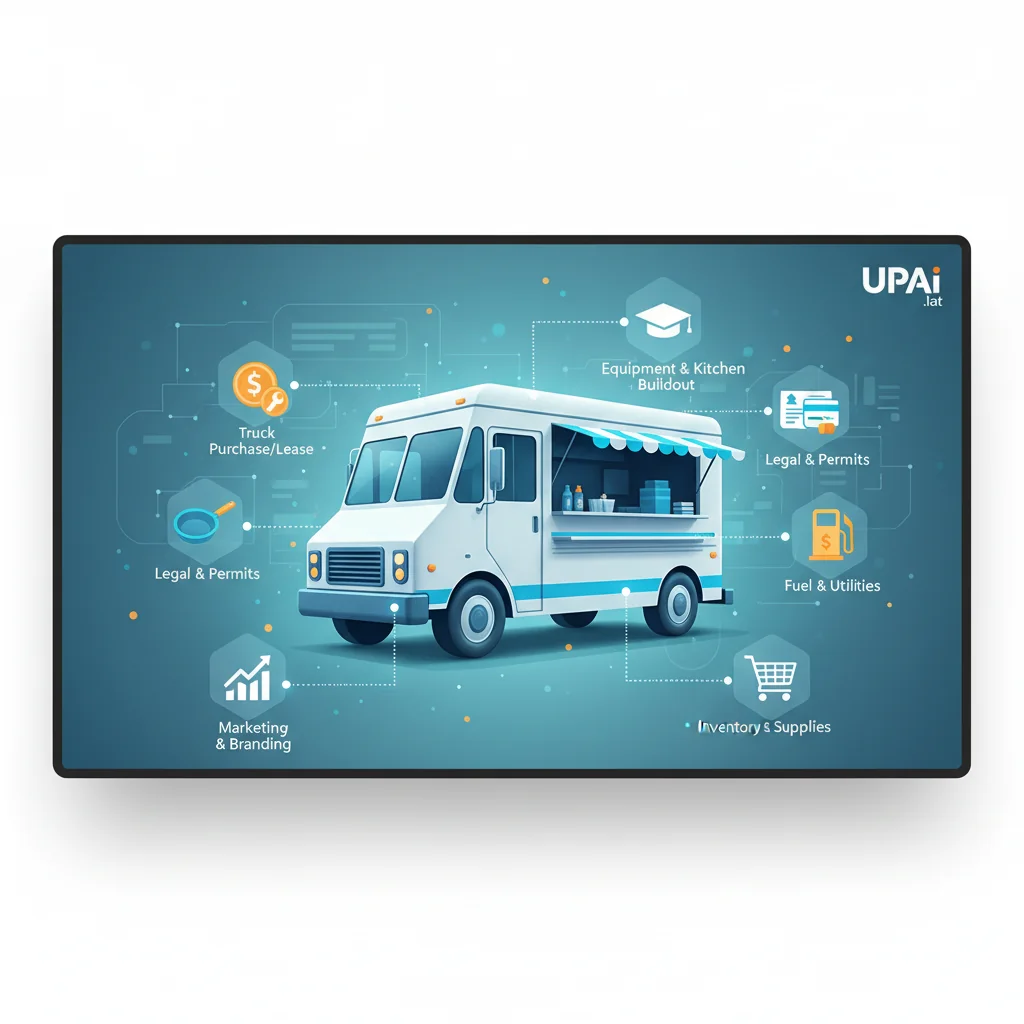
What Ongoing Operational Expenses Should a Food Truck Owner Anticipate?
Ongoing operational expenses are the recurring costs necessary to keep a food truck running daily, encompassing everything from ingredients and fuel to labor and insurance, typically amounting to $2,000 to $8,000+ per month. Neglecting to accurately budget for these variable and fixed costs can quickly lead to cash flow problems, even for a popular food truck.Food Inventory and Supplies Management
The cost of food inventory and supplies represents one of the largest and most variable ongoing expenses for any food business. Effective management of these costs, including sourcing, storage, and waste reduction, directly impacts profitability.Key considerations for food and supply costs:
- **Raw Ingredients:** This is your primary recurring cost, fluctuating based on menu, seasonality, and supplier relationships. Budget 25-40% of your revenue for food costs.
- **Packaging Supplies:** Disposable containers, napkins, cutlery, and bags are essential. Costs depend on volume and material quality, typically $300-$800 per month.
- **Cleaning Supplies:** Maintaining hygiene requires regular purchase of detergents, sanitizers, gloves, and other cleaning agents, costing $50-$150 per month.
- **Small Wares:** Replacements for broken dishes, utensils, or small kitchen tools are ongoing, though less frequent than food, budget $50-$100 per month.
Fuel, Generator, and Vehicle Maintenance Costs
Because a food truck is a mobile business, fuel for both the vehicle and generator, along with regular maintenance, are significant and unavoidable operational expenses. These costs can fluctuate based on gas prices, driving distances, and the age/condition of your truck.- **Vehicle Fuel:** Depending on your route and events, expect to spend $200 to $800 per month on diesel or gasoline for the truck itself.
- **Generator Fuel:** Propane or gasoline for the generator, essential for powering kitchen equipment, can add another $100 to $400 per month.
- **Routine Maintenance:** Oil changes, tire rotations, brake inspections, and other preventative maintenance are crucial for vehicle longevity and safety, budgeting $100 to $300 per month on average.
- **Unexpected Repairs:** While hard to predict, setting aside funds for unforeseen repairs (engine issues, equipment malfunctions) is wise. This can be a few hundred to several thousand dollars per incident.
Commissary Kitchen Fees and Comprehensive Insurance
Most jurisdictions require food trucks to operate out of a licensed commissary kitchen for food prep, storage, and waste disposal. This, along with comprehensive insurance, forms a significant part of your fixed monthly expenses, ensuring compliance and protection.A **Commissary Kitchen** is a licensed commercial kitchen facility that food trucks and other mobile food operations use for food preparation, storage, cleaning, and waste disposal, as required by health departments.
| Cost Category | Type | Typical Monthly Range | Description |
|---|---|---|---|
| Commissary Kitchen Fees | Fixed | $300 - $1,200 | Mandatory fees for licensed kitchen space, storage, and waste disposal. |
| Commercial Auto Insurance | Fixed | $200 - $600 | Coverage for vehicle, liability, and often contents; varies by coverage and driver history. |
| General Liability Insurance | Fixed | $50 - $150 | Protects against claims of injury or property damage to customers. |
| Workers' Compensation | Fixed | Varies (per employee) | Mandatory insurance for employee injuries (if you have staff). |
| Food Inventory | Variable | $1,500 - $5,000+ | Cost of raw ingredients, fluctuates with sales volume and menu. |
| Fuel (Vehicle & Generator) | Variable | $300 - $1,200 | Dependent on driving distance, generator usage, and fuel prices. |
| Labor Wages | Variable | $1,000 - $4,000+ | Hourly wages, tips, and payroll taxes for staff; scales with hours worked. |
| Marketing & Advertising | Variable | $100 - $500+ | Social media ads, event fees, promotional materials; can be adjusted. |
| Permit Renewals | Fixed/Annual | $50 - $100 (monthly avg.) | Annual renewal fees for various permits, amortized monthly. |
Labor Costs and Utilities
Staffing your food truck and covering utility expenses are crucial for daily operations. Labor costs include wages, payroll taxes, and potential benefits, while utilities cover propane, electricity (if not fully generator-dependent), and water.- **Wages and Salaries:** If you hire staff (cooks, cashiers), labor will be a significant ongoing cost. Expect to pay hourly wages, potentially tips, and factor in payroll taxes (e.g., FICA, unemployment). This can range from $1,000 to $4,000+ per month per employee.
- **Payroll Taxes:** Budget an additional 10-15% on top of gross wages for employer-paid payroll taxes.
- **Propane/Electricity:** Beyond generator fuel, propane is often used for cooking appliances. If you connect to shore power at events or your commissary, electricity costs will apply. Budget $50-$200 per month.
- **Water:** For washing and cooking (beyond what's in your tanks), you might incur water costs at your commissary or event locations.
How Much Does It Cost to Outfit and Customize a Food Truck's Interior?
Outfitting and customizing a food truck's interior involves significant investment in commercial-grade kitchen equipment, safety systems, and efficient layout design, typically ranging from $35,000 to $100,000+ for a comprehensive build-out. These costs are critical because the interior setup directly impacts your menu's capabilities, operational efficiency, and compliance with health and safety regulations.Core Cooking and Refrigeration Equipment
The selection and installation of your primary cooking and refrigeration equipment are central to your food truck's functionality and menu. Investing in durable, efficient, and appropriately sized appliances is crucial for long-term success.Essential equipment and their typical price ranges:
- **Grill/Griddle:** $1,500 - $5,000
- **Deep Fryer:** $1,000 - $4,000 (single or double basket)
- **Convection Oven:** $2,000 - $8,000
- **Commercial Burner Range:** $1,000 - $4,000
- **Under-counter Refrigerator/Freezer:** $1,500 - $4,000 each
- **Prep Table Refrigerator:** $2,000 - $5,000 (with cutting board tops)
- **Ice Machine:** $1,000 - $3,000 (if needed)
- **Coffee/Beverage Equipment:** $500 - $5,000 (espresso machine, soda dispenser, etc.)
Safety Systems: Fire Suppression and Ventilation
Compliance with fire and health safety regulations is non-negotiable and requires specific, certified systems for fire suppression and ventilation. These installations are complex and must be performed by qualified professionals, making them a significant part of the budget.- **Fire Suppression System (Ansul System):** A mandatory requirement for most commercial cooking operations, these systems automatically detect and extinguish fires. Installation and certification can cost $4,000 to $10,000.
- **Commercial Exhaust Hood and Fan System:** Essential for removing smoke, grease, and heat, ensuring a safe and comfortable working environment. Costs range from $3,000 to $8,000, depending on size and power.
- **Propane/Gas Line Installation:** If using gas appliances, professional installation and safety checks for propane tanks and lines are critical. Budget $1,000 to $3,000.
- **Electrical System Wiring:** A robust electrical system capable of handling all equipment is vital. This includes wiring, outlets, and a breaker panel, costing $2,000 to $6,000.
Point-of-Sale (POS) Systems and Technology Integration
Modern food trucks rely on efficient Point-of-Sale (POS) systems for order taking, payment processing, and inventory management. Integrating these technologies streamlines operations and enhances customer experience.A **POS System** (Point-of-Sale System) is a combination of hardware and software used to process transactions, manage inventory, track sales, and often handle customer relationship management in a retail or food service environment.
- **POS Hardware:** Tablet, cash drawer, receipt printer, and card reader. Initial setup can cost $500 to $2,000.
- **POS Software Subscription:** Monthly fees for POS software typically range from $50 to $200, depending on features (e.g., inventory tracking, online ordering integration).
- **Internet Connectivity:** A reliable mobile hotspot or dedicated internet plan for your POS and online orders, costing $50 to $100 per month.
- **Sound System/Menu Displays:** Digital menu boards or simple printed menus and a basic sound system for music can add $200 to $1,000.
Custom Fabrication and Interior Design
Beyond standard equipment, custom fabrication and thoughtful interior design optimize your workflow and maximize the limited space within a food truck. This includes custom shelving, countertops, and ergonomic layouts.- **Stainless Steel Fabrication:** Custom stainless steel work surfaces, shelving, and wall panels are durable and hygienic, costing $2,000 to $10,000, depending on complexity.
- **Flooring:** Commercial-grade, non-slip flooring is essential for safety and cleanliness. Installation can range from $500 to $2,000.
- **Lighting:** Proper interior lighting ensures a safe and efficient workspace, costing $300 to $1,000 for LED fixtures.
- **Serving Window & Counter:** The design and installation of your serving window and exterior counter are crucial for customer interaction, costing $1,000 to $3,000.
What Are the Marketing and Branding Costs for a New Food Truck?
Marketing and branding costs for a new food truck are essential investments, typically ranging from $2,000 to $10,000+ initially, and $100 to $500+ monthly, to establish your identity, attract customers, and build a memorable presence. These expenses cover everything from your truck's visual appeal to your digital footprint and initial promotional efforts, directly influencing your ability to stand out in a competitive market.Truck Wrap, Signage, and Menu Design
Your food truck's exterior is your most visible marketing asset, acting as a moving billboard. A professional truck wrap, eye-catching signage, and a clear, appealing menu design are crucial for attracting attention and communicating your offerings.- **Full Truck Wrap:** A high-quality, custom vinyl wrap can cost $3,000 to $10,000, depending on the size of the truck and complexity of the design. This is a one-time major investment that offers continuous brand exposure.
- **Exterior Signage:** Additional signs, such as LED open/closed signs or specific promotional banners, can cost $100 to $500.
- **Menu Board Design & Printing:** Professionally designed and printed menus, both for the truck and potentially for digital display, can cost $200 to $1,000. Ensure your menu is clear and easy to read. You can use a tool like UPAI's Readability checker to ensure your menu descriptions are easily understood by customers.
- **Logo Design:** A professional logo is the cornerstone of your brand identity, typically costing $300 to $1,500 from a graphic designer.
Building an Online Presence: Website and Social Media
In today's digital age, a strong online presence is indispensable for a food truck. A functional website and active social media channels allow customers to find your location, view your menu, and engage with your brand.- **Website Development:** A basic, mobile-responsive website displaying your menu, schedule, location, and contact information can cost $500 to $2,500 for initial setup, plus $10 to $50 monthly for hosting and domain.
- **Social Media Management:** While you can manage social media yourself, professional help for content creation, scheduling, and engagement can cost $200 to $800 per month.
- **Online Advertising:** Running targeted ads on platforms like Facebook, Instagram, or Google can effectively reach potential customers. Budget $100 to $500+ per month, depending on your goals.
- **Email Marketing Tools:** Subscriptions for email marketing services to send out newsletters or promotions cost $20 to $100 per month.
- **SEO Optimization:** Ensuring your website and online listings are optimized for search engines is crucial for discoverability. Tools like UPAI's SEO Checker can help analyze your page's performance, and SERP Preview allows you to see how your listings appear in Google.
Initial Promotional Materials and Events
Beyond digital efforts, direct promotional materials and participation in local events are vital for generating buzz and securing early customers. These costs contribute to initial brand recognition and direct sales opportunities.- **Flyers, Business Cards, & Stickers:** Printing costs for tangible promotional items can range from $100 to $500.
- **Merchandise:** T-shirts, hats, or other branded merchandise can be sold or given away, fostering brand loyalty. Initial investment $200 to $1,000.
- **Event Fees:** Participation in food truck festivals, local markets, or private events often involves vendor fees, ranging from $50 to $500+ per event.
- **Grand Opening/Launch Promotion:** Costs for a special launch event, including discounts, giveaways, or live music, can range from $200 to $1,000+.
- **Photography:** Professional food photography for your menu and marketing materials is a worthwhile investment, costing $300 to $1,000 per session.
How Can Aspiring Food Truck Owners Secure Funding?
Securing adequate funding is a critical step for any aspiring food truck owner, requiring a clear understanding of various financing avenues and a well-structured business plan. Most food truck entrepreneurs combine multiple funding sources, ranging from traditional bank loans and government-backed programs to personal investments and crowdfunding, to cover the substantial startup costs.Traditional Bank Loans and SBA Programs
Traditional lending institutions and government-backed programs offer structured financing options that can provide significant capital, often with competitive interest rates and longer repayment terms, especially for well-prepared applicants.- **Small Business Administration (SBA) Loans:** The SBA doesn't lend directly but guarantees portions of loans made by commercial lenders, making it easier for small businesses to qualify. SBA 7(a) loans are versatile and can cover a wide range of startup costs.
- **Term Loans:** Standard bank loans with a fixed interest rate and repayment schedule. Banks typically require a solid business plan, collateral, and a good personal credit score.
- **Equipment Loans:** Specific loans designed to finance the purchase of equipment, where the equipment itself often serves as collateral. This is ideal for funding the truck and kitchen build-out.
- **Lines of Credit:** A flexible borrowing option that allows access to funds up to a certain limit, useful for managing cash flow and unexpected expenses.
Crowdfunding and Personal Investments
For those who may not qualify for traditional loans or prefer alternative funding methods, crowdfunding and leveraging personal resources or networks can be effective ways to raise capital.- **Crowdfunding Platforms:** Websites like Kickstarter, Indiegogo, or specialized food-focused platforms allow you to solicit small investments from a large number of people, often in exchange for rewards (e.g., free meals, merchandise).
- **Personal Savings:** Using your own savings reduces debt and interest payments, but exposes personal assets to business risk.
- **Friends and Family Loans:** Borrowing from personal networks can be more flexible than institutional loans but requires clear agreements to maintain relationships.
- **Angel Investors/Venture Capital:** While less common for small food truck startups, if you have a highly scalable concept or plan for a fleet, seeking angel investors might be an option.
The Critical Role of a Robust Business Plan
Regardless of the funding source, a comprehensive and well-researched business plan is indispensable. It serves as your roadmap, demonstrates your understanding of the market, and proves your financial viability to potential lenders or investors.A strong business plan should include:
- **Executive Summary:** An overview of your business concept, mission, and financial projections.
- **Company Description:** Details about your food truck, target market, and unique selling proposition.
- **Market Analysis:** Research on your target customers, competition, and industry trends.
- **Menu and Operations Plan:** A detailed description of your menu, suppliers, daily operations, and staffing needs.
- **Marketing and Sales Strategy:** How you plan to attract and retain customers, including branding and promotional activities.
- **Financial Projections:** Detailed startup costs, projected profit and loss statements, cash flow analysis, and break-even analysis. This is where the Earn Calculator can help estimate potential revenue.
- **Management Team:** Information about your experience and the expertise of your key personnel.
Thoroughly researching and documenting your costs using tools like UPAI's Keyword Density for market research terms, or Headline Analyzer for your business plan's executive summary, can strengthen your appeal to lenders.
Conclusion: Plan Smart, Cook Big
Launching a food truck is an exciting entrepreneurial venture that offers flexibility and a direct connection with customers, but it demands meticulous financial planning and a clear understanding of all associated costs. While the initial investment can range significantly, a detailed budget encompassing vehicle acquisition, equipment, permits, insurance, and ongoing operational expenses is essential for success. By anticipating both visible and hidden costs, securing appropriate funding, and focusing on efficient operations, aspiring food truck owners can navigate the challenges and build a thriving mobile culinary business. Remember that a well-crafted content strategy and SEO-optimized online presence are just as important for your truck's visibility as its appealing menu. To streamline your content creation and ensure your digital marketing efforts are as robust as your food, consider how UPAI can Automate Your Blog with AI, freeing you to focus on what you do best: cooking delicious food.Technology and Point-of-Sale (POS) Systems: Modernizing Your Mobile Kitchen
In today's fast-paced culinary landscape, integrating efficient technology is no longer a luxury but a necessity for food truck operations. From taking orders to processing payments and managing inventory, a robust Point-of-Sale (POS) system and related tech infrastructure can significantly streamline your workflow, enhance customer experience, and provide crucial data for decision-making. These technological investments represent a notable portion of your startup costs, but they pay dividends in operational efficiency and accuracy.
POS Hardware Costs
The physical components of your POS system are the foundation of your transactional capabilities. These typically include:
- Tablet or Terminal: A dedicated POS terminal or a ruggedized tablet (iPad, Android tablet) serves as the primary interface for order entry. Costs can range from $300 to $1,500 depending on the brand, durability, and features.
- Cash Drawer: Essential for handling cash transactions securely. Expect to pay between $100 and $250.
- Receipt Printer: For customers who prefer a physical receipt, a thermal printer is standard. Prices generally fall between $150 and $400. Consider wireless or Bluetooth options for flexibility.
- Card Reader: Crucial for processing credit and debit card payments. Basic swipe/chip readers can be free or cost around $50-$100, while more advanced tap-to-pay (NFC) readers might be $150-$300. Many payment processors offer these as part of their service.
- Network Equipment: A reliable Wi-Fi router and potentially a mobile hotspot or cellular data plan are vital for connectivity, especially on the go. Initial setup can be $100-$300, plus ongoing monthly data fees.
POS Software and Subscription Fees
Beyond the hardware, the software that powers your POS system is typically subscription-based. These fees often vary based on features, number of terminals, and transaction volume. Popular food truck POS systems like Square, Toast, Clover, or Revel offer different tiers.
- Monthly Software Fees: Expect to budget anywhere from $0 (for very basic plans) to $150+ per month. Higher-tier plans include advanced inventory management, detailed reporting, employee management, and CRM features.
- Setup/Implementation Fees: Some more complex systems might charge an initial setup or onboarding fee, ranging from $0 to $500, though many cloud-based systems are designed for self-setup.
Payment Processing Fees
Every credit or debit card transaction will incur a fee from your payment processor. These are usually a percentage of the transaction amount plus a small fixed fee.
- Transaction Rates: Typically range from 1.5% to 3.5% + $0.10-$0.30 per transaction. It's crucial to compare these rates as they significantly impact your profitability, especially with high sales volumes.
- PCI Compliance Fees: Some processors charge a small annual fee (e.g., $50-$100) to ensure your system meets Payment Card Industry (PCI) data security standards.
Additional Technology Considerations
Depending on your operational scale and desired features, you might also invest in:
- Kitchen Display Systems (KDS): Digital screens in the kitchen that display orders, improving efficiency and accuracy. Initial hardware and software can cost $500-$1,500 per screen.
- Online Ordering Platform: If you plan to offer pre-orders or catering, integrating an online ordering system (either through your POS provider or a third-party like ChowNow, Toast, etc.) will incur setup fees ($0-$500) and/or monthly subscription costs ($50-$200).
- Inventory Management Software: While some POS systems include this, dedicated solutions offer more robust features for tracking ingredients, managing suppliers, and reducing waste. Standalone options can cost $30-$100 per month.
Factoring in these technology costs from the outset ensures you build a modern, efficient food truck operation capable of handling the demands of a busy service while providing a seamless experience for your customers.
Initial Staffing and Training Costs: Building Your Dream Team
While ongoing labor costs are a significant operational expense, the initial investment in recruiting, hiring, and training your food truck staff is a distinct startup cost that requires careful budgeting. A well-trained and motivated team is crucial for delivering consistent food quality, excellent customer service, and efficient operations, directly impacting your brand's reputation and profitability.
Recruitment and Hiring Expenses
Finding the right people can involve various costs, especially if you're looking for experienced culinary professionals or reliable counter staff:
- Job Postings: Advertising on job boards (e.g., Indeed, LinkedIn, local culinary schools) can range from $0 (for basic listings) to $200+ per posting for sponsored or premium placements.
- Background Checks: Essential for ensuring trustworthiness and safety. These typically cost between $25 and $75 per applicant.
- Drug Testing: Depending on local regulations and company policy, drug testing might be required, costing $30-$60 per test.
- Applicant Tracking Systems (ATS): For larger hiring efforts, an ATS can help manage applications, though most food trucks manage this manually or through basic HR software.
Initial Training Wages and Materials
Your new hires won't be productive from day one. You'll need to pay them for their training period, which is an investment in their future performance.
- Training Time Wages: Budget for 1-2 weeks of paid training per employee, covering menu knowledge, POS operation, food safety protocols, customer service standards, and truck specific operations. If you hire 2-3 staff at minimum wage (e.g., $15/hour) for 20-40 hours each, this can quickly add up to $600-$1,800+ per employee in initial training wages.
- Training Materials: Costs for printing manuals, creating recipe cards, or investing in online food safety certification programs (e.g., ServSafe) can range from $50 to $200.
- Uniforms: Providing branded uniforms (t-shirts, aprons, hats) ensures a professional appearance and helps build team identity. Budget $50-$150 per employee for an initial set.
Onboarding and Administrative Costs
There are also administrative costs associated with bringing new employees on board:
- Payroll Setup: While ongoing, the initial setup with a payroll service can involve a small fee or be included in the first month's subscription (e.g., $50-$100).
- HR Software (Optional): For managing employee records, scheduling, and benefits. Basic versions might be free, while more comprehensive solutions can cost $20-$50 per month per employee.
By allocating a specific budget for initial staffing and training, you set your food truck up for success with a competent and cohesive team from day one, minimizing turnover and maximizing operational efficiency.
Menu Development and Initial Inventory Strategy: Crafting Your Culinary Identity
The heart of any food truck is its menu. Developing a compelling, efficient, and profitable menu is a critical startup phase that involves more than just cooking. It includes recipe testing, ingredient sourcing, and strategic initial inventory planning to ensure both quality and cost-effectiveness. These activities require upfront investment in time, ingredients, and sometimes, professional expertise.
Recipe Testing and Development Costs
Before you can sell a single item, you need to perfect your recipes. This process can be iterative and involves significant ingredient consumption.
- Ingredient Costs: Repeated purchases of ingredients for experimentation, trial batches, and taste tests. Depending on the complexity and number of menu items, this could range from $200 to $1,000+.
- Equipment for Testing: While you'll have your truck's equipment, you might need specific smallwares or tools for initial development in a commissary kitchen or home.
- Professional Consultation (Optional): If you're not a seasoned chef, hiring a culinary consultant for menu engineering, recipe costing, or operational flow advice can be invaluable. This could be a one-time fee of $500 to $2,000+.
- Packaging Testing: Experimenting with various takeout containers, wraps, and bags to ensure food holds well, is presentable, and meets sustainability goals. Initial samples and small orders can cost $100-$300.
Initial Inventory Procurement Strategy
Your first major food purchase will be for your grand opening and initial weeks of operation. This requires careful planning to avoid waste and ensure you have sufficient stock.
- Initial Food and Beverage Inventory: This is one of the largest immediate cash outflows. Based on your menu, expected volume, and supplier relationships, this could range from $1,000 to $5,000+. Factors influencing this include:
- Menu Simplicity: A smaller, focused menu generally requires less diverse inventory.
- Shelf Life: Prioritizing ingredients with longer shelf lives can reduce spoilage risk.
- Supplier Minimums: Some wholesale suppliers have minimum order requirements that might lead to larger initial purchases.
- Perishables vs. Non-Perishables: A larger portion of your initial spend will be on non-perishable goods (spices, dry goods, oils, sauces) that can be bought in bulk.
- Cleaning Supplies: Essential for maintaining hygiene standards from day one. Budget $100-$300 for initial stock of detergents, sanitizers, gloves, and paper products.
- Smallwares and Utensils: While major equipment is covered, initial purchases of knives, cutting boards, serving spoons, tongs, and other small kitchen tools are necessary. Expect $200-$500.
Waste Management and Cost Control Planning
While not a direct "startup cost," developing a strategy for waste management from the outset helps control ongoing food costs and impacts your initial inventory decisions.
- Portion Control Tools: Investing in scales and portioning scoops helps standardize recipes and reduce waste. ($50-$150)
- Inventory Tracking System: Utilize your POS system's inventory features or a dedicated software to track usage, identify popular items, and minimize over-ordering.
- Supplier Relationships: Establishing relationships with reliable suppliers who offer competitive pricing and flexible delivery schedules is crucial.
A well-thought-out menu and inventory strategy not only defines your culinary offering but also lays the groundwork for financial efficiency and long-term sustainability.
Comprehensive Food Truck Insurance: Beyond the Basics
Insurance is a non-negotiable cost for any business, and food trucks, with their unique blend of mobile operations, cooking equipment, and public interaction, require a robust insurance portfolio. While general insurance was mentioned as an ongoing expense, understanding the specific types and their initial premium implications is vital for a comprehensive startup budget.
Initial premiums are typically paid upfront for the first six months to a year, representing a significant startup outlay before becoming an ongoing operational cost.
Types of Essential Food Truck Insurance
- Commercial Auto Insurance: This is distinct from personal auto insurance and covers your food truck as a commercial vehicle. It protects against accidents, theft, and damage to the vehicle itself, as well as liability for injuries or property damage caused by your truck. Given the specialized nature of food trucks, these policies tend to be more expensive than standard commercial auto insurance. Initial premiums can range from $1,500 to $4,000+ annually, depending on the truck's value, driving record, and coverage limits.
- General Liability Insurance: Also known as "slip and fall" insurance, this covers claims of bodily injury or property damage that occur on your premises (e.g., a customer trips over a power cord, or your truck causes damage to a venue's property). This is crucial for any business interacting with the public. Annual premiums typically range from $500 to $2,000.
- Property Insurance: This covers damage to your food truck's equipment and inventory due to perils like fire, theft, vandalism, or certain natural disasters. Given the high value of specialized kitchen equipment, this is essential. Annual costs can be $500 to $2,500+, depending on the value of your assets.
- Workers' Compensation Insurance: If you plan to hire employees, this is legally required in most states. It covers medical expenses and lost wages for employees injured on the job. Premiums vary significantly based on payroll, industry risk, and state regulations, but can easily add hundreds to thousands of dollars annually.
- Product Liability Insurance: This protects your business from claims arising from foodborne illnesses, allergic reactions, or other harm caused by the food or beverages you serve. This is critically important for any food business. Annual premiums typically range from $300 to $1,000.
- Business Interruption Insurance: While optional, this can be invaluable. It covers lost income and extra expenses if your food truck is forced to temporarily close due to a covered peril (e.g., fire, major equipment breakdown). Costs vary widely based on coverage limits.
Factors Affecting Initial Insurance Premiums
- Location: Insurance rates vary by state, county, and even specific cities due to differing regulations, crime rates, and weather risks.
- Coverage Limits and Deductibles: Higher coverage limits mean higher premiums; higher deductibles mean lower premiums but more out-of-pocket expense if you file a claim.
- Claims History: A clean driving and business claims history can lead to lower rates.
- Type of Food: Certain types of food (e.g., raw seafood, highly allergenic items) might be considered higher risk, affecting product liability premiums.
- Driver Experience: The experience and driving records of your truck's operators will impact commercial auto rates.
- Safety Measures: Installing safety features like fire suppression systems, security cameras, and maintaining good food safety practices can sometimes lead to discounts.
Securing adequate insurance is not just about compliance; it's about protecting your significant investment and ensuring your business can recover from unforeseen events. Always obtain quotes from multiple insurance providers specializing in food truck coverage to find the best rates and comprehensive protection.
Food Truck Franchise vs. Independent Startup: A Cost Comparison
When embarking on the food truck journey, one fundamental decision is whether to launch an independent brand from scratch or invest in a food truck franchise. Both paths offer unique advantages and disadvantages, particularly concerning initial startup costs and ongoing financial commitments. Understanding these differences is crucial for making an informed decision that aligns with your entrepreneurial goals and financial capacity.
Below is a comparison table outlining key cost categories for both independent and franchise food truck models:
| Cost Category | Independent Food Truck Startup | Food Truck Franchise |
|---|---|---|
| Initial Franchise/Licensing Fee | $0 | Typically $25,000 - $75,000+. This is a one-time fee to use the brand name, recipes, and operational system. |
| Food Truck Vehicle & Build-out | $50,000 - $150,000+ (new/used, custom build). Full control over design and equipment choices. | Often a specific model/spec mandated by franchisor. Cost can be similar to independent, but less flexibility. May be purchased directly from franchisor or approved vendor. |
| Equipment | $10,000 - $40,000+. Freedom to choose brands and types. | Specific equipment list often mandated by franchisor, sometimes at a premium through approved suppliers. |
| Menu Development & Recipe Testing | $200 - $1,000+. Significant time and ingredient costs for R&D. | Minimal to no cost. Recipes and menu items are provided, tested, and standardized. |
| Initial Inventory | $1,000 - $5,000+. Sourcing from various suppliers. | Similar range, but often mandated to purchase specific ingredients from approved suppliers, which may have different pricing structures. |
| Marketing & Branding | $1,000 - $10,000+ (logo, website, social media, initial campaigns). Full creative control. | Initial marketing materials often provided. Ongoing national/local marketing fees (e.g., 1-5% of gross sales). Benefits from established brand recognition. |
| Licenses, Permits & Legal Fees | $500 - $5,000+. Research and application process entirely your responsibility. | Similar costs, but franchisor may provide guidance or templates for applications. |
| Training | Cost of training staff (initial wages, materials). Self-directed owner training. | Mandatory, comprehensive training provided by franchisor (often included in franchise fee, but travel/accommodation extra). Staff training on established systems. |
| Working Capital / Contingency | $5,000 - $20,000+. Essential for unexpected costs. | Similar requirement, often recommended by franchisor as a buffer. |
| Ongoing Royalties | $0 | Typically 4% - 8% of gross sales, paid weekly or monthly to the franchisor. |
Pros and Cons: Independent vs. Franchise
Independent Food Truck Startup:
- Pros:
- Full Creative Control: You dictate the menu, brand, design, and operational style.
- No Franchise Fees or Royalties: All profits (after expenses) are yours.
- Flexibility: Adapt quickly to market trends, customer feedback, and location opportunities.
- Personal Brand Building: The success is entirely your own creation.
- Cons:
- Higher Risk: No established brand recognition or proven business model.
- More Responsibility: Everything from menu development to marketing is on your shoulders.
- Steeper Learning Curve: You're navigating all aspects of the business for the first time.
- Greater Initial Marketing Effort: Building brand awareness from scratch takes time and money.
Food Truck Franchise:
- Pros:
- Established Brand Recognition: Benefit from an existing customer base and reputation.
- Proven Business Model: Access to tested recipes, operational procedures, and supply chains.
- Training and Support: Franchisors provide initial and ongoing training, marketing support, and operational guidance.
- Reduced Risk: Statistically, franchises often have a higher success rate due to established systems.
- Easier Funding: Lenders may view franchises as less risky, potentially making financing easier.
- Cons:
- Significant Initial Franchise Fee: A large upfront cost.
- Ongoing Royalties and Marketing Fees: A portion of your sales goes to the franchisor.
- Limited Creative Control: Must adhere to franchisor's brand guidelines, menu, and operational procedures.
- Dependency on Franchisor: Your business's success can be tied to the franchisor's overall brand health and decisions.
- Approved Suppliers: May be required to purchase ingredients/supplies from specific (sometimes more expensive) vendors.
The choice between an independent food truck and a franchise boils down to your appetite for risk, your desire for creative freedom, and your financial resources. While an independent venture offers boundless potential for personal expression and higher profit margins (without royalties), a franchise provides a structured path with built-in support and a recognized brand, albeit at a higher initial and ongoing financial cost.
Frequently Asked Questions
What is the average startup cost for a food truck?
How much does a food truck itself cost?
What are the major equipment costs for a food truck?
How much should I budget for permits and licenses?
What are the typical insurance costs for a food truck?
Are there any hidden costs I should be aware of?
Related Articles

Best Business Structure for Small Tech Startups: LLC vs. C-Corp
Discover the best business structure for your small tech startup. Learn about LLCs, C-Corps, and S-Corps to protect your assets and optimize taxes. Find out which is right for you.

Best Payroll Provider for Startups: Gusto & More
Discover the best payroll provider for your startup. Explore top options like Gusto, focusing on features, ease of use, and compliance for growing businesses.

Travel Startups: Innovating the Future of Global Tourism
Explore the exciting world of travel startups disrupting the $1.5 trillion global industry with innovative tech and new market segments. Discover their impact today!
More free AI tools from the same team
Grow your LinkedIn presence on autopilot. Try LinkedIn automation and AI content for free.
Read the Linkesy blogAsk AI about UPAI
Click your favorite assistant to learn more about us