
Best Feature Flag Tools for Startups: Flagsmith & Unleash

Selecting a good feature flag tool for startups involves prioritizing cost-effectiveness, ease of integration, and robust targeting capabilities, with Flagsmith and Unleash emerging as strong contenders due to their open-source options and scalability. Feature flags, also known as feature toggles, are a software development technique that allows you to turn features on or off without deploying new code, providing immense agility for rapidly evolving products. For startups, this agility is not just a convenience but a strategic imperative, enabling rapid iteration, controlled rollouts, and data-driven decision-making crucial for market validation and growth.
The right tool empowers development teams to decouple deployment from release, mitigating risk and accelerating the pace of innovation. It allows for A/B testing new functionalities with specific user segments, conducting gradual rollouts to monitor performance, and instantly disabling problematic features without a full redeploy. This flexibility directly translates into a more resilient product, improved user experience, and a faster path to product-market fit, making the selection of a robust yet agile feature flag solution a foundational decision for any lean startup aiming for sustainable success.
Key takeaways
- A good feature flag tool for startups must offer a balance of affordability, ease of integration, and powerful targeting features to support rapid iteration.
- Feature flags enable startups to decouple code deployment from feature release, allowing for safer rollouts, A/B testing, and instant kill switches for problematic features.
- Essential criteria for tool selection include cost structure (open-source vs. SaaS), SDK availability, scalability, user segmentation capabilities, and a clear user interface.
- Popular tools like Flagsmith, Unleash, and LaunchDarkly each offer distinct advantages, with open-source options often appealing to budget-conscious startups seeking control.
- Common mistakes include neglecting flag lifecycle management, poor naming conventions, and insufficient testing, all of which can lead to technical debt and operational overhead.
- Integrating feature flags with content strategy allows for A/B testing headlines, CTAs, and personalized content delivery, directly impacting engagement and monetization.
What are Feature Flags and Why Do Startups Need Them?
A feature flag, also known as a feature toggle, is a software development technique that allows you to turn features on or off without deploying new code. This capability provides unparalleled control over the software release cycle, enabling developers to manage features dynamically in production environments. Feature flags act as conditional gates, wrapping specific code blocks that can be activated or deactivated based on predefined rules or parameters, offering a powerful mechanism for controlling user experiences and testing new functionalities.
Startups specifically need feature flags because they operate in highly dynamic environments where speed, experimentation, and risk mitigation are paramount. The ability to iterate quickly, test hypotheses with real users, and pivot efficiently can be the difference between success and failure. Feature flags provide the infrastructure to support these critical operational needs, allowing small teams to achieve significant impacts with limited resources.
The Core Benefits of Feature Flags for Startups
Feature flags deliver several strategic advantages that are particularly impactful for startups aiming to disrupt markets and scale rapidly. These benefits extend across development, product management, and even content strategy.
Decoupling Deployment from Release
One of the most significant advantages is the ability to deploy code to production without immediately making new features available to all users. This separation allows development teams to push unfinished features, bug fixes, or experimental code to production more frequently and with reduced risk. It creates a continuous delivery pipeline where code is always ready, but features are only unveiled when product and business teams deem them ready, often based on strategic decisions or A/B test results.
A/B Testing and Experimentation
Feature flags are the backbone of effective A/B testing, enabling startups to rigorously test new features, UI/UX changes, or content variations with specific user segments. By presenting different versions of a feature to different user groups, startups can collect empirical data on user behavior, engagement, and conversion rates. This data-driven approach ensures that product decisions are based on measurable outcomes rather than assumptions, optimizing resource allocation and maximizing the impact of new functionalities. Tools like UPAI's SERP Preview can help visualize how different content approaches might appear, while feature flags can test their actual performance.
Gradual Rollouts (Canary Releases)
Rolling out new features to 100% of the user base instantly carries inherent risks. Feature flags facilitate gradual rollouts, also known as canary releases, where a new feature is progressively exposed to a small percentage of users before expanding to the entire audience. This staged approach allows teams to monitor performance, identify bugs, and gather feedback in a controlled environment, minimizing the potential negative impact on the overall user base. If issues arise, the feature can be instantly rolled back for the affected segment.
Kill Switches for Risk Mitigation
Despite thorough testing, unforeseen issues can emerge in production. Feature flags act as instant kill switches, allowing teams to immediately disable a problematic feature without requiring a code rollback or redeploy. This capability is invaluable for maintaining system stability, protecting user experience, and preventing potential revenue loss or reputational damage. For a startup, a quick recovery from an incident can be critical for survival.
Personalized User Experiences
Beyond simple on/off toggles, sophisticated feature flag tools enable granular user targeting based on attributes like location, subscription tier, device type, or even past behavior. This allows startups to deliver highly personalized experiences, tailoring features or content to individual user segments. For content-driven businesses, this means presenting relevant articles or calls-to-action, which can be further optimized using UPAI's Headline Analyzer to ensure maximum impact.
Faster Iteration and Reduced Time-to-Market
By streamlining the release process and enabling continuous experimentation, feature flags significantly accelerate a startup's iteration cycles. Developers can work on multiple features concurrently, and product managers can launch and test new ideas with unprecedented speed. This agility reduces time-to-market for valuable features, allowing startups to respond rapidly to market changes and stay ahead of competitors.
Simplified Branch Management
In traditional development, managing multiple feature branches can become complex and lead to merge conflicts. Feature flags allow developers to integrate their work into the main codebase more frequently, even if features are not yet complete. This "trunk-based development" reduces branch sprawl and simplifies merging, improving overall developer productivity and reducing technical debt.
In summary, feature flags are not just a technical tool; they are a strategic enabler for startups. They foster a culture of experimentation, reduce risk, accelerate delivery, and ultimately help build a more resilient and user-centric product. The investment in a good feature flag tool pays dividends in agility, insights, and sustainable growth.
Essential Criteria for Choosing a Feature Flag Tool for Startups
Selecting the right feature flag tool for a startup hinges on a careful evaluation of several critical criteria that balance functionality with cost, ease of use, and scalability. Startups need tools that are not only powerful but also adaptable to their evolving needs and often constrained budgets. The ideal tool provides robust control over feature releases while remaining simple enough for lean teams to manage effectively.
A comprehensive assessment should cover technical requirements, operational considerations, and long-term strategic alignment. Ignoring any of these aspects can lead to increased technical debt, operational bottlenecks, or prohibitive costs down the line.
Cost-Effectiveness and Pricing Models
For startups, budget constraints are often a primary concern, making the pricing model a crucial factor. Tools typically offer either open-source, self-hosted solutions or SaaS (Software-as-a-Service) subscriptions.
- Open-Source: Tools like Unleash or Flagsmith offer open-source versions, which can significantly reduce upfront costs. However, they require internal resources for hosting, maintenance, and scaling, which can incur indirect costs. This model provides maximum control and data ownership.
- SaaS: Commercial solutions like LaunchDarkly or Split.io offer managed services, handling infrastructure, scalability, and security. Their pricing often scales with the number of monthly active users (MAU), flag evaluations, or team size. While more expensive, they reduce operational overhead for the startup's engineering team. Startups must carefully project their user growth to avoid unexpected cost spikes.
It is essential to compare the total cost of ownership (TCO), including development time, maintenance, and potential future scaling costs, rather than just the license fee.
Ease of Integration (SDKs, APIs)
A good feature flag tool must integrate seamlessly with a startup's existing technology stack. This means offering comprehensive and well-documented Software Development Kits (SDKs) for all relevant programming languages and platforms (e.g., JavaScript, Python, Go, iOS, Android). Strong API support is also vital for custom integrations, automation, and connecting with other tools in the development ecosystem.
The easier the integration, the faster the team can adopt and leverage the tool, minimizing initial setup time and accelerating time-to-value. Look for SDKs that are actively maintained and have a clear installation process, often available through standard package managers.
Scalability and Performance
As a startup grows, the feature flag system must scale alongside its user base and feature complexity. The tool should be able to handle a high volume of flag evaluations without introducing significant latency or performance bottlenecks to the application. This involves efficient client-side SDKs, robust server-side infrastructure for flag delivery, and intelligent caching mechanisms.
Consider the architecture: whether flag evaluations happen client-side, server-side, or a hybrid approach. Server-side evaluation typically offers more security and control, while client-side can reduce server load but requires careful management of sensitive data.
Targeting Capabilities and User Segmentation
The power of feature flags lies in their ability to target specific user segments. A robust tool provides granular targeting rules based on various user attributes (e.g., email, user ID, country, device, subscription plan) and contextual data. This allows startups to:
- Roll out features to internal teams first.
- Test features with beta users or specific customer cohorts.
- Personalize experiences based on user characteristics.
- Conduct A/B tests with precise control over audience distribution.
Look for tools that offer a flexible rule engine, allowing for complex logical conditions (AND/OR) and percentage-based rollouts to ensure precise control over who sees which feature.
Experimentation and A/B Testing Features
Beyond simple on/off toggles, a good feature flag tool facilitates robust experimentation. This includes:
- Variant Management: Easily define multiple variations of a feature for testing.
- Statistical Significance: Tools that integrate with or offer their own analytics for determining the statistical significance of A/B test results.
- Integration with Analytics: Seamless connection with popular analytics platforms (e.g., Google Analytics, Mixpanel, Amplitude) to track user behavior and measure feature impact.
The ability to run multiple experiments concurrently without interference is also a key differentiator, enabling a continuous optimization loop for product development. This data-driven approach is fundamental to refining product features and content strategies, which can be further informed by tools like UPAI's Keyword Density checker to ensure content relevance in experiments.
User Interface and Developer Experience (DX)
An intuitive and well-designed user interface (UI) is crucial for product managers, marketers, and even developers to manage flags effectively without constant engineering intervention. Key aspects include:
- Dashboard Clarity: Easy overview of all active flags, their status, and targeting rules.
- Flag Creation Workflow: Simple process for defining new flags and variants.
- Audit Logs: Comprehensive logging of who changed what, when, and why, essential for accountability and debugging.
- Documentation: Clear, up-to-date documentation for all features and SDKs.
A good developer experience means that integrating SDKs is straightforward, flag evaluation is performant, and debugging is manageable. This reduces friction and encourages wider adoption within the team.
Security and Compliance
Security is non-negotiable. The feature flag tool must offer robust security features, including:
- Access Control: Role-Based Access Control (RBAC) to define who can create, modify, or delete flags.
- Data Encryption: Secure handling of any sensitive user data used for targeting.
- Compliance: Adherence to relevant data privacy regulations (e.g., GDPR, CCPA) if applicable to the startup's operations.
- Audit Trails: Detailed logs of all flag changes, providing a clear history for compliance and debugging.
For self-hosted solutions, the startup is responsible for securing the infrastructure. For SaaS solutions, trust in the vendor's security practices is paramount.
Analytics and Reporting
Effective feature flag management extends beyond just turning features on and off; it includes understanding their impact. The tool should provide or integrate with analytics capabilities to:
- Track key metrics for each feature variant.
- Visualize A/B test results.
- Monitor feature performance in real-time.
This data empowers startups to make informed decisions about feature promotion, iteration, or deprecation. The ability to quickly assess the success or failure of a feature helps optimize development resources and improve product strategy. UPAI's Earn Calculator can help estimate the financial impact of successful feature rollouts or content changes informed by such analytics.

Top Feature Flag Tools for Startups: A Detailed Comparison
Choosing a good feature flag tool for a startup often comes down to balancing advanced capabilities with cost and ease of use, with options ranging from comprehensive enterprise solutions to agile open-source platforms. The market offers a variety of tools, each with its strengths and target audience, making it essential for startups to match their specific needs and resources with the right solution.
Here, we compare some of the most prominent feature flag tools, highlighting their key features, pricing models, and suitability for the startup environment. This comparison will help inform decision-making based on typical startup requirements like budget, technical expertise, and desired level of control.
LaunchDarkly
LaunchDarkly is widely recognized as a leader in the feature management space, offering a comprehensive and robust platform suitable for businesses of all sizes, including growth-stage startups. It provides enterprise-grade feature flagging, experimentation, and personalization capabilities.
- Key Features: Advanced targeting rules, A/B testing, comprehensive audit logs, robust SDKs for over 20 languages, rich analytics and integrations, security (SSO, RBAC), and a highly scalable architecture.
- Pricing Model: SaaS-based, typically priced per Monthly Active User (MAU) or flag evaluations, with different tiers offering varying levels of features. Can be more expensive for rapidly scaling startups but offers significant value in reduced operational overhead.
- Best For: Startups prioritizing reliability, advanced experimentation, extensive integrations, and willing to invest in a premium, fully managed solution that scales effortlessly. It's ideal for those with complex targeting needs and a strong emphasis on data-driven product development.
Split.io
Split.io positions itself as a feature experimentation platform, combining feature flagging with powerful A/B testing and impact measurement capabilities. It's designed for engineering and product teams that want to tie feature releases directly to business outcomes.
- Key Features: Feature flags, A/B/n testing, real-time performance monitoring, integration with data warehouses and analytics tools, advanced targeting, and robust security features. Focuses heavily on measuring the impact of features on key metrics.
- Pricing Model: SaaS-based, often tied to impressions (flag evaluations) and number of users. Similar to LaunchDarkly, it can be a higher investment but provides deep insights into feature performance.
- Best For: Startups with a strong focus on data-driven product decisions, continuous experimentation, and a need to directly quantify the business impact of every feature rollout. It excels in providing metrics and insights alongside feature control.
Flagsmith
Flagsmith is a compelling option for startups, offering both a hosted SaaS solution and a self-hosted open-source version. This flexibility allows startups to choose between a fully managed service and complete control over their infrastructure, often appealing to those with budget constraints or specific compliance needs.
- Key Features: Feature flags, remote config, A/B testing, user segmentation, robust SDKs for various platforms, audit logs, and a straightforward interface. The open-source nature means community support and extensibility.
- Pricing Model: Offers a free tier for small projects, competitive SaaS pricing based on monthly API calls, and a self-hosted open-source option with no direct license cost (but requires operational investment).
- Best For: Startups looking for a balance between functionality and cost. Ideal for those who might start with the free or self-hosted version to keep costs down and then transition to SaaS as they scale. Provides excellent value for money and control.
Unleash
Unleash is another strong open-source feature flag solution, primarily designed for self-hosting but also offering a commercial cloud-hosted option. It's known for its developer-centric approach and performance, making it a favorite among engineering teams.
- Key Features: Feature flags, remote configuration, rich targeting strategies, enterprise-grade performance, comprehensive SDKs, and a focus on scalability and reliability. Strong community support for the open-source version.
- Pricing Model: Free open-source version for self-hosting, with paid tiers for their enterprise/cloud offering that include additional features, support, and managed hosting.
- Best For: Startups with strong engineering capabilities that prefer open-source solutions for control, transparency, and cost efficiency. It's also suitable for those who might eventually consider their cloud offering for enterprise features and support. Excellent for performance-critical applications.
Optimizely Full Stack (now part of Optimizely One)
Optimizely is a well-established player in experimentation, and its Full Stack product offers server-side A/B testing and feature flagging. It is a powerful platform for data-driven product development and personalization.
- Key Features: Server-side A/B testing, feature flags, remote configuration, advanced audience targeting, statistical analysis, and integration with other Optimizely products for web and client-side optimization.
- Pricing Model: SaaS-based, typically at a higher price point, making it more suited for larger startups or those with significant funding, where experimentation is a core business strategy.
- Best For: Startups that are highly focused on sophisticated experimentation across multiple platforms and have the budget for a premium solution. It's particularly strong for companies where personalization and continuous optimization are central to their product strategy.
Comparison Table: Feature Flag Tools for Startups
This table summarizes the key aspects of these popular feature flag tools, providing a quick reference for startups evaluating their options.
| Tool | Primary Strengths | Pricing Model | Best Suited For Startups | Key Consideration |
|---|---|---|---|---|
| LaunchDarkly | Comprehensive, robust, enterprise-grade, extensive SDKs, advanced experimentation. | SaaS (MAU/Evaluations) | Growth-stage startups needing reliability, advanced features, and minimal operational overhead. | Higher cost, but highly scalable and feature-rich. |
| Split.io | Experimentation-focused, strong analytics, real-time impact measurement. | SaaS (Impressions/Users) | Startups prioritizing data-driven decisions and quantifying feature impact directly. | Strong focus on metrics; can be costly for high impression volumes. |
| Flagsmith | Flexible (SaaS & Open-Source), remote config, A/B testing, good value. | Free/SaaS (API calls)/Self-hosted Open-Source | Budget-conscious startups seeking control, flexibility, or starting small with growth potential. | Self-hosting requires internal resources; SaaS is competitive. |
| Unleash | Open-Source first, developer-centric, high performance, scalable. | Free/SaaS (Enterprise features) | Startups with strong engineering teams preferring open-source control and performance. | Self-hosting requires expertise; cloud offering for advanced needs. |
| Optimizely Full Stack | Powerful server-side A/B testing, deep personalization, robust analytics. | SaaS (Higher tier) | Startups with significant budget and a core strategy built around sophisticated experimentation and personalization. | Premium cost; geared towards advanced experimentation. |
Ultimately, the "good" feature flag tool for a startup is one that aligns with its current stage, technical capabilities, budget, and future growth projections. While LaunchDarkly offers unparalleled breadth, open-source options like Flagsmith and Unleash provide excellent foundations for cost-conscious or control-oriented teams. Evaluating these options against the essential criteria will lead to the most effective choice.
Implementing Feature Flags: Best Practices for Startups
Implementing feature flags effectively requires adherence to best practices that ensure agility, maintainability, and operational stability, especially for startups with limited resources. Without a structured approach, feature flags can quickly become a source of technical debt and complexity rather than a tool for acceleration. Proper management and strategic deployment are crucial for maximizing their benefits and avoiding common pitfalls.
These best practices cover the entire lifecycle of a feature flag, from its creation and naming to its eventual deprecation, helping startups maintain a clean and efficient feature management system.
Establish Clear Naming Conventions
A consistent and descriptive naming convention is fundamental for managing feature flags effectively. Clear names help team members quickly understand a flag's purpose, the feature it controls, and its intended lifecycle. Without good naming, flags can become confusing, leading to accidental misconfigurations or difficulty in identifying flags that are no longer needed.
Example convention: <team-prefix>-<feature-name>-<type> (e.g., marketing-new-onboarding-flow-abtest, dev-admin-dashboard-v2-release). The "type" could indicate if it's a release toggle, an experiment, or a permission flag.
Manage the Feature Flag Lifecycle
Feature flags are not meant to live forever. Each flag should have a defined lifecycle: creation, activation, monitoring, and eventual deprecation. Neglecting to remove old or unused flags leads to "flag debt," cluttering the system, increasing complexity, and potentially impacting performance.
- Create: Define the flag's purpose, owner, and expected lifespan.
- Activate: Turn the flag on for specific users or segments.
- Monitor: Track the feature's performance and impact.
- Decide: Based on data, decide to fully roll out the feature or revert.
- Deprecate: Once a feature is fully rolled out and stable, or discarded, remove the flag and the associated conditional code. Automate this process where possible.
Monitor Flag Performance and Impact
Every feature controlled by a flag should be continuously monitored for its performance and impact on key metrics. This includes application performance (latency, errors), user engagement, conversion rates, and any other relevant business KPIs. Integration with analytics tools is crucial here.
If a feature under a flag causes unexpected issues or negative user experience, the monitoring should trigger alerts, allowing for immediate deactivation via the kill switch. This proactive approach minimizes the blast radius of potential problems.
Implement Robust Testing Strategies
Feature flags introduce new testing considerations. It's vital to test not only the feature itself but also the flag's behavior in different states (on/off, various targeting rules). This includes:
- Unit Tests: Ensure flag logic functions as expected.
- Integration Tests: Verify the feature's interaction with other parts of the system under different flag states.
- End-to-End Tests: Simulate user journeys with different flag configurations.
- Regression Tests: Confirm that toggling a flag off doesn't break existing functionality.
Automated testing pipelines should incorporate feature flag states to ensure comprehensive coverage. Tools like UPAI's SEO Checker can be used to test the impact of feature changes on page elements that affect SEO before full rollout.
Document Everything
Comprehensive documentation for each feature flag is essential for team collaboration and long-term maintainability. This documentation should include:
- Purpose: What feature does the flag control?
- Owner: Who is responsible for the flag?
- Dependencies: Are there other flags or systems it relies on?
- Expected Lifespan: When is it expected to be removed?
- Impact: What are the potential side effects of turning it on/off?
Centralizing this information within the feature flag tool itself or a linked wiki ensures that all team members have access to critical context.
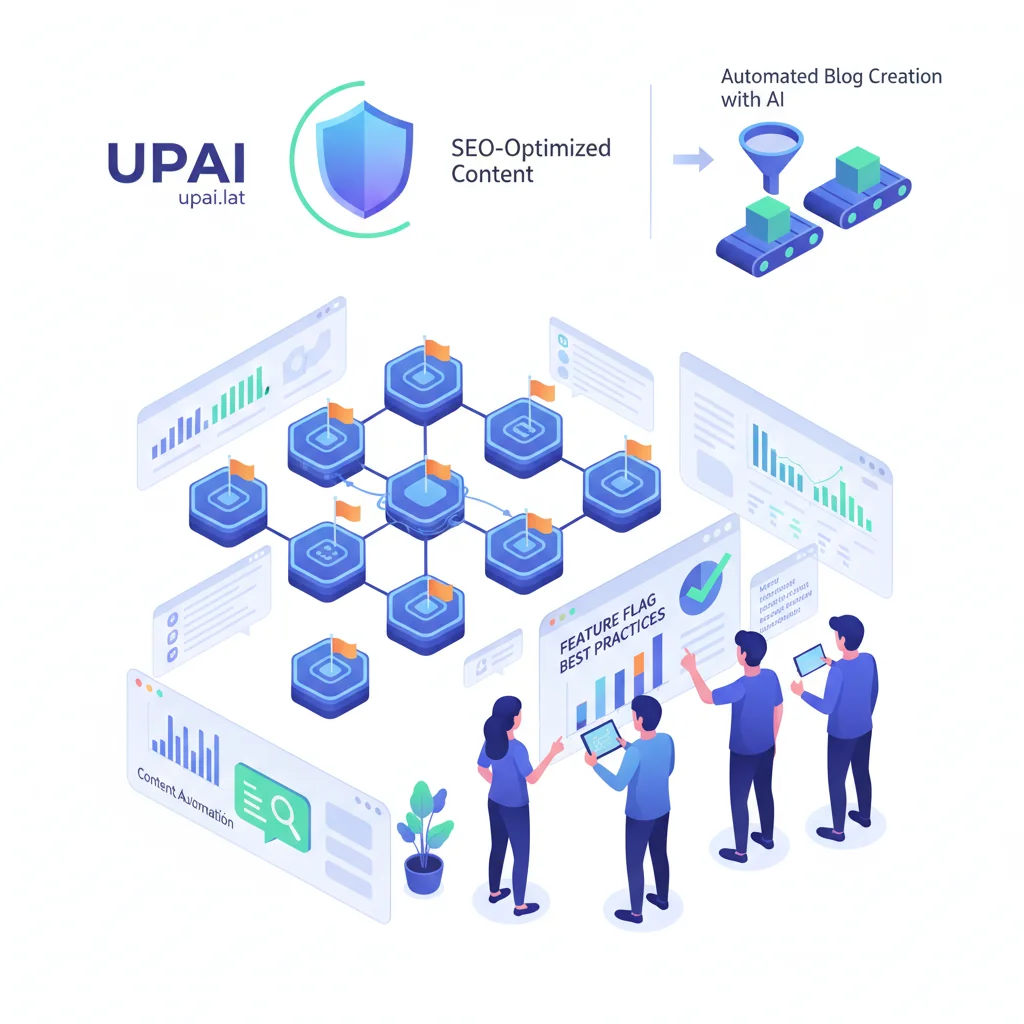
Common Mistakes Startups Make with Feature Flags (and How to Avoid Them)
While feature flags offer significant advantages, startups often stumble by making common mistakes that can negate their benefits and introduce new complexities. These errors typically stem from a lack of strategic planning, insufficient process, or underestimating the operational overhead of managing flags. Recognizing and actively avoiding these pitfalls is crucial for leveraging feature flags as a true accelerator.
Addressing these common mistakes early on can save significant time, resources, and headaches, ensuring that feature flags remain a valuable tool rather than a source of technical debt.
Creating Too Many Flags Without a Clear Strategy
One of the most frequent mistakes is flag proliferation – creating a feature flag for every minor change without a clear strategy for its purpose or lifecycle. This leads to an unmanageable number of flags, making it difficult to understand what each flag does, who owns it, or when it should be removed.
How to avoid: Implement a clear policy for flag creation. Only create flags for features that require dynamic control, A/B testing, or staged rollouts. Assign ownership to each flag and establish a review process before creation. Regularly audit flags and deprecate those no longer needed.
Poor Naming Conventions and Lack of Documentation
As discussed in best practices, ambiguous or inconsistent naming conventions can quickly lead to confusion and errors. If flag names don't clearly indicate their purpose, teams can accidentally toggle the wrong flag or struggle to debug issues related to specific features.
How to avoid: Enforce strict naming conventions (e.g., <team>_<feature>_<purpose>). Mandate documentation for every flag, detailing its purpose, owners, dependencies, and lifecycle plan. Integrate this documentation directly within the feature flag management system or a linked internal wiki.
Neglecting Flag Lifecycle Management (Flag Debt)
Failing to remove flags once their purpose is served is a critical mistake that leads to "flag debt." This technical debt clutters the codebase, increases the complexity of testing, and can lead to performance degradation or unexpected behavior as old flag logic persists.
How to avoid: Treat flags as temporary constructs. Define an explicit owner and an expected removal date for each flag at its inception. Implement regular audits to identify and remove stale flags. Automate the cleanup process where possible, ensuring that the code associated with deprecated flags is also removed.
Ignoring Security and Access Control
Without proper security measures, feature flags can become a vulnerability. Unauthorized access or accidental changes to flags can lead to features being exposed prematurely, disabled incorrectly, or even exploited maliciously.
How to avoid: Implement Role-Based Access Control (RBAC) within your feature flag tool. Ensure that only authorized personnel can create, modify, or delete flags. Regularly review access permissions. For sensitive flags, consider multi-factor authentication for changes. Audit logs are essential for tracking who made what changes and when.
Insufficient Testing of Flag States
Simply testing a feature when a flag is "on" is insufficient. A common mistake is not thoroughly testing the application's behavior when flags are "off," or when different targeting rules are applied. This can lead to unexpected bugs or regressions when a flag is toggled.
How to avoid: Incorporate feature flag states into your testing strategy. Develop automated tests that cover all possible flag combinations relevant to a feature. Test the application with flags both on and off, and with various targeting scenarios. Consider using test environments that mimic production flag configurations.
Lack of Monitoring and Alerting
Launching a feature behind a flag without adequate monitoring is like flying blind. If a new feature causes performance issues or critical bugs, a lack of real-time monitoring means the problem might go unnoticed until it impacts a significant number of users.
How to avoid: Integrate feature flag events with your application monitoring and alerting systems. Set up dashboards to track key metrics (e.g., error rates, latency, user engagement) specifically for features controlled by flags. Configure alerts to notify teams immediately if metrics deviate from baselines when a flag is active.
Over-reliance on Feature Flags for Configuration
While feature flags can act as remote configuration, over-relying on them for all configuration management can lead to an overly complex system. Simple application settings or static values are often better managed through traditional configuration files or dedicated configuration services.
How to avoid: Distinguish between feature flags (dynamic, transient feature control) and configuration settings (static, long-term application parameters). Use feature flags for features that need to be toggled, experimented with, or rolled out gradually. Use dedicated configuration management solutions for other settings.
By consciously addressing these common pitfalls, startups can harness the full power of feature flags, ensuring they remain an asset for agility and innovation rather than a source of technical debt and operational headaches.
Integrating Feature Flags with Your Content Strategy
Integrating feature flags into a content strategy allows startups to dynamically control and personalize content delivery, enabling data-driven optimization of user engagement and monetization. This approach moves beyond static content publishing to a more agile, experimental model where every piece of content can be treated as a feature to be tested, optimized, and personalized. For content-focused startups, this means directly impacting reader acquisition, retention, and conversion rates.
By leveraging feature flags, content marketers can gain unprecedented control over what content users see, when they see it, and how it performs, leading to a more effective and responsive content ecosystem.
A/B Testing Content Variations
Feature flags are indispensable for A/B testing different content elements to determine what resonates best with your audience. This can include testing various:
- Headlines: Different titles for blog posts or articles can significantly impact click-through rates. Use a feature flag to show different headlines to segmented user groups and measure engagement. UPAI's Headline Analyzer can pre-score headline options, which can then be validated via A/B tests with flags.
- Calls-to-Action (CTAs): Experiment with different wording, placement, or design of CTAs within your content to optimize conversion rates (e.g., newsletter sign-ups, product purchases).
- Introductory Paragraphs: Test different opening hooks to see which captures reader attention most effectively and reduces bounce rates.
- Image Choices: Evaluate the impact of different images or multimedia elements on reader engagement and time on page.
By segmenting your audience and presenting different content versions, you can gather empirical data to refine your content strategy, ensuring that your efforts are directed towards the most impactful elements. This iterative process is key to continuous improvement and maximizing content ROI.
Personalized Content Delivery
Feature flags enable hyper-personalization of content, tailoring the user experience based on attributes like user demographics, past behavior, subscription status, or geographic location. For example:
- New User Onboarding: Show specific introductory content or a series of helpful tips only to first-time visitors or new sign-ups.
- Subscriber-Exclusive Content: Gate premium articles or resources behind a flag that is only active for paying subscribers.
- Location-Specific Content: Display localized news, offers, or event information based on a user's IP address or declared location.
- Behavior-Driven Recommendations: Adjust content recommendations in real-time based on a user's reading history or product interactions.
This level of personalization enhances user satisfaction and relevance, leading to increased engagement, longer dwell times, and ultimately, better monetization potential. Measuring the impact of these personalized experiences can be aided by UPAI's Earn Calculator, by quantifying the financial uplift from improved engagement.
Gradual Rollouts of New Content Formats or Layouts
Introducing significant changes to your content presentation, such as a new blog layout, a different article template, or an interactive content format, carries inherent risks. Feature flags allow you to roll out these changes gradually to a small percentage of your audience first.
This staged approach enables you to monitor user feedback, track key metrics (e.g., readability scores using UPAI's Readability tool, bounce rate, session duration), and identify any technical issues before a full release. If the new format performs poorly or causes problems, you can instantly revert to the old version for the affected segment, minimizing negative impact.
Optimizing SEO with Feature Flags
While direct SEO manipulation via feature flags is not recommended (Google generally renders the default state), flags can indirectly support SEO efforts by enabling rapid experimentation and optimization of user experience signals. For instance:
- Testing Page Layouts: Experiment with different content layouts that might improve user engagement metrics (time on page, lower bounce rate), which are indirect SEO factors.
- Optimizing Internal Linking: Test different internal linking strategies to see which drives more clicks to important pages, using flags to control the display of related articles or contextual links.
- Content Refresh Strategies: Use flags to test updated versions of evergreen content against the original, measuring which version maintains better search rankings and user engagement.
Always ensure that the default state of your content (the one Googlebot sees) is optimized and that any flagged variations do not create cloaking issues. Tools like UPAI's SERP Preview can help visualize how different content versions might appear in search results, while the SEO Checker can analyze their technical SEO health.
Managing Content Expiry and Availability
Feature flags can also be used to manage the availability of time-sensitive content, such as promotional offers, seasonal campaigns, or event-specific articles. Instead of manually publishing and unpublishing, a flag can control when content becomes visible and when it disappears, reducing manual effort and potential errors.
This is particularly useful for flash sales, limited-time offers, or content relevant to ongoing events. The flag can be set to automatically activate and deactivate based on a schedule, ensuring precise control over content exposure.
By integrating feature flags into your content strategy, startups can move beyond static publishing to a dynamic, data-driven approach. This empowers content teams to experiment, personalize, and optimize their output continuously, ultimately driving better engagement, conversions, and business growth.
Future Trends in Feature Flag Management
The landscape of feature flag management is continuously evolving, driven by advancements in AI, increasing demands for automation, and the growing complexity of software ecosystems. Startups looking to stay ahead should be aware of these emerging trends, as they will shape how features are developed, deployed, and optimized in the coming years. These trends promise to make feature management even more intelligent, efficient, and integrated, offering new opportunities for rapid innovation and risk mitigation.
Feature management is the overarching discipline of controlling and deploying software features, often using feature flags as the primary mechanism. The future of this discipline points towards more autonomous and data-driven systems.
AI-Driven Experimentation and Optimization
One of the most significant trends is the integration of Artificial Intelligence (AI) and Machine Learning (ML) into experimentation platforms. Instead of manually setting up A/B tests and analyzing results, AI can:
- Automate Experiment Design: Suggest optimal variant combinations and targeting rules based on historical data.
- Real-time Optimization: Dynamically adjust traffic allocation to winning variants in real-time, maximizing positive outcomes without manual intervention.
- Anomaly Detection: Automatically identify unexpected performance dips or bugs related to active features, triggering alerts or even automated rollbacks.
- Predictive Analytics: Forecast the potential impact of new features before full rollout, improving decision-making.
This shift towards intelligent experimentation will allow startups to run more sophisticated tests with less effort, leading to faster learning cycles and more effective product iterations. This aligns with UPAI's mission of automating and optimizing content creation for maximum impact.
Low-Code/No-Code Flag Management
As feature flags become more ubiquitous, there's a growing demand for low-code or no-code interfaces that empower non-technical users (product managers, marketers) to manage flags independently. This trend aims to reduce the reliance on engineering teams for simple flag toggles or targeting rule adjustments.
- Visual Rule Builders: Drag-and-drop interfaces for creating complex targeting rules without writing code.
- Pre-defined Templates: Ready-to-use templates for common use cases like A/B tests, gradual rollouts, or kill switches.
- Intuitive Dashboards: Simplified views of flag status and impact, accessible to business users.
This democratization of feature flag management will accelerate decision-making and free up engineering resources for more complex development tasks.
Enhanced Security and Compliance
With increasing data privacy regulations (e.g., GDPR, CCPA) and the critical role feature flags play in production systems, security and compliance features will continue to evolve. Future trends include:
- Advanced RBAC: More granular role-based access control, down to individual flag properties.
- Automated Compliance Checks: Tools that automatically scan flag configurations for potential compliance risks.
- Immutable Audit Trails: Blockchain-like ledger systems for immutable records of all flag changes, crucial for regulatory compliance and forensics.
- Secure Data Handling: Enhanced encryption and anonymization techniques for user data used in targeting.
For startups operating in regulated industries, these advancements will be critical for maintaining trust and avoiding penalties.
Closer Integration with CI/CD Pipelines and Observability
Feature flag tools will become even more deeply integrated into the Continuous Integration/Continuous Delivery (CI/CD) pipelines and observability stacks. This means:
- Automated Flag Provisioning: Flags automatically created and configured as part of the build and deployment process.
- Contextual Observability: Linking flag states directly to monitoring and logging tools, allowing developers to see how specific flag configurations impact application performance in real-time.
- GitOps for Flags: Managing feature flag configurations as code in version control systems, enabling full traceability and automated deployments.
This tighter integration will create a more seamless and intelligent development workflow, where feature changes are not only deployed but also monitored and managed with unprecedented transparency.
Edge Computing and Decentralized Flag Evaluation
As applications move closer to the user (e.g., edge computing, serverless functions), feature flag evaluation will also become more decentralized. This trend aims to reduce latency and improve resilience.
- Edge-based Evaluation: Flags evaluated at the edge of the network, closer to the user, minimizing round-trip times to central flag servers.
- Offline Mode Support: Enhanced capabilities for applications to operate with cached flag states even when offline, ensuring a consistent user experience.
- Blockchain for Decentralized Control: While nascent, some explorations might involve using blockchain for immutable and decentralized flag state management, especially in highly distributed or trust-sensitive environments.
These future trends highlight a move towards more intelligent, automated, and secure feature management. Startups adopting these advancements will gain a competitive edge by accelerating their development cycles, improving product quality, and delivering highly personalized user experiences at scale.
Conclusion
Choosing a good feature flag tool for a startup is a strategic decision that profoundly impacts its ability to innovate, mitigate risk, and scale efficiently. The right tool empowers teams to decouple deployment from release, enabling rapid experimentation, gradual rollouts, and instant kill switches that are vital for navigating the volatile startup landscape. Tools like Flagsmith and Unleash offer compelling open-source options for budget-conscious teams, while LaunchDarkly provides enterprise-grade reliability and advanced features for growth-stage companies.
Successful implementation hinges on adhering to best practices, including clear naming conventions, diligent lifecycle management, robust testing, and comprehensive documentation. Avoiding common pitfalls such as flag proliferation or neglecting security ensures that feature flags remain an asset rather than a source of technical debt. Furthermore, integrating feature flags with your content strategy unlocks powerful capabilities for A/B testing headlines, personalizing content delivery, and optimizing user engagement, directly contributing to monetization efforts.
As the feature flag landscape evolves with AI-driven experimentation and low-code solutions, startups that embrace these advancements will be better positioned for sustained growth and market leadership. By carefully evaluating options against essential criteria and committing to best practices, any startup can harness the transformative power of feature flags to build more resilient products and deliver exceptional user experiences. Automate your blog with AI and strategically manage your content features to unlock its full potential. Explore UPAI's suite of tools to further optimize your content and SEO strategies.
Frequently Asked Questions
What are the most important factors for a startup when choosing a feature flag tool?
Are there any free or open-source feature flag tools suitable for startups?
How does a feature flag tool help with rapid iteration in a startup?
What kind of targeting capabilities should a startup look for in a feature flag tool?
How can feature flags help startups manage risk during new feature releases?
What is the typical integration process for a feature flag tool into a startup's existing tech stack?
More free AI tools from the same team
Grow your LinkedIn presence on autopilot. Try LinkedIn automation and AI content for free.
Read the Linkesy blogAsk AI about UPAI
Click your favorite assistant to learn more about us