
What Are the Best Startup Accelerators? Top Programs Revealed

The best startup accelerators are highly competitive programs like Y Combinator, Techstars, and 500 Global, which provide early-stage companies with seed funding, intensive mentorship, strategic guidance, and invaluable network access in exchange for a small equity stake, significantly increasing their chances of securing follow-on funding and achieving rapid growth. These programs typically boast success rates far exceeding the average for bootstrapped or unaccelerated startups, with many alumni achieving unicorn status or successful acquisitions. As of June 2026, the landscape remains dynamic, but the core value proposition of structured support and expedited growth continues to make these accelerators pivotal for aspiring entrepreneurs.
Key Takeaways
- Top accelerators like Y Combinator, Techstars, and 500 Global offer seed funding, mentorship, and network access in exchange for equity, significantly boosting startup success rates.
- The application process is rigorous, focusing on team quality, market potential, and early traction, often involving multiple interview stages and a compelling pitch.
- Successful participation requires active engagement with mentors, clear execution of program goals, and strategic preparation for Demo Day to attract follow-on investment.
- Accelerators differ from incubators and venture studios primarily in their structured, time-limited programs, equity-for-funding model, and focus on rapid scaling.
- Choosing the right accelerator involves assessing program focus, mentor network, investment terms, and post-program support, aligning it with your startup's specific needs and industry.
- Common mistakes include applying without sufficient preparation, failing to leverage the mentor network effectively, and not understanding the long-term implications of equity dilution.
What Exactly is a Startup Accelerator?
A startup accelerator is a fixed-term, cohort-based program that provides early-stage companies with seed investment, intensive mentorship, educational resources, and networking opportunities, culminating in a Demo Day where founders pitch to investors. These programs are designed to rapidly accelerate the growth and development of startups, typically over a period of 3 to 6 months, by compressing years of learning and networking into a highly structured environment. Accelerators aim to help startups refine their product, achieve market fit, and secure follow-on funding.A key characteristic of accelerators is their cohort model, meaning startups go through the program together, fostering a strong peer-support network. This distinguishes them from incubators, which often offer longer, less structured support without a fixed curriculum or guaranteed investment. The equity-for-funding model is also standard, where the accelerator takes a small percentage of the company in exchange for the initial capital and program benefits.
Defining Key Terms in the Startup Ecosystem
To fully understand the value and function of accelerators, it's essential to clarify related terms:
- Startup Accelerator: A fixed-term program offering seed funding, mentorship, and resources in exchange for equity, designed for rapid growth and investor readiness.
- Startup Incubator: An organization that helps entrepreneurs develop their ideas and companies, often without a fixed timeline or equity stake, providing office space, resources, and advice.
- Venture Studio: An entity that ideates, builds, and launches new companies internally, often providing significant operational support and taking a larger equity stake, acting more like a co-founder.
- Seed Funding: The earliest stage of venture capital financing, provided to help a startup get off the ground, often used for product development, market research, and initial hiring.
- Demo Day: The culminating event of an accelerator program where participating startups pitch their businesses to a room full of angel investors, venture capitalists, and media to secure further funding.
Understanding these distinctions is crucial for founders evaluating the best path for their nascent ventures. Each model offers different levels of support, commitment, and investment structure.
Why Do Startups Join Accelerators? The Core Benefits.
Startups join accelerators primarily to gain a significant advantage in their early growth trajectory, accessing capital, expertise, and networks that would be challenging to secure independently during their nascent stages. The structured environment forces rapid iteration and decision-making, accelerating product-market fit and business development. This concentrated period of intense focus and guided development can be the critical factor that propels a promising idea into a viable, fundable business.1. Seed Funding and Investment Opportunities
The most immediate benefit is often the seed investment provided upon acceptance. While the amount may vary (typically $20,000 to $150,000 for a 5-7% equity stake), it's crucial non-dilutive capital that allows founders to focus on product development and initial traction rather than immediate fundraising. More importantly, accelerators act as a powerful signal to later-stage investors, significantly increasing the likelihood of securing follow-on funding rounds. The stamp of approval from a reputable accelerator opens doors to venture capitalists and angel investors who trust the accelerator's vetting process.
2. Unparalleled Mentorship and Expert Guidance
Access to a diverse pool of experienced mentors is a cornerstone of accelerator programs. These mentors, often successful entrepreneurs, industry experts, or investors, provide invaluable advice on strategy, product, marketing, legal issues, and fundraising. Their guidance helps founders avoid common pitfalls, navigate complex challenges, and make informed decisions. The quality and depth of the mentor network are often key differentiators between accelerator programs.
When preparing your pitch and marketing materials for mentors and investors, remember that clarity and impact are paramount. Tools like UPAI's Readability checker can ensure your content is easy to understand, while the Headline Analyzer can help craft compelling titles for your presentations and online presence.
3. Structured Program and Education
Accelerators provide a curriculum designed to address the critical needs of early-stage startups. This often includes workshops on legal incorporation, financial modeling, marketing strategies, sales tactics, product management, and investor relations. The structured nature ensures founders cover all essential business aspects, often in a condensed timeframe, building a robust foundation for scaling. This educational component is particularly valuable for first-time founders who may lack experience in specific business functions.
4. Network Access and Credibility
Joining an accelerator instantly expands a startup's network beyond just mentors to include alumni, fellow founders in the current cohort, and a wide array of industry contacts. This network can lead to partnerships, customer introductions, talent acquisition, and peer support. The affiliation with a reputable accelerator also lends significant credibility to a startup, making it easier to attract talent, customers, and investors. This 'halo effect' can be a game-changer for brand perception.
5. Validation and Market Feedback
The rigorous application process itself can be a form of validation, confirming that a startup's idea and team have potential. Once in the program, startups receive continuous feedback from mentors and peers, helping them refine their product and business model to achieve product-market fit faster. This iterative feedback loop is crucial for building something customers truly want and need.
6. Intensive Focus and Accountability
The demanding schedule and clear milestones of an accelerator program create an environment of intense focus and accountability. Founders are pushed to work harder, smarter, and faster than they might on their own. This pressure, combined with regular check-ins and progress reviews, ensures consistent forward momentum and helps founders stay disciplined in executing their vision.

What Are the Top Global Startup Accelerators?
The top global startup accelerators are consistently recognized for their high success rates, extensive networks, significant funding capabilities, and the transformative impact they have on early-stage companies, routinely producing unicorns and successful exits. These programs have established themselves as benchmarks for startup acceleration, attracting the brightest minds and most innovative ideas from around the world. Their proven methodologies and deep industry connections make them highly sought-after by ambitious founders.1. Y Combinator (YC)
Y Combinator, founded in 2005, is widely regarded as the world's most prestigious startup accelerator, having funded over 4,000 companies with a combined valuation exceeding $600 billion. Based in Silicon Valley, YC runs two three-month programs per year, providing seed funding (currently $500,000 for a standard equity deal) and an intensive curriculum focused on product, growth, and fundraising. Its alumni network includes household names like Airbnb, Dropbox, Stripe, Coinbase, and Reddit.
- Focus: Broad, across all industries, with a strong emphasis on technology and scalable business models.
- Program Structure: Three-month remote-first program with weekly group meetings, office hours with partners, and a culminating Demo Day.
- Investment: Standard deal is $500,000 for 7% equity.
- Key Differentiators: Unrivaled alumni network, "Y Combinator brand" credibility, deep expertise in scaling tech companies, and a strong focus on building minimum viable products and iterating quickly.
Getting into YC is incredibly competitive, with acceptance rates often below 1%. Founders must demonstrate a strong team, a large market opportunity, and initial traction. The application process is meticulous, requiring clear articulation of the problem, solution, and growth strategy. Preparing a compelling online presence and pitch deck is crucial for success. Tools like UPAI's SERP Preview can help you visualize how your startup's website might appear in search results, ensuring a professional first impression.
2. Techstars
Techstars, established in 2006, operates a global network of accelerators, running over 50 programs annually in various cities and industry verticals. Each program is a 13-week intensive experience, offering seed funding (typically $120,000 convertible note), mentorship, and access to a vast network of entrepreneurs, investors, and corporate partners. Techstars boasts a portfolio of over 3,000 companies, many of which have gone on to raise significant follow-on funding.
- Focus: Varies by program; includes generalist, city-specific (e.g., Techstars Boston), and industry-specific (e.g., Techstars FinTech, Techstars Smart Mobility) accelerators.
- Program Structure: 13-week in-person or hybrid program with dedicated managing directors, mentor matching, and a Demo Day.
- Investment: $20,000 for 6% equity (common stock) and an optional $100,000 convertible note.
- Key Differentiators: Localized programs with strong regional networks, corporate partnerships providing unique market access, and a "mentor-driven" philosophy emphasizing deep, personalized guidance.
Techstars' distributed model allows it to cater to a broader range of startup types and geographies, providing localized support while still leveraging a global brand. Their strong corporate partnerships often lead to pilot projects and direct customer feedback opportunities for participating startups.
3. 500 Global (formerly 500 Startups)
500 Global, founded in 2010, is a venture capital firm and startup accelerator that has invested in over 2,800 companies across 80+ countries. Known for its global reach and diverse portfolio, 500 Global runs various programs, including flagship accelerators and specialized programs, focusing on early-stage companies with high growth potential. They emphasize design, distribution, and scale, often with an international lens.
- Focus: Global, sector-agnostic, with a strong emphasis on diverse founders and international markets.
- Program Structure: Varies by program, but typically 4-month accelerator programs with a blend of workshops, mentorship, and investor introductions.
- Investment: Varies, often around $150,000 for 6% equity (SAFE note).
- Key Differentiators: Strong international presence, focus on growth hacking and distribution, diverse founder community, and a large network of mentors and limited partners globally.
500 Global's strength lies in its ability to identify and support promising startups from emerging markets, providing them with the resources and connections needed to compete on a global stage. Their programs often incorporate modules on international expansion and cultural adaptation.
4. Plug and Play Tech Center
Plug and Play Tech Center, founded in 2006, is a global innovation platform that connects startups, corporations, and investors. Unlike traditional accelerators, Plug and Play runs multiple industry-specific programs focusing on facilitating pilot projects and strategic partnerships between startups and large corporations. They have accelerated over 2,000 companies and invested in hundreds, including PayPal, Dropbox, and Lending Club.
- Focus: Industry-specific (e.g., FinTech, Insurtech, Mobility, Health, Supply Chain, Sustainability) with a strong corporate engagement model.
- Program Structure: Typically 12-week programs focused on corporate pilots, deal flow, and business development, often without taking equity upfront.
- Investment: Often no upfront equity taken for participation; investment decisions are made later based on performance and corporate interest.
- Key Differentiators: Unparalleled access to large corporate partners for pilot programs and potential customers, highly industry-focused, and a non-dilutive entry model for many programs.
Plug and Play is ideal for startups seeking direct corporate engagement and validation, offering a pathway to enterprise customers and strategic partnerships that can be difficult to secure otherwise. Their model prioritizes commercial deals over immediate equity investment.
5. MassChallenge
MassChallenge, established in 2009, is a global network of zero-equity accelerators that supports high-impact startups across various industries. Unlike most top accelerators, MassChallenge does not take equity from participating companies, instead awarding non-dilutive cash prizes to top-performing startups at the end of its programs. It has supported over 4,000 startups, which have raised over $10 billion in funding.
- Focus: Broad, impact-driven, with specific programs in areas like health, fintech, and climate tech.
- Program Structure: Typically 4-month programs with mentorship, workshops, and access to a global network.
- Investment: Zero equity taken; awards non-dilutive cash prizes (up to $1 million per cohort) to top startups.
- Key Differentiators: Zero equity model, strong focus on impact and social good, extensive network of corporate partners and mentors, and access to significant non-dilutive prize money.
MassChallenge is particularly attractive to founders who are wary of giving up equity early, or whose business models have a strong social or environmental impact component. The competitive prize structure encourages high performance throughout the program.
Other Notable Accelerators and Programs
While the above represent the global giants, many other accelerators offer significant value, often with specialized focuses:
- Alchemist Accelerator: Focuses specifically on enterprise startups, helping them build revenue and secure seed-stage funding.
- Startmate (Australia/New Zealand): A leading accelerator in the ANZ region, known for its strong mentor network and focus on high-growth tech companies.
- Entrepreneur First (Global): Unique in that it helps individuals find co-founders and build companies from scratch, rather than accelerating existing teams.
- Hax (SOSV): Specializes in hard tech, hardware, and deep tech startups, offering extensive engineering and manufacturing support.
- IndieBio (SOSV): Focuses on biotech and life sciences, providing lab space and scientific mentorship.
- Barclays Accelerator (powered by Techstars): An example of a corporate accelerator, focusing on FinTech innovation with direct access to Barclays resources.
The "best" accelerator often depends on a startup's specific industry, stage, and geographical needs. Thorough research into each program's focus, mentor network, and alumni success is paramount.
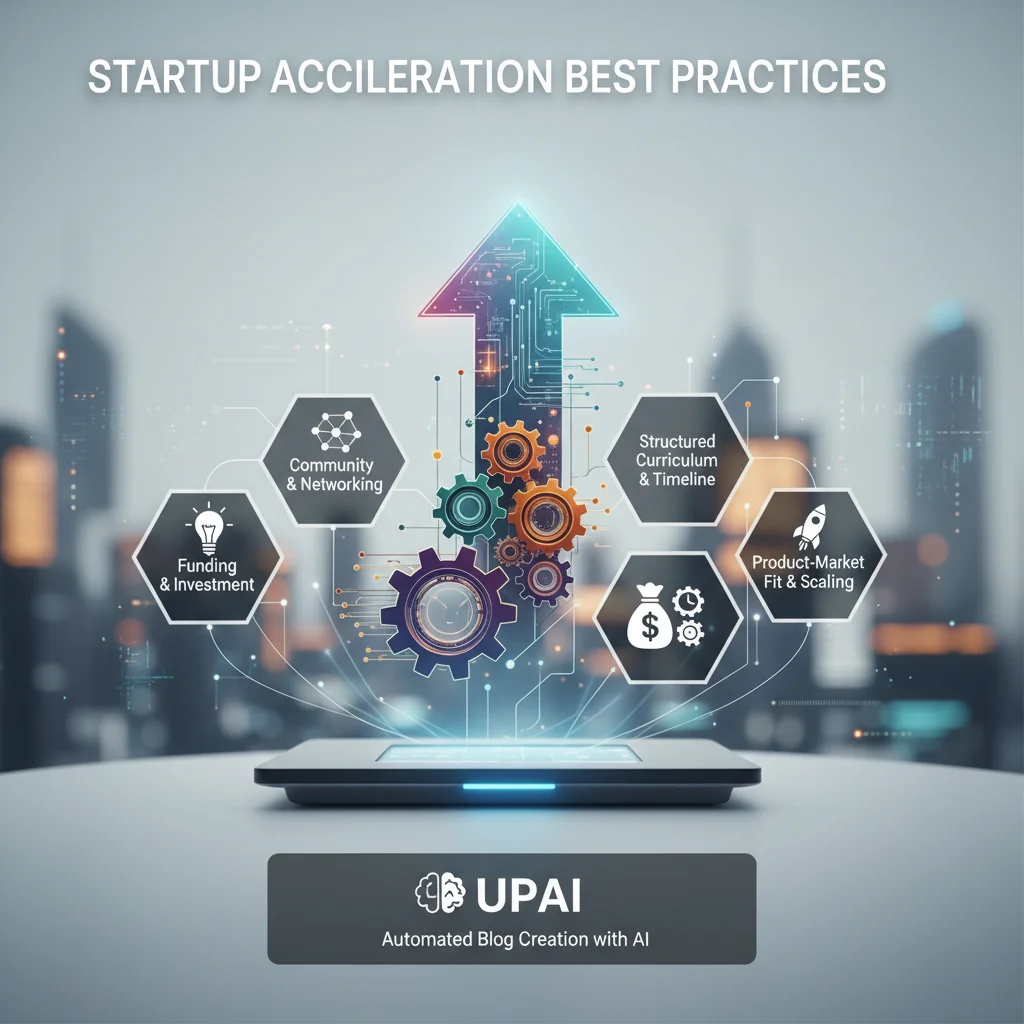
How Do Accelerators Select Startups? The Application and Selection Process.
Accelerators select startups through a highly competitive multi-stage process that rigorously evaluates the founding team, the market opportunity, the innovativeness of the solution, and early traction, aiming to identify ventures with the highest potential for rapid growth and significant returns. This process typically involves an initial application, followed by multiple interview rounds, and sometimes a pitch day, designed to assess both the quantitative aspects of the business and the qualitative attributes of the founders. Success hinges on demonstrating a clear vision, strong execution capabilities, and a compelling narrative.1. Eligibility Criteria and Initial Screening
Before applying, startups must meet specific eligibility criteria, which typically include:
- Stage of Development: Most accelerators target pre-seed or seed-stage companies, often with a working prototype or early customer traction.
- Team Composition: A strong, committed, and diverse founding team with complementary skills is paramount. Accelerators invest in people first.
- Market Size: The startup must address a large, growing market with significant potential for disruption.
- Scalability: The business model should be highly scalable, capable of rapid expansion without proportional increases in cost.
- Innovation: A unique or significantly improved solution to a real problem.
Initial applications are often filtered based on these criteria, with many programs using AI-driven tools or dedicated review teams to process thousands of submissions. Clarity and conciseness in the application are vital.
2. The Application Form and Materials
The application form is typically extensive, requiring detailed information about the company, product, team, and market. Common components include:
- Company Overview: Problem, solution, target market, business model.
- Team Bios: Experience, roles, why this team is uniquely suited.
- Traction: Key metrics like users, revenue, growth rate, partnerships.
- Product Demo/Video: A short, compelling demonstration of the product or prototype.
- Pitch Deck: A concise presentation outlining the business opportunity.
- References: Sometimes requested, especially for later stages.
A well-crafted application demonstrates not only a strong business but also the founders' ability to communicate effectively. For instance, ensuring your pitch deck is visually appealing and SEO-optimized for any online distribution can be enhanced by tools like UPAI's Keyword Density checker to ensure your core message is clear and present, and the SEO Checker to analyze its overall online visibility potential.
3. Interview Rounds
Startups that pass the initial screening proceed to interview rounds. These can range from short, intense 10-15 minute interviews with partners to longer, more in-depth discussions with mentors and program directors. The interviews focus on:
- Team Dynamics: How well founders work together, their resilience, and coachability.
- Deep Dive into the Business: Challenging assumptions, understanding market insights, and technical feasibility.
- Vision and Ambition: Assessing the founders' long-term goals and their passion for the problem they are solving.
- "Why this accelerator?": Understanding if the startup is a good fit for the program's specific resources and network.
Founders should be prepared to articulate their vision, defend their assumptions, and demonstrate a deep understanding of their market and competition. Honesty about challenges and a clear plan to address them are often appreciated.
4. What Accelerators Look For
Beyond the formal criteria, accelerators are looking for several key indicators of potential success:
- Exceptional Team: This is often the most critical factor. They seek founders who are smart, relentless, adaptable, and have a clear understanding of their strengths and weaknesses. Co-founder chemistry is also heavily scrutinized.
- Large Market Opportunity: The problem being solved must be significant enough to support a multi-billion dollar company.
- Early Traction: Demonstrable progress, whether it's user growth, revenue, successful pilots, or strong engagement metrics. This shows execution capability.
- Founder-Market Fit: The founders' unique insights, experience, or passion for the specific problem they are solving.
- Coachability: A willingness to listen, learn, and adapt based on mentor feedback, without losing conviction in their core vision.
Ultimately, accelerators are making an investment decision based on limited information, so they prioritize founders who exude confidence, competence, and a compelling vision for the future.
Maximizing Your Accelerator Experience: What to Expect and How to Succeed.
Maximizing your accelerator experience requires proactive engagement, a clear strategic focus, and a willingness to adapt and learn rapidly, ensuring you fully leverage the program's resources for product development, fundraising, and network building. Startups that enter with defined goals and an open mind tend to extract the most value, transforming the intense program into a launchpad for significant post-accelerator growth. It's a period of extreme focus and demanding work, but the returns on that investment can be substantial.1. Program Structure and Key Activities
Accelerator programs are typically 3-6 months long, characterized by a demanding schedule. Key activities include:
- Workshops and Educational Sessions: Covering topics from legal structures to growth hacking, fundraising, and PR.
- Mentor Office Hours: Regular, often weekly, one-on-one meetings with mentors for personalized advice and feedback.
- Peer-to-Peer Learning: Collaborative sessions and informal interactions with other founders in your cohort.
- Pitch Practice: Constant refinement of your startup's story and investor pitch.
- Investor Introductions: Towards the end of the program, direct introductions to angel investors and venture capitalists.
- Demo Day: The grand finale where startups present to a large audience of investors and media.
The intensity is designed to push founders out of their comfort zones and accelerate their learning curve. Be prepared for long hours and a high-pressure environment.
2. Setting Clear Goals and Priorities
Before the program even begins, define 2-3 measurable goals you want to achieve. These might include:
- Achieving specific product milestones (e.g., launching a beta, adding key features).
- Reaching specific traction metrics (e.g., X active users, Y revenue, Z customer sign-ups).
- Securing follow-on funding (e.g., raising a seed round of $X million).
- Building a strong advisory board.
Having clear objectives helps you prioritize tasks, focus your efforts, and critically evaluate mentor advice. Not all advice will be relevant to your specific goals, so learn to filter strategically.
3. Engaging with Mentors Effectively
Mentors are a primary resource, but effective engagement requires effort:
- Be Prepared: Have specific questions or challenges ready for each mentor meeting. Share relevant context beforehand.
- Be Coachable: Listen actively, consider feedback, and be willing to challenge your own assumptions.
- Build Relationships: Focus on genuine connections, not just transactional advice. Mentors can become long-term advisors or investors.
- Follow Up: Thank mentors for their time and update them on your progress, even if you didn't take their advice.
Remember that mentors offer diverse perspectives; it's your job to synthesize their input and decide the best path for your company. Building a strong network within the accelerator is a crucial aspect of maximizing your experience.
4. Leveraging the Network and Peer Support
Your fellow founders in the cohort are invaluable. They face similar challenges and can offer unique insights, emotional support, and future collaboration opportunities. Actively participate in peer discussions, offer help, and be open to receiving it. The alumni network is also a powerful asset, providing ongoing support, introductions, and a sense of community long after the program ends.
5. Preparing for Demo Day and Fundraising
Demo Day is not just a presentation; it's the culmination of your accelerator journey and a critical fundraising event. Preparation is key:
- Perfect Your Pitch: Practice relentlessly. Your pitch should be concise, compelling, and clearly articulate your vision, traction, and ask.
- Investor Strategy: Understand which investors are a good fit for your stage and industry. Tailor your follow-up.
- Data Room Readiness: Have all your legal, financial, and operational documents organized and ready for due diligence.
For your pitch, ensure your story is compelling and your key takeaways are immediately apparent. If you're building a content strategy around your startup, tools like UPAI's FAQ Schema generator can help structure common investor questions on your website, improving your search engine visibility and making information easily digestible.
6. Post-Accelerator Support
The relationship with an accelerator often continues post-Demo Day. Many programs offer ongoing alumni support, including access to their network, continued mentorship, and sometimes even follow-on funding. Staying engaged with the accelerator and its community can provide long-term benefits for your startup's journey.
Beyond the Top Tier: Niche, Industry-Specific, and Geographic Accelerators.
Beyond the globally renowned accelerators, a vibrant ecosystem of niche, industry-specific, and geographic accelerators caters to specialized startup needs, offering tailored mentorship, resources, and connections within particular sectors or regions. These programs often provide a deeper level of industry insight and more relevant networks than generalist accelerators, making them ideal for founders operating in specialized fields or seeking localized support. Their focused approach can lead to more targeted customer acquisition and partnership opportunities.1. Industry-Specific Accelerators
These accelerators focus on a particular vertical, providing specialized expertise, industry connections, and sometimes unique infrastructure (e.g., labs, test facilities). Examples include:
- FinTech Accelerators: Programs like the Barclays Accelerator powered by Techstars or FinTech Innovation Lab (run by Accenture) focus on financial technology, connecting startups with banks, insurance companies, and payment processors. They provide regulatory guidance and access to enterprise clients.
- HealthTech/BioTech Accelerators: Programs such as IndieBio (SOSV) or the Johnson & Johnson Innovation JLABS network offer lab space, scientific mentorship, and pathways to clinical trials and regulatory approval for life science and healthcare startups.
- AI/Deep Tech Accelerators: Accelerators like Creative Destruction Lab (CDL) or HAX (SOSV) for hardware and deep tech provide highly specialized technical mentorship, access to advanced facilities, and connections to corporate R&D departments.
- Climate Tech/Sustainability Accelerators: Programs such as Cleantech Open or Techstars Sustainability support startups developing solutions for environmental challenges, often connecting them with impact investors and government grants.
Choosing an industry-specific accelerator can provide a significant competitive edge by immersing a startup in a highly relevant ecosystem.
2. Geographic/Regional Accelerators
These accelerators focus on fostering innovation within a specific city, region, or country, often supported by local governments, universities, or regional venture funds. They are excellent for startups looking to build a local network, access regional talent, and tap into local market opportunities.
- European Accelerators: Examples include Startupbootcamp (multiple locations and verticals across Europe), Seedcamp (London-based, pan-European focus), and Station F (Paris, though more of a campus than a single accelerator, housing many programs).
- Asian Accelerators: Programs like Chinaccelerator (Shanghai) or NTUitive (Singapore) cater to the unique market dynamics and growth opportunities in Asia.
- Latin American Accelerators: Startup LatAm (a network of programs) or Wayra (Telefonica's global accelerator with strong presence in LatAm) support local entrepreneurs.
- African Accelerators: Programs like Mircal Accelerator (Kenya) or Co-creation Hub (CcHUB) (Nigeria) are crucial for developing the continent's burgeoning tech scene.
These regional programs often have strong ties to local investors, government grants, and business communities, which can be invaluable for navigating specific market entry barriers.
3. Corporate Accelerators
Many large corporations launch their own accelerator programs to foster innovation, identify potential acquisition targets, or solve specific business challenges. These programs offer unparalleled access to corporate resources, customer bases, and potential partnerships.
- Benefits: Direct access to a large corporation's customer base, technology, and market expertise; potential for pilot projects and strategic partnerships; sometimes non-dilutive funding or grants.
- Considerations: Potential for slow decision-making; risk of intellectual property conflicts; may be less focused on broader investor readiness.
Examples include programs by Google, Microsoft, Amazon, and various automotive, financial, and consumer goods companies. They are ideal for startups whose products or services align directly with the corporate parent's strategic interests.
4. Social Impact Accelerators
These programs focus on startups that aim to solve pressing social or environmental problems, often prioritizing impact alongside financial returns. They connect founders with impact investors, NGOs, and government agencies.
- Examples: Impact Hub Accelerators (global network), Unreasonable Institute, or specific programs within MassChallenge.
For founders with a strong mission-driven focus, these accelerators provide a community and resources aligned with their values.
Startup Accelerators vs. Incubators vs. Venture Studios: A Comparative Analysis.
Startup accelerators, incubators, and venture studios represent distinct models for supporting early-stage companies, differing primarily in their program structure, funding mechanisms, equity requirements, and the level of operational involvement. While all aim to foster startup growth, understanding these differences is crucial for founders to choose the most appropriate support system for their specific stage and needs. Accelerators are typically time-bound and equity-for-funding, incubators offer longer-term, less structured support, and venture studios actively co-found and build companies internally.Choosing between these models depends heavily on a startup's stage, team composition, funding needs, and desired level of external involvement. Each offers a unique set of advantages and disadvantages that founders must carefully weigh.
| Feature | Startup Accelerator | Startup Incubator | Venture Studio |
|---|---|---|---|
| Purpose | Rapid growth, investor readiness, seed funding, network building. | Nurturing ideas, early-stage development, community, resources. | Ideation, building, and launching companies internally. |
| Stage of Startup | Pre-seed to seed stage, often with a prototype/some traction. | Idea to very early-stage, often pre-product. | Concept to early-stage, built by the studio. |
| Program Structure | Fixed-term (3-6 months), cohort-based, intensive curriculum. | Flexible, open-ended, often project-based, less structured. | Ongoing, internal team builds and operates the startup. |
| Funding | Seed investment (e.g., $20k-$500k) for equity. | Often no direct funding, but connections to investors. Some may offer grants. | Significant internal funding and resources, effectively acting as the first investor. |
| Equity Taken | Typically 5-10% for seed funding and program. | Often zero equity, or minimal for specific services. | Significant equity (e.g., 50%+) as they are co-founders. |
| Mentorship | Intensive, structured mentorship from a large network. | Ad-hoc mentorship, often from internal staff or community. | Deep, hands-on operational guidance from studio team. |
| Operational Involvement | Advisory, founders remain in control. | Resource provision, founders remain in control. | Highly involved, often providing core team members and services. |
| Goal/Outcome | Raise next funding round (Seed/Series A), rapid scale. | Product development, market validation, sustainable business. | Create multiple successful companies from scratch. |
| Notable Examples | Y Combinator, Techstars, 500 Global. | 1871, university-affiliated incubators, local innovation hubs. | Idealab, Betaworks, Science Inc. |
Common Mistakes Startups Make When Engaging with Accelerators.
Startups frequently undermine their accelerator experience by making preventable mistakes, including failing to adequately prepare, mismanaging mentor relationships, neglecting internal team dynamics, or misunderstanding the program's core objectives. These errors can significantly diminish the value derived from the intensive program, potentially leading to missed fundraising opportunities or a failure to achieve critical growth milestones. Founders must approach accelerators with strategic intent and a commitment to rigorous execution to avoid these pitfalls.1. Applying to the Wrong Programs
A common error is applying indiscriminately to any accelerator without thoroughly researching its focus, industry alignment, investment terms, and mentor network. An accelerator that specializes in B2B SaaS might not be the best fit for a consumer hardware startup, regardless of its prestige. Misalignment wastes both the startup's and the accelerator's time and can lead to a less impactful experience if accepted.
- Solution: Conduct deep research. Understand the accelerator's thesis, alumni successes, and the specific expertise of its partners and mentors. Only apply to programs that genuinely align with your startup's stage, sector, and strategic needs.
2. Lack of Preparation for the Application and Interviews
Many founders underestimate the rigor of the application and interview process. Submitting a hastily prepared application, an unclear pitch deck, or being unable to articulate key metrics and market insights during interviews are common self-sabotaging behaviors.
- Solution: Treat the application as a critical business project. Refine your pitch deck, practice answering tough questions, and ensure your team can clearly articulate your value proposition, market opportunity, and traction. Use tools like UPAI's Headline Analyzer to ensure your pitch titles are impactful and memorable.
3. Not Leveraging Mentors Effectively
Founders sometimes treat mentor meetings as passive listening sessions or opportunities for validation, rather than active problem-solving sessions. Failing to prepare specific questions, not following up on advice, or being unreceptive to critical feedback are common missteps.
- Solution: Go into every mentor meeting with a clear agenda and specific questions about your most pressing challenges. Be open to feedback, even if it's challenging, and actively follow up on suggestions that resonate. Remember, mentors are a resource, not decision-makers.
4. Failing to Execute During the Program
The accelerator program is for building and growing, not just learning. Some founders get caught up in workshops and networking, neglecting the core work of product development, customer acquisition, and achieving critical milestones. The intensity is meant to drive execution.
- Solution: Set clear, measurable goals for the program's duration and focus relentlessly on execution. Use the structured environment and accountability to push forward. Prioritize building and iterating over endless meetings.
5. Ignoring Team Dynamics and Burnout
The high-pressure environment of an accelerator can exacerbate existing team tensions or lead to burnout if not managed proactively. Neglecting communication, failing to define roles, or not addressing conflict can derail a startup during this critical period.
- Solution: Prioritize team health and communication. Establish clear roles and responsibilities. Schedule regular check-ins and ensure founders are supporting each other. Recognize the signs of burnout and take proactive steps to manage stress.
6. Not Understanding the Terms and Equity Implications
Founders sometimes rush into accelerator agreements without fully understanding the equity dilution, valuation caps, or other terms of the investment. This can have long-term consequences for future fundraising rounds and ownership percentages.
- Solution: Seek legal counsel to review all investment documents. Understand the implications of the terms on your cap table and future fundraising. Don't be afraid to ask questions and negotiate where appropriate, though top accelerators often have standardized terms.
Deciding If an Accelerator is Right for Your Startup: Pros and Cons.
Deciding whether an accelerator is the right path for your startup involves a careful evaluation of its potential benefits against its costs, considering factors like your company's stage, industry, team dynamics, and long-term vision. While accelerators offer unparalleled opportunities for rapid growth and access to capital, they also demand significant commitment and result in equity dilution. This decision requires a strategic assessment of whether the concentrated support and network access outweigh the equity given up and the intense program demands.Pros of Joining an Accelerator:
- Seed Funding: Immediate capital injection allows founders to focus on building without constant fundraising pressure in the early days.
- Accelerated Growth: The structured program and intense mentorship force rapid iteration, product development, and market validation, compressing years of learning into months.
- Network Access: Unlocks a vast network of mentors, investors, alumni, and industry experts, providing invaluable connections for partnerships, talent, and future funding.
- Credibility and Validation: Acceptance into a top accelerator acts as a powerful signal to the market, making it easier to attract talent, customers, and subsequent investors.
- Structured Learning: Workshops and curriculum cover essential business topics, filling knowledge gaps for first-time founders.
- Accountability: The program's milestones and regular check-ins create a strong sense of accountability, keeping founders focused and motivated.
- Peer Support: Cohort-based learning provides a supportive community of fellow founders facing similar challenges.
Cons of Joining an Accelerator:
- Equity Dilution: The most significant cost is giving up a percentage of your company, typically 5-10%, at an early stage. This can impact future ownership and control.
- Intense Pressure and Burnout: The demanding schedule and high expectations can lead to long hours, stress, and potential burnout for founders.
- Loss of Focus: The sheer volume of advice and activities can sometimes distract founders from their core mission or lead to "mentor whiplash" if not managed carefully.
- Fixed Program Duration: The time-limited nature means support eventually ends, and startups must be ready to stand on their own.
- Not for Every Startup: Some businesses (e.g., lifestyle businesses, very early-stage ideas without a strong team, or those requiring very long development cycles) may not be a good fit.
- Risk of Misalignment: If the accelerator's focus or culture doesn't align with your startup's needs, the experience can be less valuable.
- Opportunity Cost: The time spent in an accelerator is time not spent purely on your own terms, which could be dedicated to other growth activities.
When an Accelerator is Most Beneficial:
An accelerator is often ideal for:
- First-time founders seeking structured guidance and a strong network.
- Startups with a clear vision and early traction but needing help with scaling and fundraising.
- Teams looking to rapidly iterate on their product and achieve product-market fit.
- Companies in highly competitive sectors where external validation and connections are crucial.
When to Consider Alternatives:
You might consider alternatives if:
- You are unwilling to give up equity at an early stage.
- Your startup is a lifestyle business or does not aim for hyper-growth.
- You prefer a slower, more organic growth path (e.g., bootstrapping).
- You already have a strong network, funding, and mentorship.
- Your product requires a very long development cycle (e.g., deep science, hardware requiring years of R&D).
The decision to join an accelerator should be a strategic one, made after thoroughly weighing the potential benefits against the costs and ensuring alignment with your startup's long-term vision. It's a significant commitment that can profoundly shape your company's trajectory, for better or worse.
Alternative Paths to Growth: Bootstrapping, Angel Investors, VC, and More.
While accelerators offer a compelling path for rapid startup growth, numerous alternative strategies exist for funding and scaling a venture, including bootstrapping, securing angel investment, raising venture capital, or leveraging grants and crowdfunding. Each alternative presents a different balance of control, capital access, and strategic support, allowing founders to choose a path best suited to their specific business model, risk tolerance, and growth aspirations. Understanding these options ensures founders can make informed decisions beyond the accelerator model.1. Bootstrapping
Bootstrapping involves funding a startup using personal savings, early customer revenue, or minimal external capital, allowing founders to retain full ownership and control. This path emphasizes lean operations, profitability from day one, and organic growth, often leading to a more sustainable and resilient business model.
- Pros: Full ownership and control, no equity dilution, forced financial discipline, strong focus on profitability.
- Cons: Slower growth potential, limited resources, higher personal financial risk, can be more challenging to scale rapidly.
- Best for: Lifestyle businesses, service-based companies, businesses with low startup costs, founders who prioritize control.
Bootstrapping requires exceptional resourcefulness and a strong focus on generating revenue early. Content marketing can be a powerful bootstrapping tool; understanding the potential revenue from your blog can be estimated using UPAI's Earn Calculator.
2. Angel Investors
Angel investors are high-net-worth individuals who provide capital for startups, usually in exchange for equity, often bringing valuable industry experience and network connections. They typically invest smaller amounts than venture capitalists, often in the very early stages (pre-seed or seed).
- Pros: Flexible terms, often provide mentorship, quicker decision-making than VCs, can be highly impactful if the angel is strategic.
- Cons: Smaller capital amounts, can be difficult to find the right angel, potential for misaligned expectations.
- Best for: Startups needing seed capital and strategic guidance without the intensity of an accelerator, or those not yet ready for institutional VC.
3. Venture Capital (VC)
Venture capital firms invest in high-growth potential startups in exchange for significant equity, typically in larger rounds (Seed, Series A, B, etc.) than angel investors. VCs provide substantial capital, strategic guidance, and access to an extensive network, but expect significant returns and rapid scaling.
- Pros: Large capital injections for rapid scale, access to institutional networks and expertise, validation for future investors.
- Cons: Significant equity dilution, high pressure for rapid growth and exits, loss of control, demanding reporting requirements.
- Best for: Startups with proven traction, large market opportunities, and a clear path to aggressive scaling and a potential billion-dollar valuation.
4. Grants and Non-Dilutive Funding
Government grants, research grants, and non-profit organization funding provide capital without requiring equity, making them highly attractive. These are often tied to specific research, innovation, or social impact objectives.
- Pros: No equity dilution, often comes with prestige and validation, can fund R&D that might not attract traditional investors.
- Cons: Highly competitive, often comes with strict reporting requirements, can be time-consuming to apply for, funds may be restricted to specific uses.
- Best for: Deep tech, scientific research, social impact ventures, or startups aligned with government innovation initiatives.
5. Crowdfunding
Crowdfunding platforms allow startups to raise capital from a large number of individuals, either through donations, rewards (pre-orders), debt, or equity. This method also serves as a powerful market validation and marketing tool.
- Pros: Market validation, brand building, customer acquisition, access to capital without traditional gatekeepers.
- Cons: Requires significant marketing effort, risk of public failure, platform fees, can be legally complex for equity crowdfunding.
- Best for: Consumer products, hardware, creative projects, or startups with a highly engaged community.
6. Incubators and Venture Builders
As discussed, incubators provide resources and community for early-stage ideas, often without a fixed timeline or direct investment. Venture builders (or studios) actively co-found and build companies internally, providing significant operational support and taking a larger equity stake.
- Pros: Long-term support (incubators), hands-on operational help (venture builders), reduced initial risk (venture builders).
- Cons: Less structured (incubators), significant equity dilution (venture builders), slower pace than accelerators.
- Best for: Founders with just an idea (incubators), or those seeking a co-founding partner with resources (venture builders).
Each funding and growth path has its unique advantages and disadvantages. Founders should carefully evaluate their startup's specific needs, stage, and long-term goals to choose the most suitable strategy. Often, a combination of these paths is utilized throughout a startup's lifecycle.
Conclusion: Accelerate Your Startup's Future
The best startup accelerators, such as Y Combinator, Techstars, and 500 Global, offer an unparalleled pathway for early-stage companies to secure funding, gain expert mentorship, and rapidly scale within a concentrated timeframe. These programs are not merely sources of capital but comprehensive ecosystems designed to transform promising ideas into viable, high-growth businesses by providing critical resources, invaluable networks, and a rigorous framework for execution. While highly competitive and demanding, the strategic advantages gained from a top-tier accelerator can be a defining factor in a startup's long-term success.For founders navigating the complex journey of building a startup, understanding the nuances of these programs, their application processes, and how to maximize the experience is paramount. From refining your pitch to leveraging mentor connections and preparing for follow-on funding, every step requires precision and strategic thinking. Just as accelerators help startups refine their core product and go-to-market strategy, UPAI helps content creators refine their online presence and content strategy. Automate your blog's growth and ensure your message reaches the right audience. Automate Your Blog with AI today and focus on building your next big idea.
Frequently Asked Questions
What are the top startup accelerators?
What do startup accelerators offer founders?
How do accelerators make money?
What is the typical duration of an accelerator program?
What are the benefits of joining a startup accelerator?
How competitive are top startup accelerators?
Related Articles

Launching Your Startup in New York: Opportunities & Challenges
Discover the vibrant startup scene in New York City. Explore opportunities, funding, and key industries for your new venture. Start your NYC journey today!

Austin Startup Companies: Your Guide to the Tech Scene
Explore the thriving startup companies in Austin, a top US hub for innovation and venture capital. Discover opportunities in this dynamic tech landscape.

San Francisco Startups: The Future of Innovation
Explore the vibrant San Francisco startup scene, a global hub for innovation and venture capital. Discover what makes it the place to be for founders. Learn more!
More free AI tools from the same team
Grow your LinkedIn presence on autopilot. Try LinkedIn automation and AI content for free.
Read the Linkesy blogAsk AI about UPAI
Click your favorite assistant to learn more about us