
Best MDR Solutions for Startups: Protect Your Growth

Choosing the best Managed Detection and Response (MDR) solutions for startups is a critical strategic decision that directly impacts business continuity and growth, especially given that 60% of small businesses fail within six months of a cyberattack. Startups operate with lean teams and often lack dedicated cybersecurity expertise, making robust, outsourced security services not just beneficial but essential for protecting intellectual property, customer data, and brand reputation from an ever-evolving threat landscape. This comprehensive guide details the nuances of MDR, its specific advantages for early-stage companies, key evaluation criteria, and how to select a solution that scales with your ambition, ensuring your innovative ventures are safeguarded against modern cyber threats.
Key Takeaways
- MDR combines advanced technology with human expertise to provide 24/7 threat monitoring, detection, and rapid response, a critical need for resource-constrained startups.
- Startups face unique security challenges, including a lack of in-house expertise, limited budgets, and a rapidly expanding attack surface, all effectively addressed by MDR services.
- Evaluate MDR providers based on their coverage (endpoints, cloud, identity), threat intelligence, response capabilities, scalability, and transparent pricing models.
- The ROI of MDR for startups stems from preventing costly data breaches, maintaining business continuity, protecting brand reputation, and ensuring compliance with industry regulations.
- Avoid common mistakes such as underestimating security needs, choosing providers based solely on price, or failing to integrate MDR into existing operational workflows.
- Maximize MDR value through active collaboration with your provider, regular security reviews, and leveraging their insights for continuous improvement of your security posture.
What is MDR and Why is it Crucial for Startups?
Managed Detection and Response (MDR) is a comprehensive cybersecurity service that provides 24/7 threat monitoring, detection, and rapid response capabilities, making it absolutely crucial for startups by enabling them to defend against sophisticated cyber threats without requiring an in-house security team. This service ensures continuous protection of digital assets, which is vital for maintaining operational continuity and protecting sensitive data in a fast-paced, resource-constrained environment. MDR providers deliver a proactive security posture, moving beyond traditional prevention tools to actively hunt for threats that bypass conventional defenses.
Defining Managed Detection and Response (MDR)
MDR is a specialized cybersecurity offering that combines advanced security technology with human expertise to provide round-the-clock surveillance, analysis, and response to security incidents. It differs significantly from traditional managed security services (MSSP) by focusing on active threat hunting and rapid incident response rather than just alert management. MDR services typically include a dedicated team of security analysts who act as an extension of a startup's internal team, offering expert insights and immediate action.
MDR (Managed Detection and Response) is a cybersecurity service that combines technology and human expertise to proactively hunt for threats, monitor security incidents, and respond to them 24/7.
The core components of a robust MDR solution include:
- 24/7 Monitoring: Continuous surveillance of network, endpoint, and cloud environments for suspicious activities.
- Threat Detection: Utilizing advanced analytics, machine learning, and behavioral analysis to identify known and unknown threats.
- Threat Hunting: Proactive searching for indicators of compromise (IOCs) and indicators of attack (IOAs) that automated systems might miss.
- Incident Response: Rapid containment, eradication, and recovery from security incidents, often including forensic analysis.
- Root Cause Analysis: Identifying the origin of an attack to prevent future occurrences.
- Vulnerability Management: Advising on security posture improvements and patching strategies.
The Evolving Threat Landscape for Startups
Cyber threats are becoming increasingly sophisticated, targeting organizations of all sizes, including nascent startups. Attackers often view startups as easy targets due to perceived weaker security postures and valuable intellectual property. Common threats include ransomware, phishing attacks, supply chain compromises, and insider threats. A single successful breach can lead to devastating financial losses, reputational damage, and legal repercussions, often proving fatal for young companies.
Why Traditional Security Approaches Fall Short for Startups
Many startups initially rely on basic security measures like firewalls, antivirus software, and perhaps some cloud security defaults. While necessary, these tools are often insufficient against advanced persistent threats (APTs) or zero-day exploits. Traditional security tools are primarily preventive and reactive, generating numerous alerts that require expert interpretation and action. Startups typically lack:
- Dedicated Security Staff: Hiring and retaining a full-time cybersecurity team is prohibitively expensive for most startups.
- Specialized Expertise: Even if staff are available, they often lack the deep, specialized knowledge required for advanced threat hunting and incident response.
- 24/7 Coverage: Security incidents do not adhere to business hours, and an in-house team cannot provide continuous monitoring without significant overhead.
- Advanced Tooling: Enterprise-grade security tools are costly to acquire, configure, and maintain.
MDR bridges these gaps by providing access to a team of experts and cutting-edge technology at a predictable cost, allowing startups to focus on their core business innovation.
The Unique Advantages of MDR for Startups
MDR offers several compelling benefits tailored to the startup environment:
- Cost-Effectiveness: MDR services are typically subscription-based, providing access to a full security team and advanced tools without the overhead of hiring, training, and retaining in-house staff. This predictable expense helps startups manage their budgets effectively.
- Expertise on Demand: Startups gain immediate access to highly skilled security analysts, threat hunters, and incident responders who continuously adapt to new attack methodologies.
- 24/7 Protection: Cyberattacks can occur at any time. MDR ensures constant vigilance and rapid response, minimizing the window of opportunity for attackers and reducing potential damage.
- Focus on Core Business: By outsourcing cybersecurity to MDR providers, startup teams can allocate their limited resources and time to product development, market expansion, and customer acquisition, rather than diverting attention to complex security operations.
- Enhanced Compliance: Many industries have strict regulatory requirements (e.g., GDPR, HIPAA, SOC 2). MDR providers can help startups meet these obligations by implementing robust security controls and providing audit-ready documentation.
- Faster Incident Response: The speed at which an organization detects and responds to a breach significantly impacts its cost and severity. MDR solutions are designed for rapid containment and remediation, drastically reducing recovery times.
For startups, MDR is not merely a security add-on; it is a foundational element that protects their innovative efforts and enables sustainable, secure growth in a digitally connected world.
Specific Security Challenges Startups Face That MDR Addresses
Startups encounter distinct security challenges due to their rapid growth, innovative nature, and often limited resources, making MDR solutions exceptionally well-suited to address these vulnerabilities by providing expert oversight and comprehensive protection. These challenges range from a lack of internal security expertise to an expanding attack surface, all of which can be mitigated through a well-implemented MDR strategy.
Lack of In-House Security Expertise and Resources
One of the most significant hurdles for startups is the inability to hire and retain a dedicated, skilled cybersecurity team. The talent pool for experienced security professionals is competitive and expensive, placing it out of reach for many early-stage companies. This deficit means that security responsibilities often fall to IT generalists who may lack specialized knowledge in threat hunting, incident response, or forensic analysis. MDR directly solves this by providing a virtual security operations center (SOC) staffed with experts.
Limited Budget for Security Investments
Startups operate under tight budgetary constraints, prioritizing investment in product development, marketing, and scaling operations. This often leaves little room for substantial security spending on enterprise-grade tools, advanced threat intelligence subscriptions, or round-the-clock monitoring. MDR services offer a cost-effective alternative, consolidating these capabilities into a single, predictable subscription fee, which is significantly less than building an in-house security program from scratch.
Rapidly Expanding Attack Surface
As startups grow, so does their digital footprint. This includes increasing reliance on cloud infrastructure (AWS, Azure, GCP), Software-as-a-Service (SaaS) applications for various business functions, and often a remote or hybrid workforce. Each new system, application, or employee adds to the attack surface, creating more potential entry points for cyber threats. MDR solutions provide comprehensive monitoring across these diverse environments, from endpoints to cloud workloads and network traffic, ensuring no blind spots emerge as the company scales.
Endpoint Detection and Response (EDR) is a cybersecurity technology that continuously monitors and collects activity data from endpoint devices (laptops, servers) to detect and investigate suspicious behavior.
Protecting Intellectual Property (IP)
For many startups, their intellectual property — proprietary code, algorithms, product designs, or unique business models — is their most valuable asset. The theft or compromise of this IP can undermine their competitive advantage and jeopardize their entire business. MDR services are crucial for protecting these crown jewels by detecting unauthorized access, data exfiltration attempts, and espionage activities before significant damage occurs.
Navigating Compliance and Regulatory Requirements
Depending on their industry and target market, startups may face stringent compliance requirements such as GDPR (General Data Protection Regulation), CCPA (California Consumer Privacy Act), HIPAA (Health Insurance Portability and Accountability Act), or SOC 2. Non-compliance can result in hefty fines, legal action, and reputational damage. MDR providers can help startups meet these obligations by implementing necessary security controls, maintaining audit trails, and demonstrating a strong security posture, which is essential for building trust with customers and partners.
Mitigating Specific Threat Vectors
MDR solutions are specifically designed to address a wide array of modern cyber threats that startups frequently encounter:
- Ransomware: MDR teams can detect the early stages of a ransomware attack, contain its spread, and assist in recovery, preventing costly business disruption and data loss.
- Phishing and Business Email Compromise (BEC): Advanced monitoring and threat intelligence help identify and block sophisticated phishing attempts and BEC schemes that target employees.
- Insider Threats: Whether malicious or accidental, insider actions can lead to data breaches. MDR monitors user behavior and data access to detect anomalous activities.
- Supply Chain Attacks: As startups integrate with numerous third-party vendors, they become vulnerable to supply chain attacks. MDR helps monitor the interactions and potential risks associated with these dependencies.
- Advanced Persistent Threats (APTs): These stealthy, long-term attacks are designed to evade traditional defenses. MDR's proactive threat hunting capabilities are essential for uncovering and neutralizing APTs before they achieve their objectives.
By offering a comprehensive shield against these complex and varied threats, MDR empowers startups to innovate and grow securely, without the constant burden of managing an overwhelming security landscape. This proactive protection allows founders and teams to focus their energy on building their vision, knowing their digital assets are continuously guarded by experts.
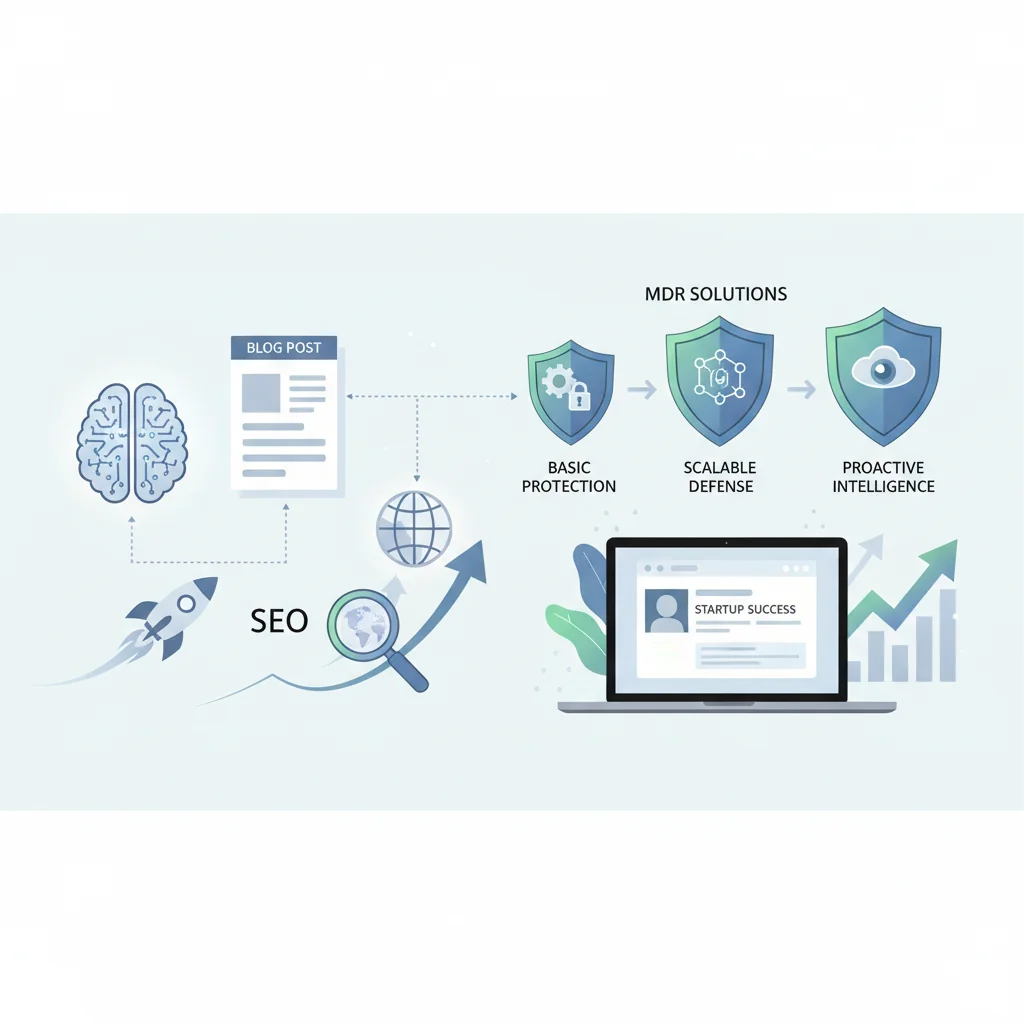
What Are the Different Types of MDR Services Available for Startups?
Various types of MDR services are available for startups, each offering distinct approaches and levels of coverage, primarily differentiating themselves by their underlying technology stack and the scope of their monitoring capabilities. Understanding these distinctions is crucial for selecting a solution that aligns with a startup's specific technological environment, risk profile, and budget. These services generally fall into categories based on their primary focus, such as endpoint-centric, network-centric, or cloud-focused solutions.
Categorizing MDR Providers by Focus
MDR providers typically specialize or have core strengths in certain areas, which can influence their suitability for different startup needs:
- Endpoint-Centric MDR: These providers leverage Endpoint Detection and Response (EDR) platforms as their primary data source. They excel at monitoring laptops, desktops, servers, and virtual machines, providing deep visibility into endpoint activities, process execution, file changes, and network connections. This approach is highly effective against malware, ransomware, and fileless attacks.
- Network-Centric MDR: Focusing on network traffic, these services deploy sensors or integrate with existing network infrastructure to monitor data flow, identify suspicious communication patterns, and detect intrusions at the network perimeter or within internal segments. They are strong at identifying command-and-control (C2) communications and lateral movement within a network.
- Cloud-Focused MDR: As more startups operate entirely in the cloud, specialized MDR services monitor cloud environments (IaaS, PaaS, SaaS). They integrate with cloud security tools (e.g., AWS Security Hub, Azure Sentinel) to detect misconfigurations, unauthorized access, and threats targeting cloud workloads and data.
- SIEM-Centric MDR: Some MDR providers build their services around Security Information and Event Management (SIEM) platforms, aggregating logs from a wide array of sources—endpoints, networks, cloud, applications, identity systems. This provides a holistic view of the security posture and is excellent for compliance and complex threat correlation.
- Identity-Focused MDR: With the rise of identity-based attacks, some MDR providers emphasize monitoring identity providers (e.g., Okta, Azure AD) for suspicious login attempts, privilege escalation, and account compromises.
Comparison of Common MDR Service Models for Startups
When evaluating MDR solutions, startups must consider the depth of monitoring, the technology stack employed, and the provider's response capabilities. The table below outlines a comparison of common MDR service models:
| Feature/Model | Endpoint-Centric MDR | Cloud-Focused MDR | SIEM-Centric MDR |
|---|---|---|---|
| Primary Focus | Device activity, process execution, file integrity on endpoints. | Cloud infrastructure, SaaS applications, cloud workloads. | Aggregated logs from all sources (endpoints, network, cloud, apps). |
| Key Technology | EDR (Endpoint Detection and Response) platforms. | Cloud-native tools, CSPM (Cloud Security Posture Management), CWPP (Cloud Workload Protection Platform). | SIEM (Security Information and Event Management) platforms. |
| Strengths for Startups | Excellent for detecting malware, ransomware, and advanced endpoint attacks. Good for remote workforce security. | Ideal for cloud-native startups; detects misconfigurations, unauthorized cloud access. | Holistic view, strong for compliance, complex threat correlation. Scalable for diverse environments. |
| Potential Limitations | Limited visibility into network-level attacks or cloud-specific threats if not integrated. | May lack deep endpoint or on-premise network visibility. | Can be more complex to implement initially; potential for 'alert fatigue' without strong human analysis. |
| Best Suited For | Startups with a significant number of employee devices, reliance on SaaS, and remote teams. | Startups primarily operating on public cloud platforms. | Startups with diverse IT environments, strict compliance needs, and a need for comprehensive visibility. |
Beyond Core Technology: Service Delivery Models
Beyond the technological focus, MDR providers also differ in their service delivery models:
- Pure-Play MDR: These providers specialize exclusively in MDR services, often offering deep expertise and highly refined processes. They typically use their own proprietary or best-of-breed EDR/SIEM platforms.
- Managed Security Service Providers (MSSPs) with MDR Offerings: Larger MSSPs are increasingly adding dedicated MDR capabilities to their broader portfolio. While they offer a wide range of services, their MDR might be one of many offerings, potentially leading to less specialized focus compared to pure-plays.
- Security Consulting Firms with MDR: Some cybersecurity consulting firms extend their services to include ongoing MDR, leveraging their advisory expertise to provide a more tailored and strategic security partnership.
When selecting an MDR solution, startups should prioritize providers whose technological focus aligns with their primary operational environment (e.g., cloud-native startups benefit most from cloud-focused MDR). It is also crucial to consider the provider's experience with companies of a similar size and growth trajectory, as their understanding of startup-specific constraints can significantly impact the effectiveness and value of the service.
Security Information and Event Management (SIEM) is a system that aggregates and analyzes log data from various sources across an organization's IT infrastructure to provide real-time security monitoring and incident management.
How to Evaluate and Choose the Right MDR Provider for a Startup?
Evaluating and choosing the right MDR provider for a startup requires a systematic approach, focusing on aligning the provider's capabilities with the startup's unique security needs, budget, and growth trajectory. The selection process must go beyond mere feature lists to assess the quality of human expertise, scalability, and the clarity of the service level agreements to ensure a robust and enduring security partnership. Prioritize providers that demonstrate a strong understanding of startup environments and offer flexible, comprehensive solutions.
Key Evaluation Criteria for Startups
When sifting through the myriad of MDR providers, startups should consider the following critical factors:
- Coverage and Scope:
- Endpoint Protection: Does the provider offer robust EDR capabilities across all operating systems (Windows, macOS, Linux) and mobile devices?
- Cloud Security: For cloud-native startups, does the MDR cover your specific cloud providers (AWS, Azure, GCP) and SaaS applications? Look for Cloud Security Posture Management (CSPM) and Cloud Workload Protection Platform (CWPP) integrations.
- Network Monitoring: Does it include network traffic analysis for both on-premise and virtual networks?
- Identity and Access Management (IAM): Is there monitoring for suspicious activities within your identity providers (e.g., Okta, Azure AD)?
- Threat Intelligence and Detection Capabilities:
- Proactive Threat Hunting: Assess the provider's methodology for actively searching for threats, not just reacting to alerts.
- Behavioral Analytics: Does the solution use machine learning and AI to detect anomalous behavior indicative of advanced threats?
- Global Threat Intelligence: Inquire about their access to up-to-date global threat intelligence feeds and how they integrate this into their detection logic.
- Incident Response and Remediation:
- Speed of Response: What are their Service Level Agreements (SLAs) for detection, containment, and response?
- Remediation Guidance: Do they offer clear, actionable steps for remediation, or do they take direct action on your behalf?
- Forensic Capabilities: Can they provide detailed forensic analysis post-incident to identify root causes and prevent recurrence?
- Integration and Compatibility:
- Existing Tools: How well does the MDR solution integrate with your current security stack (e.g., firewalls, vulnerability scanners, email security)?
- IT Ecosystem: Does it seamlessly fit into your existing IT infrastructure and workflows, including collaboration tools and ticketing systems?
- Scalability and Flexibility:
- Growth Path: Can the MDR solution scale up or down as your startup grows, adding more endpoints, cloud resources, or users?
- Customization: Are they flexible enough to adapt to your evolving security needs and specific industry requirements?
- Pricing Models and Transparency:
- Clear Cost Structure: Understand exactly what is included in the pricing (e.g., per endpoint, per user, tiered, incident-based). Avoid hidden fees.
- Value for Money: Compare the cost against the comprehensive services offered, considering the alternative of building an in-house team.
- Service Level Agreements (SLAs) and Support:
- Defined Metrics: Ensure SLAs clearly define response times, resolution times, and availability of security analysts.
- Communication Channels: How will you communicate with the MDR team? (e.g., dedicated portal, chat, phone).
- Reporting: What kind of regular reports will you receive on security posture, detected threats, and incident summaries?
- Reputation and References:
- Industry Recognition: Look for providers recognized by reputable industry analysts (e.g., Gartner, Forrester).
- Customer Testimonials: Seek out references, especially from other startups or companies with similar operational models.
The Importance of Human Expertise
While technology is foundational, the human element of MDR is paramount. The quality of the security analysts, threat hunters, and incident responders can make or break an MDR service. Look for providers that emphasize:
- Experienced Analysts: A team with diverse expertise in various attack vectors, forensic analysis, and industry-specific threats.
- Proactive Threat Hunters: Analysts who actively seek out threats using advanced techniques rather than just waiting for alerts.
- Clear Communication: The ability of the MDR team to communicate complex security issues in an understandable way to non-security professionals.
- Dedicated Account Management: A point of contact who understands your startup's specific context and can bridge the gap between your team and the security experts.
Pilot Programs and Proof of Concepts (POCs)
Before committing to a long-term contract, consider engaging in a pilot program or a Proof of Concept (POC) with shortlisted providers. This allows your startup to:
- Evaluate the MDR solution in your actual environment.
- Assess the integration process and ease of deployment.
- Experience the quality of detection, response, and communication firsthand.
- Validate the provider's claims against real-world performance.
A successful POC provides invaluable insights and confidence in your final decision, ensuring the chosen MDR solution genuinely meets your startup's evolving security needs.
What Are the Cost Considerations and ROI of MDR for Early-Stage Companies?
The cost considerations for MDR solutions for early-stage companies involve understanding various pricing models and evaluating the comprehensive return on investment (ROI) derived from preventing potentially catastrophic cyberattacks. While MDR represents an operational expense, its value far exceeds the direct cost by safeguarding against financial losses, reputational damage, and business disruption that can cripple a nascent enterprise. A strategic investment in MDR is a proactive measure that protects a startup's future earnings and market position.
Understanding MDR Pricing Models
MDR pricing is not one-size-fits-all, and providers offer various models. Startups must scrutinize these structures to find the most cost-effective solution without compromising on essential protection:
- Per Endpoint: This is a common model where pricing is based on the number of devices (laptops, servers) being monitored. It's straightforward and scales with your hardware assets.
- Per User: Some providers charge per user, which can be beneficial for organizations with many devices per user or a rapidly fluctuating workforce.
- Tiered Pricing: Providers often offer different service tiers (e.g., Basic, Standard, Premium) with varying levels of coverage, response times, and additional features. Startups can choose a tier that matches their current risk profile and budget, with options to upgrade as they grow.
- Per Log Volume/Data Ingestion: For SIEM-centric MDR, pricing might be based on the volume of data ingested and analyzed (e.g., GB per day). This requires careful estimation of log data generation.
- Incident-Based Fees: While less common for core MDR, some providers might have additional fees for extensive incident response or forensic services beyond a certain threshold. Always clarify if these are included or separate.
- Hybrid Models: Many providers use a combination, such as a base fee plus per-endpoint charges, or tiered pricing with add-on modules for specific cloud environments or compliance needs.
It is crucial to request detailed quotes and understand all potential charges. Transparent pricing prevents surprises and allows for accurate budget planning.
Calculating the Return on Investment (ROI) of MDR
The ROI of cybersecurity, particularly MDR, is often measured by avoided costs and preserved value rather than direct revenue generation. For startups, this calculation is vital to justify the investment:
1. Cost of a Data Breach
The financial impact of a data breach on a startup can be devastating. This includes:
- Direct Financial Losses: Ransom payments, regulatory fines (e.g., GDPR violations can reach up to 4% of global annual revenue), legal fees, and costs for credit monitoring services for affected customers.
- Operational Disruption: Downtime from system compromise can halt business operations, leading to lost sales, missed deadlines, and reduced productivity.
- Reputational Damage: A breach erodes customer trust and investor confidence, making it harder to acquire new clients, secure funding, and attract talent. This damage can be long-lasting and significantly impact future growth.
- Recovery Costs: Expenses for incident response, forensic investigations, system remediation, and enhanced security measures post-breach.
Estimates suggest the average cost of a data breach for small to medium-sized businesses can range from hundreds of thousands to millions of dollars. For a startup, such a figure can easily lead to insolvency. While an MDR solution requires an investment, consider the potential revenue loss from a data breach, which can be catastrophic. Use a tool like the UPAI Earn Calculator to project your blog's potential earnings and then factor in how a security incident could erase months or even years of that potential.
2. Opportunity Cost of Not Having MDR
Without MDR, startups often divert critical internal resources (engineering, IT, management) to deal with security incidents or to build rudimentary security functions. This leads to:
- Delayed Product Development: Time spent on security issues is time not spent on innovation and core business activities.
- Missed Market Opportunities: Slowed growth due to security concerns can allow competitors to gain an advantage.
- Employee Burnout: Non-security staff forced into security roles can experience stress and reduced job satisfaction.
MDR allows startups to reclaim these resources, focusing them on revenue-generating activities and strategic growth.
3. Intangible Benefits and Preserved Value
- Peace of Mind: Knowing that your digital assets are under 24/7 expert surveillance allows founders and employees to focus on their primary roles without constant security worries.
- Enhanced Trust: A strong security posture, backed by MDR, builds trust with customers, partners, and investors, which is invaluable for a startup's long-term success.
- Faster Growth Enablement: By mitigating security risks, MDR indirectly accelerates growth by preventing setbacks and ensuring business continuity.
- Compliance Assurance: Reducing the risk of non-compliance fines and legal issues.
A significant data breach or security incident can severely impact a startup's online reputation and search engine rankings. Google prioritizes secure websites, and a compromised site can lead to penalties, reduced organic visibility, and a damaged brand image in search results. Regularly monitor your site's health and SEO performance using tools like the UPAI SEO Checker and preview how searchers see your brand with the UPAI SERP Preview, understanding that robust security is a foundational element of sustained SEO success.
Strategic Investment, Not Just an Expense
For startups, MDR should be viewed as a strategic investment in business resilience and future growth. It's an insurance policy against the unpredictable and potentially devastating costs of cyberattacks, allowing early-stage companies to innovate boldly and scale securely, without the constant threat of a security incident derailing their progress. The ROI is realized through avoided losses, maintained reputation, and the ability to focus on what truly drives the business forward.
Common Mistakes Startups Make When Implementing MDR
Startups often make several common mistakes when implementing MDR solutions, which can diminish their effectiveness, lead to unexpected costs, or leave critical security gaps. These errors typically stem from a lack of cybersecurity understanding, budget constraints, or insufficient planning, underscoring the need for thorough due diligence and strategic alignment before committing to an MDR provider. Avoiding these pitfalls ensures that the investment in MDR yields its intended protective benefits.
1. Underestimating Security Needs and Risk Exposure
A frequent mistake is for startups to believe they are "too small to be a target" or that basic antivirus is sufficient. Cybercriminals do not discriminate by size; they seek vulnerabilities. Underestimating the value of intellectual property, customer data, or the potential for business disruption leads to inadequate security investment and a reactive posture. Startups must conduct a realistic assessment of their digital assets and potential threats.
2. Choosing the Cheapest Option Without Due Diligence
While budget constraints are real, selecting an MDR provider based solely on the lowest price can be a costly error. Cheaper solutions often come with limited coverage, slower response times, or less experienced analysts. This can result in false economies, where the perceived savings are quickly negated by a security incident that a more robust, albeit pricier, solution would have prevented or mitigated more effectively. Value, not just cost, should drive the decision.
3. Lack of Clear Internal Processes and Communication
MDR is a partnership. Startups sometimes fail to establish clear internal processes for how to interact with their MDR provider, who is responsible for what, and how incidents will be communicated and escalated. Without defined roles and communication protocols, response times can lengthen, and critical information might be missed, undermining the MDR service's effectiveness.
4. Ignoring Integration Needs and Existing Tools
A common oversight is neglecting how the MDR solution will integrate with a startup's existing IT infrastructure, cloud services, and security tools. Poor integration can lead to blind spots, redundant alerts, or operational inefficiencies. It's essential to choose an MDR provider that can seamlessly connect with your current environment, including cloud platforms, identity providers, and business applications, to provide a unified security view.
5. Not Understanding Service Level Agreements (SLAs)
Startups sometimes sign contracts without thoroughly understanding the specific terms of the SLA. This can lead to misconceptions about response times, remediation responsibilities, or the scope of service. It is critical to clarify:
- What constitutes an "incident" and how it is categorized.
- The guaranteed timeframes for detection, notification, and initial response.
- Who is responsible for final remediation actions.
- The reporting frequency and detail.
Ambiguous SLAs can cause frustration and leave a startup vulnerable during a crisis.
6. Treating MDR as a "Set It and Forget It" Solution
MDR provides expert security, but it is not a magic bullet that eliminates all security responsibilities for the startup. Some organizations mistakenly believe that once MDR is in place, they no longer need to think about security. Effective MDR requires ongoing collaboration, internal security awareness training for employees, and a commitment to implementing the provider's recommendations for hardening the security posture. Neglecting these internal responsibilities reduces the overall security effectiveness.
7. Overlooking Scalability and Future Growth
Startups are designed for growth, but they sometimes choose an MDR solution that cannot easily scale with their expansion. A provider that is perfect for a 10-person team might struggle to support a 100-person, multi-cloud operation. Ensure the chosen MDR solution offers a clear path for scalability, allowing for easy addition of endpoints, cloud environments, and services as your startup evolves, without requiring a complete overhaul of your security strategy.
By being aware of these common pitfalls, startups can approach MDR implementation with greater foresight and strategic planning, ultimately securing a more robust and effective cybersecurity defense for their innovative ventures.
How Can Startups Maximize the Value of Their MDR Partnership?
Startups can maximize the value of their MDR partnership by actively engaging with their provider, fostering open communication, and integrating security insights into their overall business strategy. An MDR service is not a passive subscription but a collaborative relationship, and proactive involvement from the startup's side significantly enhances the effectiveness of the security program. This approach ensures that the investment translates into robust protection and continuous security posture improvement.
1. Foster Active Collaboration and Communication
The most successful MDR partnerships are built on strong communication channels. Startups should:
- Designate a Primary Contact: Assign an internal point person (e.g., CTO, Head of IT) who will serve as the main liaison with the MDR team.
- Regular Check-ins: Schedule consistent meetings with the MDR provider to review security posture, discuss new threats, and address any concerns.
- Open Dialogue: Encourage open communication regarding changes in your IT environment, new application deployments, or any unusual activity observed internally. The more context the MDR team has, the better they can protect you.
2. Provide Context to the MDR Team
Your MDR provider protects your environment, but they don't operate within your business daily. Providing them with context about your operations is crucial:
- Business Critical Assets: Clearly identify your most critical data, systems, and applications so the MDR team can prioritize their monitoring and response efforts.
- Normal Business Operations: Inform them about planned maintenance, expected network traffic spikes, or legitimate activities that might otherwise trigger security alerts. This helps reduce false positives and allows the MDR team to focus on real threats.
- Organizational Changes: Keep them updated on significant changes like mergers, acquisitions, new remote offices, or large-scale software migrations.
3. Leverage Reports for Strategic Improvements
MDR providers typically offer regular reports on security incidents, threat trends, and overall security posture. Startups should not just file these reports but actively use them:
- Review and Understand: Take the time to understand the findings, metrics, and recommendations provided in the reports.
- Identify Weaknesses: Use the insights to identify recurring vulnerabilities or areas where your internal security controls need strengthening.
- Inform Strategy: Integrate the MDR's recommendations into your long-term security strategy and IT roadmap, prioritizing improvements based on the most significant risks identified.
4. Implement Internal Security Awareness Training
While MDR protects against external threats, human error remains a significant vulnerability. Startups must complement their MDR service with internal security awareness training:
- Phishing Drills: Regularly train employees to recognize and report phishing attempts.
- Strong Password Policies: Enforce multi-factor authentication (MFA) and strong, unique passwords across all accounts.
- Data Handling Best Practices: Educate staff on proper data classification, storage, and sharing protocols.
A well-informed workforce acts as an additional layer of defense, significantly reducing the attack surface for the MDR team to monitor.
5. Plan for Scalability and Evolving Needs
Startups are dynamic. Their MDR partnership should reflect this dynamism:
- Regular Reviews of Coverage: Periodically review your MDR coverage to ensure it still aligns with your expanding infrastructure, new cloud services, or increasing employee count.
- Discuss Future Plans: Inform your MDR provider about anticipated growth, new product launches, or market expansions. This allows them to proactively adjust their services and advise on future security needs.
- Adapt to New Threats: Stay informed about emerging threat landscapes and discuss with your MDR provider how their services are evolving to counter these new challenges.
By treating the MDR provider as a trusted security advisor and an integral part of their team, startups can significantly enhance their defensive capabilities, protect their valuable assets, and ensure a secure foundation for sustained innovation and growth.
Conclusion: Secure Your Future with Strategic MDR
Selecting the best MDR solution is a pivotal decision for any startup, providing an indispensable layer of defense against a relentless and sophisticated cyber threat landscape. By offering 24/7 expert monitoring, proactive threat hunting, and rapid incident response, MDR empowers early-stage companies to protect their intellectual property, customer data, and reputation without the prohibitive costs of building an in-house security operations center. The strategic investment in MDR yields substantial ROI through avoided breach costs, maintained business continuity, and the ability to focus internal resources on core innovation.
Startups must conduct thorough due diligence, evaluating providers based on their comprehensive coverage, human expertise, scalability, and transparent pricing. Avoiding common pitfalls like underestimating risks or neglecting internal processes ensures that the MDR partnership is effective and truly safeguards the company's future. By actively collaborating with their MDR provider, startups can transform a security service into a strategic asset that fuels secure growth and builds lasting trust in a digital-first world.
As your startup focuses on building, growing, and scaling, remember that a strong security posture underpins all success. Just as UPAI helps you automate and optimize your content creation for maximum impact, MDR secures the platform upon which that content, and your entire business, thrives. Automate your blog with AI, but secure your business with expert-led MDR.
Frequently Asked Questions
What is MDR and why do startups need it?
What are the key features to look for in an MDR solution for a startup?
How much does MDR typically cost for a startup?
Can MDR solutions integrate with existing startup IT infrastructure?
What is the difference between MDR and traditional antivirus or managed security services (MSSP)?
How can a startup choose the right MDR provider?
Related Articles

More free AI tools from the same team
Grow your LinkedIn presence on autopilot. Try LinkedIn automation and AI content for free.
Read the Linkesy blogAsk AI about UPAI
Click your favorite assistant to learn more about us