
AI Content Strategy for Small Business: Boost Visibility

An AI content strategy for small businesses integrates artificial intelligence tools and methodologies into every stage of content creation and marketing, demonstrably boosting efficiency by up to 80% in specific tasks and significantly enhancing online visibility. This strategic approach empowers resource-constrained small businesses to compete effectively by automating routine content tasks, optimizing for search engines, and delivering personalized experiences to their target audience. By systematically leveraging AI, businesses can scale their content production, improve content quality, and achieve measurable marketing objectives without expanding their internal teams.
Key takeaways
- An AI content strategy systematically applies AI tools to planning, creation, optimization, and distribution, significantly improving efficiency and reach for small businesses.
- Small businesses gain a competitive edge by using AI to automate mundane tasks, personalize content, and optimize for SEO, leading to higher engagement and conversions.
- Effective AI content strategies require human oversight to maintain brand voice, ensure accuracy, and add unique insights that AI cannot replicate.
- Key pillars include data-driven planning, AI-assisted content generation, advanced SEO optimization, and continuous performance analysis.
- Implementing AI across the content lifecycle, from keyword research to performance tracking, ensures a holistic approach to maximizing content ROI.
- Measuring success involves tracking metrics like traffic, conversion rates, and time saved, allowing for data-driven iteration and strategy refinement.
What is an AI Content Strategy for Small Businesses?
An AI content strategy for small businesses is a structured framework that integrates artificial intelligence technologies into the entire content marketing workflow, from conceptualization to publication and analysis. It is not merely about using AI tools but about strategically deploying them to achieve specific business objectives such as increased brand visibility, lead generation, and customer engagement. This strategy focuses on leveraging AI to overcome common small business challenges like limited budgets, time constraints, and a smaller workforce.
This strategic approach defines how a small business will utilize AI for tasks ranging from topic ideation and keyword research to content drafting, SEO optimization, and performance measurement. The goal is to create a scalable, efficient, and data-driven content operation. By implementing a clear AI content strategy, small businesses can ensure consistency in their messaging, improve the relevance of their content, and free up human resources for higher-level strategic thinking and creative input.
**An AI content strategy is** a comprehensive plan outlining how artificial intelligence tools will be used to enhance, automate, and optimize content creation, distribution, and analysis processes within a business.
The strategy encompasses several key areas:
- **Content Planning:** Using AI for market research, audience analysis, and identifying high-potential topics and keywords.
- **Content Creation:** Employing AI writing assistants to generate drafts, outlines, headlines, and various content formats.
- **Content Optimization:** Utilizing AI to enhance SEO, improve readability, personalize content, and ensure brand voice consistency.
- **Content Distribution:** Automating aspects of social media scheduling, email marketing, and content repurposing.
- **Performance Analysis:** Leveraging AI to track content metrics, identify trends, and provide insights for iterative improvements.
For a small business, this means moving beyond manual, time-consuming processes to a more streamlined, technologically-aided approach. It enables them to produce a higher volume of quality content that is precisely targeted to their audience's needs and optimized for search engine visibility, all while operating within tight resource constraints. The strategic integration of AI ensures that every piece of content serves a clear purpose and contributes directly to the business's growth objectives.
Why Small Businesses Need an AI Content Strategy
Small businesses critically need an AI content strategy to level the playing field against larger competitors, achieving significant gains in efficiency, cost reduction, and market reach. This strategic adoption allows them to overcome inherent limitations such as restricted budgets and small teams, enabling a competitive digital presence. AI tools can automate up to 70% of initial content drafting tasks, drastically cutting down production time and allowing staff to focus on strategic oversight and creative refinement.
The primary drivers for small businesses to adopt AI in their content operations include:
- **Increased Efficiency and Speed:** AI can generate content outlines, first drafts, and variations of marketing copy in minutes, a task that traditionally takes hours for human writers. This acceleration allows small businesses to publish more frequently and respond faster to market trends.
- **Cost Reduction:** Automating parts of the content creation process reduces the need for extensive human resources, lowering operational costs associated with hiring multiple writers, editors, or SEO specialists. This translates into significant savings that can be reinvested elsewhere.
- **Enhanced SEO Performance:** AI tools excel at analyzing vast datasets to identify optimal keywords, predict search trends, and suggest on-page SEO improvements. This capability ensures that content is not only well-written but also highly discoverable by target audiences on search engines, driving organic traffic.
- **Personalized Content at Scale:** Small businesses can use AI to tailor content to specific audience segments based on demographic data, browsing behavior, and past interactions. This personalization increases relevance, engagement, and conversion rates without requiring individual manual customization for every customer.
- **Competitive Advantage:** By leveraging AI, small businesses can produce high-quality, SEO-optimized content at a pace and scale previously reserved for larger enterprises. This allows them to carve out a stronger niche, attract more customers, and establish authority in their industry.
- **Data-Driven Decision Making:** AI provides insights into content performance, audience preferences, and market gaps that are difficult to identify manually. This data empowers small businesses to make informed decisions about their content strategy, optimizing for maximum impact and ROI.
- **Scalability of Operations:** As a small business grows, an AI content strategy ensures that content production can scale up without a proportional increase in human capital. AI tools can handle increased demand, allowing the business to expand its reach and offerings efficiently.
Without an AI content strategy, small businesses risk falling behind competitors who are already harnessing these technologies. They face the constant challenge of producing enough high-quality, optimized content to maintain visibility and relevance in a crowded digital landscape. An AI strategy provides the framework to systematically integrate these powerful tools, transforming content marketing from a resource-intensive burden into a streamlined growth engine.
For instance, a local bakery can use AI to generate blog posts about seasonal recipes, optimize product descriptions for local SEO, and create engaging social media captions, all while the owner focuses on baking. This strategic application of AI directly contributes to increased online orders and brand recognition.
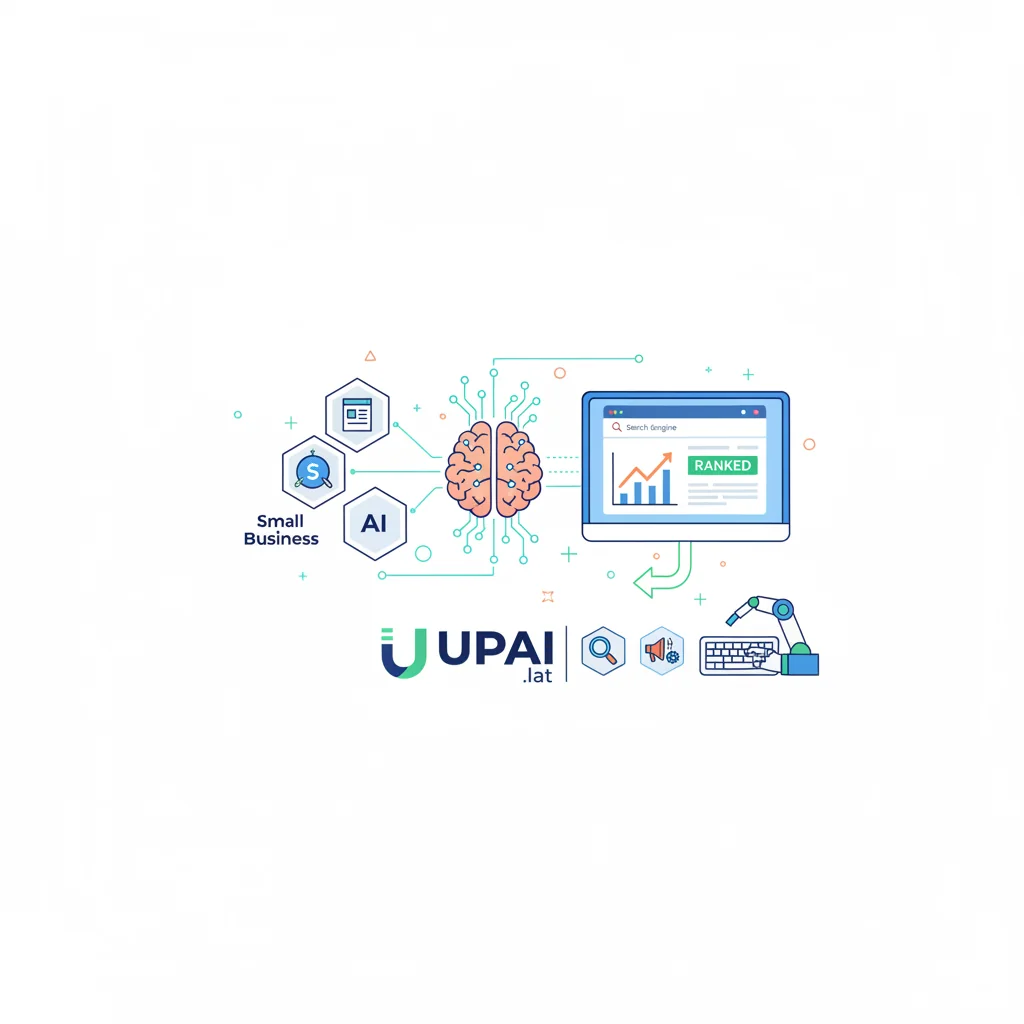
Pillars of an Effective AI Content Strategy
An effective AI content strategy for small businesses rests on several foundational pillars, each crucial for maximizing the benefits of artificial intelligence in content marketing. These pillars ensure that AI integration is systematic, goal-oriented, and aligned with overall business objectives. A robust strategy integrates these elements to create a cohesive and high-performing content ecosystem.
**Content automation is** the process of using software and artificial intelligence tools to streamline and execute various content-related tasks, including generation, optimization, distribution, and analysis, with minimal human intervention.
1. Data-Driven Planning and Research
The cornerstone of any successful AI content strategy is a commitment to data-driven decision-making. AI tools excel at analyzing vast amounts of data to uncover insights that humans might miss. For small businesses, this means:
- **Audience Analysis:** Using AI to understand customer demographics, psychographics, pain points, and content consumption habits. This includes analyzing social media conversations, review data, and website analytics.
- **Keyword Research and Topic Ideation:** AI-powered tools can identify high-volume, low-competition keywords, analyze competitor content gaps, and suggest trending topics. This ensures content addresses actual audience needs and has a higher chance of ranking. UPAI's tools, while not explicitly mentioned for keyword research here, play a crucial role in the subsequent optimization phase based on this research.
- **Competitor Analysis:** AI can quickly dissect competitor strategies, identify their top-performing content, and analyze their SEO tactics, providing actionable insights for differentiation.
2. AI-Assisted Content Generation and Creation
While AI cannot fully replace human creativity and strategic thinking, it significantly augments the content creation process. This pillar focuses on leveraging AI to accelerate content production and maintain consistency.
- **Drafting and Outlining:** AI writing assistants can generate initial drafts, blog post outlines, email sequences, and social media captions based on prompts. This saves significant time for human writers, who can then focus on refining, fact-checking, and adding unique perspectives.
- **Content Repurposing:** AI can transform existing long-form content (e.g., blog posts) into various formats like social media snippets, video scripts, infographics summaries, or podcast outlines, maximizing the return on content investment.
- **Personalized Content:** AI enables the creation of dynamic content that adapts to individual user preferences, improving engagement and conversion rates, particularly in email marketing and website experiences.
3. Advanced SEO Optimization
Optimizing content for search engines is paramount for visibility, and AI provides powerful capabilities to achieve this. This pillar ensures that generated content is not just good, but also discoverable.
- **On-Page SEO Enhancement:** AI tools can analyze content for keyword density, suggest internal linking opportunities, and optimize meta titles and descriptions for maximum click-through rates. Our SEO Checker can instantly analyze a page's SEO score, providing actionable recommendations to improve visibility.
- **Readability and Engagement:** AI can assess content readability levels, suggesting improvements to sentence structure, vocabulary, and overall flow, making content more accessible to the target audience. The Readability tool can help ensure your content is clear and engaging for your audience.
- **Headline Optimization:** AI can generate multiple headline options and predict which ones will perform best based on engagement metrics and SEO factors. Use our Headline Analyzer to score and improve your titles.
- **Schema Markup Generation:** AI can help generate structured data like FAQ schema, which enhances how content appears in SERPs and improves click-through rates. The FAQ Schema generator is a valuable asset for this.
- **Keyword Density Analysis:** Maintaining an optimal keyword density is crucial for SEO. Our Keyword Density tool helps analyze keyword usage, ensuring your content is optimized without being overstuffed.
4. Performance Analysis and Iteration
An AI content strategy is not static; it requires continuous monitoring and adaptation. This pillar leverages AI to understand content performance and inform future strategy adjustments.
- **Automated Reporting:** AI can compile and analyze content performance data (traffic, conversions, engagement, bounce rate) from various sources, presenting insights in an easily digestible format.
- **Predictive Analytics:** AI can forecast content trends, identify potential performance issues, and suggest proactive adjustments to the content calendar or strategy.
- **A/B Testing and Optimization:** AI can facilitate the A/B testing of headlines, CTAs, and content variations, automatically identifying the most effective elements to improve conversion rates.
By systematically building upon these pillars, small businesses can create a robust and dynamic AI content strategy that delivers consistent, measurable results, positioning them for sustainable growth in the digital landscape.
Implementing AI Across the Content Lifecycle
Implementing AI across the content lifecycle involves strategically integrating AI tools and methodologies into every phase of content development, from initial concept to post-publication analysis. This holistic approach ensures that AI enhances efficiency, quality, and effectiveness at each stage, providing a streamlined workflow for small businesses. By breaking down the content process, businesses can identify specific areas where AI offers the most impact.
Here's how AI can be implemented at each stage:
1. Content Planning and Strategy
This initial phase is where AI can provide foundational insights, ensuring your content efforts are well-directed and data-backed.
- **Market and Audience Research:** AI tools analyze vast datasets (social media, forums, search queries) to identify audience pain points, interests, and emerging trends. They can segment audiences and create detailed buyer personas.
- **Keyword and Topic Ideation:** AI-powered keyword research tools identify high-potential keywords, analyze search intent, and suggest content topics that address specific user queries. They can also reveal content gaps where competitors are not performing well.
- **Competitor Analysis:** AI can crawl competitor websites, analyze their top-ranking content, backlink profiles, and social media engagement to uncover successful strategies and areas for differentiation.
- **Content Calendar Generation:** Based on research, AI can suggest optimal publishing schedules and content formats that align with audience behavior and seasonal trends.
2. Content Creation and Generation
Once the plan is in place, AI significantly accelerates the actual writing and visual creation process.
- **Drafting and Outlining:** AI writing assistants can generate detailed outlines, intros, conclusions, and even full first drafts for blog posts, articles, landing page copy, and email newsletters. This provides a strong starting point for human editors.
- **Headline and CTA Generation:** AI can produce multiple compelling headlines and calls-to-action (CTAs) optimized for click-through rates and conversions. Our Headline Analyzer is an excellent tool for scoring and refining these.
- **Content Repurposing:** AI can effortlessly transform long-form content into shorter formats like social media posts, video scripts, podcast notes, or email snippets, maximizing the reach of each content piece.
- **Image and Video Generation (AI-Assisted):** While more advanced, AI can assist in generating royalty-free images, creating video scripts, or even basic video edits based on text prompts, enhancing visual content production.
3. Content Optimization and SEO
After creation, AI becomes indispensable for refining content to ensure it ranks high on search engines and engages readers effectively.
- **On-Page SEO Analysis:** AI tools analyze content for keyword density, readability, internal linking opportunities, and overall SEO health. Our SEO Checker provides an instant analysis of a page's SEO score, offering actionable insights. Use the Keyword Density tool to ensure optimal keyword usage.
- **Readability Improvement:** AI assesses content for clarity, conciseness, and engagement, suggesting improvements to sentence structure and vocabulary. The Readability tool is specifically designed for this purpose.
- **Meta Description and Title Tag Optimization:** AI can craft compelling meta descriptions and title tags that entice clicks from the SERP. Preview how your page will look in Google with our SERP Preview tool.
- **Structured Data Generation:** AI can automatically generate schema markup (e.g., FAQ Schema) to improve how content is presented in search results, enhancing visibility and organic reach.
- **Grammar and Style Checks:** Advanced AI tools provide more sophisticated grammar, spelling, and style suggestions than traditional checkers, ensuring polished content.
4. Content Distribution and Promotion
AI streamlines the process of getting content in front of the right audience.
- **Social Media Scheduling and Copy:** AI can generate social media captions tailored to different platforms and schedule posts for optimal engagement times.
- **Email Marketing Personalization:** AI segment email lists, personalize subject lines, and recommend relevant content to individual subscribers, improving open rates and click-throughs.
- **Ad Copy Generation:** AI can create multiple variations of ad copy for platforms like Google Ads and social media ads, testing and optimizing for performance.
5. Content Performance Analysis and Iteration
The final stage uses AI to learn from past performance and refine future strategies.
- **Automated Reporting and Insights:** AI platforms can aggregate data from analytics tools, social media, and CRM systems to provide comprehensive performance reports. They highlight what content is working, why, and what needs improvement.
- **Predictive Analytics:** AI can forecast future content trends, predict content decay, and suggest proactive strategies to maintain relevance and performance.
- **A/B Testing and Optimization:** AI can autonomously run A/B tests on various content elements (headlines, images, CTAs) and identify the most effective combinations, leading to continuous improvement.
- **Audience Feedback Analysis:** AI can analyze comments, reviews, and customer support interactions to gather qualitative feedback, informing content adjustments and future topics.
By integrating AI at each of these stages, small businesses can create a highly efficient, data-driven content operation that consistently delivers results. This systematic application transforms content marketing from a series of disjointed tasks into a cohesive, optimized, and scalable growth engine.
| Content Stage | Manual Process (Traditional) | AI-Assisted Process (Strategic) |
|---|---|---|
| **Planning & Research** | Time-consuming manual keyword research, limited competitor analysis, qualitative audience insights. | Automated keyword discovery, comprehensive competitor gap analysis, data-driven audience segmentation. |
| **Content Creation** | Hours spent on drafting, outlining, and writing from scratch, limited content variations. | AI generates outlines, first drafts, multiple headlines, and rapid content repurposing, significantly reducing drafting time. |
| **Optimization & SEO** | Manual on-page checks, subjective readability assessment, basic meta-tag writing. | AI-powered SEO scoring (SEO Checker), readability analysis (Readability), headline optimization (Headline Analyzer), and schema generation (FAQ Schema). |
| **Distribution & Promotion** | Manual scheduling of posts, generic ad copy, limited personalization in emails. | AI-optimized social media scheduling, personalized email content, AI-generated ad copy variations. |
| **Analysis & Iteration** | Manual data aggregation from disparate sources, reactive strategy adjustments. | Automated performance reports, predictive analytics for trends, AI-driven A/B testing and optimization. |
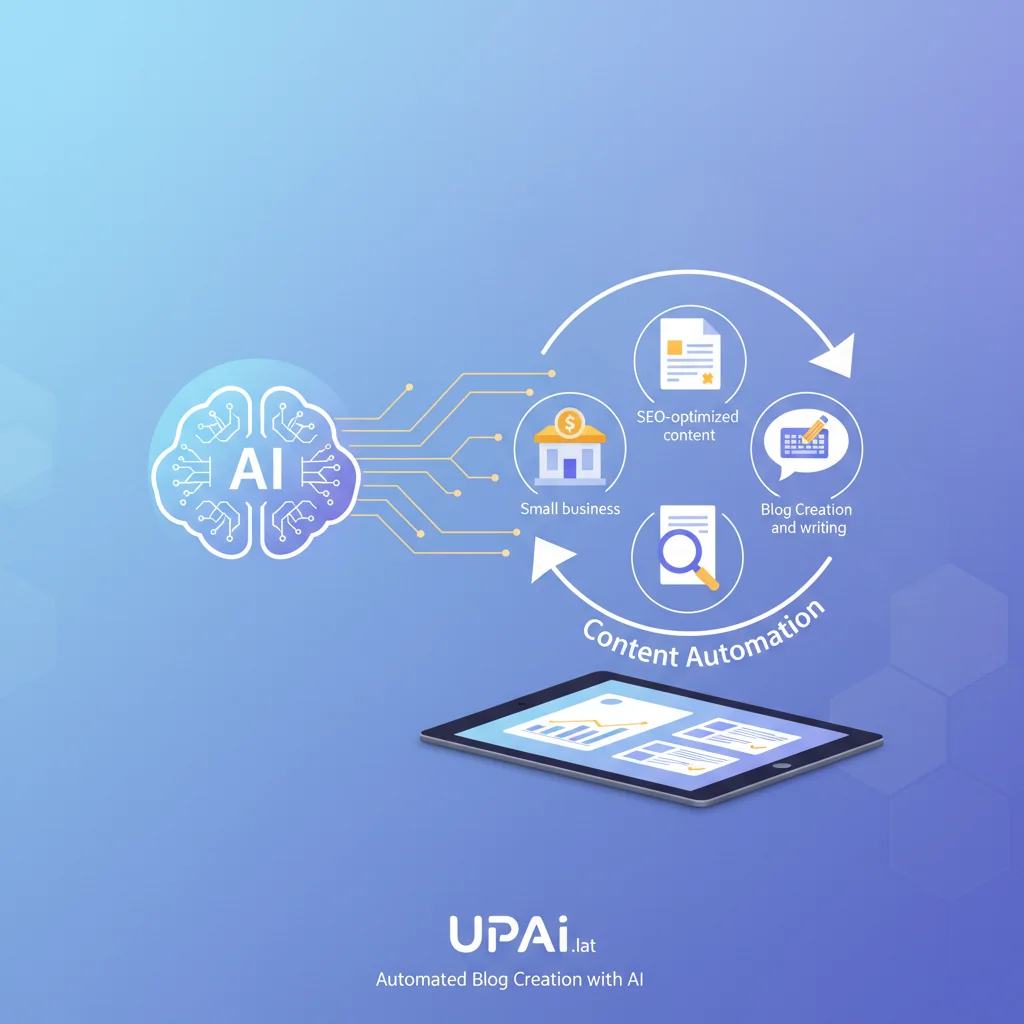
Choosing the Right AI Tools for Your Small Business
Choosing the right AI tools for your small business content strategy requires a careful assessment of your specific needs, budget, and desired outcomes. The market offers a diverse range of AI solutions, each with unique capabilities, making it crucial to select tools that integrate seamlessly into your workflow and provide tangible value. Prioritize tools that address your most pressing content challenges and offer clear return on investment.
When evaluating AI tools, consider the following factors:
- **Identify Your Core Content Challenges:** Before looking at tools, pinpoint where your content process struggles most. Is it keyword research, content drafting, SEO optimization, or performance analysis? This clarity will guide your selection.
- **Budget Constraints:** AI tools vary widely in price, from free tiers to expensive enterprise solutions. Small businesses should seek cost-effective options that offer significant value without overstretching resources. Many tools offer tiered pricing based on usage or features.
- **Ease of Use and Learning Curve:** Small businesses often have limited time for extensive training. Prioritize tools with intuitive interfaces and good customer support to ensure quick adoption and efficient use by your team.
-
**Specific Feature Set:**
- **AI Writing Assistants:** These tools excel at generating text for various purposes, from blog post drafts to social media captions. Look for capabilities like tone adjustment, content summarization, and language translation.
- **SEO Analysis and Optimization Tools:** These are critical for improving search visibility. Essential features include keyword research, competitor analysis, on-page SEO recommendations, and readability checkers. UPAI offers specialized tools like the SEO Checker for instant analysis, Keyword Density for optimization, and FAQ Schema for structured data.
- **Content Planning & Ideation Tools:** Focus on tools that help with topic generation, content gap analysis, and understanding audience intent.
- **Performance Analytics Tools:** These should integrate with your website and social media to provide insights into content effectiveness, traffic, and conversions. Using a tool like our Earn Calculator can help estimate potential monetization from your blog, guiding content strategy based on revenue potential.
- **Readability and Grammar Tools:** Essential for ensuring high-quality, error-free content that is easy for your audience to consume. Our Readability tool is key for this.
- **Headline Optimization Tools:** Crucial for attracting clicks in search results and social feeds. The Headline Analyzer assists in crafting compelling titles.
- **SERP Preview Tools:** Before publishing, seeing how your content will appear in search results is vital. The SERP Preview tool provides this essential visualization.
- **Integration Capabilities:** Consider if the AI tool integrates with your existing marketing stack (e.g., CMS, email marketing platform, analytics tools). Seamless integration reduces manual data transfer and improves workflow efficiency.
- **Scalability:** Choose tools that can grow with your business. As your content needs expand, the tool should be able to handle increased volume and complexity without requiring a complete overhaul.
- **Vendor Reputation and Support:** Research user reviews, case studies, and the quality of customer support. Reliable support is invaluable, especially when encountering technical issues or needing guidance on best practices.
- **Trial Periods and Demos:** Always take advantage of free trials or request demos. This allows you to test the tool's functionality with your actual content and assess its real-world value before committing to a purchase.
For a small business, a phased approach is often best. Start by investing in one or two AI tools that address your most critical pain points, such as an AI writing assistant for drafting and an SEO optimization tool for visibility. As you become more comfortable and see tangible results, you can gradually expand your AI toolkit to cover more aspects of your content lifecycle. The key is to select tools that empower your team, not replace them, allowing them to focus on creativity, strategy, and human connection.
Measuring Success and Iterating Your AI Strategy
Measuring the success of your AI content strategy is paramount to ensure that your investments in AI tools and processes yield tangible business results. This involves tracking key performance indicators (KPIs) and regularly iterating on your strategy based on data-driven insights. A robust measurement framework allows small businesses to optimize their AI usage, refine content approaches, and maximize return on investment.
**Return on Investment (ROI) is** a performance measure used to evaluate the efficiency or profitability of an investment, calculated by dividing the net profit by the cost of the investment, expressed as a percentage.
Key Metrics to Track
To effectively measure the impact of your AI content strategy, focus on a combination of quantitative and qualitative metrics:
-
**Efficiency Gains:**
- **Time Saved:** Quantify the reduction in time spent on content planning, drafting, and optimization tasks compared to pre-AI processes. For example, if AI reduces drafting time by 50%, calculate the saved hours.
- **Content Volume:** Track the increase in the number of high-quality content pieces produced within the same timeframe or with the same resources.
- **Cost Reduction:** Analyze the decrease in expenditures related to content creation, such as outsourcing writing or reducing staff hours dedicated to manual tasks.
-
**SEO Performance:**
- **Organic Traffic:** Monitor the growth in visitors coming from search engines to your AI-assisted content.
- **Keyword Rankings:** Track improvements in search engine rankings for target keywords.
- **SERP Visibility:** Measure how often your content appears in search results and its position, using tools like our SERP Preview to visualize your appearance.
- **Click-Through Rate (CTR):** Evaluate the percentage of users who click on your content from search results, often influenced by AI-optimized headlines and meta descriptions.
-
**Engagement Metrics:**
- **Page Views & Time on Page:** Higher numbers indicate that content is resonating with your audience.
- **Bounce Rate:** A lower bounce rate suggests content is relevant and engaging.
- **Social Shares & Comments:** Indicate audience interaction and content virality.
-
**Conversion Metrics:**
- **Lead Generation:** Track the number of leads generated directly from content (e.g., form submissions, newsletter sign-ups).
- **Sales/Revenue:** Measure the direct sales attribution from content, especially for e-commerce businesses. Our Earn Calculator can help estimate potential monetization from your blog, aligning content efforts with revenue goals.
- **Conversion Rate:** The percentage of visitors who complete a desired action after engaging with your content.
-
**Brand Sentiment and Authority:**
- **Mentions and Backlinks:** Increased mentions across the web and high-quality backlinks signal growing authority.
- **Brand Perception:** While harder to quantify, surveys and sentiment analysis can gauge how your brand is perceived post-AI integration.
Iterative Process for Continuous Improvement
Measuring success is not a one-time event; it's an ongoing cycle of analysis and adaptation.
- **Set Clear Benchmarks:** Before implementing AI, establish baseline metrics for your current content performance. This provides a reference point for measuring improvement.
- **Regular Data Collection and Analysis:** Implement systems to consistently collect data on your chosen KPIs. Use analytics dashboards to visualize trends and identify anomalies.
- **A/B Testing:** Actively use AI to A/B test different content elements—headlines, CTAs, content formats, and even entire articles. AI can help generate variations and analyze which performs best.
- **Feedback Loops:** Incorporate both quantitative data and qualitative feedback (e.g., customer comments, sales team insights) to understand the "why" behind the numbers.
-
**Strategy Adjustment:** Based on your analysis, make informed adjustments to your AI content strategy. This could involve:
- Refining AI prompts for better output quality.
- Adjusting keyword targeting.
- Experimenting with new content formats.
- Reallocating resources to high-performing content types or channels.
- Integrating new AI tools or features.
- **Document Learnings:** Maintain a record of what worked, what didn't, and why. This institutional knowledge is invaluable for future strategy development and training.
By embracing this iterative process, small businesses can ensure their AI content strategy remains agile, responsive to market changes, and continuously optimized for maximum impact. It transforms AI from a mere tool into a strategic partner in achieving sustainable growth.
Common Mistakes in AI Content Strategy for Small Businesses
Small businesses adopting AI for content often make critical mistakes that undermine their efforts, leading to suboptimal results and wasted resources. Recognizing and avoiding these pitfalls is essential for a successful AI content strategy. The most frequent errors stem from an over-reliance on AI without human oversight or a lack of strategic planning.
Here are common mistakes and how to avoid them:
1. Over-Reliance on AI Without Human Oversight
**Mistake:** Treating AI as a complete replacement for human writers and editors, publishing AI-generated content directly without review. This often results in generic, inaccurate, or poorly structured content.
**Solution:** Position AI as an assistant or co-pilot. Human editors must review, fact-check, refine, and inject unique insights and brand voice into every piece of AI-generated content. AI provides the draft; humans provide the polish and strategic depth.
2. Neglecting Brand Voice and Tone
**Mistake:** Allowing AI to produce content that deviates significantly from the established brand voice, leading to inconsistent messaging and a diluted brand identity.
**Solution:** Train your AI tools with specific guidelines on your brand's voice, tone, and style. Provide examples of your best content as input. Always have a human review to ensure brand consistency and authenticity.
3. Ignoring SEO Best Practices
**Mistake:** Generating content with AI but failing to optimize it for search engines, assuming AI automatically handles SEO. This leads to content that may be well-written but remains undiscoverable.
**Solution:** Integrate AI-powered SEO tools into your workflow. Conduct thorough keyword research, ensure optimal keyword density using tools like our Keyword Density checker, optimize meta descriptions, and build internal links. Use tools like our SEO Checker to analyze and improve your content's search performance.
4. Lack of a Clear Strategy and Goals
**Mistake:** Adopting AI tools simply because they are popular, without a defined strategy, specific goals, or understanding of how AI fits into overall business objectives.
**Solution:** Develop a comprehensive AI content strategy with clear objectives (e.g., increase organic traffic by X%, reduce content production time by Y%). Define how AI will contribute to each goal and establish measurable KPIs.
5. Poor Prompt Engineering
**Mistake:** Providing vague or insufficient prompts to AI tools, leading to generic, irrelevant, or low-quality output that requires extensive human revision.
**Solution:** Learn the art of prompt engineering. Be specific, provide context, define the target audience, desired tone, format, and key information points. Experiment with different prompts to understand what yields the best results from your chosen AI tools.
6. Not Measuring Results and Iterating
**Mistake:** Failing to track the performance of AI-generated or AI-optimized content, thus missing opportunities to learn, improve, and justify the investment.
**Solution:** Implement a robust measurement framework. Track KPIs such as organic traffic, engagement, conversions, and time saved. Regularly analyze data and use insights to iterate on your strategy, AI tool usage, and content creation process. Utilize tools like our Earn Calculator to estimate monetization potential and guide strategic content decisions.
7. Neglecting Readability and User Experience
**Mistake:** Focusing solely on keyword optimization or content volume, overlooking the importance of clear, engaging, and user-friendly content. AI can sometimes produce dense or repetitive text.
**Solution:** Prioritize readability and user experience. Use tools like our Readability checker to ensure your content is easy to understand. Structure content with headings, subheadings, bullet points, and short paragraphs. Ensure a seamless user journey on your website.
8. Fear of Experimentation and Adaptation
**Mistake:** Sticking to old methods or a rigid AI strategy, failing to adapt as AI technology evolves or as market conditions change.
**Solution:** Embrace a mindset of continuous learning and experimentation. Regularly explore new AI tools and features. Be willing to adjust your strategy based on performance data and emerging trends in AI and content marketing.
By proactively addressing these common mistakes, small businesses can harness the full potential of AI, transforming their content marketing into a powerful, efficient, and results-driven engine for growth.
Adopting an AI content strategy is no longer optional for small businesses aiming for sustainable growth and a competitive edge in the digital landscape. By systematically integrating AI tools into every phase of the content lifecycle—from data-driven planning and efficient creation to precise SEO optimization and insightful performance analysis—small businesses can dramatically boost their efficiency, reduce costs, and significantly expand their market reach. The strategic application of AI frees up valuable human resources, allowing teams to focus on creativity, strategy, and building genuine customer relationships, while the AI handles the heavy lifting of content generation and optimization.
The key to success lies in a balanced approach: leveraging AI for its speed and analytical power, while maintaining human oversight for accuracy, brand voice, and strategic depth. Avoid common pitfalls like over-reliance on AI or neglecting SEO, and instead, embrace an iterative process of measurement and refinement. By doing so, your small business can unlock unprecedented levels of content performance and achieve measurable marketing objectives.
Ready to supercharge your content strategy? Explore UPAI's suite of AI-powered tools designed to streamline your content creation, optimize for SEO, and help you understand your blog's monetization potential. Automate Your Blog with AI and transform your digital presence.
Frequently Asked Questions
What is an AI content strategy for a small business?
How can AI content tools help my small business save time and money?
What types of content can AI help me create for my small business?
Will AI-generated content sound robotic or unnatural for my brand?
How can AI help my small business improve its search engine optimization (SEO) with content?
What are the first steps a small business should take to implement an AI content strategy?
Related Articles

Sample Blog Post: Engaging Content for SEO & AI in June 2026
Discover the blueprint for a sample blog post in June 2026 that engages readers, ranks high in search, and is AI-citable. Learn GEO strategies now!

Xvidio Technologies-Startup OS: Revolutionize Your Content Lifecycle
Discover the Xvidio Technologies-Startup OS, an integrated framework for startup content from ideation to monetization. Optimize for search, engagement, and growth.
Guest Blogging Opportunities: Get High-Quality Backlinks
Guest blogging opportunities to scale organic traffic and backlinks across Latin America. Learn outreach tactics, platforms, and SaaS workflows—schedule a demo.
More free AI tools from the same team
Grow your LinkedIn presence on autopilot. Try LinkedIn automation and AI content for free.
Read the Linkesy blogAsk AI about UPAI
Click your favorite assistant to learn more about us