
Aerospace Startup Funding News: $17.8B Surge in 2025
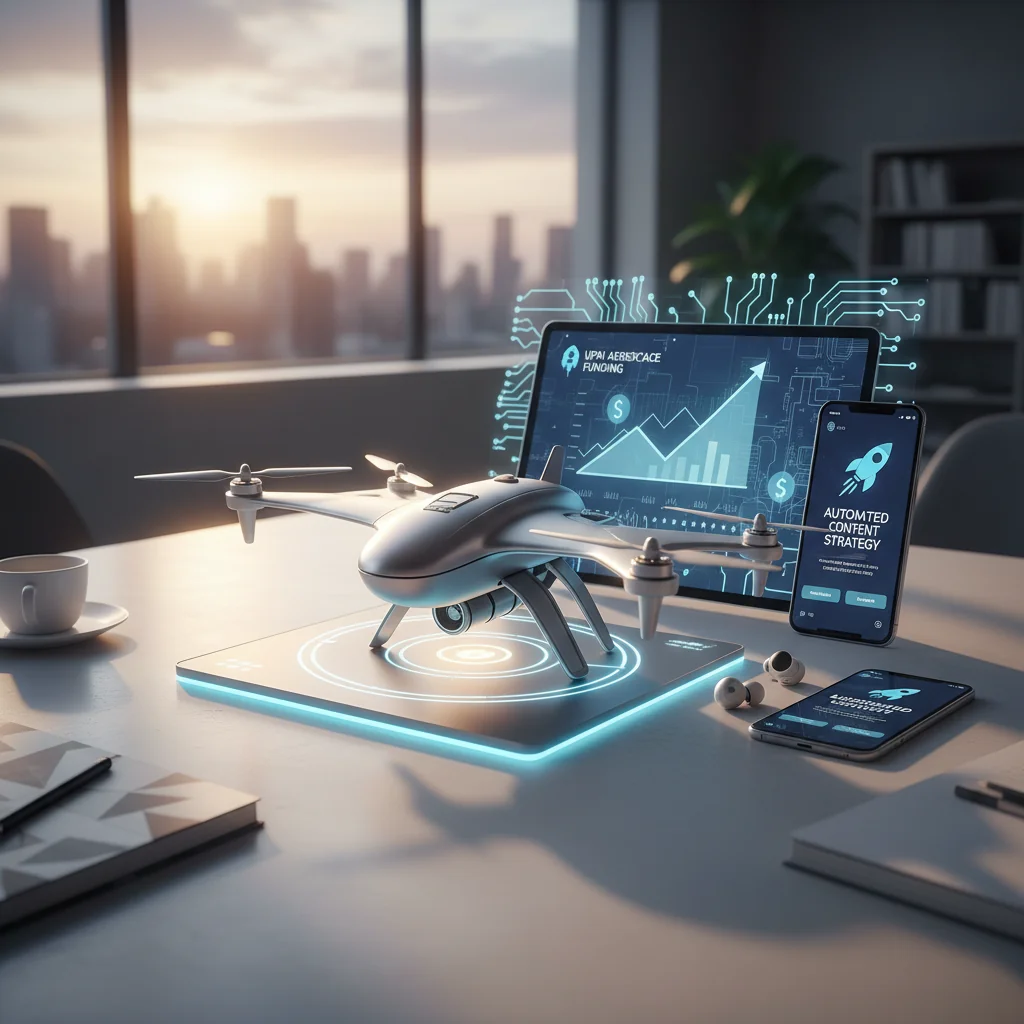
The aerospace sector is currently experiencing an unprecedented surge in innovation and investment, with global aerospace startup funding reaching an estimated $17.8 billion in 2025, marking a significant increase from previous years as investors recognize the transformative potential of space exploration, advanced air mobility, and sustainable aviation technologies.
This dynamic landscape presents both immense opportunities and unique challenges for new ventures seeking capital. Understanding the intricate patterns of investment, the key players, and the evolving technological frontiers is paramount for any startup aiming to secure the necessary backing to turn ambitious visions into reality. This guide delves into the latest trends, critical funding stages, and strategic approaches that define the aerospace funding ecosystem in 2026, offering insights for founders, investors, and industry observers alike.
From the burgeoning market of satellite constellations to the disruptive potential of eVTOL aircraft, capital is flowing into areas poised to redefine how we travel, connect, and explore. Navigating this complex environment requires not just groundbreaking technology, but also a sophisticated understanding of investor expectations, regulatory pathways, and market dynamics, which we will explore in detail.
Key Takeaways
- Aerospace startup funding is booming, driven by innovation in space, advanced air mobility, and sustainable aviation, with an estimated $17.8 billion invested in 2025.
- Key funding stages (Seed, Series A, B, C) require tailored strategies, clear milestones, and a deep understanding of investor expectations specific to the aerospace sector's long development cycles.
- Emerging trends like Advanced Air Mobility (AAM), satellite constellations, and sustainable aviation fuels (SAFs) are attracting significant venture capital and private equity investment.
- Government grants, contracts (e.g., SBIR/STTR), and strategic partnerships with prime contractors are crucial non-dilutive funding sources, especially for early-stage, high-risk projects.
- Overcoming funding challenges involves robust business plans, clear regulatory roadmaps, demonstrating dual-use potential, and building strong, experienced teams.
- Effective content marketing, leveraging tools like UPAI, is essential for aerospace startups to build visibility, attract investors, and communicate their value proposition in a competitive landscape.
The Current Landscape of Aerospace Startup Funding in 2026
The aerospace startup funding landscape in 2026 is characterized by robust growth and diversified investment, primarily fueled by advancements in space technology, the advent of Advanced Air Mobility (AAM), and a global push towards sustainable aviation. Investors are increasingly recognizing the long-term potential of this sector, moving beyond traditional defense and commercial aviation to embrace disruptive innovations.
Global investment data indicates a sustained upward trajectory, with venture capital firms, corporate venture arms, and private equity funds actively seeking opportunities in both upstream (launch, satellite manufacturing) and downstream (data analytics, ground services) space segments, as well as in electric vertical takeoff and landing (eVTOL) aircraft and hydrogen propulsion systems. This shift reflects a maturing market where technological feasibility is increasingly matched by clear business models and regulatory progress.
Defining the Aerospace Startup Ecosystem
An aerospace startup is a newly established company, typically technology-driven, focused on developing innovative products, services, or solutions within the aviation, space, or defense industries. These ventures often aim to disrupt existing markets or create entirely new ones through novel technologies or business models.
The ecosystem is highly complex, involving a wide array of stakeholders from government agencies and established aerospace primes to specialized venture capital funds and academic institutions. This interconnected network facilitates innovation, provides critical infrastructure, and often acts as a proving ground for new technologies before broader market adoption.
Key Growth Drivers Attracting Capital
Several macro and micro trends are significantly influencing investor interest in aerospace startups:
-
Space Exploration and Commercialization
The drive for space commercialization, including satellite broadband, in-orbit servicing, space tourism, and resource utilization, continues to be a major magnet for capital. Companies focusing on reusable launch vehicles, small satellite constellations, and lunar/Martian infrastructure are seeing substantial investment. The demand for global connectivity, earth observation data, and secure communication channels from space is insatiable, driving innovation in satellite design, manufacturing, and deployment.
Private companies are leading the charge in developing more cost-effective and frequent access to space, democratizing capabilities previously exclusive to national space agencies. This has opened up a new frontier for data-driven services and applications that rely on space-based assets.
-
Advanced Air Mobility (AAM)
AAM, encompassing eVTOLs, drones for cargo delivery, and future urban air taxi services, is attracting significant funding. The promise of reducing urban congestion, improving logistics, and offering new modes of personal travel has captivated investors. While regulatory hurdles remain, advancements in battery technology, autonomous flight systems, and electric propulsion are accelerating progress.
The market for AAM is projected to grow exponentially over the next decade, with companies focusing on both aircraft development and the necessary ground infrastructure, air traffic management systems, and charging solutions. This holistic approach is critical for the successful deployment and scaling of these new transportation networks.
-
Sustainable Aviation Technologies
With increasing pressure to decarbonize air travel, investments in sustainable aviation fuels (SAFs), electric and hydrogen propulsion systems, and more efficient aircraft designs are paramount. Startups developing these technologies are seen as critical for the long-term viability and environmental responsibility of the aerospace industry.
Governments and major airlines are setting ambitious net-zero targets, creating a massive market for innovative solutions that reduce carbon emissions. This includes not only direct propulsion technologies but also advancements in aerodynamic efficiency, lightweight materials, and optimized flight operations.
-
Defense and National Security Innovation
Geopolitical tensions and evolving threats are driving significant investment into defense-related aerospace technologies, including hypersonics, advanced surveillance systems, cyber-secure communications, and counter-drone capabilities. Startups offering dual-use technologies (applicable to both commercial and defense sectors) are particularly attractive.
National security interests often provide a stable funding base through government contracts and grants, offering a clear pathway to market for technologies with critical strategic value. This sector often benefits from accelerated development cycles and direct government procurement.
Geographic Hotbeds of Aerospace Investment
While aerospace is a global industry, certain regions have emerged as dominant hubs for startup funding:
-
United States
Still the undisputed leader, with Silicon Valley, Los Angeles, Seattle, and Florida acting as major centers. NASA, DoD, and a robust venture capital ecosystem provide unparalleled support. The U.S. benefits from a strong entrepreneurial culture, significant government R&D spending, and a concentration of aerospace talent and established companies.
-
Europe
Countries like the UK, France, Germany, and Luxembourg are growing rapidly, driven by ESA programs, national initiatives, and increasing private investment. Europe's focus on sustainable aviation and advanced manufacturing provides a unique competitive edge, alongside strong academic research institutions.
-
Asia-Pacific
China, India, Japan, and Australia are making significant strides, particularly in satellite technology, launch services, and drone applications. Government support and a rapidly expanding middle class are fueling demand and investment in these regions.
Understanding these geographic concentrations is vital for startups seeking to tap into the most active funding networks and leverage regional expertise and resources.
Key Funding Stages and How Aerospace Startups Navigate Them
Aerospace startups, like those in other deep technology sectors, typically navigate a series of distinct funding stages, each with its own set of expectations, capital requirements, and investor profiles. Successfully progressing through these stages requires meticulous planning, clear demonstration of technical and commercial progress, and effective communication of a compelling vision.
The unique challenges of aerospace, such as long development cycles, high capital expenditure, and stringent regulatory compliance, often mean that funding rounds are larger and more complex than in other industries, demanding a sophisticated approach to investor relations and financial strategy.
Pre-Seed and Seed Stage: Proving the Concept
The pre-seed and seed stages are foundational for aerospace startups, typically focusing on validating the core technology, building a minimum viable product (MVP) or prototype, and assembling the initial team. Funding at this stage primarily comes from angel investors, incubators, accelerators, and early-stage venture capital funds, as well as non-dilutive government grants.
-
Funding Range
Typically ranges from $50,000 to $2 million, depending on the capital intensity of the initial development. For aerospace, this can sometimes be higher due to specialized equipment or testing requirements.
-
Investor Expectations
Investors at this stage look for a strong team with relevant expertise, a clear problem statement, a credible technical roadmap, and evidence of market opportunity. A compelling vision and the ability to execute on early milestones are critical. They understand that a fully functional product is often years away, so the focus is on foundational elements.
-
Key Milestones
Achieving proof-of-concept, completing initial design reviews, securing early intellectual property, building functional prototypes, and demonstrating initial market interest through letters of intent or small pilot programs.
During this phase, clear communication of technical progress and future potential is paramount. Startups can leverage tools like UPAI's Readability tool to ensure their pitch decks and whitepapers are easily understood by a diverse audience of technical and non-technical investors.
Series A: Scaling the Technology and Team
Series A funding marks a critical transition, as startups move from concept validation to demonstrating commercial viability and scaling their operations. Investors typically include larger venture capital firms, corporate venture capital arms, and sometimes strategic partners.
-
Funding Range
Commonly between $5 million and $20 million, though this can vary significantly based on the specific sub-sector of aerospace and the capital requirements for advanced R&D and initial manufacturing.
-
Investor Expectations
Investors seek evidence of a repeatable business model, significant technical de-risking, a clear path to market, and a growing customer base (even if early-stage). The team should be expanding to include key operational and commercial roles. A strong competitive advantage and defensible intellectual property are highly valued.
-
Key Milestones
Completing a full-scale prototype or pre-production model, securing initial customer contracts or significant partnerships, demonstrating regulatory pathway progress, and showing scalability of the technology or service. This stage often involves significant testing and certification efforts.
Series B and Beyond: Market Penetration and Expansion
Series B, C, and subsequent rounds are focused on accelerating market penetration, expanding product lines, entering new geographies, and scaling manufacturing or service delivery. These rounds often involve larger venture capital funds, private equity firms, and increasingly, institutional investors.
-
Funding Range
Series B typically ranges from $20 million to $75 million, with later stages often exceeding $100 million. These substantial investments reflect the capital-intensive nature of aerospace and the need for significant infrastructure and operational scaling.
-
Investor Expectations
Investors demand clear metrics demonstrating market traction, revenue growth, customer retention, and a solid plan for achieving profitability or a clear path to exit. The management team should be robust and experienced in scaling a complex business. Regulatory approvals and certifications become paramount.
-
Key Milestones
Achieving significant production volumes, securing major commercial contracts, expanding into new markets, obtaining critical regulatory certifications (e.g., FAA, EASA), and demonstrating strong unit economics. Public market readiness may also become a consideration.
Throughout these stages, maintaining a strong online presence and clear communication with stakeholders is essential. Utilizing UPAI's SEO Checker can help startups ensure their website and content are optimized to attract potential investors, partners, and customers searching for innovative aerospace solutions.

The Unique Capital Requirements of Aerospace
Aerospace startups face distinct financial hurdles that differentiate them from software or consumer tech ventures:
-
High Research & Development Costs
Developing novel aircraft, rocket engines, or satellite systems requires substantial investment in materials science, engineering, and testing facilities. These costs can run into hundreds of millions or even billions of dollars over the lifecycle of a major project.
-
Long Development Timelines
From concept to commercialization, aerospace projects often take 5-15 years, or even longer. This extended timeline demands patient capital and investors with a long-term perspective, as returns are not immediate.
-
Regulatory and Certification Burdens
Aerospace products and services are heavily regulated for safety and reliability. Obtaining certifications from bodies like the FAA, EASA, or military authorities is a costly and time-consuming process that requires significant financial resources.
-
Specialized Infrastructure
Manufacturing facilities, launch pads, ground control stations, and testing ranges are highly specialized and expensive to build and maintain. This infrastructure often represents a significant portion of a startup's capital expenditure.
These factors necessitate a deep understanding of the aerospace investment landscape and a strategic approach to securing funding that accounts for the industry's inherent complexities and capital intensity.
Emerging Trends Driving Investment in Aerospace Technology
The aerospace sector is undergoing a profound transformation, with several key technological and market trends attracting substantial investment and reshaping the industry. These emerging areas represent the vanguard of innovation, promising to deliver significant returns for early and strategic investors.
Understanding these trends is crucial for startups positioning themselves for funding, as investors are increasingly drawn to companies that align with the future trajectory of global aerospace and address critical challenges such as sustainability, connectivity, and defense.
Advanced Air Mobility (AAM): The Future of Urban and Regional Travel
Advanced Air Mobility (AAM) is a burgeoning sector focused on developing highly automated aircraft for passenger and cargo transport in urban and regional environments. This includes electric vertical takeoff and landing (eVTOL) vehicles, drones, and other innovative aerial platforms designed to enhance mobility and logistics.
Investment in AAM is driven by the potential to alleviate ground congestion, reduce travel times, and create new transportation ecosystems. Startups in this space are developing not only the aircraft themselves but also the necessary infrastructure, air traffic management systems, and operational models.
-
eVTOL Aircraft Development
Companies are racing to develop and certify electric or hybrid-electric aircraft capable of vertical takeoff and landing, designed for short-haul passenger and cargo flights. Significant funding is flowing into battery technology, electric propulsion systems, and flight control software.
-
Drone Delivery and Logistics
Beyond traditional military applications, drones are being developed for diverse commercial uses, including last-mile delivery, medical supply transport, infrastructure inspection, and agricultural monitoring. Investment focuses on autonomous flight, payload capacity, and regulatory compliance for widespread deployment.
-
Infrastructure and Air Traffic Management
The success of AAM hinges on developing vertiports, charging stations, and sophisticated digital air traffic management systems that can safely integrate a high volume of new aircraft into existing airspace. Startups addressing these foundational needs are also attracting significant capital.
Satellite Constellations and Space-as-a-Service: Democratizing Space Access
The proliferation of small satellite constellations and the "Space-as-a-Service" model are democratizing access to space-derived data and capabilities. This trend is fueled by reduced launch costs, miniaturization of technology, and the increasing demand for global connectivity, earth observation, and in-orbit services.
Space-as-a-Service refers to business models where companies provide access to space-based capabilities (e.g., satellite imagery, communication bandwidth, in-orbit manufacturing) on a subscription or pay-per-use basis, rather than requiring customers to own and operate their own satellites.
-
Broadband Internet from Space
Mega-constellations of low Earth orbit (LEO) satellites are being deployed to provide high-speed, low-latency internet access globally, including to remote and underserved areas. This requires significant investment in satellite manufacturing, launch services, and ground infrastructure.
-
Earth Observation and Data Analytics
Startups are leveraging satellite imagery and sensor data for a wide range of applications, from climate monitoring and disaster response to agricultural optimization and urban planning. Investment focuses on advanced sensors, data processing platforms, and AI-driven analytics.
-
In-Orbit Servicing and Manufacturing
This emerging sub-sector involves technologies for refueling, repairing, upgrading, and even manufacturing satellites and other assets directly in space. It promises to extend the lifespan of existing satellites and enable more complex space missions, reducing reliance on costly ground-based operations.
Sustainable Aviation: The Green Revolution in Flight
The aerospace industry's commitment to reducing its environmental footprint is driving massive investment into sustainable aviation technologies. This includes the development of alternative fuels, electric and hydrogen propulsion systems, and advanced materials for lighter, more efficient aircraft.
Sustainable Aviation Fuels (SAFs) are biofuels used to power aircraft that have a significantly reduced carbon footprint compared to conventional jet fuel. They are derived from sustainable feedstocks like waste oils, agricultural residues, or non-food crops.
-
Electric and Hybrid-Electric Propulsion
Beyond AAM, startups are developing electric and hybrid-electric engines for larger commercial aircraft, aiming for regional and eventually short-haul flights. Challenges include battery energy density and power management systems, but significant R&D funding is being deployed.
-
Hydrogen Propulsion Systems
Hydrogen, both in liquid and gaseous forms, is being explored as a zero-emission fuel for future aircraft. Investment is targeting hydrogen fuel cell technology, cryogenic storage, and the necessary infrastructure for production and distribution at airports.
-
Sustainable Aviation Fuels (SAFs) Production
Scaling the production of SAFs is critical for decarbonizing existing aircraft fleets. Investment is going into novel feedstocks, efficient conversion processes, and infrastructure for SAF blending and distribution. This involves both biological and synthetic pathways for fuel creation.
-
Advanced Materials and Aerodynamics
Innovations in lightweight composites, additive manufacturing (3D printing), and aerodynamic design are crucial for improving fuel efficiency and reducing emissions across all aircraft types. Startups in these areas are contributing foundational technologies to the sustainability push.
Defense & National Security Tech: Dual-Use Innovation
The defense sector remains a significant driver of aerospace innovation, with increasing investment in technologies that enhance national security, intelligence, and operational capabilities. Many of these technologies have "dual-use" potential, meaning they can serve both military and commercial markets.
-
Hypersonic Technologies
Development of aircraft and missiles capable of sustained flight at speeds greater than Mach 5 is a strategic priority. Funding supports propulsion systems, thermal management, and advanced materials capable of withstanding extreme conditions.
-
Intelligence, Surveillance, and Reconnaissance (ISR)
Advancements in satellite-based and aerial ISR platforms, including high-resolution sensors, persistent surveillance capabilities, and AI-powered data analysis, are critical for modern defense and intelligence operations. Startups offering innovative sensor payloads or data fusion platforms are highly sought after.
-
Counter-Drone Systems
The proliferation of drones has led to a demand for effective counter-drone technologies, including detection, tracking, and neutralization systems. This area attracts investment for radar, electronic warfare, and kinetic intercept solutions.
-
Cybersecurity for Aerospace Systems
As aerospace systems become more interconnected and reliant on digital networks, cybersecurity is paramount. Startups developing robust cybersecurity solutions for aircraft, satellites, and ground control systems are gaining traction.
For startups operating in these highly technical and often sensitive areas, clearly articulating their value proposition and market opportunity is vital. UPAI's SERP Preview tool can help founders see how their content appears in search results, ensuring maximum visibility for potential investors or government agencies researching their solutions.
The convergence of these trends creates a fertile ground for innovation and investment, pushing the boundaries of what's possible in air and space.
The Role of Venture Capital and Private Equity in Aerospace Funding
Venture Capital (VC) and Private Equity (PE) firms play increasingly pivotal roles in shaping the aerospace startup funding landscape, providing crucial capital, strategic guidance, and industry connections. While both are forms of private investment, they typically engage with companies at different stages of their growth and have distinct investment philosophies.
Their involvement signifies a growing maturity in the aerospace market, as these investors bring not only financial resources but also a rigorous evaluation process and a focus on scalability and market disruption, pushing startups to achieve commercial viability faster.
Venture Capital: Fueling Early-Stage Innovation
Venture Capital (VC) is a form of private equity financing that is provided by venture capital firms or funds to startups, early-stage, and emerging companies that have been deemed to have high growth potential or which have demonstrated high growth. VC firms typically invest in exchange for an equity stake.
In aerospace, VC funding is critical for companies developing groundbreaking technologies that require significant upfront R&D and have long development cycles. VCs are comfortable with higher risk in exchange for the potential of substantial returns if the technology proves successful and achieves market adoption.
-
Investment Criteria
VCs in aerospace look for disruptive technologies, strong intellectual property, a clear market opportunity, and an exceptional founding team with deep technical and industry expertise. They often prioritize scalability and the potential for a significant exit (acquisition or IPO).
-
Types of VC Funds
-
Traditional Venture Capital
Generalist VC firms increasingly have dedicated aerospace or deep tech practices. They bring broad investment experience and networks.
-
Specialized Aerospace/Space VCs
Funds like Space Capital, Seraphim Space, or Starburst Ventures focus exclusively on aerospace, bringing deep industry knowledge, technical understanding, and a network specific to the sector. They often provide more patient capital tailored to the industry's timelines.
-
Corporate Venture Capital (CVC)
Investment arms of large aerospace primes (e.g., Boeing HorizonX, Airbus Ventures, Lockheed Martin Ventures) invest in startups that align with their strategic interests, often providing not just capital but also mentorship, access to testing facilities, and potential partnership opportunities. CVCs can also be potential acquirers down the line.
-
-
Value-Add Beyond Capital
Beyond funding, VCs often provide strategic guidance, assist with recruitment, facilitate introductions to potential customers or partners, and help navigate regulatory landscapes. Their active involvement is a key reason why many startups seek VC funding.
Private Equity: Scaling Mature Aerospace Companies
Private Equity (PE) refers to capital invested in companies that are not publicly traded on a stock exchange. PE firms typically acquire a controlling stake in more mature, established companies with proven business models, aiming to improve their operations and financial performance before eventually selling them for a profit.
In aerospace, PE firms often target companies that have moved beyond the high-risk R&D phase and are entering or have already achieved significant commercialization. They are less focused on early-stage disruption and more on operational efficiency, market consolidation, and revenue growth.
-
Investment Focus
PE firms look for stable revenue streams, strong management teams, opportunities for operational improvements, and potential for market consolidation through mergers and acquisitions. They often invest in aerospace manufacturing, MRO (Maintenance, Repair, and Overhaul) services, and specialized component suppliers.
-
Typical Deal Structures
PE deals often involve leveraged buyouts (LBOs), where a significant portion of the acquisition price is financed with debt. They typically take a majority ownership stake and actively participate in the company's strategic direction and operational management.
-
Impact on the Aerospace Sector
PE investment can lead to significant consolidation within specific segments of the aerospace supply chain, driving efficiencies and creating larger, more competitive entities. They bring a strong focus on financial performance and shareholder value, which can accelerate growth and market positioning for their portfolio companies.
Comparison: Venture Capital vs. Private Equity in Aerospace
Understanding the distinction between VC and PE is crucial for founders seeking the right type of capital for their stage of development.
| Feature | Venture Capital | Private Equity |
|---|---|---|
| Company Stage | Early-stage (Seed, Series A, B), high growth potential | Mature, established companies with proven models |
| Risk Profile | High risk, high reward | Lower risk, focus on operational improvements |
| Investment Size | Typically smaller (millions to tens of millions) | Typically larger (tens of millions to billions) |
| Ownership Stake | Minority stake, often non-controlling | Majority or controlling stake |
| Focus | Disruptive innovation, rapid growth, market creation | Operational efficiency, market consolidation, financial engineering |
| Time Horizon | 5-10+ years (patient capital for deep tech) | 3-7 years (active management for quicker exit) |
| Value-Add | Strategic guidance, network, talent, technology scaling | Operational expertise, financial restructuring, M&A support |
For aerospace startups, selecting the appropriate funding partner depends on their current stage, growth trajectory, and long-term strategic goals. Clearly articulating these aspects in pitch materials is essential. UPAI's Headline Analyzer can help craft compelling titles for investor presentations and executive summaries, ensuring they capture attention and convey immediate value.

Government Grants, Contracts, and Strategic Partnerships
Government grants, contracts, and strategic partnerships with established aerospace primes represent a cornerstone of funding for many aerospace startups, particularly in the early and mid-stages of development. These non-dilutive funding sources are crucial for de-risking innovative technologies, accelerating R&D, and providing a stable customer base, especially for projects with national security implications or significant public benefit.
Unlike venture capital, which involves equity exchange, government funding often allows startups to retain full ownership while advancing their technological capabilities and demonstrating viability, making it a highly attractive option.
The Role of Government Agencies
Government agencies worldwide are significant investors in aerospace innovation, often providing the initial capital for projects deemed too risky or long-term for purely private investment. Their involvement often signals validation for private investors.
-
NASA (National Aeronautics and Space Administration)
NASA provides grants and contracts for space exploration, science, and aeronautics research. Programs like SBIR (Small Business Innovation Research) and STTR (Small Business Technology Transfer) are vital for small businesses to develop technologies with potential NASA applications, often leading to commercial spin-offs.
-
DoD (Department of Defense)
The U.S. DoD, through its various branches (Air Force, Space Force, Navy, Army) and agencies (DARPA, AFWERX), is a massive funder of defense-related aerospace technologies. Contracts range from R&D to procurement of advanced systems, providing a significant market for dual-use technologies.
-
ESA (European Space Agency)
Similar to NASA, ESA funds research and development across its member states, supporting projects in space science, Earth observation, telecommunications, and launch services. Their programs often involve international collaboration and public-private partnerships.
-
Other National Agencies
Agencies in countries like Japan (JAXA), India (ISRO), China (CNSA), and various European national space agencies (e.g., UK Space Agency, CNES in France, DLR in Germany) also offer substantial funding opportunities tailored to their national strategic priorities.
SBIR/STTR Programs: A Lifeline for Small Businesses
The Small Business Innovation Research (SBIR) and Small Business Technology Transfer (STTR) programs are U.S. government initiatives designed to stimulate technological innovation, increase private sector commercialization of federal R&D, and foster participation by small businesses in federal R&D. They are particularly relevant for aerospace startups.
-
SBIR (Small Business Innovation Research)
This program focuses on funding R&D with commercial potential. It has three phases: Phase I (feasibility study, typically up to $250k), Phase II (principal R&D, up to $1.5M), and Phase III (commercialization, no federal funding but encourages private investment or federal procurement).
-
STTR (Small Business Technology Transfer)
Similar to SBIR, but requires the small business to formally collaborate with a non-profit research institution (e.g., a university) for a significant portion of the work. This fosters technology transfer from academia to the private sector.
These programs provide non-dilutive capital, which means startups do not give up equity in exchange for funding. This is highly advantageous, especially in early stages where equity is most valuable. Moreover, winning an SBIR/STTR award provides significant validation and can attract follow-on private investment. For startups preparing proposals, optimizing content with tools like UPAI's Keyword Density tool can ensure they hit all required thematic points and technical jargon necessary for government review panels.
Strategic Partnerships with Prime Contractors
Collaborating with large, established aerospace prime contractors (e.g., Lockheed Martin, Boeing, Airbus, Northrop Grumman) is another critical funding and growth pathway for startups. These partnerships can take various forms:
-
Direct Investment
Many primes have corporate venture capital arms (as mentioned in the VC section) that invest directly in promising startups. This provides capital and can open doors to future collaboration or acquisition.
-
Joint Development Agreements (JDAs)
Primes may partner with startups to co-develop specific technologies, leveraging the startup's agility and innovation with the prime's resources, market access, and certification expertise. These agreements often include funding for the startup's R&D.
-
Supplier Contracts
Startups can become suppliers of components, software, or services to primes, gaining stable revenue, production experience, and a strong reference customer. This can be a vital step towards scaling and attracting further investment.
-
Accelerator Programs
Some primes run accelerator programs designed to mentor and support early-stage startups, often culminating in pilot projects or small contracts. These programs provide invaluable exposure and industry insights.
Strategic partnerships offer more than just funding; they provide access to expertise, large-scale testing facilities, established supply chains, and a pathway to integrate innovative technologies into major aerospace platforms. For startups, carefully crafting proposals and communication strategies that highlight synergies and mutual benefits is key to securing these partnerships. Utilizing tools like UPAI's Readability tool ensures that complex technical proposals are clear, concise, and persuasive for busy decision-makers at prime contractors.
Overcoming Funding Challenges in the Aerospace Sector
Aerospace startups face a unique set of funding challenges due to the sector's inherent characteristics, including high capital requirements, extended development timelines, and complex regulatory environments. Successfully navigating these hurdles is critical for securing and sustaining investment.
Addressing these challenges proactively with robust strategies and clear communication can significantly improve a startup's attractiveness to investors and partners, paving the way for long-term success in a competitive industry.
High Capital Requirements and Long ROI Timelines
Developing aerospace technologies, whether a new rocket engine or an eVTOL aircraft, demands substantial upfront investment in R&D, specialized manufacturing, and extensive testing. The return on investment (ROI) often takes many years, sometimes a decade or more, to materialize.
-
Strategy: Phased Development and Clear Milestones
Break down ambitious projects into smaller, achievable phases with clear, measurable milestones. This allows startups to raise capital incrementally, demonstrating progress at each stage and de-risking the investment for future rounds. Focus on achieving "minimum viable product" for each phase.
-
Strategy: Dual-Use Technologies
Prioritize technologies with both commercial and defense applications. This expands the potential customer base and can unlock government funding opportunities (e.g., DoD contracts, SBIR/STTR) which provide non-dilutive capital and accelerate development.
-
Strategy: Strategic Partnerships
Collaborate with established aerospace primes or government agencies. These partnerships can provide access to shared infrastructure, co-funding for R&D, and a clear path to market, reducing the financial burden on the startup.
Regulatory Complexity and Certification Hurdles
Aerospace products and services are among the most heavily regulated in the world, primarily due to safety and national security concerns. Navigating certification processes with agencies like the FAA, EASA, or military authorities is time-consuming, expensive, and requires deep expertise.
-
Strategy: Early Engagement with Regulators
Start engaging with relevant regulatory bodies (e.g., FAA, EASA) early in the development process. Understand their requirements, seek guidance, and demonstrate a clear regulatory roadmap within your business plan. This shows investors you are proactively addressing a major risk factor.
-
Strategy: Build an Experienced Team
Recruit team members with prior experience in aerospace certification, regulatory affairs, and quality assurance. Their expertise is invaluable in navigating the complex landscape and ensuring compliance from the outset.
-
Strategy: Leverage Industry Standards
Adhere to established industry standards and best practices from the beginning. This can streamline the certification process and increase investor confidence in your product's reliability and safety.
Talent Acquisition and Retention
The aerospace sector requires highly specialized talent, from propulsion engineers and avionics experts to materials scientists and software developers with experience in mission-critical systems. Attracting and retaining top talent in a competitive market can be a significant challenge, especially for startups competing with established industry giants.
-
Strategy: Cultivate a Strong Culture and Vision
Offer a compelling mission and vision that resonates with top talent passionate about aerospace innovation. A strong company culture, challenging projects, and the opportunity to make a significant impact can be powerful draws.
-
Strategy: Competitive Compensation and Equity
While startups may not always match large corporate salaries, offering competitive compensation packages that include meaningful equity can attract and retain key personnel. Clearly articulate the long-term growth potential and the value of their contribution.
-
Strategy: Partnerships with Academia
Collaborate with universities and research institutions to access talent pools, offer internships, and engage in joint research projects. This can create a pipeline of future employees and leverage academic expertise.
Market Adoption Risk and Customer Lock-in
Breaking into established aerospace markets can be difficult due to long sales cycles, high barriers to entry, and existing relationships between customers and incumbent suppliers. Convincing customers to adopt new, unproven technologies carries inherent risk.
-
Strategy: Focus on Niche Markets First
Instead of directly challenging incumbents, identify niche markets or specific applications where your technology offers a clear, superior advantage. Prove your value in these smaller segments before expanding.
-
Strategy: Demonstrate Value with Pilot Programs
Develop pilot programs or proof-of-concept demonstrations with early adopters. This provides tangible evidence of your product's capabilities and builds trust, making it easier to secure larger contracts.
-
Strategy: Build Strong Partnerships
Partner with established companies that have existing customer relationships. This can provide a faster route to market and leverage their distribution channels and credibility.
Effectively communicating these strategies and demonstrating progress is vital for investor confidence. UPAI's Earn Calculator, while typically for content creators, can be adapted to help startups estimate the potential revenue streams from different market adoption scenarios, providing data-driven insights for financial projections in pitch decks.
Common Mistakes Aerospace Startups Make When Seeking Funding
Aerospace startups, despite their groundbreaking innovations, often encounter pitfalls when seeking funding that can hinder their progress or even lead to failure. Recognizing and actively avoiding these common mistakes is as crucial as developing a revolutionary technology.
A strategic approach to investor relations, coupled with a deep understanding of the unique demands of the aerospace sector, can significantly improve a startup's chances of securing the necessary capital and building a sustainable business.
1. Underestimating Capital Requirements and Timelines
One of the most frequent errors is underestimating the sheer amount of capital and time required to bring an aerospace product to market. Unlike software, aerospace involves hardware, physical testing, and lengthy certification processes, all of which are expensive and time-consuming.
-
Mistake: Insufficient Runway
Raising too little capital for a given stage, leading to a need for another funding round before significant milestones are met, which can signal instability to investors.
-
Mistake: Unrealistic Projections
Presenting overly optimistic financial projections and development timelines that do not account for the inherent complexities and potential delays in aerospace.
-
Solution: Realistic Financial Modeling
Develop detailed financial models that account for all R&D, manufacturing, testing, certification, and operational costs. Pad timelines and budgets to account for unforeseen challenges. Be transparent with investors about the capital-intensive nature of the business.
2. Lack of a Clear Value Proposition and Market Understanding
Even with brilliant technology, a startup will struggle to attract funding if it cannot clearly articulate its unique value proposition and demonstrate a deep understanding of its target market and competitive landscape.
-
Mistake: Technology-First, Market-Second Approach
Focusing solely on technical superiority without adequately addressing a specific market need or how the technology solves a critical customer problem.
-
Mistake: Ignoring Competition
Failing to acknowledge existing competitors (including incumbents) or adequately differentiate their solution, leading investors to question market viability.
-
Solution: Problem-Solution-Market Fit
Clearly define the problem your technology solves, who the target customer is, and how your solution provides a unique and superior value. Conduct thorough market research and competitive analysis. Use UPAI's SEO Checker to analyze how competitors are positioning themselves and identify gaps you can fill.
3. Neglecting Regulatory and Certification Roadmaps
Forgetting or downplaying the importance of regulatory compliance and certification is a critical error in aerospace. This is a non-negotiable aspect of bringing any product to market.
-
Mistake: Late Engagement with Regulators
Waiting until late in the development cycle to engage with regulatory bodies, leading to costly redesigns or significant delays.
-
Mistake: Lack of Expertise
Not having team members or advisors with experience in aerospace certification processes, which can undermine investor confidence.
-
Solution: Integrated Regulatory Strategy
Develop a clear regulatory and certification roadmap from day one. Include this in your business plan and investor pitches. Demonstrate how you are building compliance into your design and operations. Highlight relevant expertise within your team or advisory board.
4. Weak or Incomplete Team
Investors fund teams as much as, if not more than, ideas. A team lacking essential skills, experience, or cohesion is a major red flag.
-
Mistake: Unbalanced Team
A team composed entirely of technical experts without business, regulatory, or operational experience, or vice versa.
-
Mistake: Lack of Industry Credibility
A team without relevant aerospace industry experience or connections, making it difficult to gain trust from investors or partners.
Solution: Build a Diverse, Experienced Team
Assemble a team with a balanced mix of technical, business, operational, and regulatory expertise. Highlight the experience and track record of key team members. Showcase advisors with strong industry credibility.
5. Poor Communication and Pitching
Even the most innovative aerospace startup can fail to secure funding if it cannot effectively communicate its vision, technology, and business plan to investors in a clear, concise, and compelling manner.
-
Mistake: Overly Technical Pitches
Drowning investors in technical jargon without explaining the broader business implications or market opportunity.
-
Mistake: Vague or Inconsistent Messaging
Having an unclear or constantly changing narrative about the company's direction, leading to confusion and loss of investor interest.
-
Solution: Clear, Concise, and Compelling Pitches
Craft a compelling narrative that simplifies complex technical concepts for a broader audience. Focus on the problem, solution, market opportunity, team, and financial projections. Practice your pitch extensively. Utilize tools like UPAI's Headline Analyzer to ensure your pitch deck titles and key messages are impactful, and the Readability tool to ensure your content is easily digestible.
6. Ignoring Dual-Use Potential
Many aerospace technologies have applications in both commercial and defense sectors. Failing to identify and pursue dual-use opportunities can limit funding avenues and market potential.
-
Mistake: Exclusive Commercial or Defense Focus
Limiting the market scope to only commercial or only defense applications when the technology could serve both, missing out on significant funding and revenue streams.
-
Solution: Explore Both Avenues
Actively investigate both commercial and defense applications for your technology. Develop separate go-to-market strategies and funding approaches for each, leveraging the stability of government contracts alongside the growth potential of commercial markets.
By consciously addressing these common pitfalls, aerospace startups can present a more robust, credible, and attractive investment opportunity, significantly enhancing their chances of securing the capital needed to thrive.
Future Outlook: What to Expect in Aerospace Funding Beyond 2026
The aerospace funding landscape is poised for continued evolution and growth beyond 2026, driven by accelerating technological advancements, increasing global demand for space-based services, and an urgent imperative for sustainable aviation. We can anticipate several key trends shaping investment patterns and opportunities for startups.
This forward-looking perspective suggests an environment where innovation remains paramount, but also one where robust business models, regulatory foresight, and a clear path to commercialization will be increasingly critical for securing capital.
Continued Growth in Private Investment
Private capital, particularly from venture capital and private equity firms, will continue to be a dominant force. The success of early-stage aerospace ventures is attracting more diverse investors who now understand the long-term potential and are more comfortable with the industry's unique risk profile.
-
Diversification of Investor Base
Expect to see more institutional investors, family offices, and sovereign wealth funds entering the aerospace sector, moving beyond traditional tech or biotech investments. This diversification will provide deeper capital pools for later-stage rounds.
-
Increased Specialization
More specialized aerospace and deep tech funds will emerge, offering not only capital but also tailored expertise, mentorship, and industry networks that are invaluable for startups navigating complex technical and regulatory challenges.
Consolidation and Strategic M&A Activity
As the aerospace startup ecosystem matures, consolidation is inevitable. Established primes and larger, well-funded startups will increasingly acquire smaller, innovative companies to integrate new technologies, expand market share, and eliminate competition.
-
Acquisitions by Primes
Large aerospace and defense contractors will continue to acquire startups to gain access to cutting-edge technologies (e.g., AI, hypersonics, advanced materials) and to quickly build capabilities that would take longer to develop in-house.
-
Startup-on-Startup Acquisitions
Successful, well-capitalized startups will begin acquiring smaller players to consolidate intellectual property, expand their product portfolios, or gain access to specific talent and customer bases.
Greater Emphasis on Sustainability and ESG Factors
Environmental, Social, and Governance (ESG) factors will play an increasingly significant role in investment decisions. Startups that can demonstrate a clear commitment to sustainability, ethical practices, and social impact will find it easier to attract capital.
-
Funding for Green Technologies
Investment in electric propulsion, hydrogen power, sustainable aviation fuels (SAFs), and eco-friendly manufacturing processes will accelerate, driven by both regulatory pressures and consumer demand for greener travel.
-
ESG Due Diligence
Investors will conduct more rigorous ESG due diligence, evaluating a startup's environmental impact, labor practices, diversity, and corporate governance. Companies with strong ESG credentials will gain a competitive advantage in funding rounds.
The Evolving Role of Government Funding
Government agencies will continue to be critical, shifting their focus to de-risk truly frontier technologies and support national strategic priorities, while also fostering commercialization.
-
Increased Focus on "Grand Challenges"
Government funding will likely concentrate on "grand challenges" such as deep space exploration, climate change mitigation through space technology, and advanced defense capabilities, providing stable, long-term funding for select, high-impact projects.
-
Public-Private Partnerships (PPPs)
More sophisticated PPP models will emerge, where government agencies co-invest with private entities, sharing risks and rewards to accelerate the development and deployment of critical aerospace infrastructure and services.
The Impact of AI and Autonomy
Artificial intelligence and autonomous systems will permeate every aspect of aerospace, from design and manufacturing to flight operations and satellite data analysis. Startups leveraging AI will attract significant investment.
-
AI for Design and Manufacturing
Investment in AI-driven generative design, predictive maintenance, and autonomous manufacturing processes will optimize efficiency and reduce costs in aerospace production.
-
Autonomous Flight and Mission Management
Funding will flow into AI for autonomous flight control, air traffic management, and complex mission planning for both terrestrial and space-based operations, enhancing safety and efficiency.
-
Space Data Analytics
AI and machine learning will be crucial for extracting actionable insights from the vast amounts of data generated by satellite constellations, driving investment in advanced analytics platforms and services.
As the aerospace sector continues its rapid expansion and transformation, startups that are adaptable, technologically advanced, and strategically aligned with these future trends will be best positioned to attract the necessary capital. For any aerospace startup, maintaining a strong, visible online presence and clearly communicating their innovations is paramount. UPAI can help automate the creation of SEO-optimized content, ensuring that your groundbreaking work reaches the right investors and partners. By leveraging tools like UPAI, aerospace innovators can focus on what they do best: building the future of flight and space.
The aerospace startup funding landscape in 2026 is vibrant, complex, and filled with immense potential. From the burgeoning opportunities in Advanced Air Mobility and sustainable aviation to the critical advancements in satellite constellations and defense technology, capital is flowing into ventures poised to redefine our future in air and space. Successfully navigating this environment requires a deep understanding of funding stages, investor expectations, and the unique challenges inherent to deep technology sectors.
By focusing on clear value propositions, robust regulatory roadmaps, and building experienced teams, aerospace startups can overcome common pitfalls and attract the necessary investment. The future promises continued growth, increased specialization, and a strong emphasis on sustainability and AI, creating a dynamic ecosystem where innovation is rewarded. For startups aiming to make their mark, effective communication and a strong online presence are non-negotiable. Automate Your Blog with AI using UPAI to ensure your groundbreaking work is seen, understood, and funded.
Frequently Asked Questions
What are the most active areas for aerospace startup funding right now?
What is the typical funding stage for aerospace startups?
Who are the main types of investors in aerospace startups?
How much funding can an early-stage aerospace startup expect?
What are the key factors investors look for in aerospace startups?
Are there specific government programs supporting aerospace startup funding?
More free AI tools from the same team
Grow your LinkedIn presence on autopilot. Try LinkedIn automation and AI content for free.
Read the Linkesy blogAsk AI about UPAI
Click your favorite assistant to learn more about us